
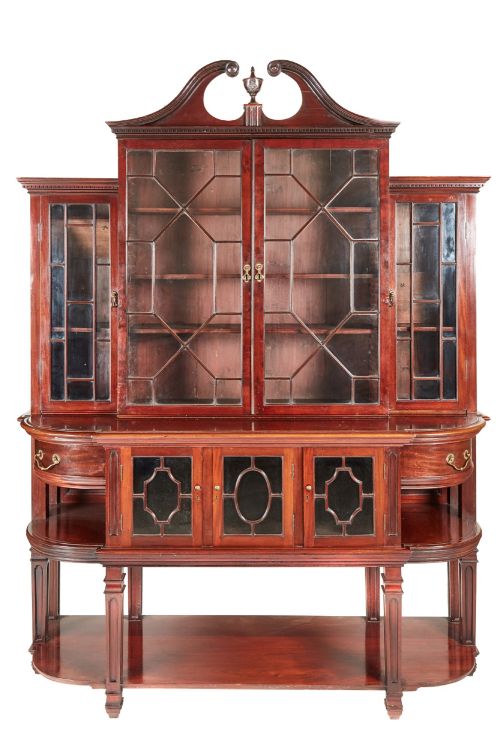
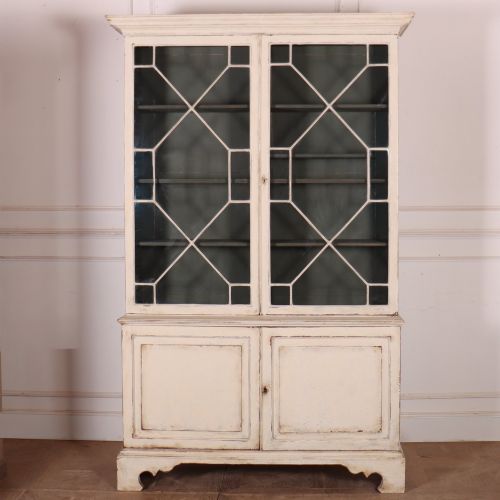
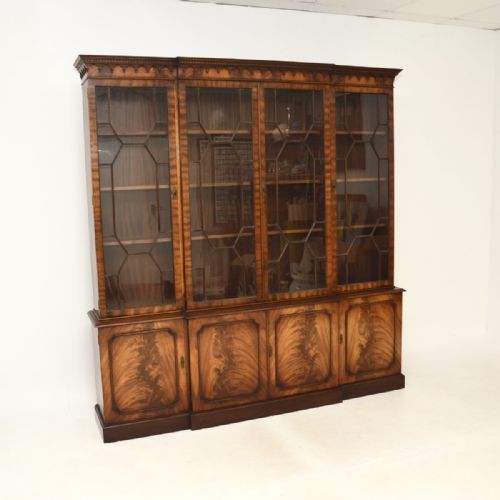


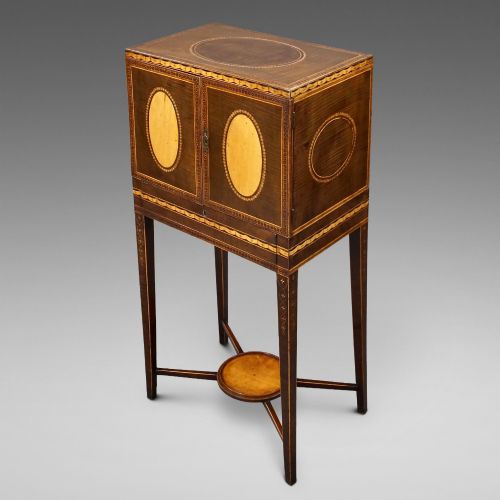
Georgian Style Display Cabinet
A georgian style display cabinet brings architectural order and glazed elegance to a room, holding books and porcelain behind timber frames.
Georgian Style Display Cabinet
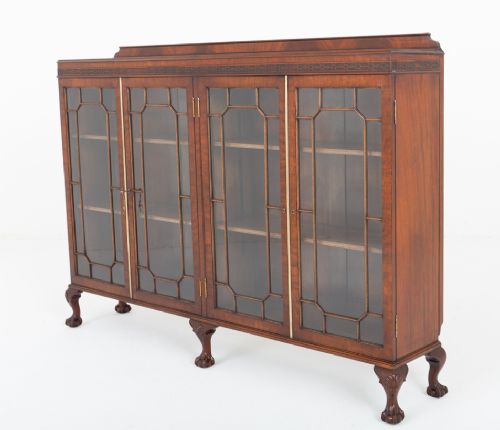
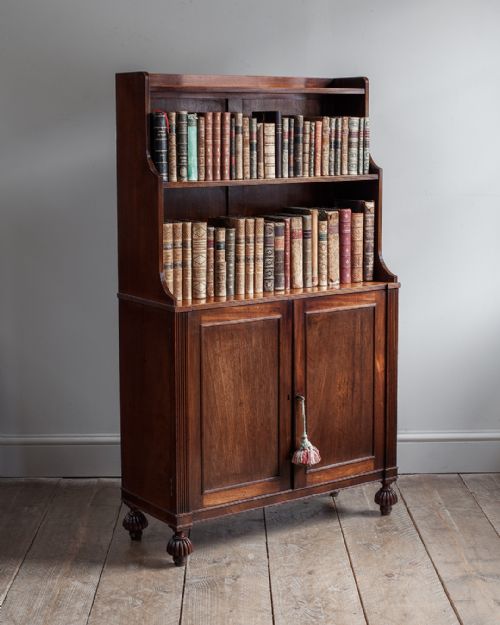
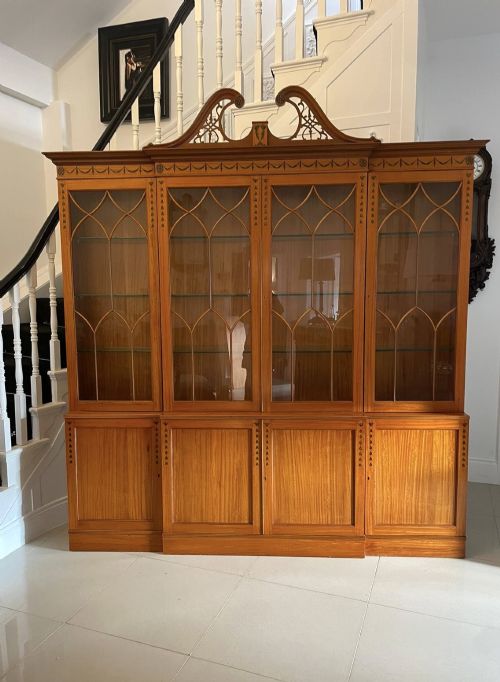
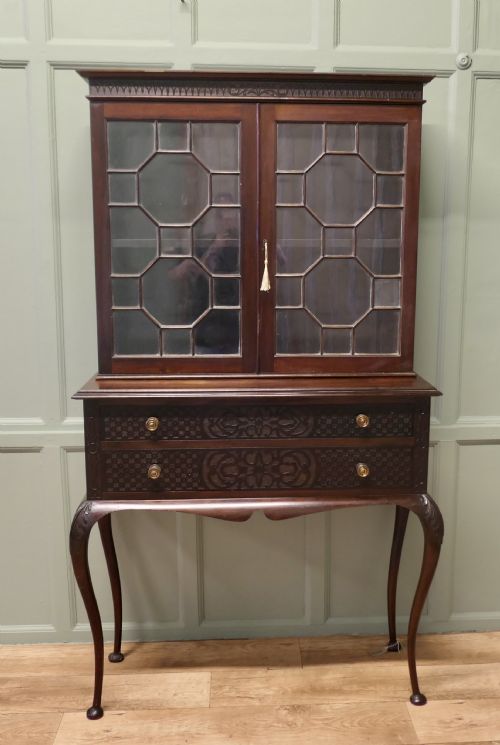
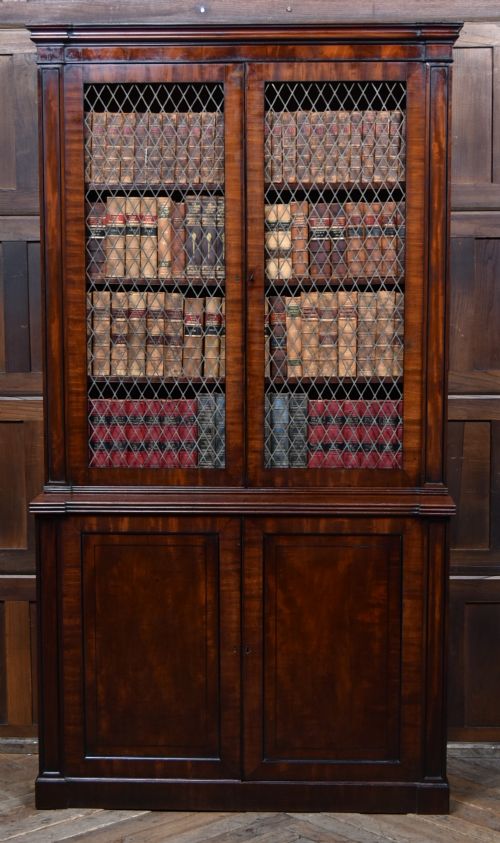
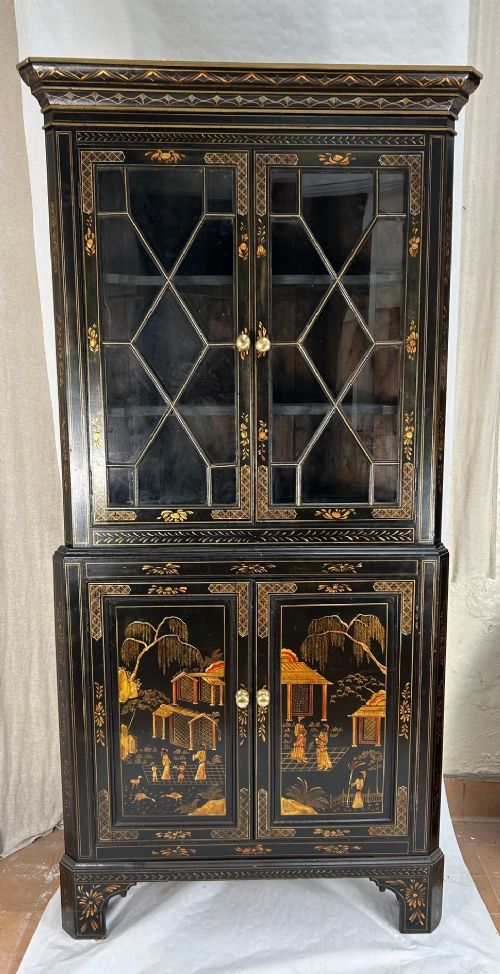
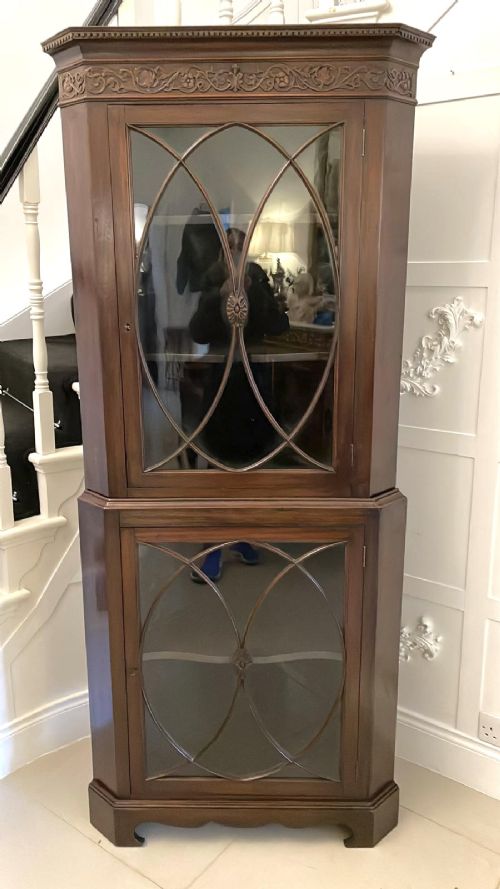
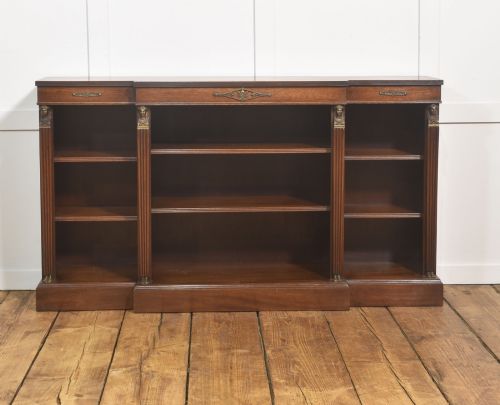
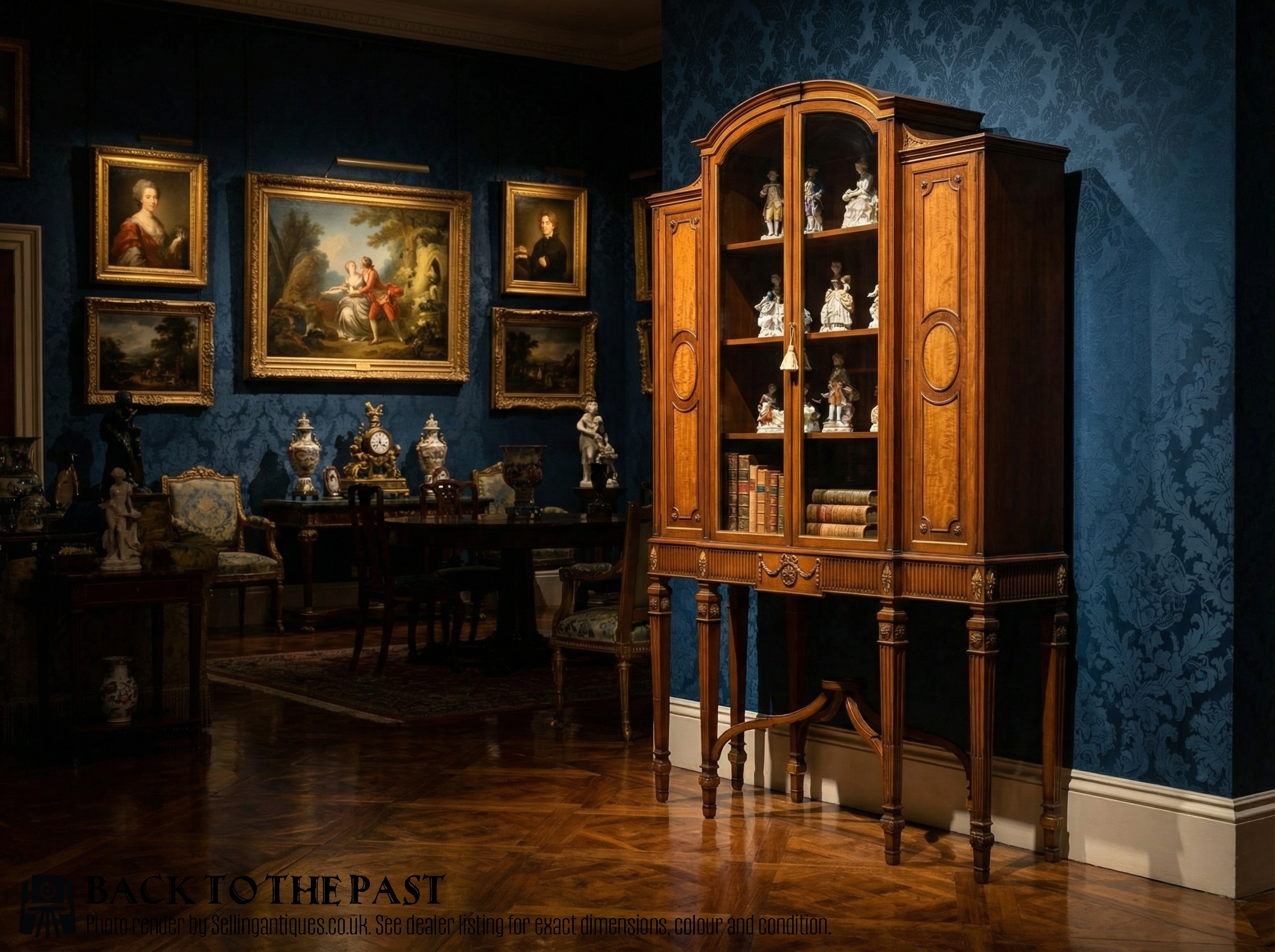
When you search for a georgian style display cabinet, you meet breakfront bookcases, corner cupboards, and tall glazed cabinets originating across the Georgian, Victorian, Edwardian, and later revival periods.
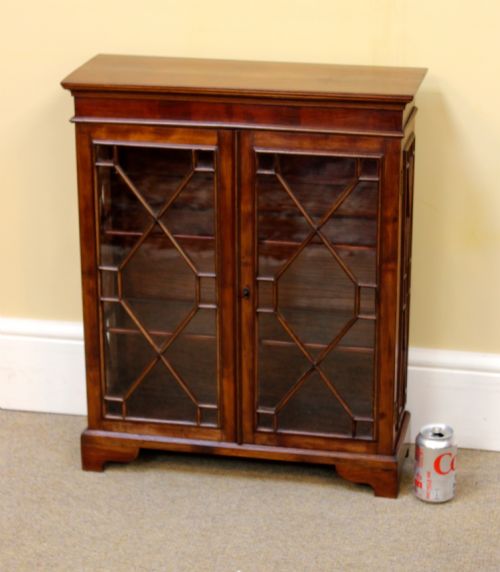
The pieces on this page span floor-standing side cabinets, bureau bookcases, and compact corner units, reflecting forms built for domestic libraries and formal parlours.
Makers and manufacturers produced these designs in mahogany, walnut, satinwood, and yew wood, often adopting styles from Regency, Chippendale, and Sheraton traditions.
Materials and Technique
Carpenters constructed these cabinets primarily in solid mahogany, burr walnut, and satinwood, frequently applying decorative veneers and inlaid details like satinwood inlay and marquetry.
Glazing relies on timber glazing bars, often shaped in astragal patterns to divide the glass panes within the doors.
Additional decorative elements include brass hardware, hand-painted decorations, fabric linings, and carved mahogany mouldings.
Listings feature woods including mahogany, satinwood, walnut, yew, rosewood, harewood, and pine across multiple centuries.
Craftsmanship and Proportion
The standard of a piece depends on the choice of timber figures, such as flame mahogany or burr walnut, and the precision of the joinery in the cornice and base.
Finer examples display delicate astragal glazing bars and crisp hand-carved details rather than heavy, machine-cut mouldings.
The integrity of the original hardware, glass panes, and internal adjustable shelving also distinguishes superior pieces from simpler utilitarian storage.
Gillows·Maple and Co.·Edwards and Roberts·William Kent
The Georgian Style Display Cabinet Glossary
- Astragal glazed
- Glass doors divided by thin wooden strips called glazing bars. These wooden lattices form geometric panes within the cabinet doors.
- Breakfront
- A cabinet design where the central section projects forward from the side sections. This creates a staggered architectural facade.
- Marquetry
- Decorative patterns formed by fitting together thin veneers of different coloured woods. Artisans use this technique on cabinet doors and drawer fronts.
- Secretaire bookcase
- A tall cabinet featuring a pull-down writing drawer with small pigeonholes and internal compartments. It combines a desk with upper bookshelf storage.
- Waterfall bookcase
- A tiered shelving unit where each successive shelf steps back from the one below. These follow a graduated vertical descent.
Georgian Style Display Cabinet: Frequently Asked Questions
How do I use a corner cabinet?
Corner cabinets fit directly into ninety-degree room angles, making efficient use of overlooked spaces while keeping delicate items visible.
They serve well in dining rooms or parlours for displaying porcelain, glassware, and decorative plates.
What is astragal glazing?
Astragal glazing refers to glass doors partitioned by slender wooden bars that form a grid of smaller panes.
This technique lightens the visual mass of large timber doors and protects the books or china stored inside.
How do I distinguish revival periods?
Revival pieces combine eighteenth-century proportions with nineteenth or twentieth-century construction methods, timber selections, and secondary woods.
Examining the backboards, drawer linings, and interior hardware often reveals whether a piece dates to the Georgian era or a later revival.