

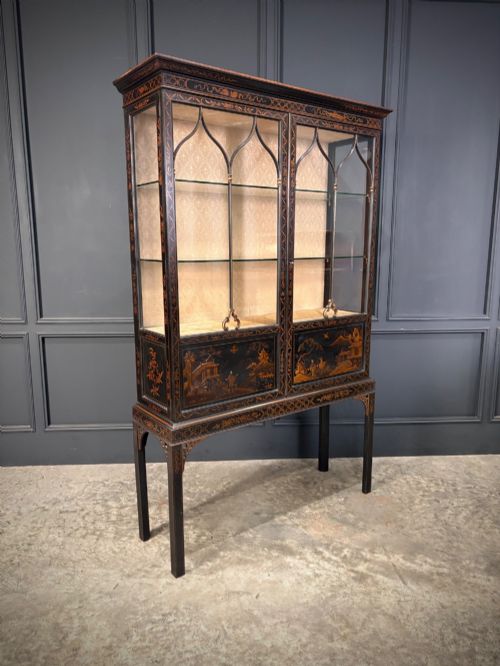
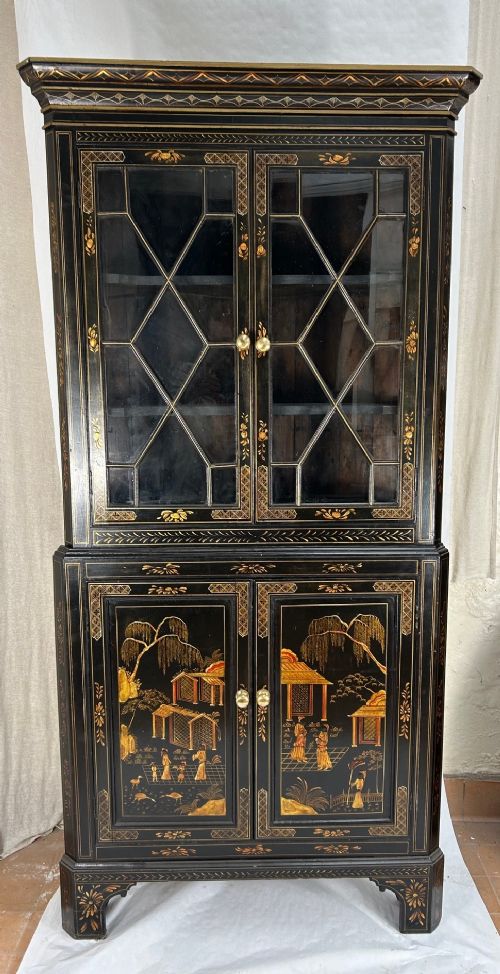


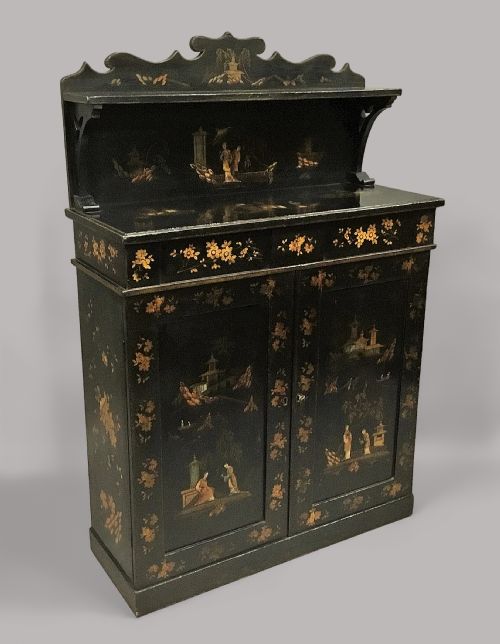

Black Chinoiserie Display Cabinet
A black chinoiserie display cabinet brings together dark lacquer surfaces and gilt motifs to hold collections with undeniable presence.
Black Chinoiserie Display Cabinet
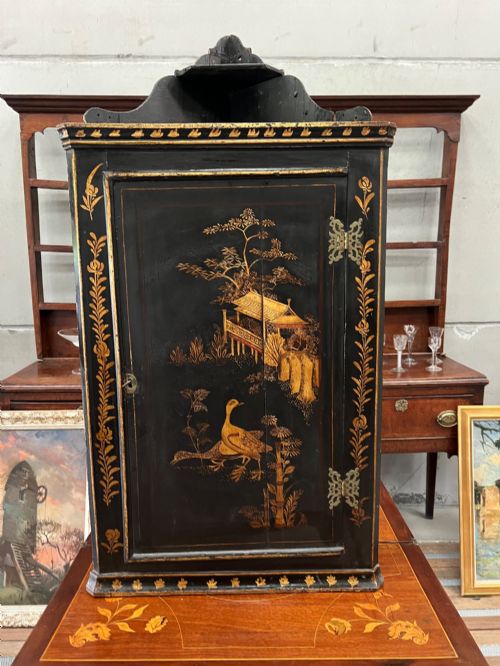
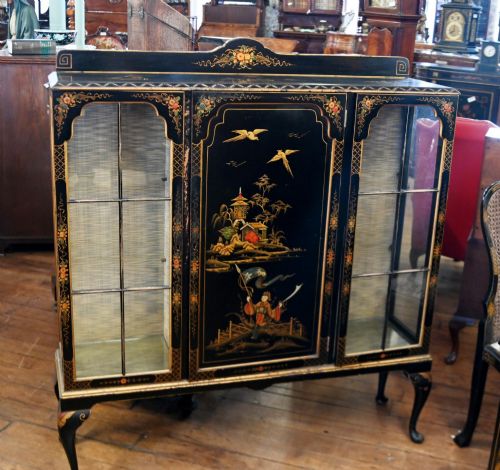
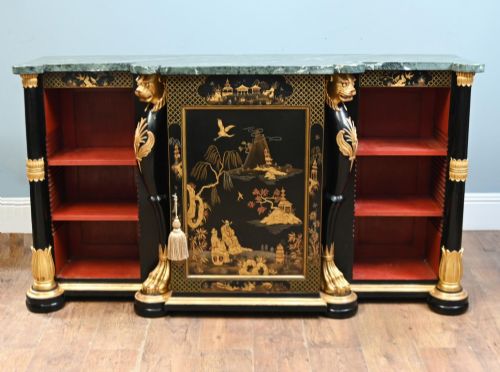
A black chinoiserie display cabinet is a storage piece defined by dark lacquered wood and decorative motifs inspired by East Asian art. These cabinets appear in various forms, including corner cupboards, side cabinets, bureau bookcases, and tall breakfront bookcases.
The pieces on this page span several distinct periods, with Edwardian interpretations and pieces from around nineteen hundred appearing alongside older eighteenth and nineteenth-century examples. Buyers frequently encounter Edwardian lacquered display cabinets and corner cupboards designed with glazed doors or open shelving.
Forms range from compact corner cabinets to substantial cabinets on stands, offering varied display options for smaller rooms or grander interiors. Each piece employs painted or gilded decoration depicting traditional figures, landscapes, birds, and flowers against a dark ground.
Judging quality and execution
Quality rests in the depth of the lacquer finish and the precision of the hand-painted or gilded details. Superior examples exhibit finely rendered figures and botanical motifs that retain their crispness across the surfaces and doors.
The integrity of the structural joinery and the original condition of the glass, brass mounts, and internal shelving distinguish higher grade pieces. Cabinets retaining well-preserved lacquer surfaces without excessive restoration demonstrate greater fidelity to their period of origin.
Black Chinoiserie Display Cabinet Retail Price Guide 2026
Typical asking prices for black chinoiserie display cabinet among the pieces listed under this phrase on Sellingantiques today, from the lower quarter to the upper quarter. They describe what is for sale here now, not the wider market.
Listings feature items spanning the eighteenth century through to the Edwardian period and nineteen hundred, utilising lacquer, wood, brass, and glass.
The Black Chinoiserie Display Cabinet Glossary
- Chinoiserie
- European decorative style reflecting imaginative interpretations of Chinese and East Asian artistic traditions. It manifests in furniture through lacquered finishes and gilt motifs depicting landscapes and figures.
- Lacquer
- A durable resin finish applied in multiple layers to wood and polished to a smooth, hard sheen. This technique provides the signature dark background for gilt and painted ornamentation.
- Breakfront
- A cabinet design where the central section projects forward from the flanking wings. This architectural arrangement creates depth and visual interest on larger bookcases and side cabinets.
- Penwork
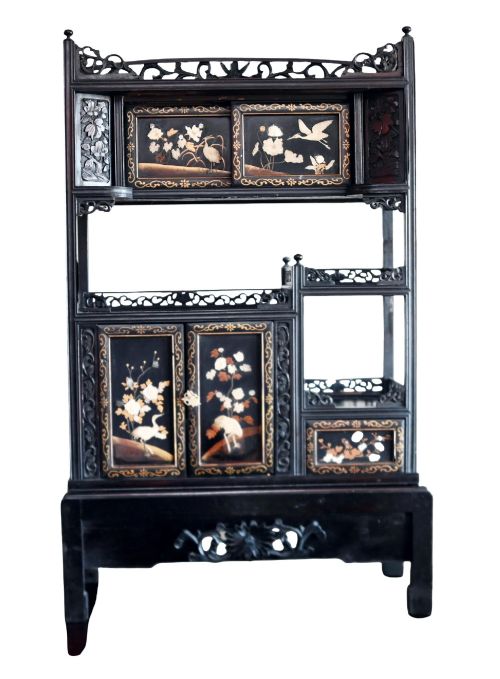
- A detailed decorative technique utilising ink or burnt lines drawn onto a prepared surface to create fine illustrations. Examples include specialised collectors cabinets decorated in this manner.
- Cabinet on stand
- A freestanding storage cabinet raised upon an independent supporting base with legs. This form lifts the main body of the furniture to create a lighter silhouette in a room.
Black Chinoiserie Display Cabinet: Frequently Asked Questions
Where should I place a black chinoiserie display cabinet?
These cabinets work well in principal living spaces or dining rooms where their dark lacquer and gilt details can catch ambient light. Position them away from direct sunlight to protect the lacquer finish and painted decorations over time.
Consider the scale of the room and choose a form that fits the space, such as a tall breakfront bookcase for a large wall or a corner cupboard to utilise unused angles.
How do I clean a lacquered cabinet?
Dust the surfaces gently with a soft, dry microfibre cloth to prevent scratching the delicate lacquer and gilt work. Avoid using harsh chemical cleaners, abrasives, or excessive moisture, which can damage the finish.
Consult a professional restorer if the piece requires deeper cleaning or conservation work to preserve the integrity of the antique materials.
What is the difference between Edwardian and eighteenth-century pieces?
Eighteenth-century examples represent the earlier periods of European chinoiserie production, utilising period construction methods and authentic ageing of the lacquer. Edwardian pieces often reflect later revivals of the style, produced around nineteen hundred with Edwardian manufacturing techniques.
Both periods feature lacquered wood and gilt decoration, but examination of the timber, joinery, and wear patterns helps distinguish the older originals from later revivals.
Can these cabinets hold heavy books and objects?
Most display cabinets and bureau bookcases are built to support standard collections of books, porcelain, and decorative items on their shelves. Corner cupboards and side cabinets offer sturdy internal storage suited to everyday use.
Check the construction of the internal shelving and ensure weight is distributed evenly, particularly in older pieces with fixed wooden boards.