



Oriental Style Display Cabinet
An oriental style display cabinet brings together intricate lacquerwork, hardwood frames and glass to showcase cherished objects with a distinctive decorative presence.
Oriental Style Display Cabinet
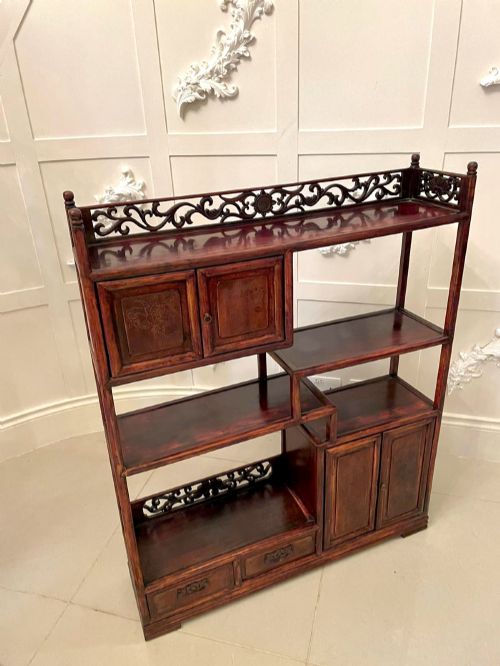
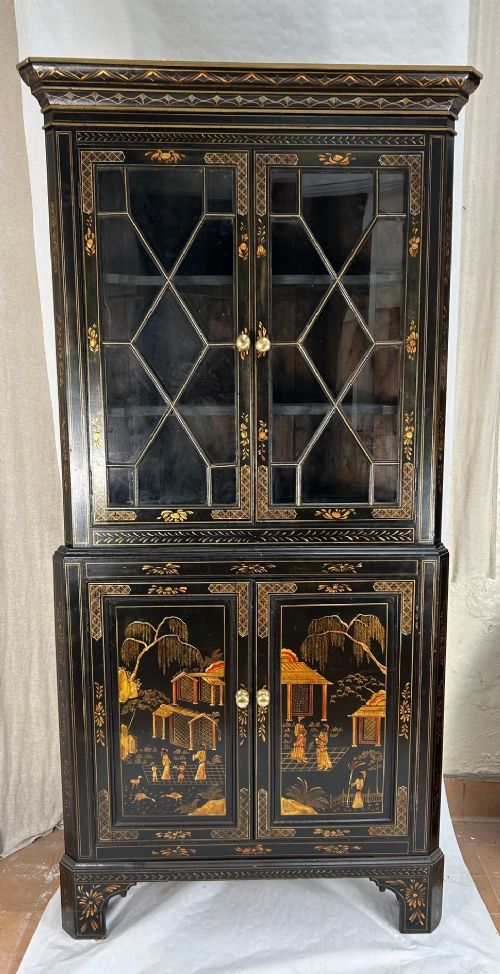
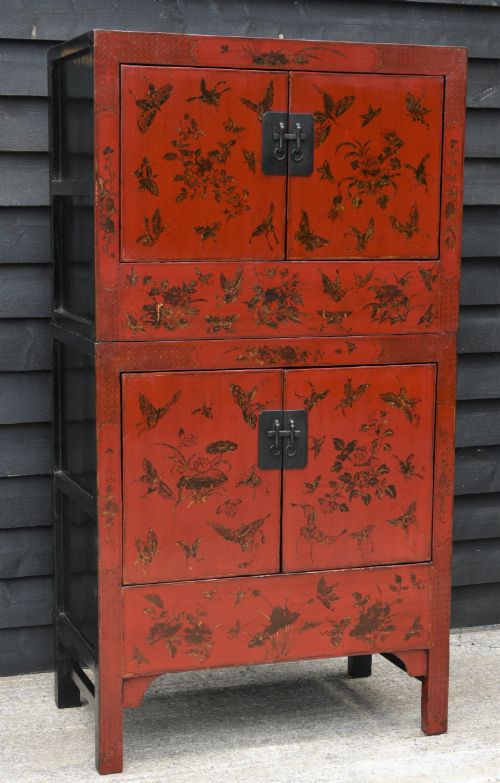
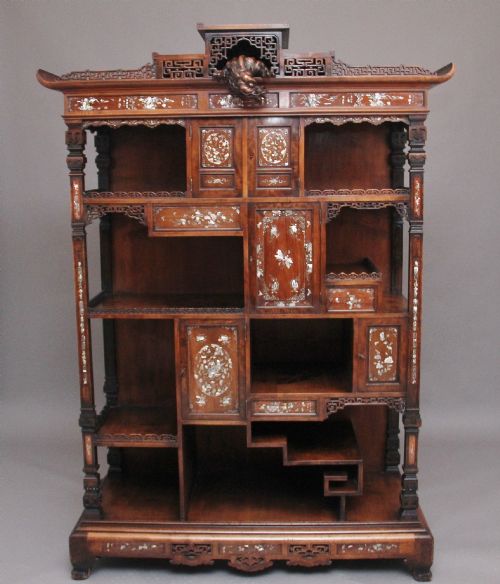
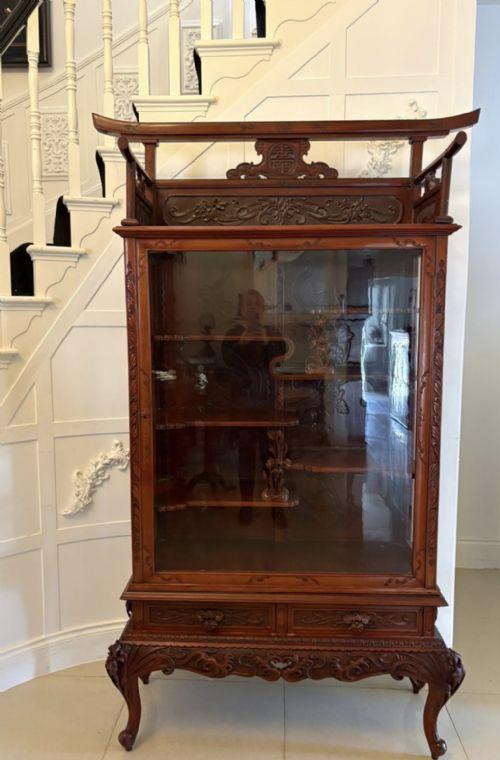
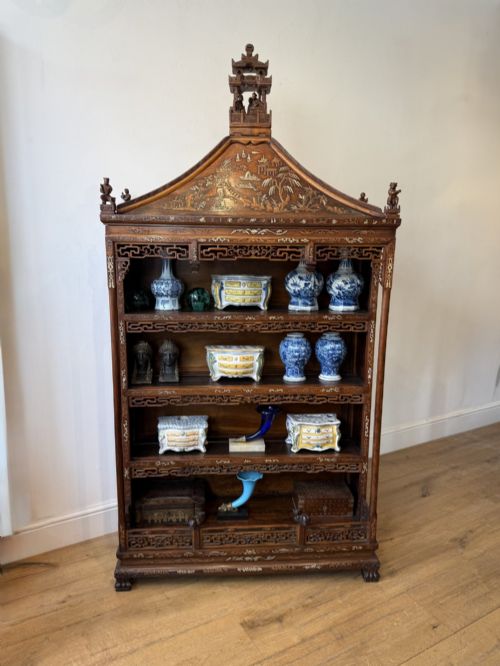
An oriental style display cabinet encompasses freestanding display cabinets, corner cupboards and smaller cabinets on stands designed to exhibit objects. These pieces draw from Chinoiserie, Japonisme and traditional Chinese aesthetics across the nineteenth and early twentieth centuries.
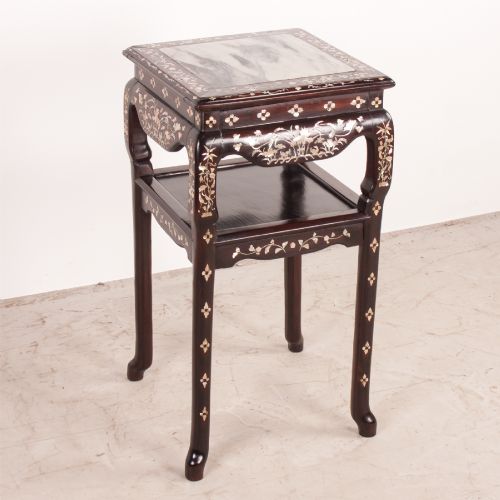
The selection frequently includes lacquered finishes, mother of pearl inlay and carved hardwood construction. Examples span from Edwardian corner cupboards to nineteenth century French interpretations influenced by Eastern design.
Assessing Quality
The distinction between tiers rests upon the execution of the surface ornamentation, such as the depth of wood carving and the precision of mother of pearl inlay. Cabinets displaying complex lacquer layers or attributed to notable makers demonstrate superior craftsmanship.
Structural integrity of the timber and the retention of original glass and brass hardware also influence the standing of a piece. The harmony between the eastern design motifs and the cabinet form determines the overall success of the execution.
Listings feature woods like rosewood, walnut, padouk and bamboo alongside lacquer, brass, glass and mother of pearl.
Gabriel Viardot
The Oriental Style Display Cabinet Glossary
- Chinoiserie
- European decorative style reflecting Chinese artistic influences, commonly seen in lacquered furniture and painted scenes.
- Japonisme
- European adoption of Japanese art and design elements, prevalent in late nineteenth century decorative arts and furniture.
- Lacquer
- Protective and decorative finish applied in multiple layers to wood surfaces, yielding a smooth coloured or gloss coating.
- Imari
- Traditional Japanese porcelain style characterised by underglaze blue and iron red overglaze decoration.
- Padouk
- Heavy tropical hardwood valued for its rich reddish brown colour and stability in fine furniture making.
Oriental Style Display Cabinet: Frequently Asked Questions
What periods do these cabinets come from?
The pieces span the nineteenth century through to the early twentieth century, encompassing Victorian, Edwardian and Regency eras.
Maker interpretations also reflect the height of the Aesthetic Movement and late nineteenth century European interest in eastern design.
How were these cabinets used originally?
These cabinets served to store and display precious items, ceramics and curiosities within formal rooms.
Corner units and smaller cabinets on stands were also utilised to maximise display space in domestic interiors.
How do I care for lacquered wood?
Lacquered surfaces require gentle dusting with a soft, dry cloth and protection from direct sunlight and extreme humidity.
Avoiding harsh chemical cleaners preserves the integrity of the finish and any delicate mother of pearl inlay.
How do I distinguish Chinoiserie from Japonisme?
Chinoiserie draws upon Chinese artistic traditions, featuring symmetrical lacquer scenes and pavilion motifs.
Japonisme reflects Japanese aesthetics, often incorporating asymmetrical arrangements, bamboo elements and natural subjects like birds and flowers.