


Oriental Lacquered Display Cabinet
An oriental lacquered display cabinet brings together intricate decorative finishes and functional storage across various periods.
Oriental Lacquered Display Cabinet
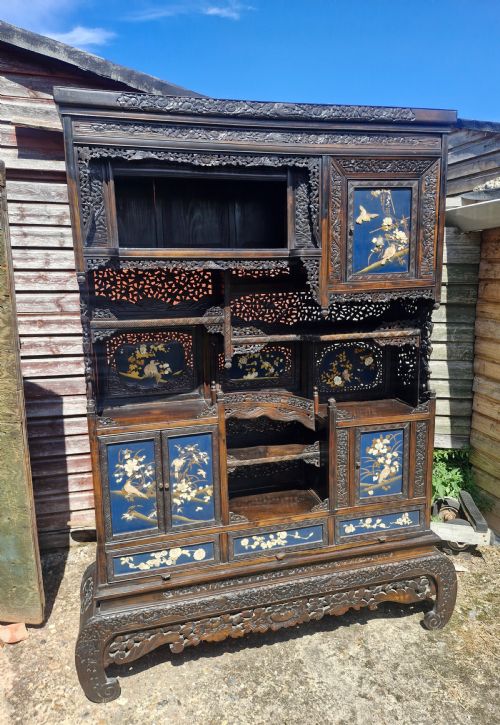
An oriental lacquered display cabinet serves as a sophisticated storage solution that highlights decorative surface treatments. These pieces range from corner cupboards and marriage cabinets to elaborate Japanese shodana and side cabinets.
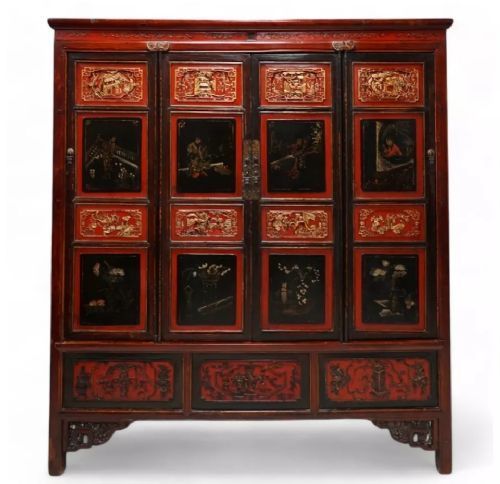
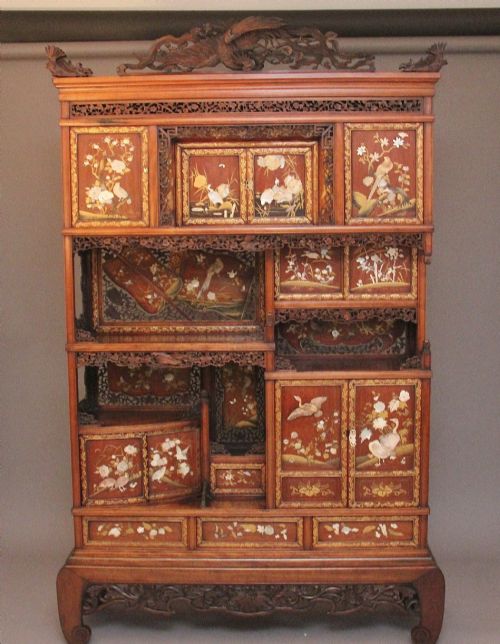
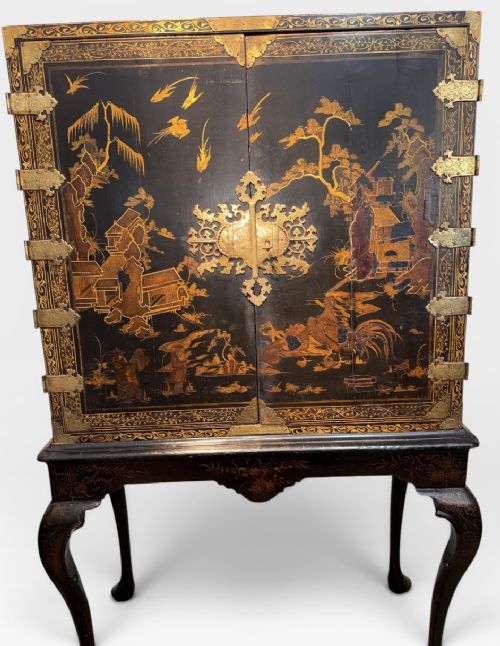
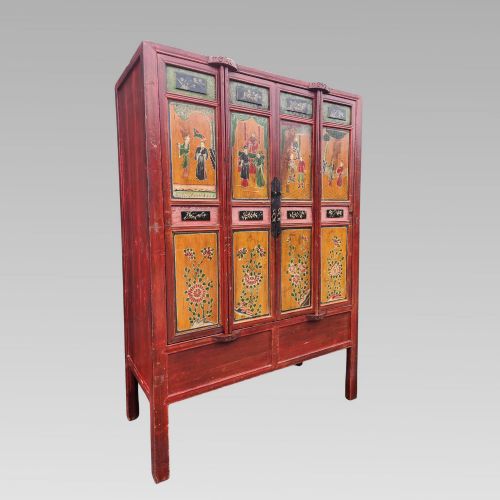
The selections span several centuries, encompassing 18th-century pieces, Regency examples, and numerous 19th-century or Edwardian variations. Buyers frequently encounter red lacquer marriage cabinets alongside black Chinoiserie cupboards and Meiji period shodanas.
Materials and Construction
Construction relies heavily on wood and hardwood foundations, sometimes incorporating bamboo elements. Artisans applied layers of lacquer to the surface, creating a smooth ground for subsequent decoration.
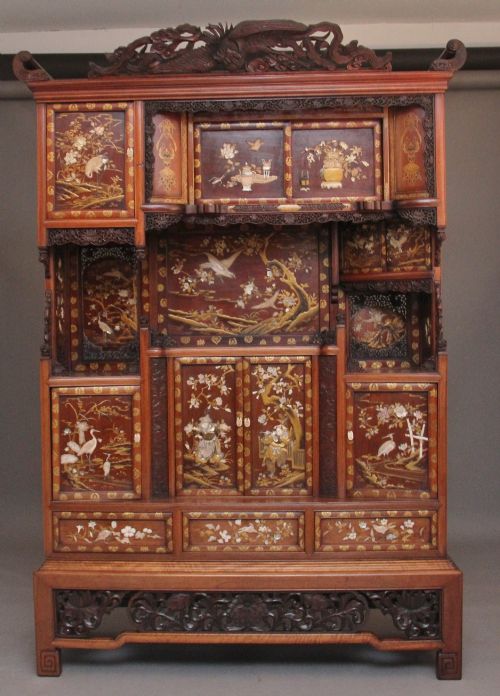
Visual depth is achieved through the use of gold leaf, mother of pearl, and bone inlay. Hardware components commonly utilise brass to secure doors and drawers.
Cabinet doors occasionally hide brightly painted red interiors behind solemn black exteriors.
Assessing Quality and Execution
Quality rests upon the depth of the lacquer finish and the precision of the decorative elements. Pieces featuring detailed inlay work or finely rendered bird and floral motifs demonstrate superior craftsmanship.
The structural integrity of the cabinet, particularly the joinery of the hardwood frame and the stability of stands on pieces designed to be elevated, determines the enduring standard of the object.
The Oriental Lacquered Display Cabinet Glossary
- Lacquer
- A resinous coating applied to wood to create a durable, glossy surface. It forms the protective base for painted or inlaid decoration.
- Shodana
- A traditional Japanese multi-shelf display cabinet. These pieces feature asymmetrical shelving compartments designed for displaying ornaments.
- Chinoiserie
- A European decorative style reflecting Chinese artistic traditions. It appears on numerous British and continental cabinets from various periods.
- Cinnabar
- A red mineral pigment historically used in traditional lacquerwork. It yields a distinctive scarlet colour when applied to objects.
- Bijouterie table
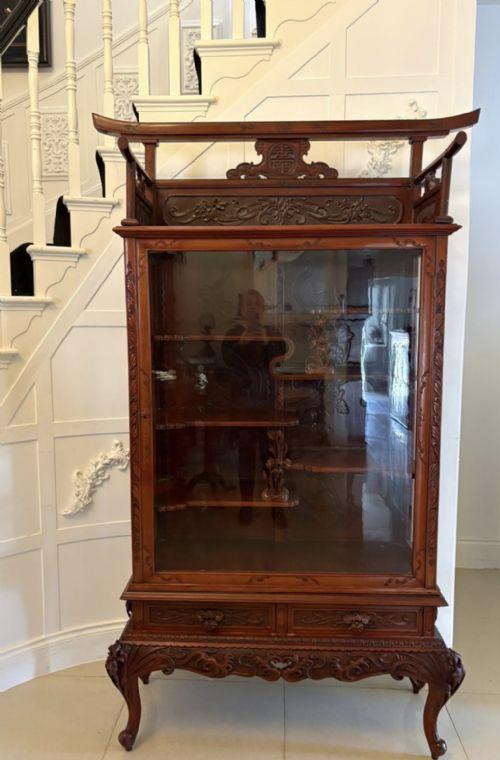
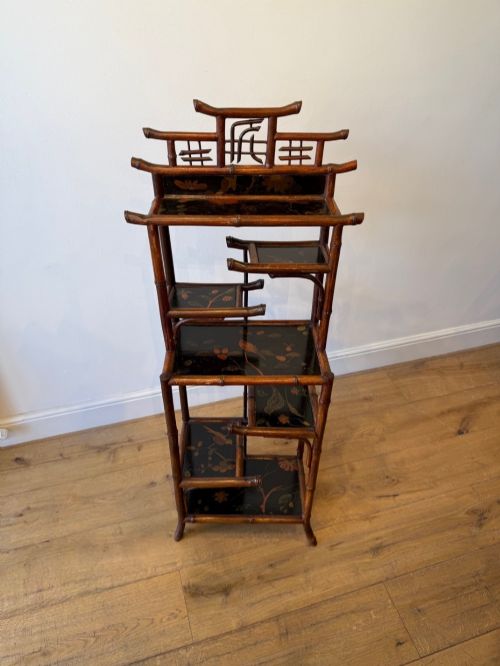
- A glass-topped display table or cabinet for small precious items. Examples integrate lacquer and bamboo construction.
Oriental Lacquered Display Cabinet: Frequently Asked Questions
What is a shodana cabinet?
A shodana is a traditional Japanese display cabinet characterised by asymmetrical shelving and compartments. These pieces were made during the Meiji period and designed for showcasing small decorative objects.
Craftsmen often incorporated elaborate lacquer finishes, carving, and intricate joinery into their construction. They stand out among storage furniture for their complex internal layouts.
How do I style a lacquered cabinet?
Place a lacquered cabinet where ambient light can catch the reflective surface of the finish and any gold leaf details. Ensure the surrounding decor remains relatively simple to let the cabinet function as a focal point.
Consider the colour palette of the room when pairing red or black lacquer pieces with existing furniture. Corner cupboards work well in smaller spaces to maximise storage while introducing period character.
What is a marriage cabinet?
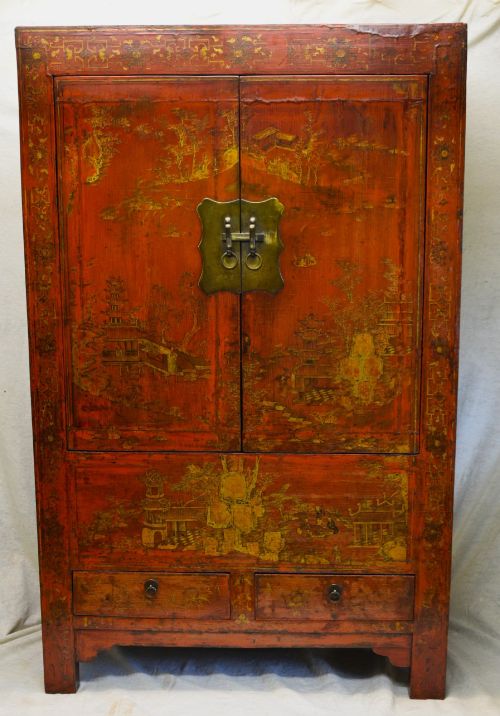
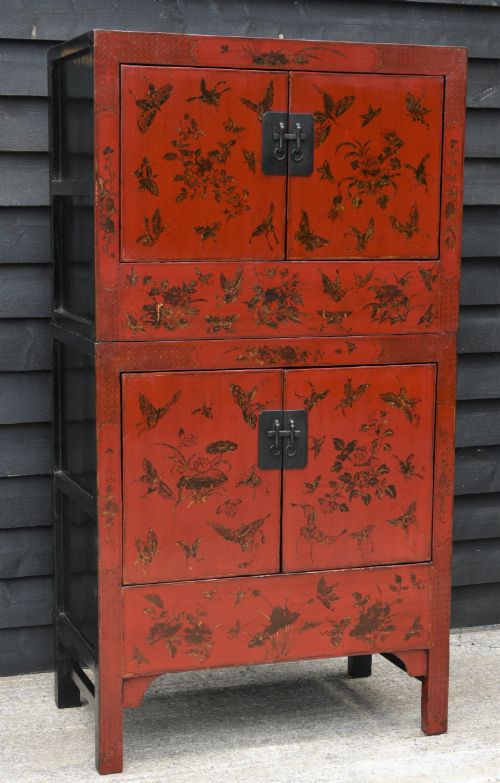
Marriage cabinets are large Chinese storage pieces traditionally given as wedding gifts. They frequently feature striking red lacquer and brass hardware.
These pieces provided substantial storage within the home while displaying auspicious decorative motifs. Their robust hardwood construction ensured they survived down the centuries.
How do I identify Chinoiserie style?
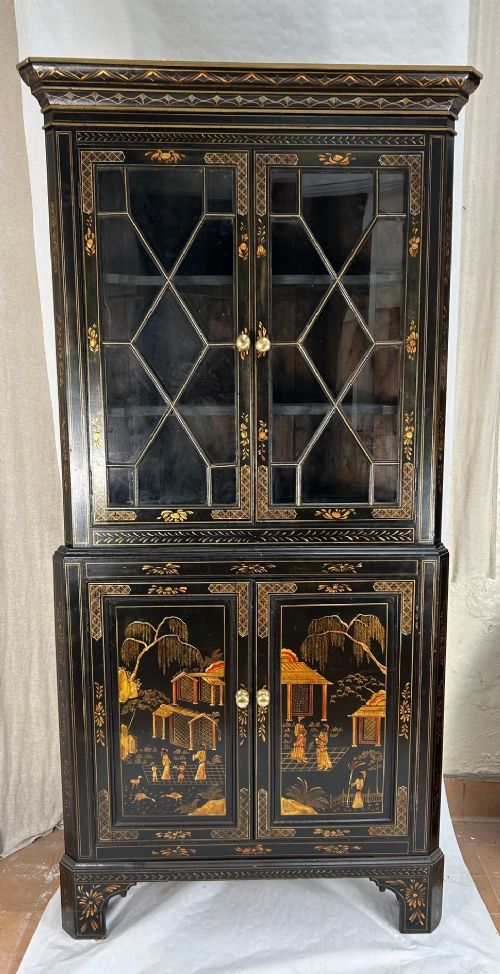
Chinoiserie represents European interpretations of Chinese artistic motifs applied to furniture and decorative arts. The style emerged strongly during the Regency and Victorian periods.
Look for painted scenes depicting figures, pagodas, birds, and flora against a dark or red lacquered ground. Bureau bookcases and corner cupboards frequently utilise this decorative vocabulary.