




Claw and Ball Vitrine
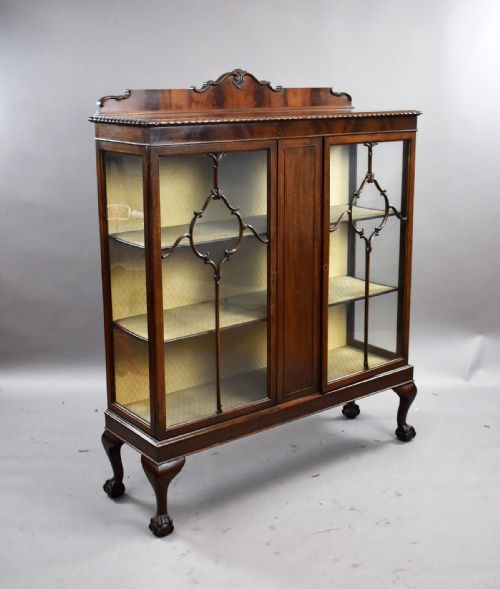
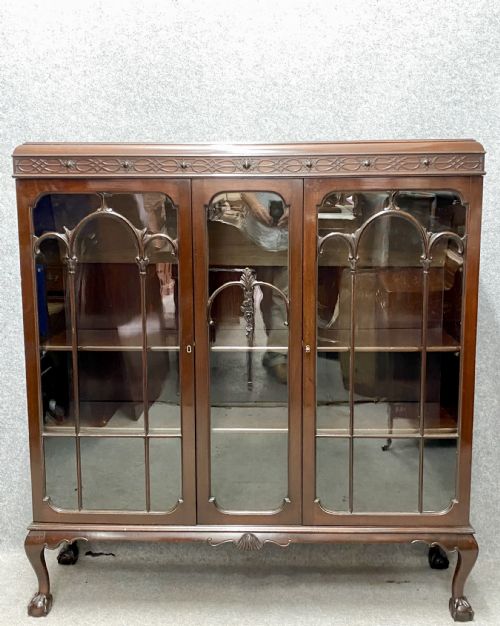
These claw and ball vitrine cabinets offer glass-fronted display space elevated on substantial carved feet, bringing refined period character to any room.
Claw and Ball Vitrine
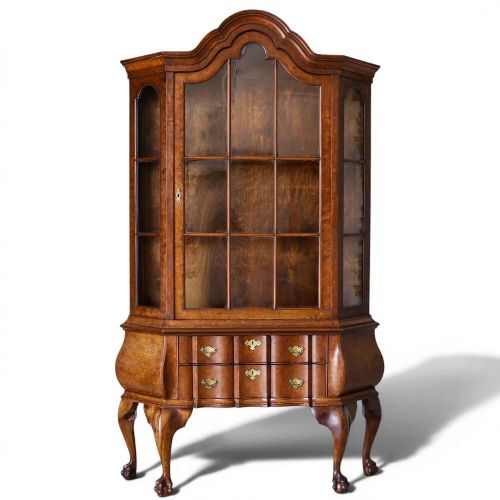
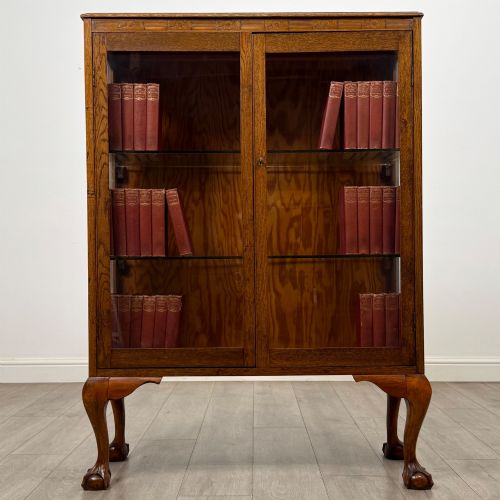
A claw and ball vitrine functions primarily as a display cabinet or bookcase, designed with glazed panels to showcase treasured objects while protecting them from dust. The form merges the utility of a storage case with the decorative ambition of a display piece, relying on distinct period revival styles.
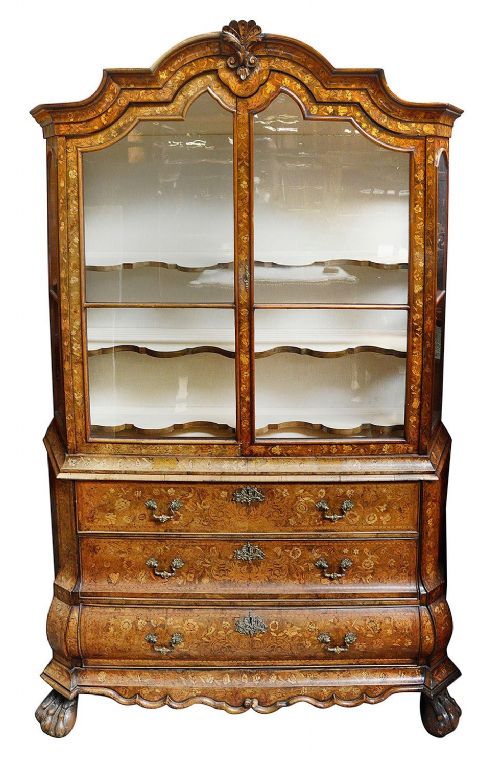
Most examples encountered here date from the Edwardian era and the early twentieth century, drawing heavily on eighteenth-century design vocabulary. Chippendale revival and Dutch baroque revival styles dominate the selections, alongside occasional art deco and chinoiserie interpretations.
The physical presence of these cabinets ranges from serpentine fronts and tall narrow formats to long bookcase variations. Mahogany and walnut serve as the predominant timbers, frequently enhanced by veneers or marquetry inlay work.
How they were made
Cabinet makers constructed these pieces using solid timbers like mahogany and oak, often applying walnut veneers and intricate marquetry inlay to achieve rich surface pattern and depth. Lacquered wood finishes also appear, particularly on chinoiserie pieces adorned with orientalist motifs.
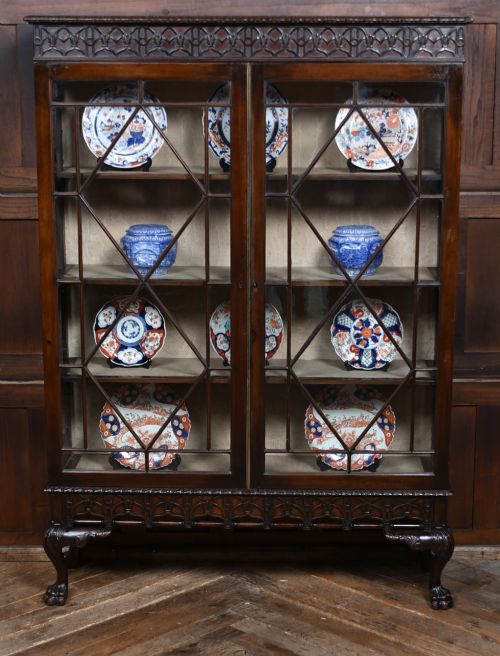
Glazing bars divide the glass panels of the upper cabinets and display sections, requiring precise joinery to house the fragile panes securely. Brass hardware and fabric linings frequently complete the interior and exterior detailing of the cabinets.
Several cabinets rely on fabric-lined interiors to ensure your porcelain sits against a softer background while contemplating its glass prison.
What varies in quality
The ambition of the carving on the feet and the crispness of the revival detailing set the finest examples apart from standard production. Cabinets featuring hand-cut marquetry inlay or specialised lacquered finishes require a higher degree of artisan skill than plain veneered surfaces.
Proportion and timber selection dictate the overall visual weight of the piece, with well-figured grain patterns and balanced serpentine or tall narrow forms commanding greater attention. The integration of original glass panes and substantial brass mounts further distinguishes superior execution.
The Claw and Ball Vitrine Glossary
- Vitrine
- A glass-fronted display cabinet used for showing porcelain, curiosities or books. The term originates from the French word for glass.
- Marquetry
- The art and craft of applying pieces of veneer to a structure to form decorative designs and pictures. Cabinet makers utilise various tinted woods to achieve tonal contrast.
- Serpentine
- A furniture front characterised by a wavy shape with a convex centre flanked by concave sides. This undulating profile demands expert woodworking technique.
- Chinoiserie
- European theatrical interpretations of Chinese and East Asian artistic traditions. This style manifests on lacquered wood cabinets through painted motifs and decorative scenes.
Claw and Ball Vitrine: Frequently Asked Questions
What is a claw and ball vitrine?
A claw and ball vitrine is a glazed display cabinet or bookcase raised on distinctive carved feet shaped like a bird's talon gripping a sphere. These pieces combine visible storage with period decorative styles.
They appear primarily in Edwardian revival formats, utilising timbers such as mahogany and walnut to showcase collections behind glass panels.
How were these cabinets used?
Original owners used these cabinets to display porcelain, silver, and treasured objects safely while keeping them visible in principal reception rooms. The glazed upper sections protected fragile items from dust and handling.
Some variants incorporate lower bookcase storage, serving a dual purpose for both reading material and ornamental display.
How do I style a vitrine at home?
Placing a vitrine in a living room or study allows the glazed cabinet to act as a focal point while housing curated collections of books or ceramics. Interior lighting or fabric linings can enhance the objects displayed within.
Matching the mahogany, walnut, or lacquered wood finish to existing room tones helps integrate the period piece into contemporary spaces.
How do I tell Edwardian revival from eighteenth-century pieces?
Edwardian revival pieces often display machine-assisted precision in their joinery alongside standardised hardware, whereas genuine eighteenth-century examples show hand-tooled construction marks and older timber shrinkage. Secondary woods inside the carcass often differ between the periods.
Stylistic proportions and the crispness of the revival carving offer further clues to distinguishing the exact era of manufacture.