

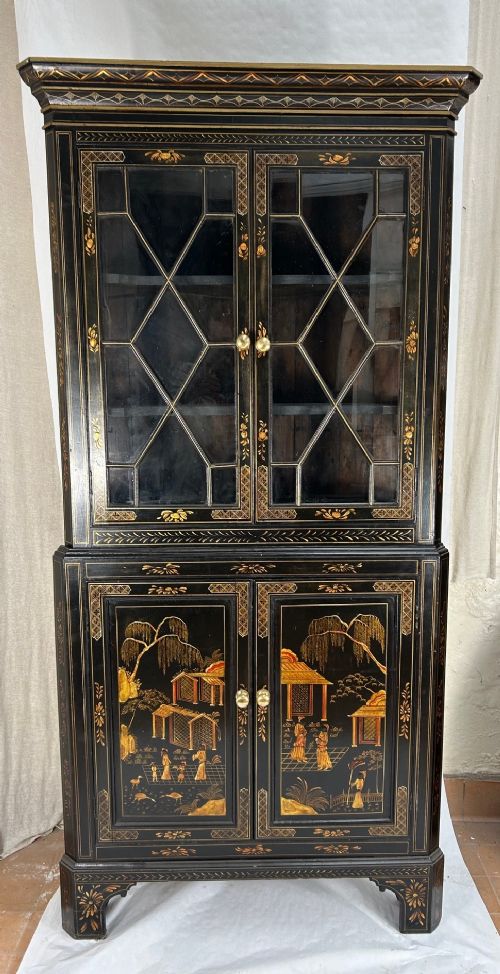


Black Lacquered Bookcase Cabinet
These black lacquered bookcase cabinet pieces bring striking orientalist motifs and deep polished surfaces into a room.
Black Lacquered Bookcase Cabinet
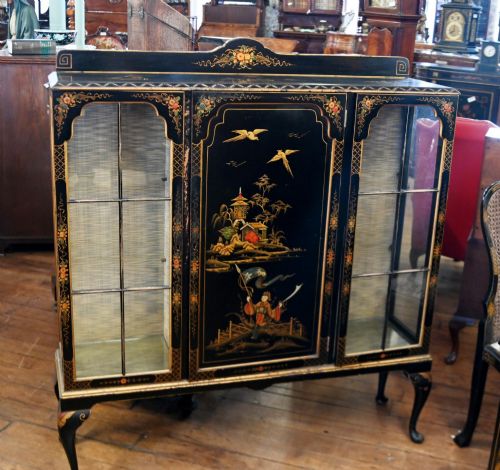
A black lacquered bookcase cabinet combines enclosed shelving with decorative lacquer finishes, often drawing on Chinoiserie styles and Qing dynasty influences. These pieces range from bureau bookcases and breakfront cabinets to corner cupboards and display shelves, spanning periods from William and Mary through the Victorian era to the early twentieth century.
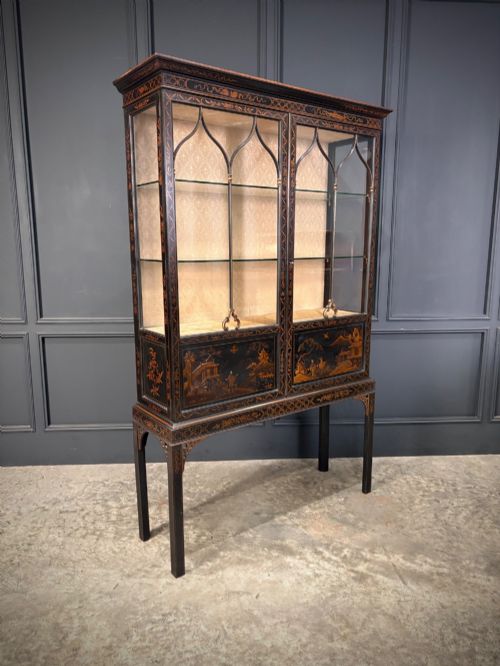
On this page, buyers frequently encounter Edwardian interpretations and Regency Revival pieces featuring lacquer work alongside Victorian ebonised wood and earlier foundational styles. The variety covers tall display cabinets with glass doors, smaller side cabinets, and bamboo shelf combinations.
Each form serves to exhibit books or curiosities while presenting a dark, reflective exterior surface that anchors the interior scheme.
How they were made
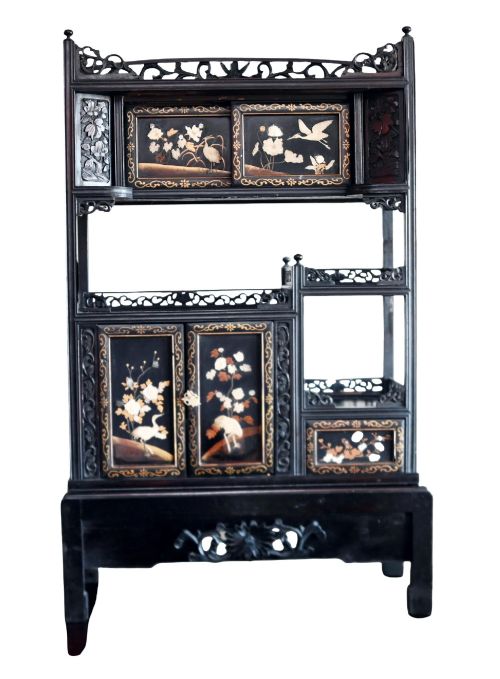
Construction relies on solid wood bases, ebonised timber, and bamboo frames finished with layers of lacquer, sometimes enhanced with gold leaf and mother of pearl inlay. Artisans applied these finishes to create smooth, dark planes capable of receiving intricate painted or gilded oriental decoration.
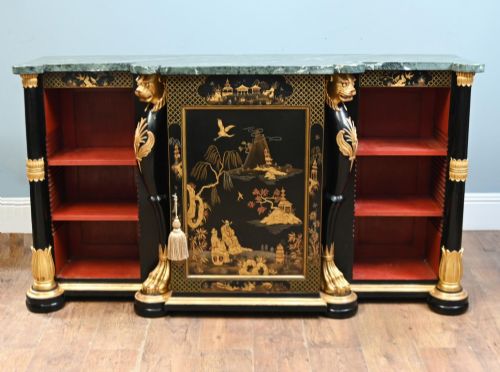
Hardware details involve cast brass mounts and ormolu framing, alongside glass panels fitted to doors for display purposes. The structural execution ranges from substantial nineteenth-century carcases to lighter Edwardian display furniture and tiered shelves.
Black Lacquered Bookcase Cabinet Retail Price Guide 2026
Typical asking prices for black lacquered bookcase cabinet among the pieces listed under this phrase on Sellingantiques today, from the lower quarter to the upper quarter. They describe what is for sale here now, not the wider market.
Current listings feature materials including glass, lacquer, brass, wood, gold leaf, and marble across styles from Chinoiserie to Victorian and William and Mary.
What varies in quality
Quality reveals itself in the depth and preservation of the lacquer surface, the crispness of the gilt or painted Chinoiserie motifs, and the integration of decorative elements like mother of pearl. Superior examples display harmonious proportions and careful joinery across complex forms such as breakfronts and bureau bookcases.
The sophistication of the brass mounts and the clarity of the glass further distinguish finer workshop output from simpler commercial production.
The Black Lacquered Bookcase Cabinet Glossary
- Chinoiserie
- European decorative style inspired by Chinese artistic traditions, featuring motifs of figures, landscapes, and pagodas. This aesthetic dominates the surface decoration of many lacquered cabinets.
- Ebonised wood
- Timber treated to resemble ebony through staining or painting. This dark finish provides a uniform background for gilded details and lacquered panels.
- Japanning
- European imitation of East Asian lacquerwork involving layered varnishes and heat curing. It creates the hard, glossy black surfaces seen on seventeenth and eighteenth-century forms.
- Ormolu
- Gilded bronze used for decorative mounts and furniture trim. It adds metallic contrast against the dark lacquered wood.
- Bureau bookcase
- A dual-purpose furniture form incorporating a sloping desk flap below upper shelving or cabinet doors. These pieces combine workspace with enclosed storage.
Black Lacquered Bookcase Cabinet: Frequently Asked Questions
What is a black lacquered bookcase cabinet?
It is a piece of furniture designed for storage and display, finished with dark lacquer and often decorated with Chinoiserie motifs.
These cabinets combine shelving or desk spaces with decorative exterior surfaces originating from various historical periods.
How do I date a lacquered cabinet?
Dating relies on identifying stylistic markers, construction methods, and materials associated with periods like the Edwardian era or the nineteenth century.
Cabinet forms and the specific execution of the lacquer work provide further clues to the manufacturing era.
Where should I place a display cabinet?
These cabinets suit reception rooms, studies, or drawing rooms where their decorative surfaces and glass fronts can be appreciated.
Positioning them away from direct sunlight protects the lacquer and any internal displays.
What is the difference between Japanning and lacquer?
Japanning is a European technique developed to emulate Asian lacquer using resin varnishes and heat drying.
True lacquer work utilises natural sap applied in numerous thin layers, though both result in a durable, polished black finish.