

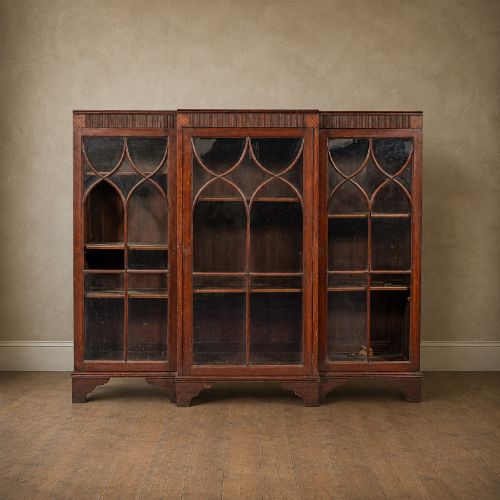
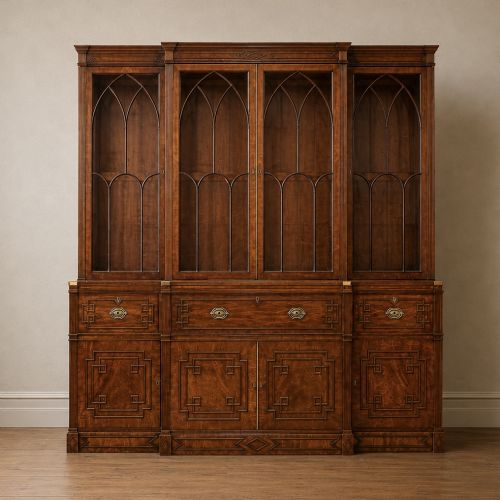
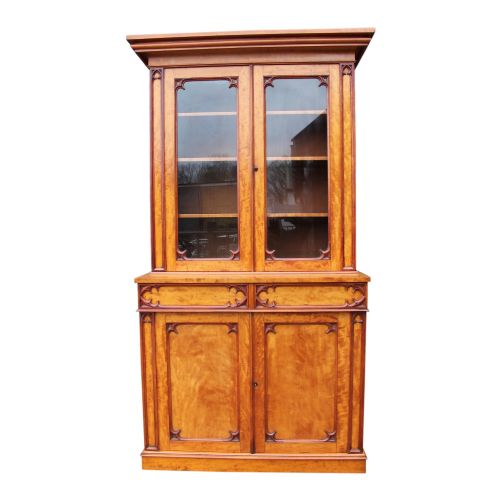
Gothic Glazed Display Cabinet
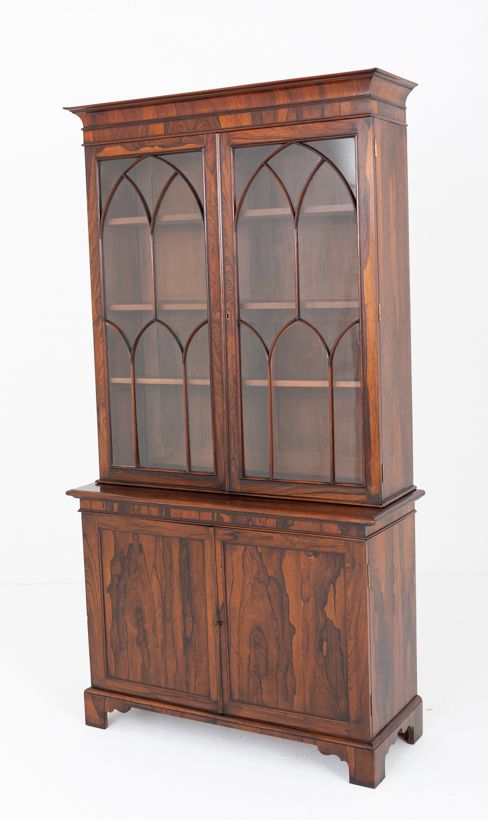
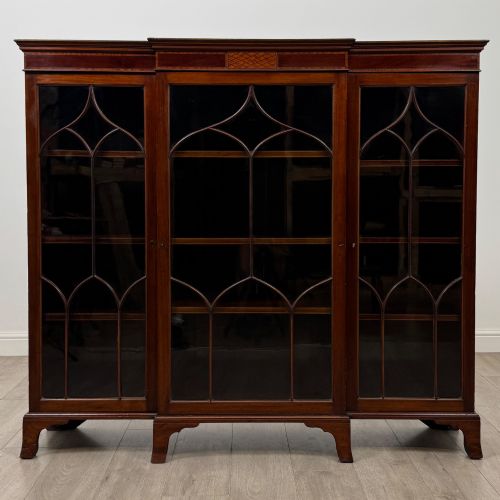
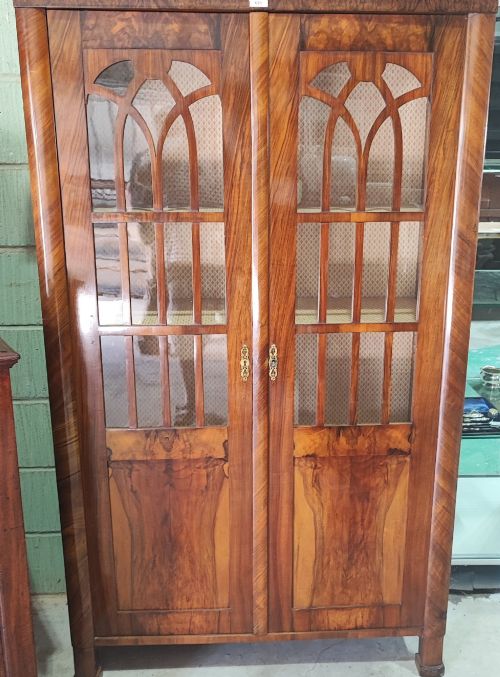
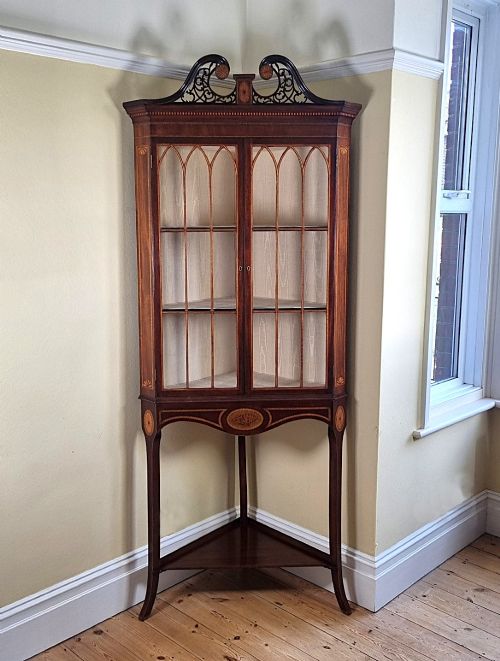
A gothic glazed display cabinet brings pointed arch geometry and visible shelving into a room to hold books and porcelain.
Gothic Glazed Display Cabinet
A gothic glazed display cabinet is a piece of furniture built to hold books or china behind glass doors, often shaped with pointed arches or tracery. When searching this phrase, a buyer meets pieces originating in the Georgian, Victorian, Edwardian, and Regency periods.
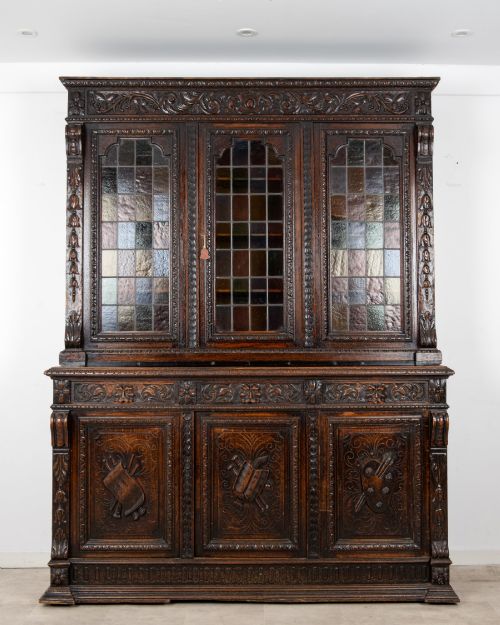
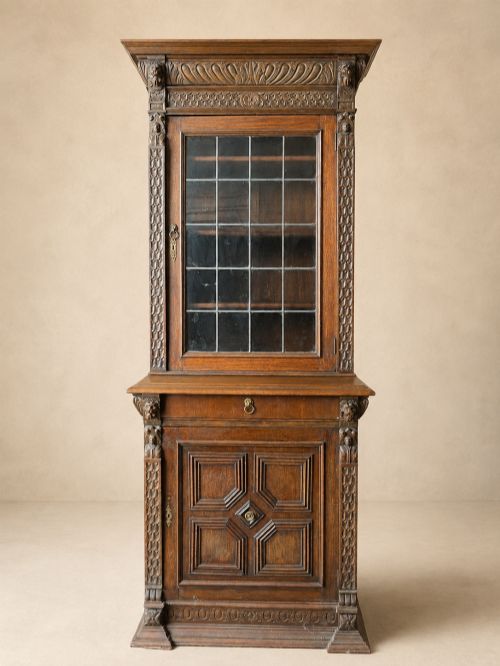
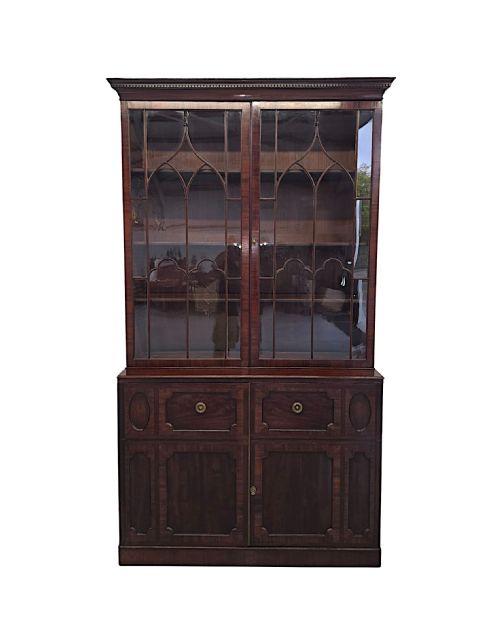
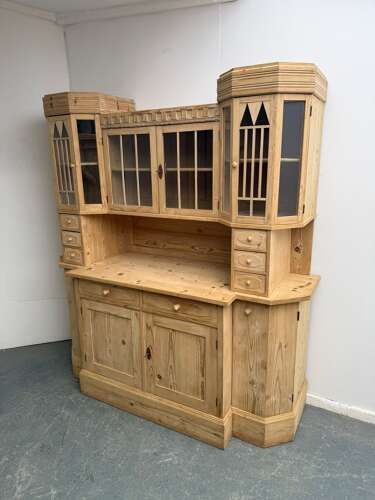
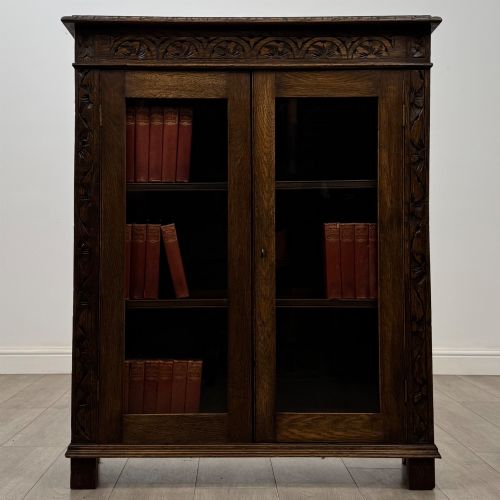
The surviving examples on this page lean heavily towards oak and mahogany, constructed as tall bookcases, corner cabinets, and breakfront display units. Many incorporate glazed upper sections combined with solid wooden cupboards below.
Makers and workshops across the nineteenth and early twentieth centuries adapted medieval ecclesiastical motifs for domestic domestic interiors. These designs range from simple pointed glazing bars in pine or oak to elaborate satinwood pieces with marquetry.
Materials and construction
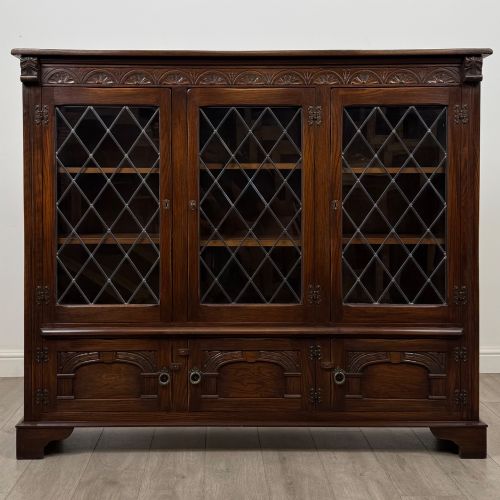
Cabinet makers relied primarily on solid oak and mahogany for the main frames, frequently housing glass panes within timber lattice or lead cames. Brass hardware secures the doors, while secondary timbers such as pine appear on interior shelves and backs.
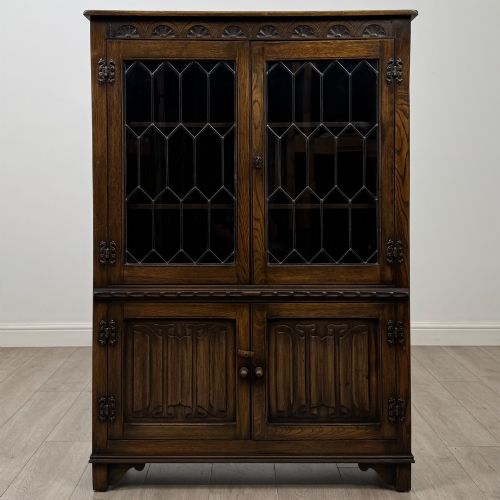
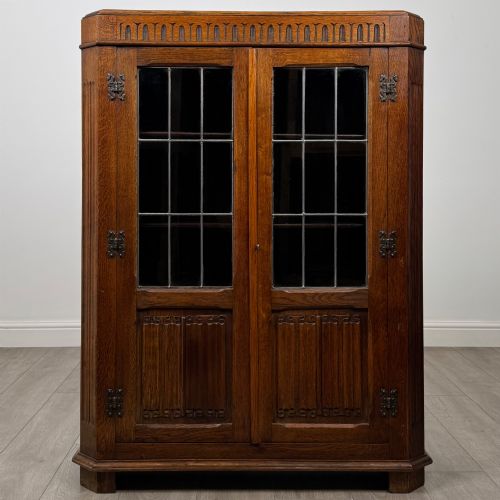
Decorative detailing relies on carved wooden linenfold panels, satinwood inlay, and specialised joinery to build complex breakfront and corner shapes. Glass panels are traditionally held in place by wooden glazing bars that trace gothic arches.
Listings span the Georgian, Regency, Victorian, and Edwardian periods, constructed in mahogany, oak, walnut, pine, and satinwood.
What separates the best from the rest
Quality rests in the crispness of the architectural carving and the selection of figured timber veneers like pollard oak or rosewood. Superior examples maintain balanced proportions across large breakfront or two-part forms without awkward joints.
The precision of the glazing bars dictates much of the visual success, as hand-cut wooden tracery requires skilled carpentry. Better pieces retain original glass, brass handles, and matching keys that operate smoothly within the locks.
Jas Shoolbred·Gillows
The Gothic Glazed Display Cabinet Glossary
- Glazing bars
- The wooden strips that hold individual panes of glass within a door or window frame. They form the structural grid behind the glass.
- Breakfront
- A piece of furniture where the central section projects forward from the flanking wings. This creates visual depth and architectural presence.
- Linenfold
- A style of wood carving that imitates folded linen cloth, frequently seen on Tudor and Gothic revival panels. It adds texture to solid cupboard doors.
- Secretaire
- A cabinet containing a pull-down writing drawer fitted with small pigeonholes and tiny drawers. It combines a desk with a bookcase.
- Tracery
- Openwork architectural ornament, particularly in gothic windows, translated here into timber woodwork across glass doors. It defines the character of the style.
Gothic Glazed Display Cabinet: Frequently Asked Questions
Where should I put a gothic glazed display cabinet?
These tall cabinets suit living rooms, libraries, or dining rooms where their glass doors can protect books and ceramics from dust. Position them against a solid wall away from direct sunlight to protect aged timber.
Ensure the floor is level so the heavy timber frame and glass doors remain square and shut properly without jamming.
How do I tell a Victorian gothic cabinet from a Georgian one?
Georgian versions tend to feature lighter mahogany frames with restrained classical proportions influenced by gothic tastes. Victorian pieces often use heavy carved oak with more elaborate ecclesiastical tracery and darker finishes.
Checking the secondary woods inside drawers and the cut of the hinges helps confirm the period of manufacture.
Can these cabinets hold heavy books?
Most of these pieces were built as bookcases or libraries, so their wooden shelves are sturdy enough for volumes of standard weight. However, antique shelves can sag over long periods if overloaded with dense collections.
Distribute heavy books evenly and check the shelf supports inside the cabinet to ensure safe storage.
How do I clean the glass and timber?
Dust the timber regularly with a dry, soft cloth and feed the wood with appropriate wax when it appears dry. Avoid modern silicone sprays that can build up a sticky film over the original finish.
Clean the glass panes with a mild glass cleaner applied to a cloth rather than sprayed directly onto the glass, keeping moisture away from the timber frames.