

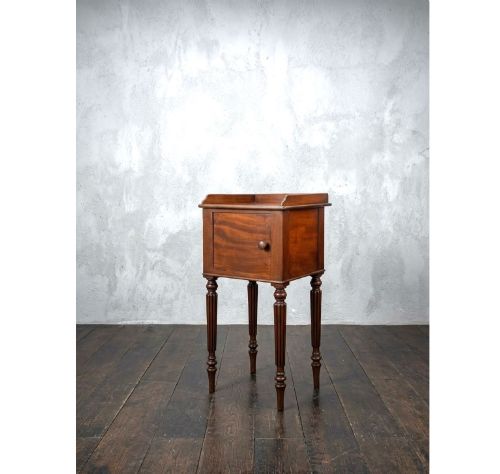

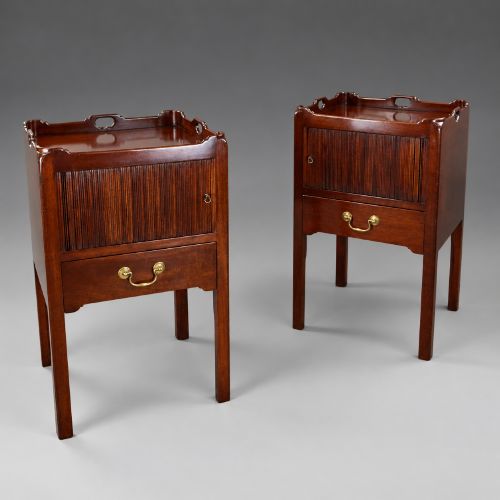
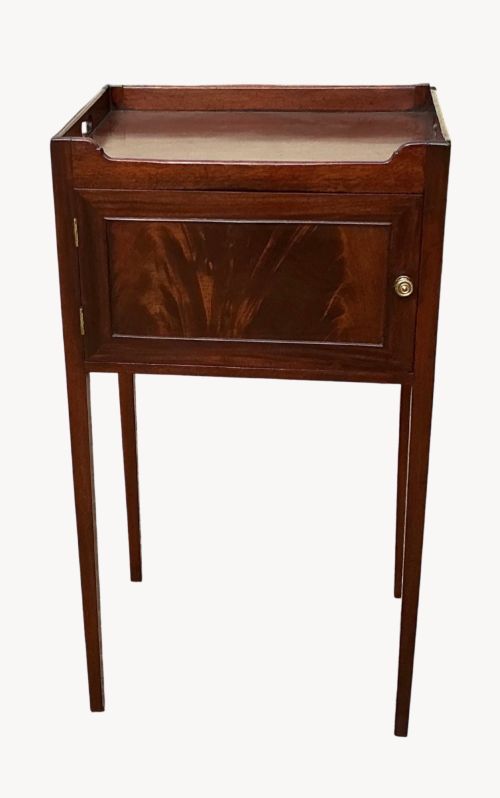
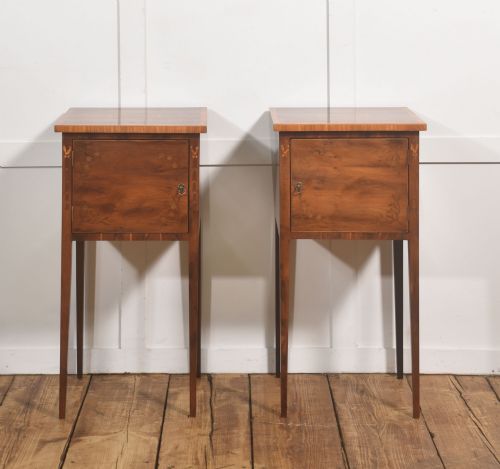
Georgian Style Bedside Cabinet
A georgian style bedside cabinet brings classical proportion to the bedroom, offering enclosed storage or display beside a bed.
Georgian Style Bedside Cabinet
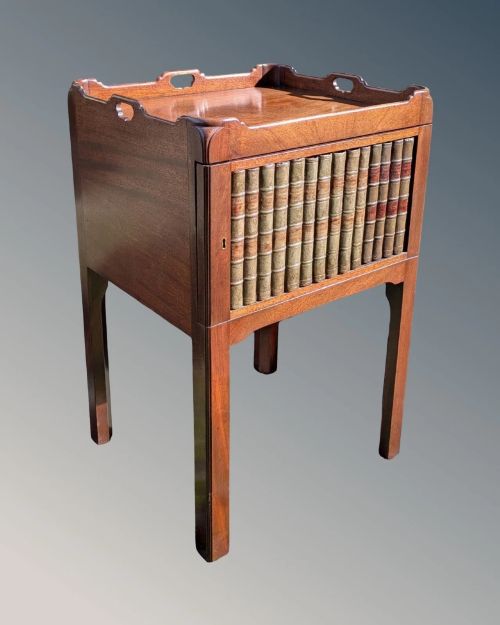
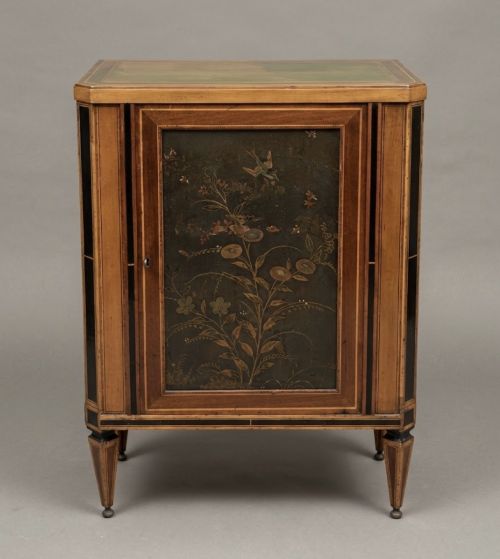
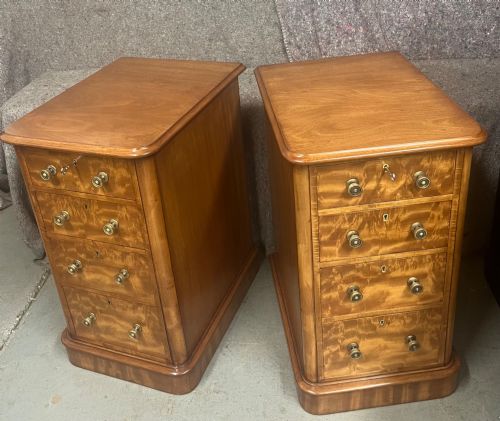
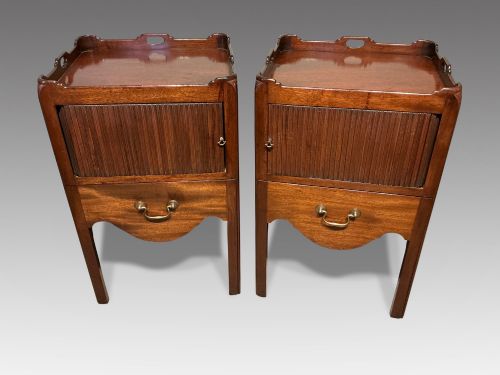
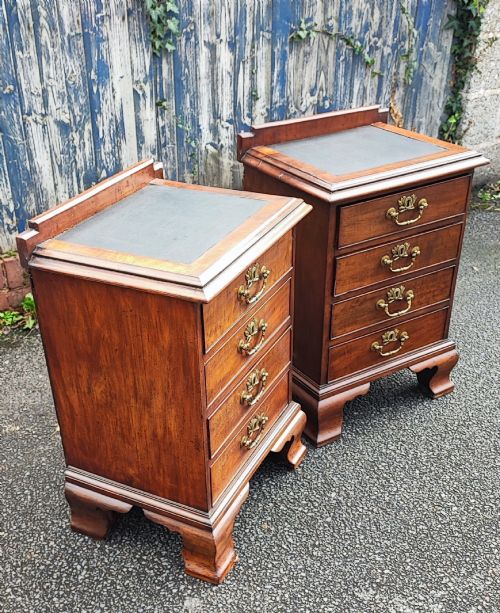
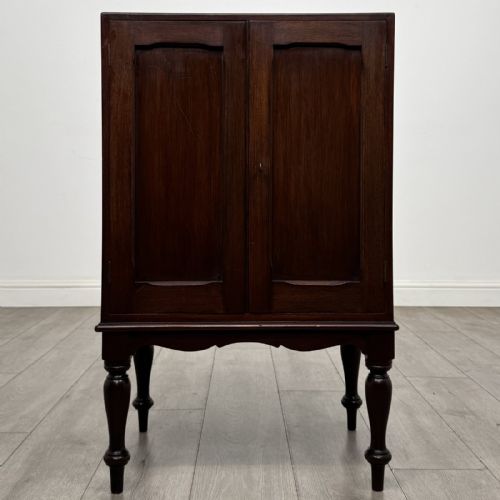
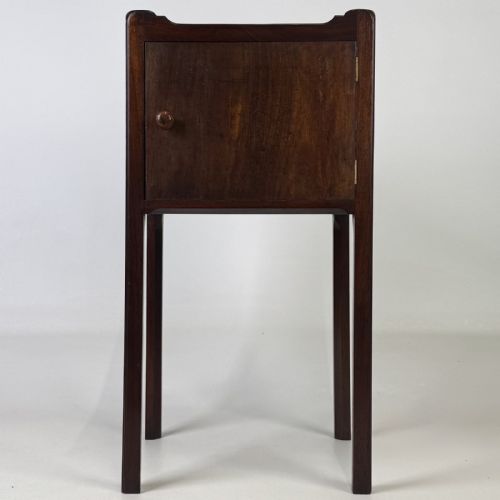
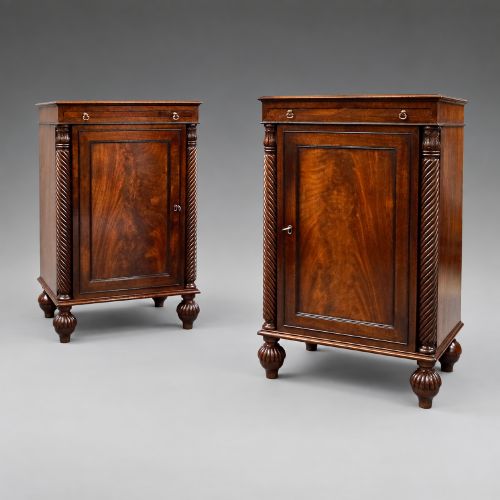
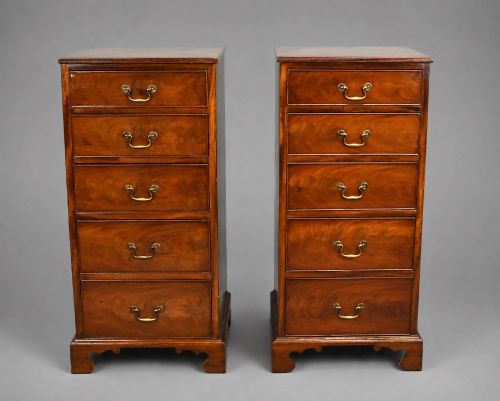
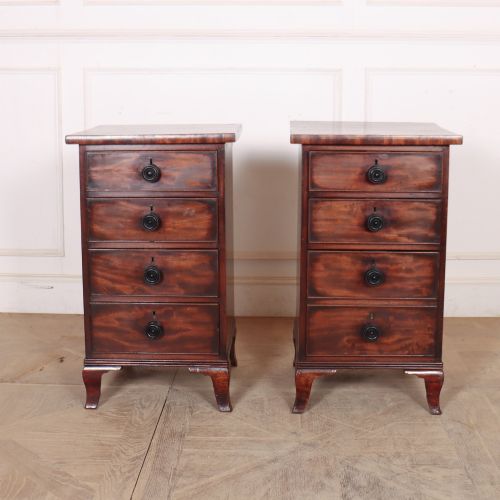
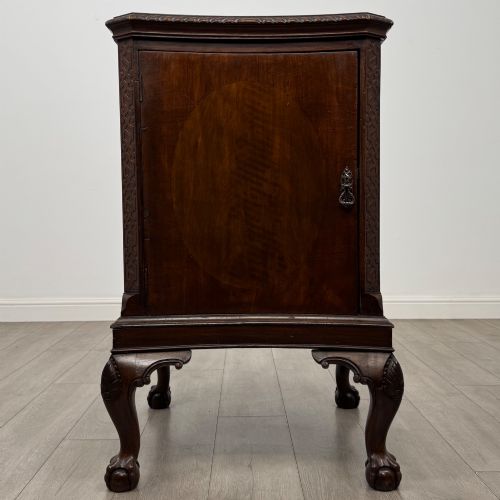
A georgian style bedside cabinet encompasses pieces designed to sit beside a bed, taking the form of cupboards, small chests of drawers, and tray-top tables. The selection ranges from authentic 18th-century originals and 19th-century interpretations to 20th-century revival pieces made across the Edwardian era and the 1920s and 1930s.
Buyers will encounter many pairs alongside single items, often constructed to echo the graceful proportions of Sheraton, Chippendale, and Queen Anne designs. Forms vary from simple pedestal cupboards to compact chests and occasional tables fitted with doors or drawers.
How they were made
Cabinetmakers constructed these pieces primarily using solid timbers and veneers of mahogany and walnut, frequently accented with lighter satinwood, boxwood, and delicate inlaid detailing. Certain examples incorporate hand-painted decoration or shaped tray tops to enrich the timber surfaces.
Traditional joinery underpins the construction of these cabinets, utilising tightly fitted drawers and hinged doors that house internal storage space. Brass hardware, including handles and pulls, often complements the rich grain of the wood.
Georgian Style Bedside Cabinet Retail Price Guide 2026
Typical asking prices for georgian style bedside cabinet among the pieces listed under this phrase on Sellingantiques today, from the lower quarter to the upper quarter. They describe what is for sale here now, not the wider market.
Mahogany and walnut dominate the material palette across these listings, appearing alongside decorative satinwood and inlaid boxwood details.
What varies in quality
Quality rests upon the selection of timber figures, such as burr walnut or well-grained mahogany, and the crispness of any inlay or carved detail. Superior examples display balanced proportions and refined execution across every surface, including the interiors and backs.
The integrity of the construction and the harmony of matched pairs also distinguish finer items from standard production. Cabinets that retain a rich, deep finish and precise cabinetwork command greater attention from collectors.
Holland and Sons·Edwards and Roberts
The Georgian Style Bedside Cabinet Glossary
- Sheraton Revival
- A late 19th and early 20th-century design movement that drew inspiration from the lighter, classical furniture forms of the late 18th century. It frequently employs satinwood, inlay, and tapered legs.
- Tray top
- A tabletop finished with a raised moulded edge or gallery designed to prevent items from rolling off. This feature appears often on compact bedside tables.
- Pedestal cabinet
- A tall, narrow freestanding cupboard designed to stand beside a bed or in a corner. These pieces usually open with a single panelled door to reveal interior shelving.
- Inlay
- A decorative technique where pieces of contrasting timber, such as boxwood or satinwood, are set into recesses flush with the main surface to create patterns.
- Chippendale Style
- A design classification rooted in mid-18th-century cabinetmaking characterised by substantial proportions, classical carving motifs, and robust use of mahogany.
Georgian Style Bedside Cabinet: Frequently Asked Questions
What is a georgian style bedside cabinet?
A georgian style bedside cabinet is a small piece of bedroom furniture designed to hold night-time essentials, drawing its aesthetic from 18th-century classical design.
These pieces often take the form of small cupboards, pedestal units, or miniature chests of drawers constructed from timbers like mahogany and walnut.
How were these cabinets used historically?
Historically, bedside cabinets provided private storage for chamber pots, books, and personal items before modern plumbing and fitted bedroom furniture became standard.
Over time, their function evolved into general bedside storage for lamps, clocks, and reading materials.
Are matched pairs common for these cabinets?
Matched pairs frequently appear in the listings, particularly among Edwardian and 1930s revival pieces intended to flank a double bed symmetrically.
Finding a true pair of antique cabinets in matching timber and condition is typical for pieces produced during the early 20th century.
How do I distinguish revival pieces from older ones?
Distinguishing the period relies on examining the interior construction, timber secondary woods, and the character of the finish rather than just the exterior style.
Revival pieces from the Edwardian era and the 1930s often show 20th-century manufacturing traits while faithfully copying earlier Georgian forms.