



Queen Anne Bedside Table
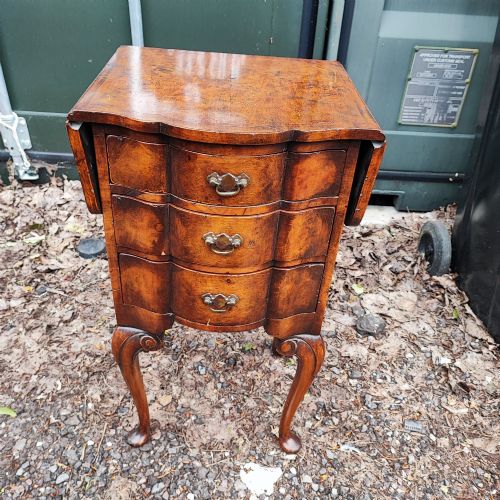
A queen anne bedside table brings understated elegance to the bedroom, combining classic proportions with rich timber grain.
Queen Anne Bedside Table
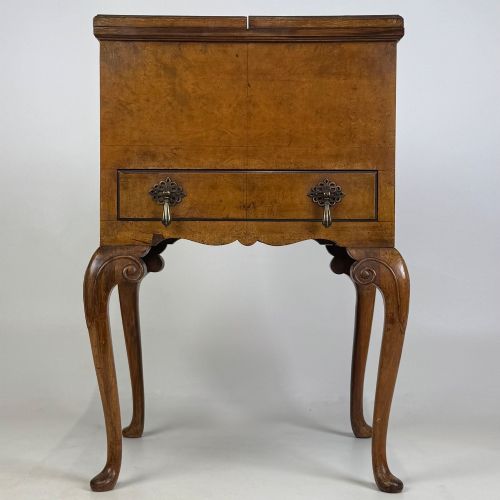
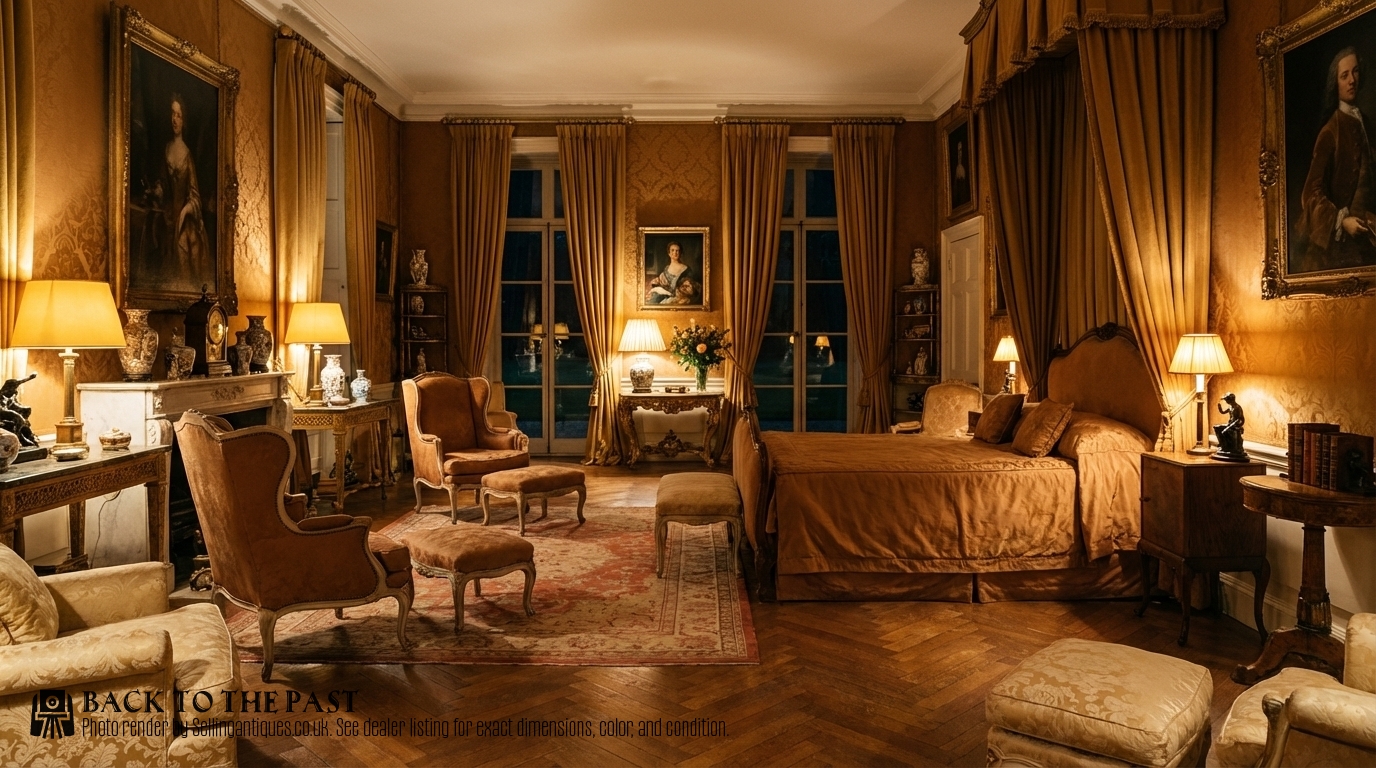
When you search for a queen anne bedside table, you encounter compact cabinets, small chests of drawers, and lamp tables created primarily during the early twentieth century and the Edwardian era. These pieces draw heavily on eighteenth-century design principles, often adopting the characteristic cabriole leg and graceful silhouette associated with the style.
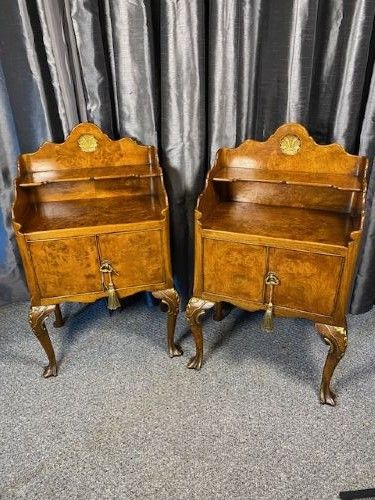
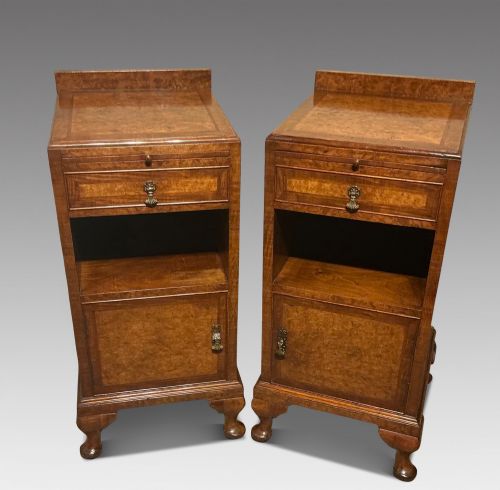
The version you are most likely to meet on this page is a revival piece from the 1920s or 1930s, constructed to serve modern bedside needs while retaining traditional aesthetic charm. Walnut and burr walnut dominate these listings, appearing frequently as matching pairs designed to flank a bed.
Materials and construction methods
Cabinetmakers utilised solid woods such as oak and mahogany alongside decorative veneers, particularly burr walnut, to achieve striking figured surfaces on top panels and drawer fronts. Skilled application of lacquer also appears on select decorative examples.
Joinery techniques focus on creating sturdy, compact frames suited to daily bedroom use, incorporating dovetailed drawers and fitted cupboards supported by shaped legs.
Queen Anne Bedside Table Retail Price Guide 2026
Typical asking prices for queen anne bedside table among the pieces listed under this phrase on Sellingantiques today, from the lower quarter to the upper quarter. They describe what is for sale here now, not the wider market.
Factors that distinguish quality pieces
The distinction between standard production and superior craftsmanship lies in the selection and matching of wood veneers, where symmetrical grain patterns elevate the visual impact of the piece. Attention to detail in the carving of cabriole legs and the integration of quality brass hardware also separate finer examples from simpler utilitarian items.
Proportion and structural integrity define the overall standing of a cabinet, with superior items displaying balanced lines, tight joints, and well-executed secondary timbers within the drawer linings.
Maple & Co·Whytock & Reid
The Queen Anne Bedside Table Glossary
- Burr walnut
- A prized timber harvested from walnut tree growths, producing highly figured, swirling grain patterns. It is frequently utilised for decorative veneer on cabinet fronts and tabletops.
- Cabriole leg
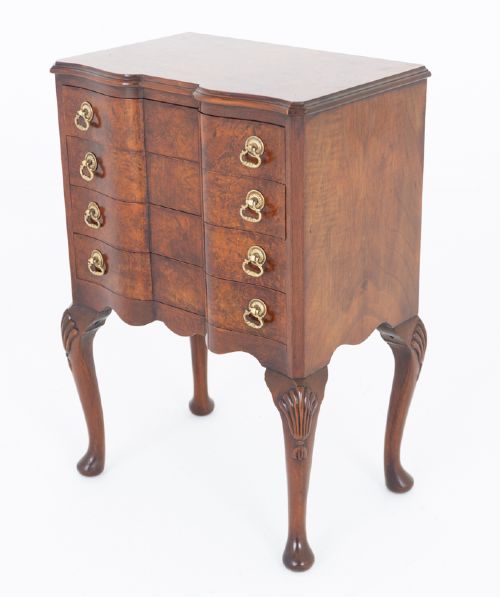
- A furniture leg that curves outward in an arc and tapers inward toward a pad or claw foot. This form originates from classical design and defines much of the revival work seen here.
- Chinoiserie
- European decorative style reflecting Chinese artistic traditions, typically executed through hand-painted lacquer techniques. Pieces featuring this finish provide a vibrant contrast to natural wood grains.
- Lowboy
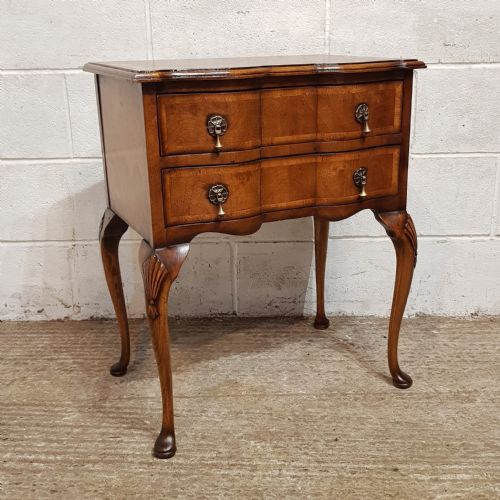
- A small side table with drawers, standing on relatively tall legs. These versatile items occasionally serve bedside functions in contemporary interiors.
Queen Anne Bedside Table: Frequently Asked Questions
Are these tables original eighteenth-century antiques?
Most pieces listed under this search phrase date from the Edwardian period through to the 1930s. They represent revivals of earlier designs rather than original period furniture from the reign of Queen Anne.
These twentieth-century interpretations offer practical dimensions and sturdy construction suited to modern bedrooms while maintaining traditional aesthetic appeal.
Do these bedside tables usually come in pairs?
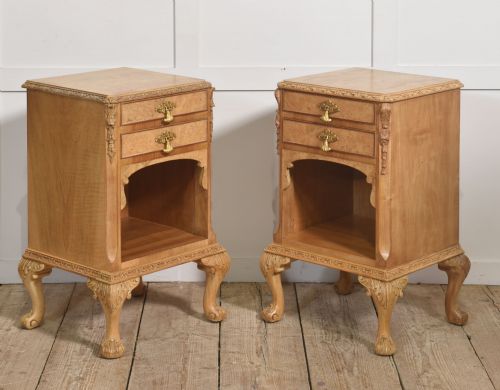
A significant portion of the available inventory consists of matched pairs intended to sit on either side of a double or king-size bed. Single tables also appear regularly for tighter spaces.
Pairs often originate from the same cabinetmaker or workshop, ensuring uniform height, timber selection, and leg profile.
What storage formats are available?
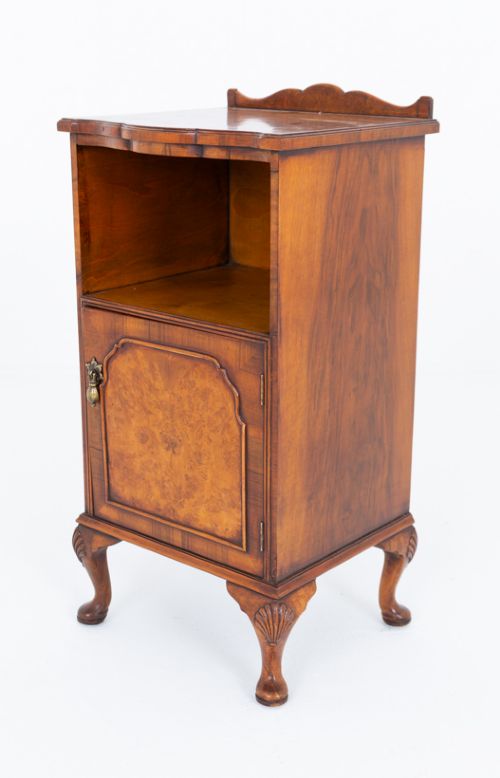
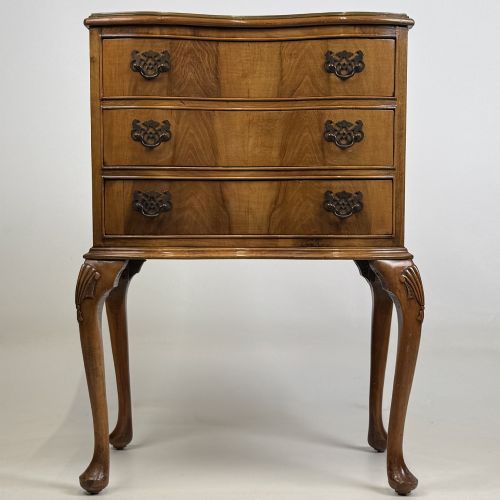
The listings encompass several practical configurations, including enclosed bedside cabinets with single doors, small chests of three or four drawers, and open lamp tables.
Selection depends on whether you prefer to conceal bedside items inside a cupboard or keep reading material accessible on open surfaces.
How do I care for burr walnut surfaces?
Burr walnut benefits from gentle dusting with a soft, dry cloth and occasional application of appropriate furniture wax to nourish the timber and protect the veneer. Avoiding direct sunlight and placement near heat sources prevents the wood from drying out.
Proper maintenance preserves the rich figuring and subtle sheen characteristic of these polished tops.