






Georgian Silver Drinking Vessel
A georgian silver drinking vessel brings solid weight and historical presence to the table, and collectors prize them for their everyday utility and tangible craftsmanship.
Georgian Silver Drinking Vessel
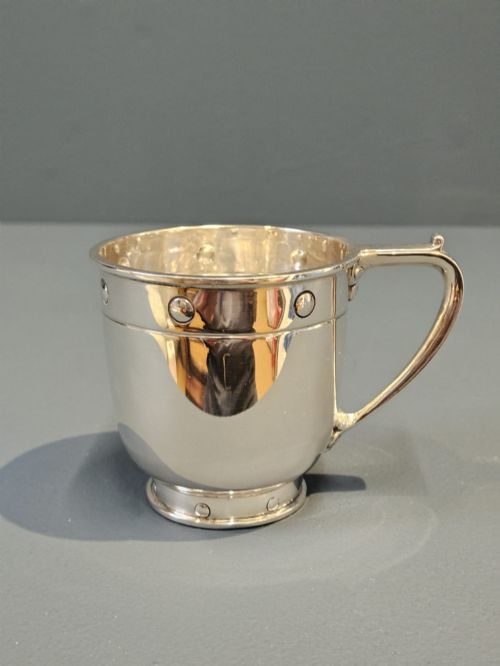
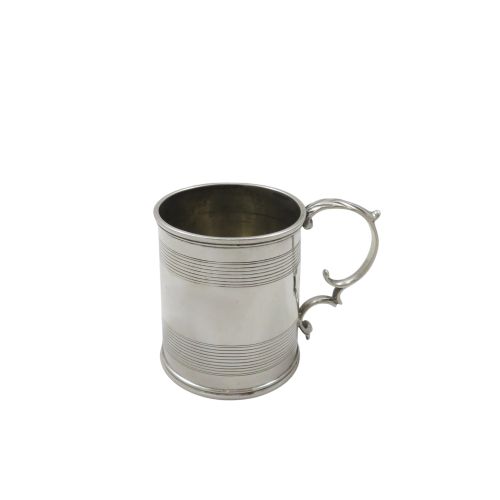
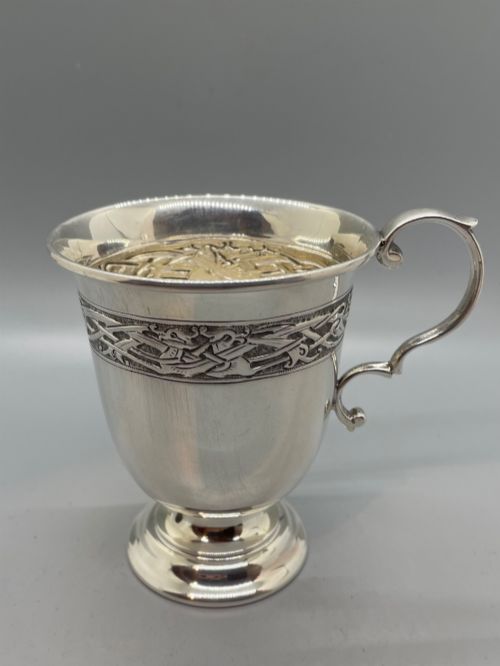
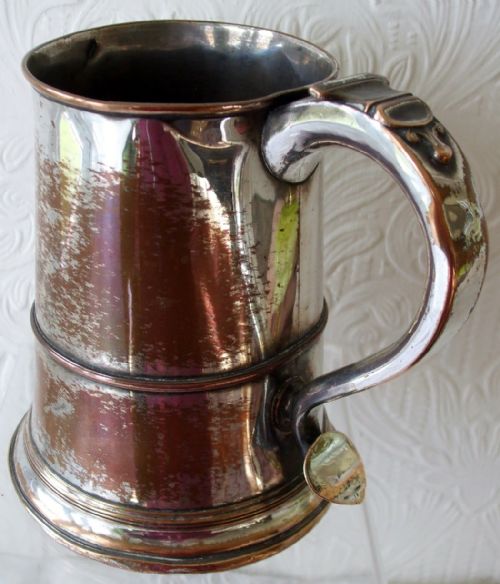
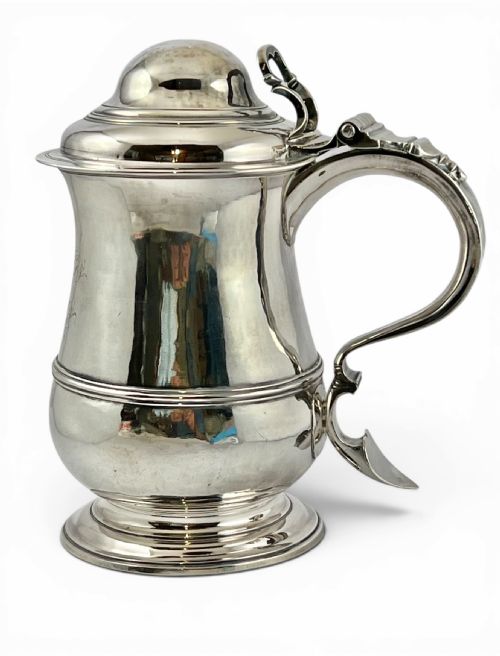
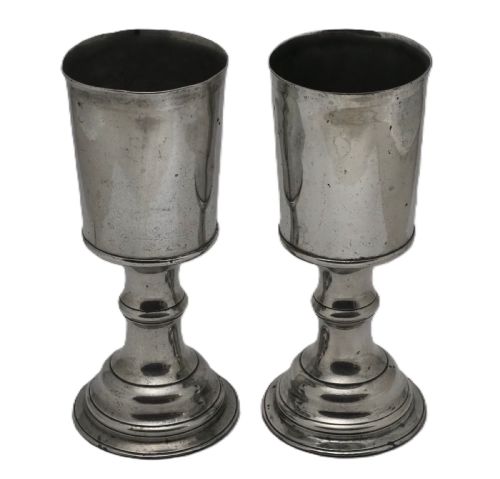
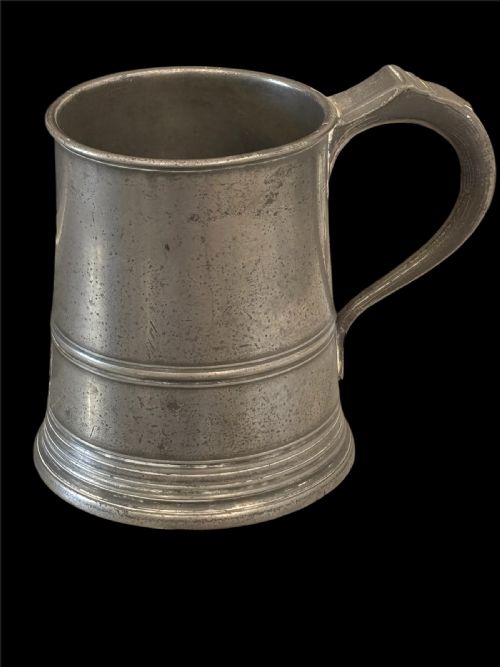
A georgian silver drinking vessel typically takes the form of a tankard, mug, or porringer, originating primarily across the eighteenth and nineteenth centuries. Buyers most frequently encounter sturdy sterling silver mugs and lidded tankards alongside Sheffield plate and pewter alternatives.
Makers produced these objects for both domestic ale consumption and formal household display, resulting in varied sizes from pint capacities down to smaller christening pieces. The inventory on this page spans from early eighteenth-century Britannia standard silver down to later twentieth-century interpretations in the Georgian style.
Materials and Technique
Silversmiths shaped these vessels using sterling silver, Britannia standard silver, and Old Sheffield plate, occasionally employing horn and copper for alternative drinking forms. Heavy hammering and soldering formed the main bodies, while applied handles and lidded mounts required precise metalworking skill.
Makers marked many of these pieces with town marks, maker's stamps, and date letters to verify silver purity and origin. The resulting construction yields a rigid, heavy-walled vessel designed to withstand frequent lifting and use.
One remarkably rustic piece repurposes natural horn into a drinking beaker, bringing a tactile touch of agricultural folk art straight to the table.
Judging Quality
Quality rests in the wall thickness, the crispness of applied handles, and the legibility of hallmarks stamped into the metal. Finer examples maintain an unblemished profile and a balanced weight in the hand.
The integrity of the construction distinguishes standard domestic items from superior workshop output. Original lids, clean solder joints, and minimal thinning from past polishing elevate a piece above heavily restored equivalents.
Barker Bros·John Payne
The Georgian Silver Drinking Vessel Glossary
- Tankard
- A tall, cylindrical drinking vessel with a single handle, frequently fitted with a hinged lid. These pieces formed a staple of tavern and household dining throughout the Georgian period.
- Britannia Standard
- A higher grade of silver purity introduced by English statute, containing 95.84 percent pure silver. Silversmiths used this softer metal during the early eighteenth century before reverting to sterling standard.
- Sheffield Plate
- A composite material formed by fusing a thin sheet of sterling silver onto a thicker copper base. Makers utilised this technique to produce accessible tableware with the visual appeal of solid silver.
- Porringer
- A small, deep bowl fitted with one or two flat handles used for porridges or warm liquids. Eighteenth-century examples in silver appear with pierced handles and rounded bodies.
- Hallmark
- An official stamp applied by an assay office to indicate the metal standard, the maker, and the year of production. These marks allow collectors to trace the exact geographic origin of a piece.
Georgian Silver Drinking Vessel: Frequently Asked Questions
How do I clean a silver tankard?
Wash the vessel in warm soapy water using a soft cloth, avoiding harsh abrasive dips that strip the patina. Dry the metal thoroughly immediately afterwards.
Store the piece in a dry environment away from direct sunlight to prevent rapid tarnishing. Regular handling helps maintain a natural, subdued shine.
Can I drink from an antique mug?
Solid silver and Britannia standard pieces are generally safe for beverages provided the interior remains clean and free of heavy corrosion. Old Sheffield plate items require caution if the underlying copper base is exposed.
Pewter vessels from the eighteenth century may contain lead content depending on the alloy used, so buyers should verify the composition before actual use.
What is a christening mug?
A christening mug is a small handled vessel traditionally presented as a gift to commemorate the baptism of a child. These pieces often feature engraved initials or decorative floral motifs.
Makers scaled these down from standard drinking mugs while retaining the solid construction of larger tankards.
How do I date a silver vessel?
Inspect the body for stamped hallmarks, which typically include a date letter corresponding to a specific assay office year cycle. Maker marks and town symbols provide additional chronological context.
Stylistic details such as handle shape, body curvature, and lid design further indicate whether a piece belongs to the early or late eighteenth century.