
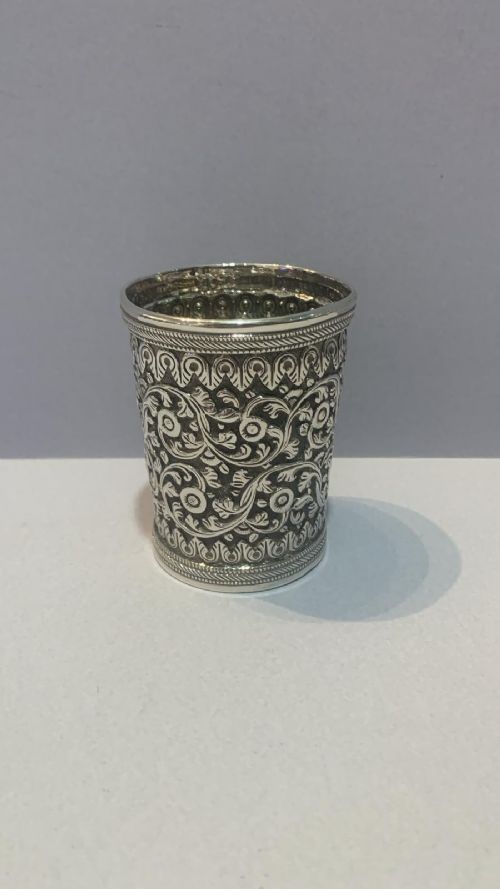


Antique Silver Tumbler
An antique silver tumbler is a heavy-based drinking vessel designed to right itself when tipped, and the examples gathered here range from Georgian folk art to Victorian novelties.
Antique Silver Tumbler
An antique silver tumbler takes the form of a small, round-bottomed drinking vessel designed without a flat base so that it rocks or returns upright when disturbed. This page offers diverse interpretations of the form, spanning the seventeenth century through to the Edwardian turn of the century.
The selection includes beakers, spirit beakers, and novelty cups rather than standard drinking vessels with flat feet. Buyers encounter forms such as German barware, Chinese export pieces, and English Victorian novelties.
Origins stretch from continental Europe to Asia and Britain, encompassing styles like Dutch Baroque, Anglo-Indian, and Georgian folk art. The primary focus remains on solid metal drinking vessels used historically for spirits and wine.
How they were made
Makers shaped these vessels primarily from solid silver, sterling silver, and lower-purity grades such as 800 silver, alongside silver plate and early metalware like pewter. Artisans occasionally combined these metals with stoneware, leather, and horn to construct durable drinking vessels.
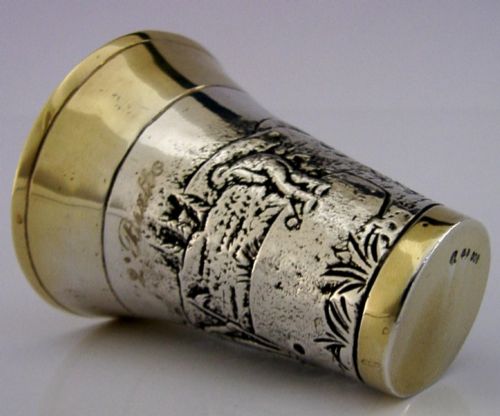
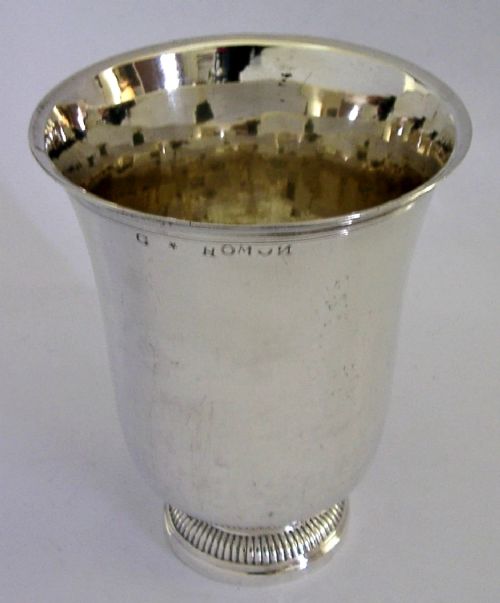
Techniques relied upon by silversmiths involved heavy hammering and raising to achieve the characteristic weighted, rounded base that allowed the vessel to function properly. Details such as parcel-gilt interiors, engraved crests, and cast applied decoration completed the construction.
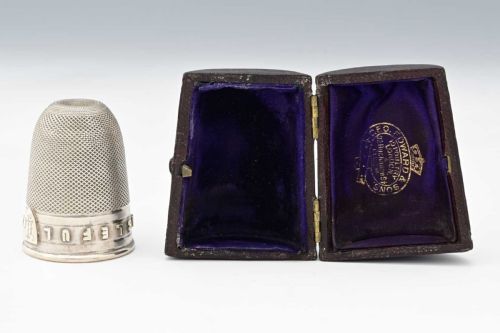
One Victorian novelty tumbler takes the exact form of a sewing thimble, complete with the inscription "just a thimbleful".
What varies in quality
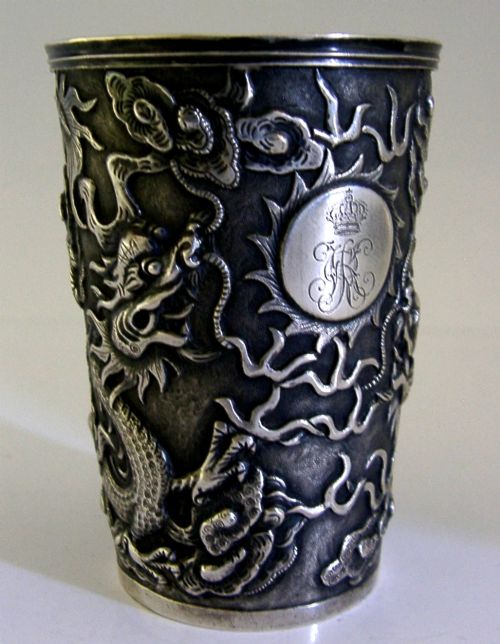
Quality rests upon the weight of the metal and the crispness of any hand-engraved crests, cyphers, or dragon motifs. Thinner walls and worn hallmarks separate standard commercial production from superior pieces.
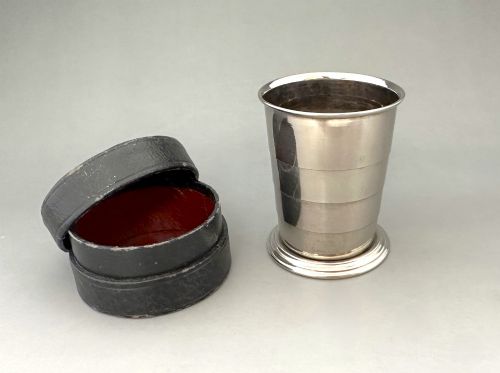
The integrity of the weighted base and the skill shown in hammering the heavy metal define the upper end of the range. Novelty execution, such as thimble-shaped vessels or collapsible mechanisms, demonstrates distinct levels of artisan ingenuity.
W Hutton
The Antique Silver Tumbler Glossary
- Parcel-Gilt
- A term describing an object where parts of the surface are gilded with gold while other parts remain bare silver. This technique highlights engraved details and interiors.
- Sterling Silver
- An alloy of silver containing ninety-two point five percent by mass of silver and seven point five percent of other metals. It forms the standard material for fine British and international silver.
- Stoneware
- A robust type of pottery fired at high temperatures until vitrified and impermeable. These pieces often feature silver mounts around the rim.
- Barware
- Equipment and utensils used in the mixing and serving of alcoholic drinks. Antique examples include spirit beakers and heavy drinking cups.
- Collapsible
- Capable of being folded down into a compact size for travel. Such designs appear in utilitarian stirrup cups made for riders.
Antique Silver Tumbler: Frequently Asked Questions
What is an antique silver tumbler?
An antique silver tumbler is a small drinking vessel characterised by a rounded or heavy base that ensures the cup rights itself if knocked over.
Historically used for consuming spirits and wine at the table or while travelling, these vessels dispense with standard flat feet in favour of kinetic stability.
How were these cups used?
These vessels served primarily as personal drinking cups for wine, ale, and spirits during meals or social gatherings.
Some variants, such as collapsible stirrup cups, were specifically designed for riders on horseback to use during outdoor pursuits.
How do I date a silver tumbler?
Dating relies heavily upon the presence of official hallmarks, maker marks, and engraved stylistic clues.
Examining the manufacturing technique, whether early hand-raised continental work or later Victorian novelty production, helps narrow the period of origin.
What materials besides silver appear?
While solid silver and sterling silver dominate the category, makers also utilised silver plate, 800 silver, and early metalware like pewter.
Composite pieces incorporate organic materials such as horn and leather, or ceramic bodies like Doulton Lambeth stoneware fitted with silver mounts.