
Antique Leather Travel Case
When you handle an antique leather travel case, you hold a tangible piece of personal history built for the journeys of past centuries.
Antique Leather Travel Case
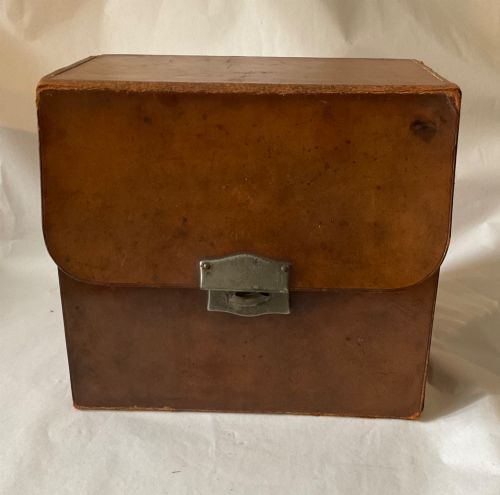
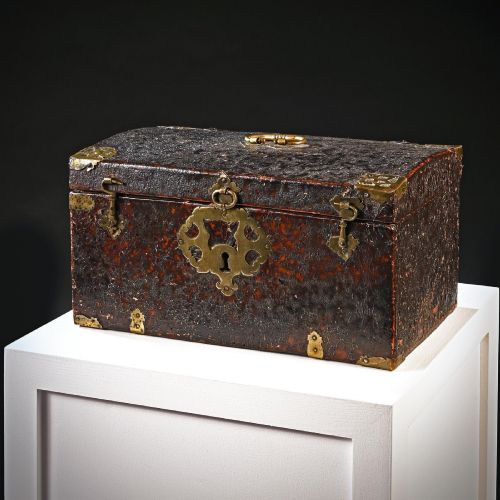
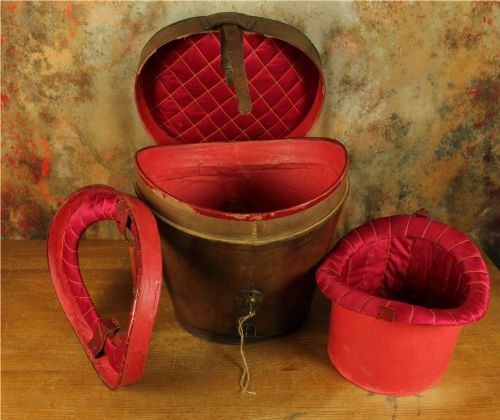
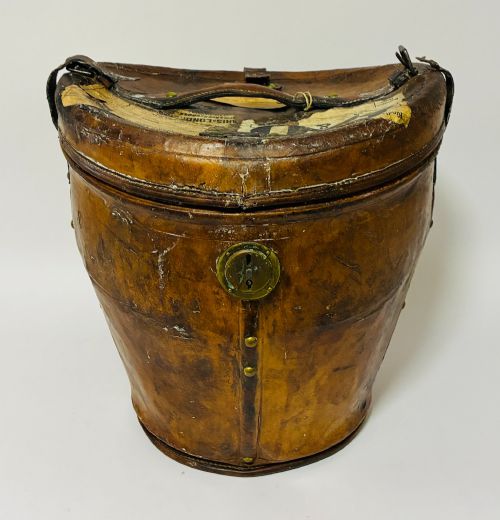
An antique leather travel case encompasses a wide variety of personal baggage, ranging from robust steamer trunks and officer's luggage to compact vanity boxes and hat boxes. These utilitarian objects served travellers across the Victorian, Edwardian, and early twentieth-century periods, protecting belongings during long journeys by rail, ship, and carriage.
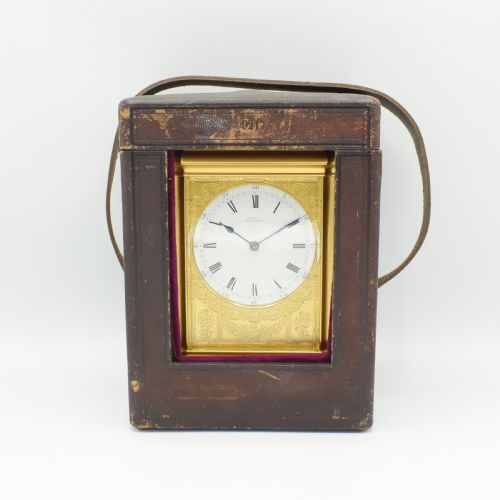
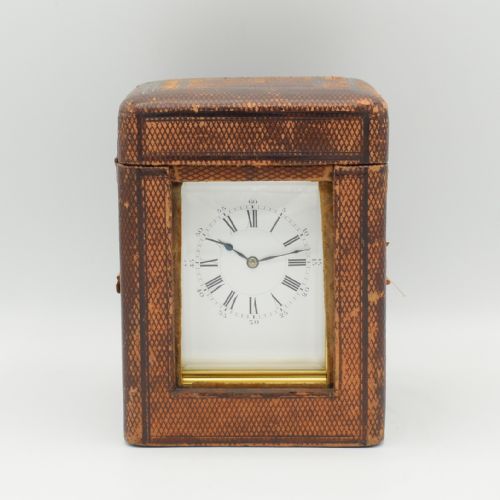
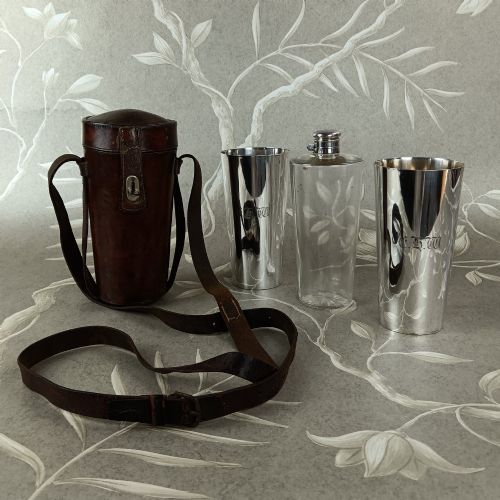
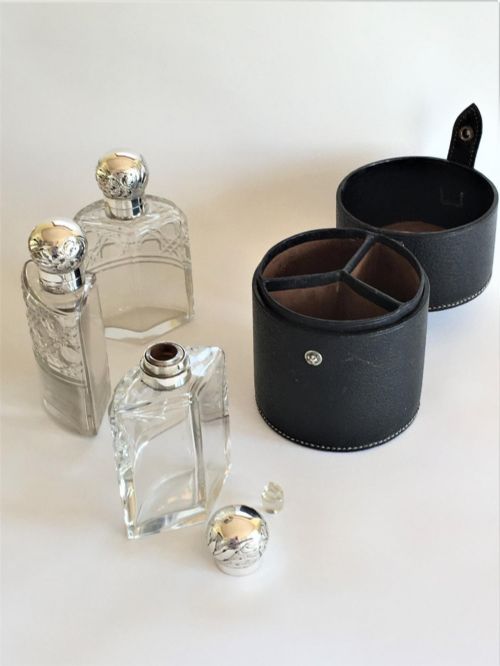
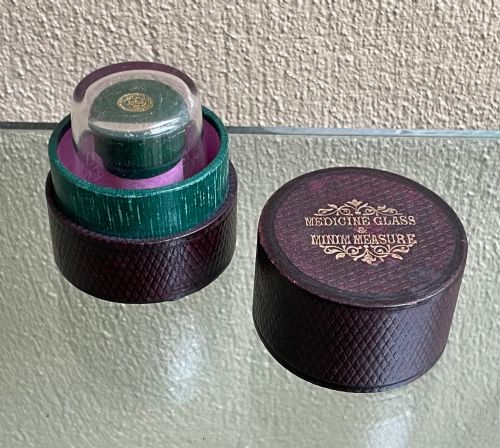
The most common examples on this page are Edwardian suitcases and Victorian gentleman's cases, frequently fashioned from hide and reinforced for transit. Buyers also encounter specialised fitted cases, including spirit sets, apothecary boxes, and carriage clock travel envelopes, which illustrate the specific demands of historical movement.
Materials and Technique
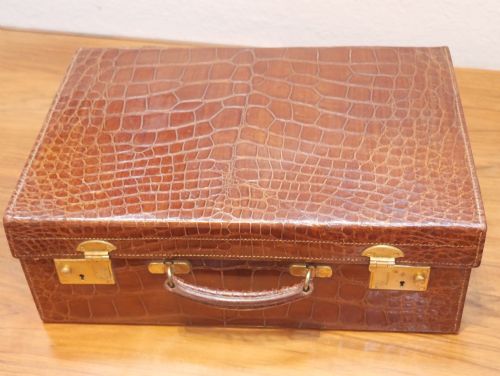
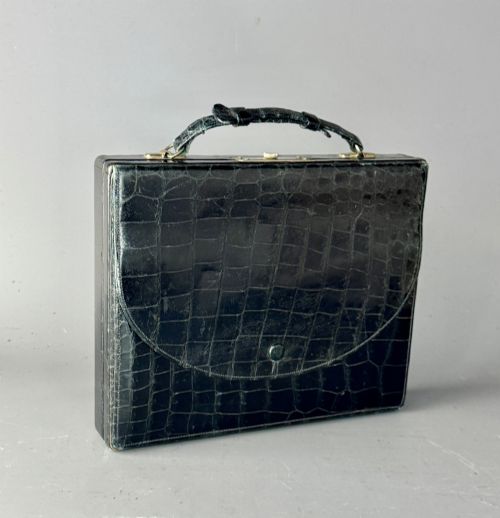
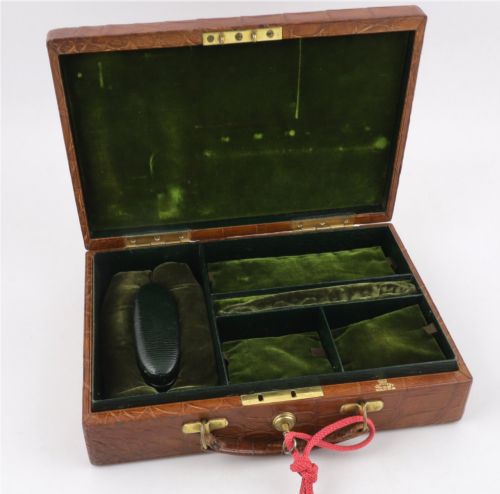
Maker's workshops built these pieces using thick cattle hide, pigskin, or exotic reptile skins such as crocodile and alligator, stretched and stitched over rigid wooden or canvas carcases. Brass hardware, including corner brackets, secure locks, and robust hinges, provided structural reinforcement and durability for heavy transit.
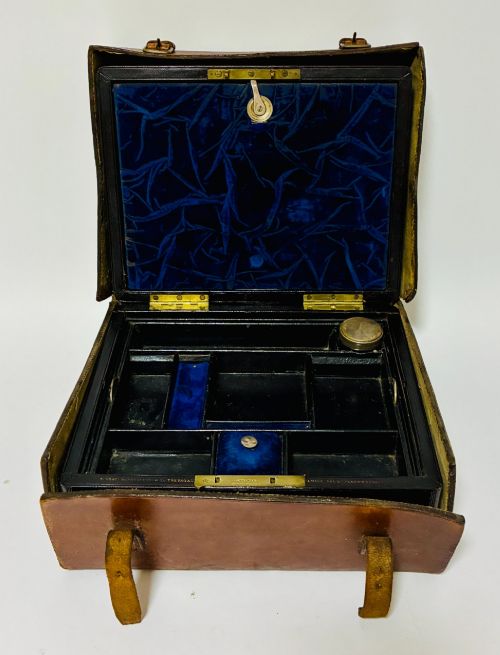
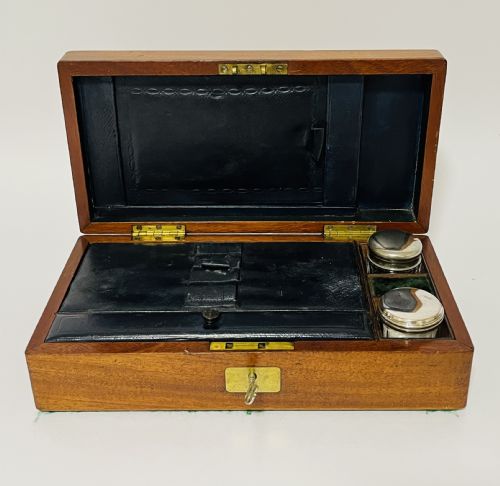
Interiors frequently received lavish treatment, lined with velvet, silk, or watered paper, and fitted with compartments for silver-plated bottles, glass flasks, and grooming instruments. Hand-stitched seams and heavy-duty riveting demonstrate the traditional saddle-maker techniques employed to ensure longevity under arduous travel conditions.
Listings feature leather travel cases spanning the Victorian, Edwardian, and Art Deco periods, incorporating brass, glass, and silver plate.
The Measure of Quality
Quality in these pieces depends heavily on the integrity of the original construction, the thickness of the hide, and the completeness of internal fittings. Superior examples retain their original maker's stamps, working locks with keys, and matching internal glass or silver components rather than replacement parts.
Henri Jacot·Dunhill London·J C Vickery·James Dixon & Sons·Lincoln Bennett·Harrods of London·Drew & Sons·JW Allen
The Antique Leather Travel Case Glossary
- Campaign case
- A portable chest or trunk designed for military officers and travellers, featuring recessed brass handles and reinforced corners for rugged transit. These items were built to withstand the rigours of colonial service and expedition life.
- Vanity case
- A compact box or suitcase fitted internally with mirrors, jars, and receptacles for cosmetics and grooming utensils. Such pieces reflect the personal grooming habits of affluent Edwardian and Victorian travellers.
- Steamer trunk
- A low-profile luggage trunk designed specifically to fit beneath a ship's cabin berth or within tight railway storage spaces. They offer substantial storage while maintaining a manageable height for ocean voyages.
- Vellum
- A fine parchment material derived from calfskin, occasionally used to cover luxury luggage trunks for a pale, smooth finish. It requires careful preservation due to its sensitivity to moisture.
- Spirit set
- A fitted travelling box containing glass decanters and drinking vessels, secured safely within a leather-covered or wooden frame. These sets allowed gentlemen to enjoy refreshments while on the move.
Antique Leather Travel Case: Frequently Asked Questions
What is an antique leather travel case?
These items are historical pieces of luggage and fitted boxes constructed from animal hide and reinforced with metal or wood. They were designed to protect clothing, grooming items, and valuables during transit in the Victorian and Edwardian eras.
Today, they serve as decorative storage items or display pieces that bring historical character into modern interiors while maintaining their original utility.
How were leather trunks used?
Travellers utilised these sturdy receptacles for packing garments, hats, and personal provisions during extended journeys by steamship, train, and carriage. Fitted variants held specific items like perfume bottles, writing materials, or decanters for on-the-road convenience.
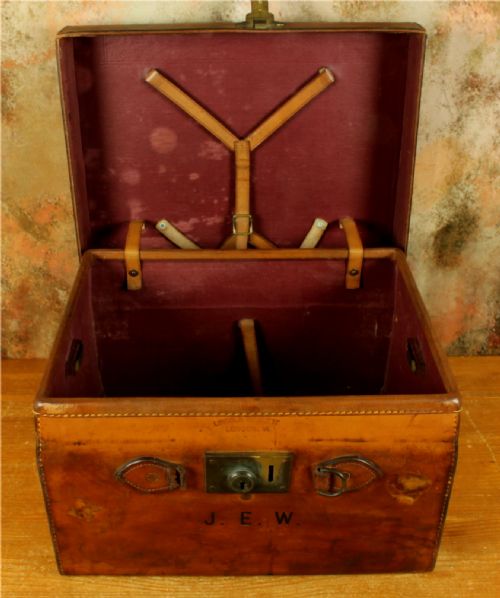
Owners often marked them with monograms or decorated them with travel labels, documenting their journeys across different countries and transport networks.
How do I care for leather travel cases?
Preserving these items involves keeping them away from direct sunlight and damp environments to prevent the hide from drying out or developing mould. Gentle cleaning with appropriate leather balms helps maintain the suppleness of the material without altering historical patina.
Internal linings of velvet or silk benefit from careful dusting with soft brushes to protect delicate fabrics from deterioration over time.
How can I tell the period?
Dating relies on examining the construction methods, hardware styles, and internal materials used within the piece. Victorian examples often feature heavy mahogany frames, brass corner braces, and hand-stitched leather, while later Edwardian and Art Deco pieces introduce alternative fastenings and streamlined forms.
Maker's marks, stamps, and patent dates found on locks or interior linings provide definitive clues to the exact era of manufacture.