

Georgian Sideboard Table
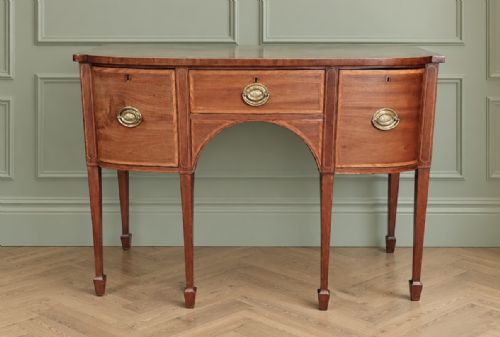
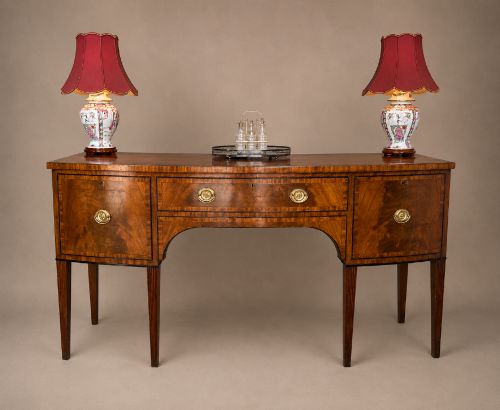
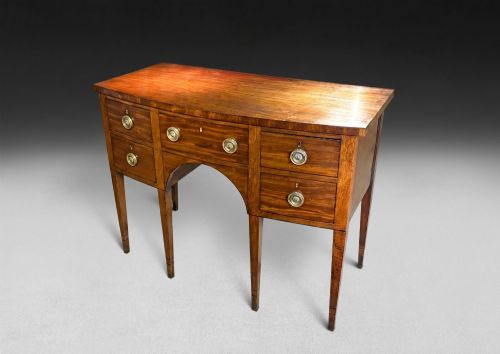
A georgian sideboard table anchors a dining room or hallway with solid timber presence and understated utility.
Georgian Sideboard Table
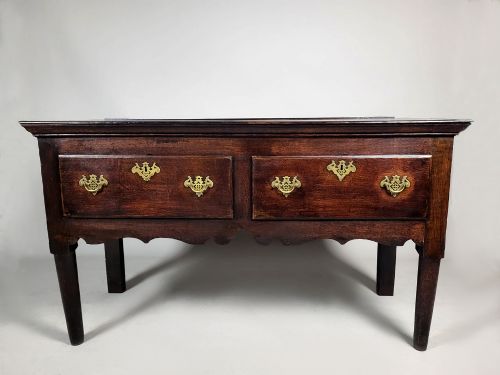
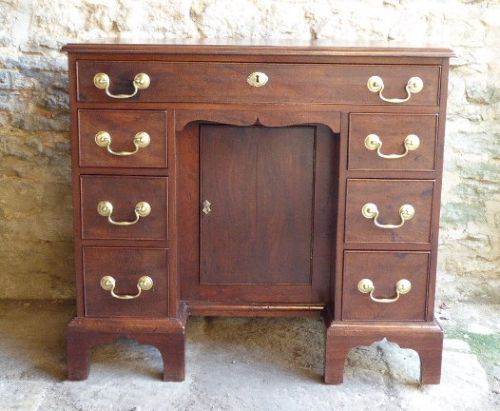
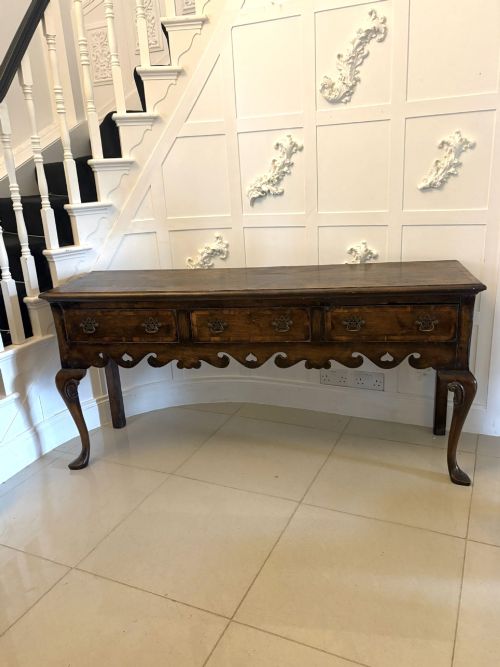
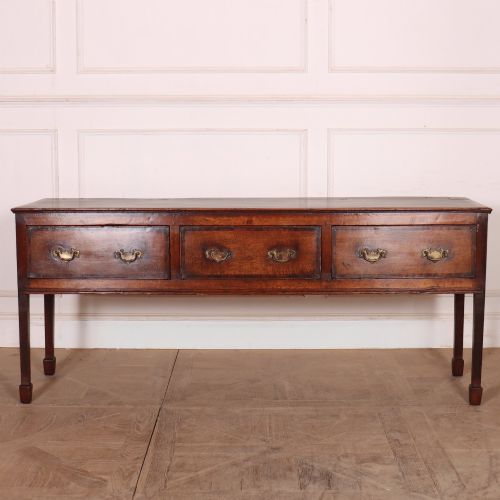
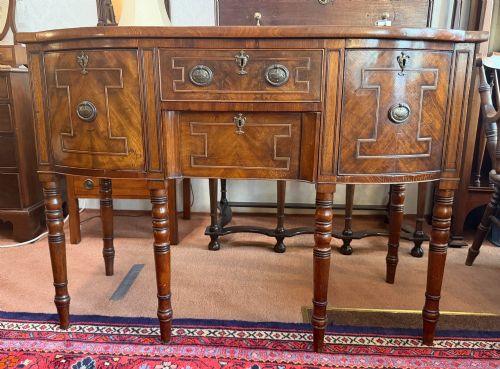
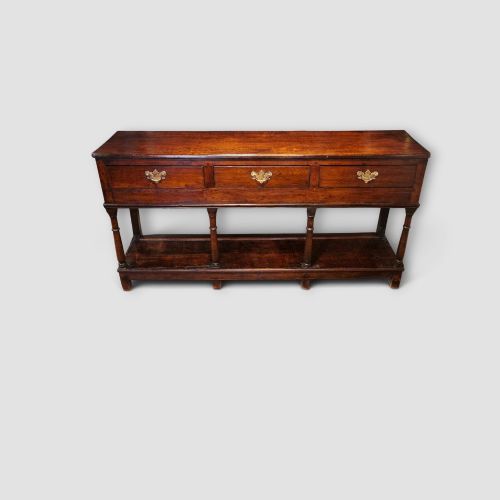
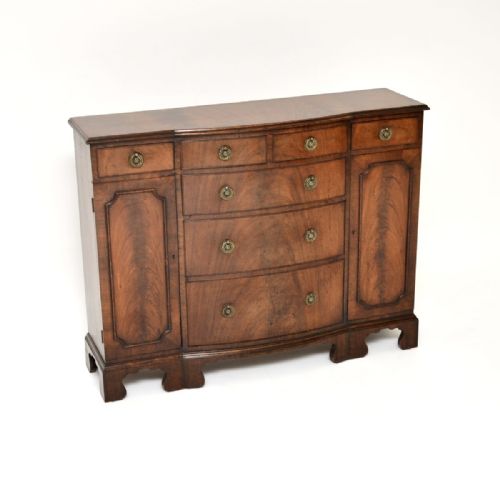
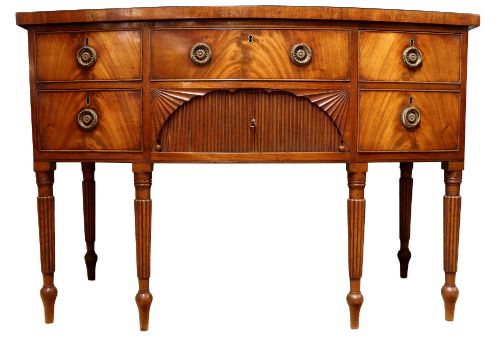
A search for a georgian sideboard table encounters substantial timber serving furniture built primarily during the eighteenth and nineteenth centuries. The selection spans robust oak country pieces alongside refined mahogany dining room servers.
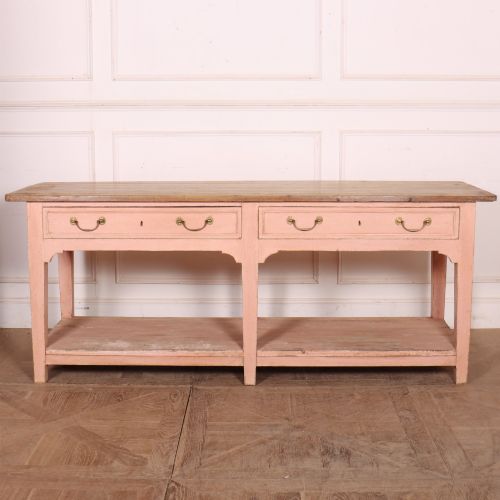
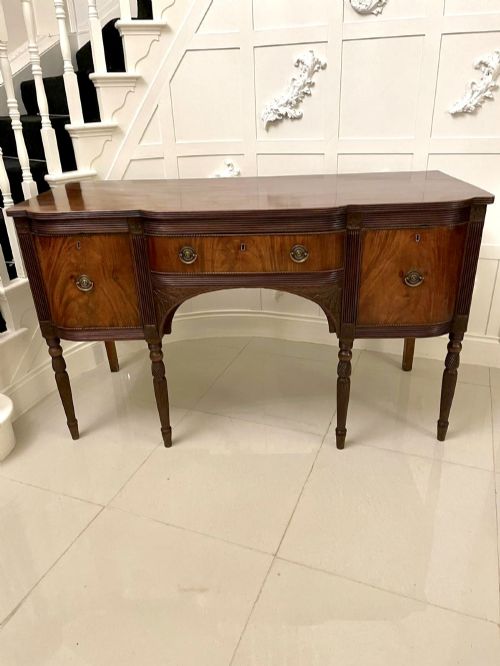
Most entries divide between plain oak dresser bases featuring lower potboards and formal mahogany designs shaped with bow fronts or breakfront profiles. Regional variations appear regularly, including Welsh and Lancashire formats alongside English country workshop iterations.
Materials and Construction
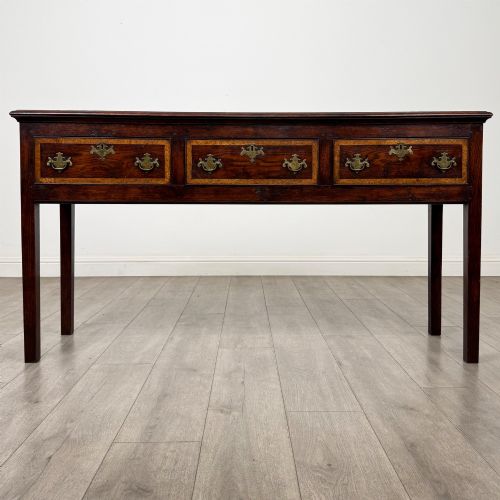
Constructed predominantly from native oak and imported mahogany, these pieces utilise traditional joinery suited to heavy daily domestic use. Cabinetmakers employed solid timber for primary structures, occasionally introducing flame mahogany veneers and contrasting satinwood or boxwood inlay to formal surfaces.
Secondary timbers such as pine frequently appear in drawer linings and backboards, while brass hardware secures handles and escutcheons. Surfaces were traditionally finished with wax or polish to highlight the natural grain without heavy synthetic lacquers.
Period styles represented across the inventory span from Queen Anne and George III through to Edwardian revival interpretations.
Factors of Quality
Quality rests upon the selection of timber figure, the crispness of cabinet joints, and the retention of original brass hardware. Pieces featuring well-figured flame mahogany veneer or intricate satinwood stringing demonstrate higher workshop ambition.
Proportion and structural integrity dictate distinction, where undisturbed original timber surfaces outrank later alterations or heavy surface stripping. The subtlety of carved details, such as bracket feet or cockbeaded drawer edges, separates standard utility items from fine dining room furniture.
George Oakley
The Georgian Sideboard Table Glossary
- Potboard
- An open lower shelf fitted between the legs of a dresser base, traditionally used for storing ceramics and heavy kitchen utensils. This practical platform distinguishes country oak furniture from formal urban serving tables.
- Breakfront
- A cabinet front where the central section projects forward from the flanking outer wings. This architectural arrangement creates depth and shadow across the timber surface.
- Bow front
- A convex curved cabinet front that swells outward in a smooth arc. This shape softens the room presence of large mahogany dining pieces.
- Serpentine
- A front contour characterised by a central convex curve flanked by two concave sweeps. This flowing line requires skilled carpentry to execute cleanly.
- Cockbeading
- A narrow projecting rounded moulding fitted around the edges of drawer openings. It protects the drawer edges from impact while framing the facade.
Georgian Sideboard Table: Frequently Asked Questions
How do I tell oak from mahogany pieces?
Oak pieces generally exhibit visible medullary rays and a coarse, golden-brown grain typical of early country furniture. They suit rustic and traditional interiors.
Mahogany items display a denser, reddish-brown grain that takes a high polish. They reflect formal urban dining room aesthetics of the later eighteenth century.
Where should I place a serving table?
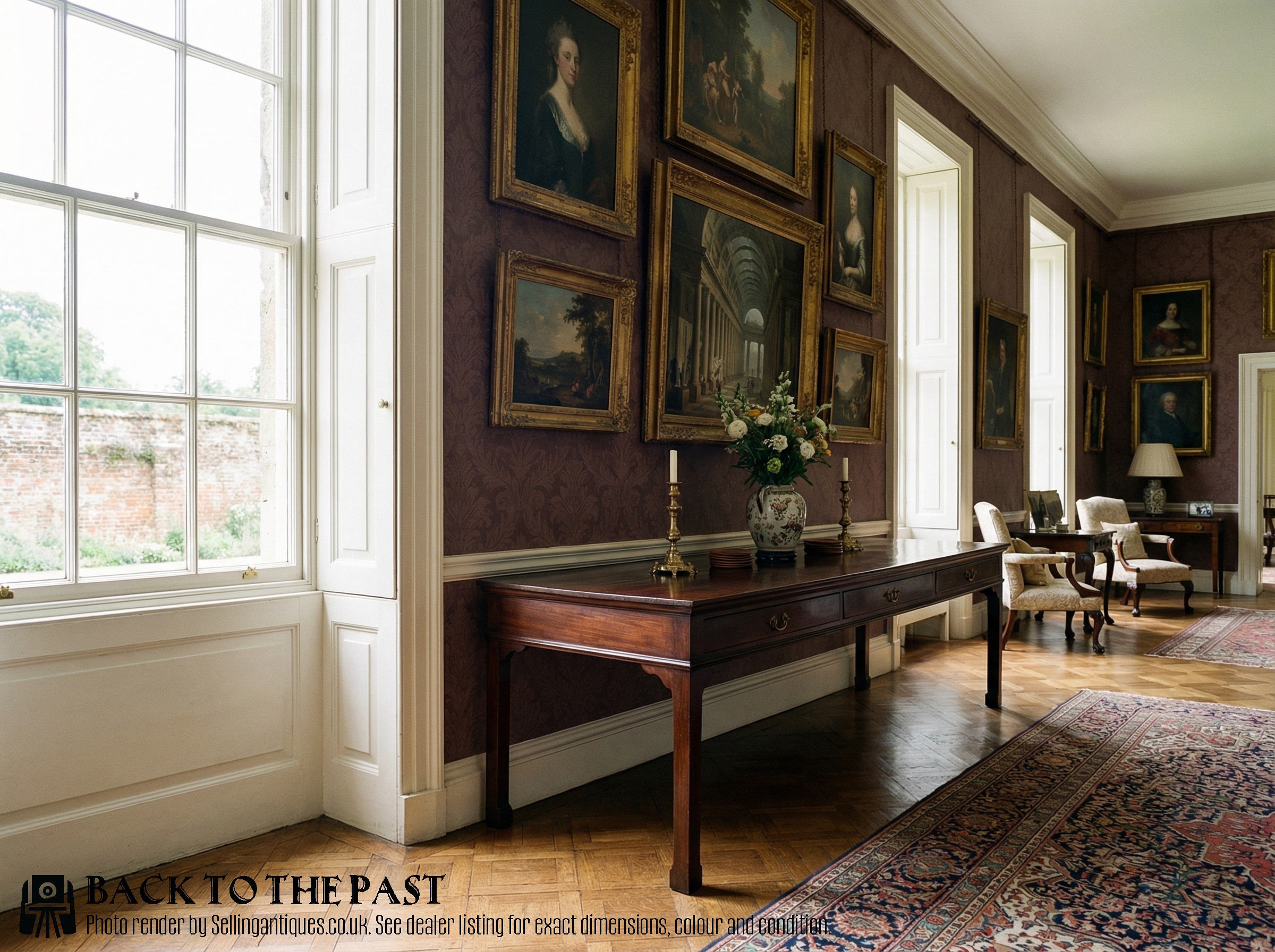
These tables fit naturally against dining room walls to hold dishes and cutlery during meals. They also function well in wide hallways as console tables.
The shallow depth of bow front and straight sideboard formats prevents them from obstructing walkways.
How do I care for antique timber surfaces?
Maintain the finish by applying natural beeswax sparingly and buffing with a soft cloth. Avoid placing timber furniture near direct heat sources or strong sunlight.
Regular polishing protects the wood from drying out while preserving the historic patina accumulated over centuries.