




Georgian Revival Sofa
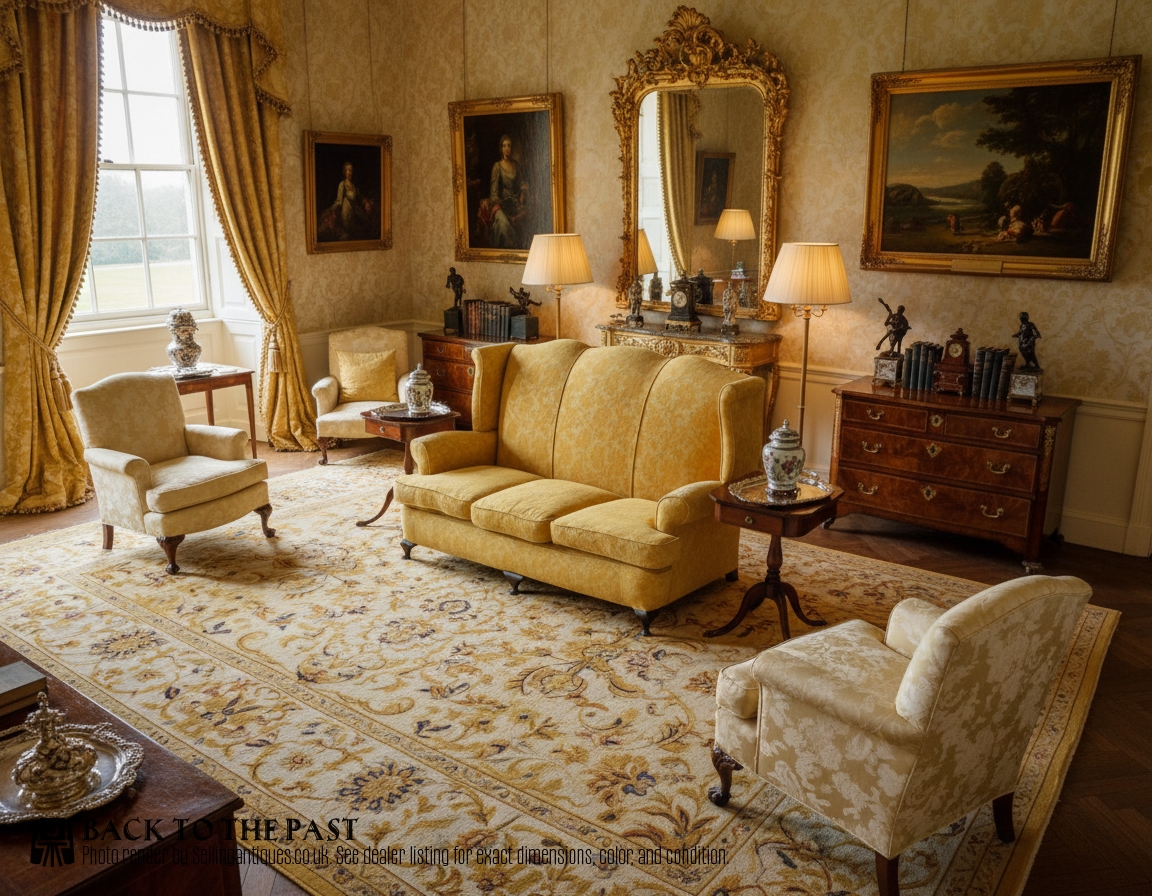
A georgian revival sofa brings heavy period gravitas into a modern room without the fragility of genuine eighteenth-century frames.
Georgian Revival Sofa
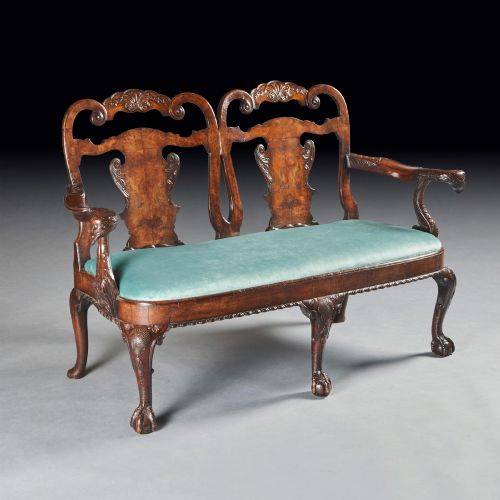
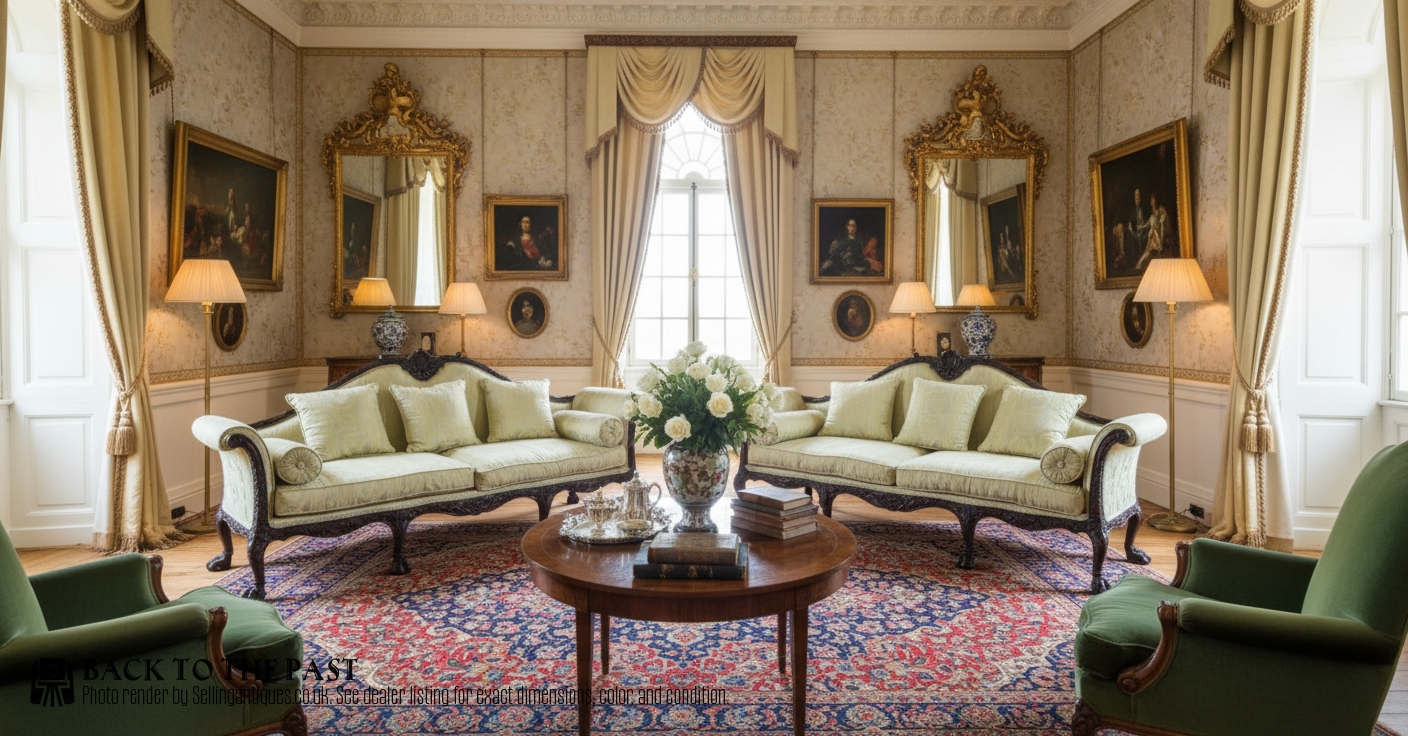
When you search for a georgian revival sofa, you find seating that echoes the substantial forms of the eighteenth century, built during the Victorian, Edwardian, and later periods. The pieces appearing most often on this page take the shape of twin chair back settees or camelback designs rooted in George II and Chippendale styles.
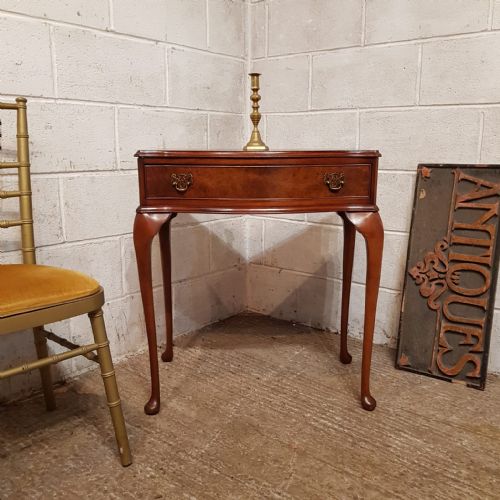
Makers working from the late nineteenth century into the 1930s drew heavily on older chair designs, adapting them into robust settees and sofas. Alongside these main seating pieces, related occasional tables and console tables in mahogany and walnut frequently appear under the same stylistic banner.
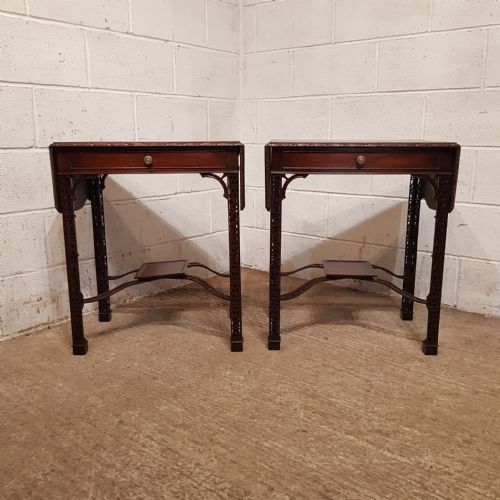
The aesthetic looks back to distinct historical revivals, including Chinese Chippendale and George III Egyptian Revival motifs. Walnut and mahogany predominate, often enhanced with satinwood inlay or brass details.
How they were made
Frames rely principally on dense timbers like mahogany and walnut, occasionally utilising burr walnut or satinwood veneers for decorative surfaces. Craftspeople shaped these woods using traditional joinery methods suited to heavy seating loads.
Upholstery techniques combined sturdy internal webbing with fabric coverings such as velvet, damask, or standard woven textiles. Carved details on arms and legs demonstrate period woodworking skills adapted for revival production.
Georgian Revival Sofa Retail Price Guide 2026
Typical asking prices for georgian revival sofa among the pieces listed under this phrase on Sellingantiques today, from the lower quarter to the upper quarter. They describe what is for sale here now, not the wider market.
What varies in quality
The depth and crispness of the timber carving separate standard production from finer examples. Sharp lines on cabriole legs and chair backs indicate skilled handwork rather than simple machine shaping.
Timber selection dictates the baseline quality of each frame. Well-figured mahogany or burr walnut with balanced grain patterns elevates a piece far above plain secondary woods.
The Georgian Revival Sofa Glossary
- Twin chair back sofa
- A settee design featuring a backrest constructed as two conjoined chair silhouettes. This form mimics earlier dining chair shapes adapted into domestic seating.
- Camelback
- A sofa back featuring a graceful, continuous undulating curve resembling a camel's hump. It remains a hallmark of eighteenth-century and revival seating.
- Chippendale style
- Furniture designs drawing on the mid-eighteenth-century pattern books of Thomas Chippendale. These pieces often display carved cabriole legs or pierced splats.
- Satinwood
- A durable, yellowish timber prized for its smooth grain and reflective quality. It saw frequent use as an inlay veneer on high-status revival furniture.
- Serpentine front
- A furniture edge shaped with a central convex curve flanked by two concave curves. This contour requires precise woodworking skill.
Georgian Revival Sofa: Frequently Asked Questions
Are these sofas comfortable for daily use?
Revival settees offer firm support due to traditional internal frame construction and springing methods.
Their seating depth and upright posture reflect early twentieth-century or Victorian comfort standards rather than deep modern lounging.
How do I identify a revival piece from an original?
Examination of internal timbers, hardware screws, and secondary woods usually reveals nineteenth or twentieth-century manufacturing methods.
Machine tooling marks and standardised joinery point away from eighteenth-century workshop production.
What wood types are most common?
Mahogany and walnut form the vast majority of frame structures across these listings.
Satinwood and burr walnut appear primarily as decorative veneer accents on table surfaces and cabinet panels.
How do I care for antique upholstery?
Vacuum textile surfaces gently with a soft brush attachment to prevent dust accumulation within the weave.
Keep wooden frames polished with appropriate beeswax and protect fabrics from direct sunlight to avoid fading.