

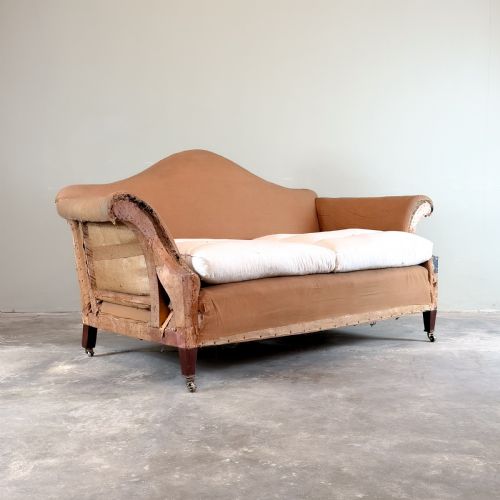


Antique Camel Back Sofa
An antique camel back sofa offers a sweeping serpentine silhouette and generous proportions that anchor a traditional room with unmistakable elegance.
Antique Camel Back Sofa
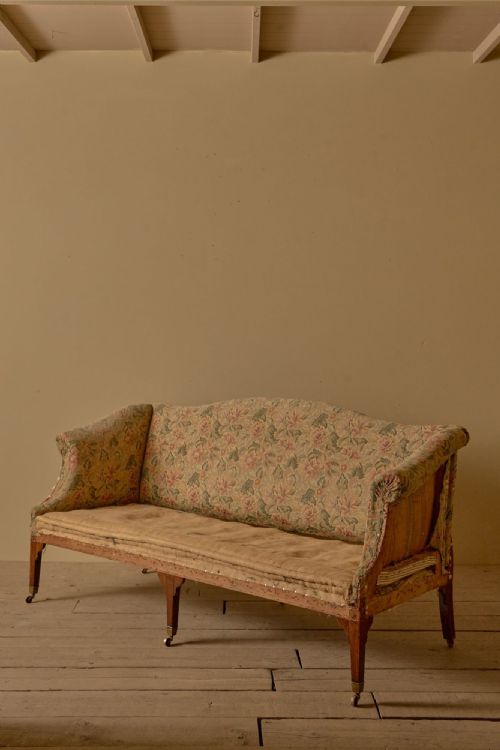
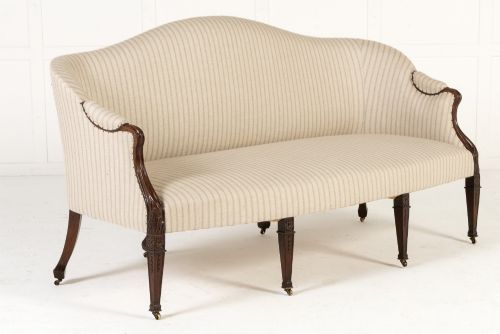
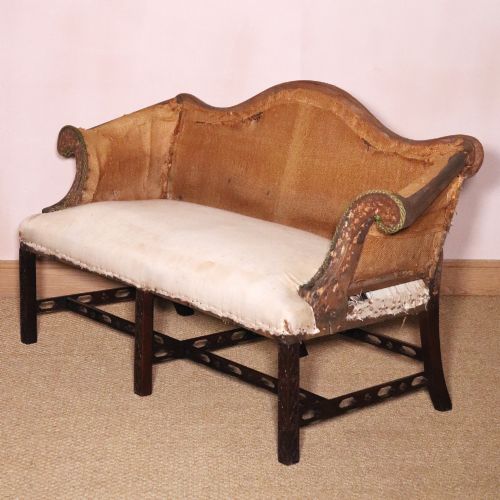
The antique camel back sofa is defined by its characteristic undulating crest rail, which rises in a gentle curve resembling a camel's hump before dropping down to scrolled arms. When searching for an antique camel back sofa, buyers encounter forms spanning from the mid eighteenth century through to Edwardian revivals and later twentieth century interpretations.
The pieces appearing on this page range from genuine eighteenth century examples down to Edwardian adaptations and mid twentieth century revivals. Forms include serpentine fronts and standard configurations, often drawing direct inspiration from Georgian, Hepplewhite, Chippendale, and Queen Anne design vocabularies.
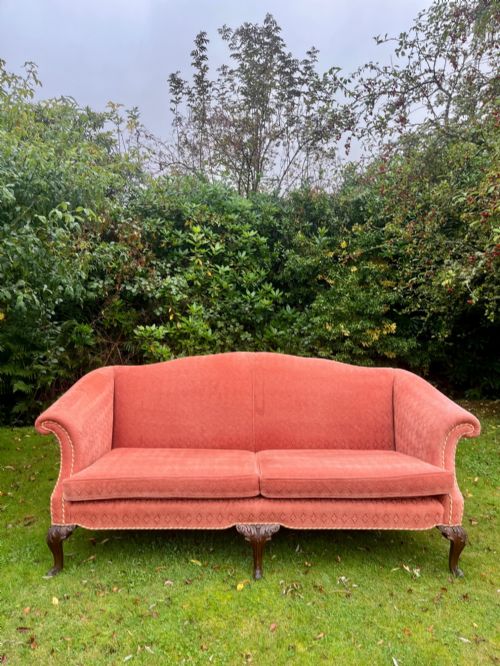
Makers working across the nineteenth and twentieth centuries frequently revisited these classic proportions, producing mahogany and walnut frames dressed in damask and various upholstery fabrics. A buyer is equally likely to find a restrained mahogany frame from the nineteen-tens as an ornate giltwood piece resting on lion mask hairy paw feet.
Construction and materials
Frames are constructed primarily from dense hardwoods like mahogany and walnut, providing the structural integrity needed to support the sweeping lines of the backrest. These timbers are shaped and joined to form the characteristic serpentine curves and supportive rails.
Traditional upholstery techniques utilise jute webbing and fabric layers to build the padded seat and back. Finished surfaces are frequently covered in damask or complementary upholstery fabric, whilst structural accents occasionally incorporate brass details.
Antique Camel Back Sofa Retail Price Guide 2026
Typical asking prices for camel back sofa among the pieces listed under this phrase on Sellingantiques today, from the lower quarter to the upper quarter. They describe what is for sale here now, not the wider market.
Some wooden frames secretly stand upon fierce lion mask hairy paw feet while politely pretending to be mere seats.
Judging quality and execution
Quality in these pieces is dictated by the fluency of the timber frame's curves and the crispness of any carved elements. Superior examples display harmonious proportions where the height of the hump balances the sweep of the arms and the rake of the legs.
The handling of the secondary woods and the integrity of the frame construction separate workshop standards. Finer pieces demonstrate careful joinery and substantial timber gauge, ensuring the serpentine silhouette remains structurally sound over generations of use.
Giles Grendey
The Antique Camel Back Sofa Glossary
- Camel back
- A sofa or settee back featuring a continuous undulating curve that rises centrally before sweeping down to the arms. This classic profile provides strong visual rhythm in a formal interior.
- Serpentine
- A line or front edge that curves outward in the centre and inward toward the ends. This contour adds depth and sophisticated movement to the base of the seating.
- Giltwood
- Timber that has been coated with a thin layer of gold leaf. It appears on high status eighteenth century frames to catch the light.
- Hairy paw feet
- Carved furniture terminals shaped to resemble the paw of an animal covered in hair, frequently seen resting upon a ball. They anchor elaborate Georgian designs with sculptural weight.
- Damask
- A reversible figured fabric woven on a jacquard loom, typically featuring floral or botanical patterns. It provides a traditional textured surface suited to period upholstery.
Antique Camel Back Sofa: Frequently Asked Questions
How do I date an antique camel back sofa?
Dating relies on examining the timber species, the tool marks on internal frame components, and the stylistic vocabulary of the legs and stretcher system. Eighteenth century examples utilise dense native or imported hardwoods with hand cut joinery.
Later Edwardian and twentieth century revivals often employ machine sawn secondary timbers and standardised framing methods. Comparing the profile of the crest rail against documented period pieces helps clarify the timeline.
Were these sofas used in bedrooms or formal parlours?
These seating forms were principally designed for formal reception rooms, drawing rooms, and parlours where guests were received. Their generous proportions and elegant silhouettes made them centrepieces for polite conversation.
Over subsequent generations, many found their way into private libraries and large master bedchambers. Their structural depth accommodates extended lounging while maintaining a dignified upright posture.
How should I care for the upholstery fabric?
Regular gentle vacuuming using a low suction brush attachment prevents dust from settling into the weave of damask and traditional textiles. Keeping the sofa away from direct sunlight protects the fibres from fading.
Professional textile cleaning is recommended for addressing deeper marks or accumulated soils. Avoiding harsh chemical treatments preserves the integrity of both the outer fabric and the underlying padding.
What is the difference between Georgian and Edwardian versions?
Georgian iterations reflect the hand tool methods and specific proportional rules of the eighteenth century, often pairing mahogany frames with restrained carving. They represent the original period of design innovation.
Edwardian versions are later interpretations that revive these earlier styles using turn of the century workshop practices. They frequently combine historical silhouettes with slightly different internal springing and comfort standards.