


Mahogany Camelback Sofa
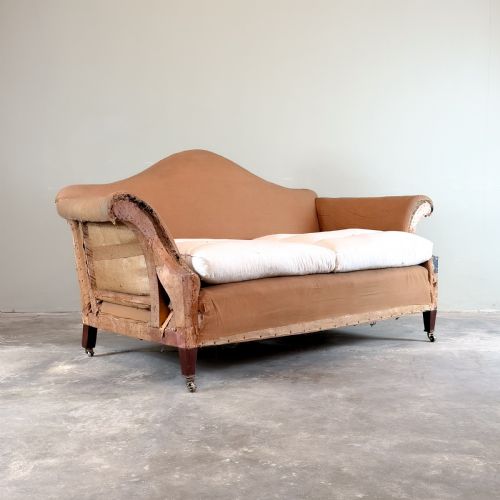
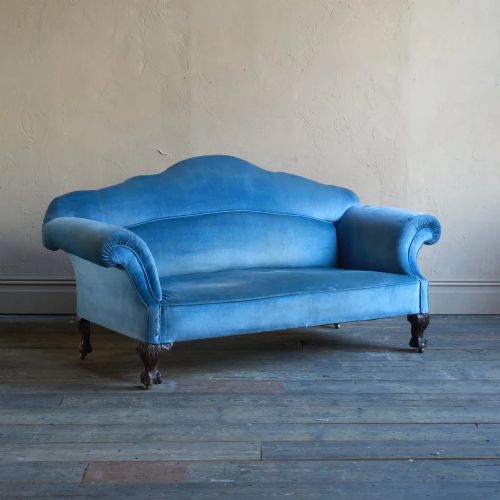
A mahogany camelback sofa brings unmistakable Georgian elegance to a room with its sweeping arched crest and robust timber frame.
Mahogany Camelback Sofa
When you search for a mahogany camelback sofa, you encounter seating built with a distinctive undulating top rail that mimics the hump of a camel. These pieces originate from various periods including the eighteenth and nineteenth centuries, alongside later revival pieces.
The forms on this page range from compact settees to larger serpentine front designs. Makers historically shaped these frames to anchor formal sitting rooms and drawing rooms with substantial presence.
You will find examples spanning George III origins through to Edwardian and later twentieth-century interpretations. Each piece relies on the characteristic serpentine outline to define its silhouette against a wall or within an open interior.
How they were made
The primary frame construction utilises solid mahogany, chosen for its structural strength and rich grain. Carved details such as ball and claw feet emerge directly from this dense timber.
Traditional upholstery techniques layer materials like jute, cotton, and horsehair beneath top coverings of silk damask or velvet fabric. Brass tacks frequently secure the edges of the textile to the wooden framework.
Mahogany Camelback Sofa Retail Price Guide 2026
Typical asking prices for mahogany camelback sofa among the pieces listed under this phrase on Sellingantiques today, from the lower quarter to the upper quarter. They describe what is for sale here now, not the wider market.
Certain frames rest securely on carved wooden talons grasping solid wooden spheres.
What varies in quality
Quality rests primarily in the fluidity of the camelback curve and the crispness of any carved woodwork. A superior frame shows intentional grace in the arched timber rather than a stiff or abrupt angle.
The integrity of the underlying build also distinguishes finer examples. Substantial mahogany scantlings and precise joinery ensure the settee retains its structural balance over centuries of use.
The Mahogany Camelback Sofa Glossary
- Camelback
- A sofa or settee featuring a serpentine or arched top rail that curves upward in the centre. This profile became a hallmark of refined seating during the Georgian era.
- Serpentine front
- A furniture front that curves outward in the middle and recesses inward toward the ends. This contour adds visual depth and dynamic movement to the base of the sofa.
- Ball and claw
- A foot carving depicting a bird's talon grasping a ball, commonly found on eighteenth-century furniture legs. It derives from ancient Chinese motifs adapted by British cabinetmakers.
- Chippendale revival
- A late nineteenth or early twentieth-century resurgence of furniture styles inspired by Thomas Chippendale's mid-eighteenth-century designs. These pieces often employ classic silhouettes paired with period revival techniques.
Mahogany Camelback Sofa: Frequently Asked Questions
How do I date a mahogany sofa?
Dating a mahogany sofa involves examining the timber grain, construction joints, and stylistic cues such as leg shapes and carving motifs. Eighteenth-century pieces typically display hand-cut joinery and aged patination on the wood.
Revival pieces from the Edwardian era or the twentieth century often use machine-cut elements alongside stylistic nods to George III or Chippendale designs. Comparing the upholstery webbing and frame architecture helps clarify the period.
Where should I place a settee?
A settee works effectively as a focal point against a main living room wall or positioned at the foot of a large bedroom. Its slender profile allows it to fit into spaces where a bulky modern sofa might overwhelm the room.
Consider placing the piece away from direct sunlight to protect delicate damask or velvet upholstery fabrics from fading. Ensuring adequate clearance around the sofa highlights its carved legs and curved back.
How do I care for mahogany frames?
Maintaining a mahogany frame requires dusting the timber regularly with a soft, dry cloth to prevent dirt accumulation. Avoid applying silicone-based polishes, which can build up on the wood surface over time.
Keep the sofa away from direct heat sources and radiators to prevent the solid mahogany from drying out or splitting. Professional upholstery cleaning preserves the underlying fabric and padding.