




Brown Walnut Settee
These brown walnut settees range from eighteenth-century originals to revival styles, offering substantial timber frames and period seating for a traditional interior.

Brown Walnut Settee
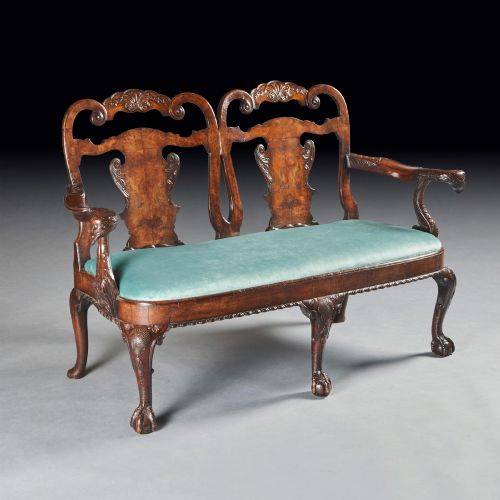
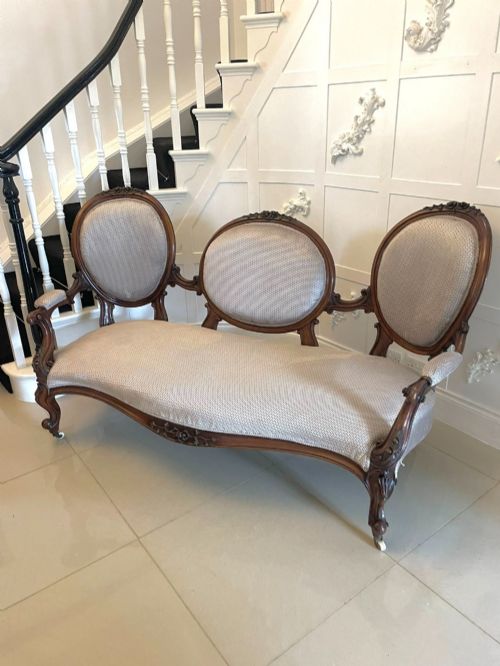
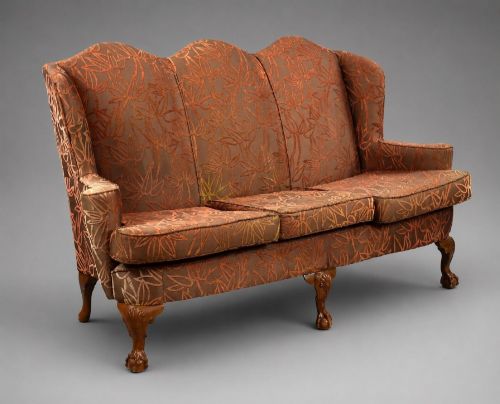
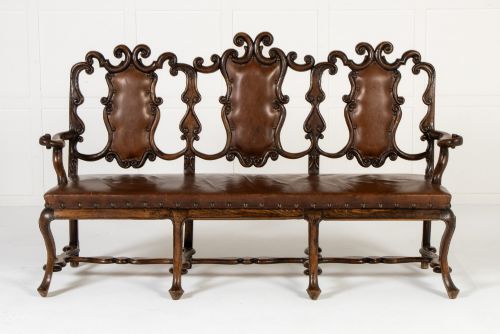
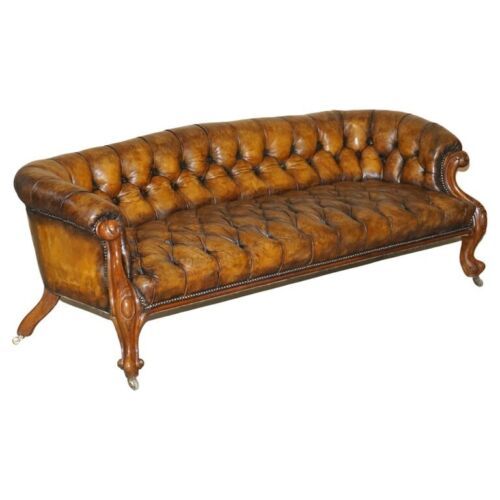
A brown walnut settee brings rich timber grain and period upholstery together into a single seating piece, appearing across eighteenth, nineteenth and twentieth-century variations on this page. Buyers seeking this phrase encounter formats ranging from eighteenth-century Dutch rococo and English George II designs to Victorian show frame Chesterfields and later revival suites.
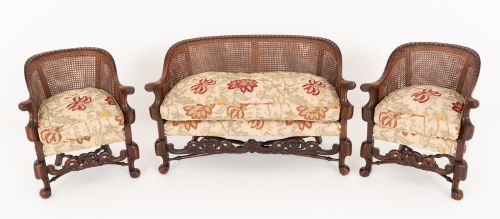
The selections span distinct historical idioms, including Carolean, Queen Anne, and French Louis XV styles, alongside Italian and Venetian benches. Most examples rely on carved walnut frames paired with leather, velvet, woven cane, or textile upholstery.
The forms encompass twin chair back sofas, cameo back couches, chaise longues, and three-seat sofas. This variety reflects changing domestic fashions across different centuries while maintaining the core presence of brown walnut construction.
Materials and construction
Makers shaped structural frames from walnut, utilising the dense timber's capacity for deep carving seen on show frames and chair backs. Joinery techniques supported complex silhouettes such as cabriole legs, carved crests, and curved scroll arms.
Upholstery methods varied by period, integrating traditional stuffing with leather, velvet, woven cane, and textile coverings. Brass accents occasionally supplemented the timber and fabric elements.
One Venetian bench carries a documented nineteenth-century sculptor's name, proving that even a seat occasionally requires an artist.
Assessing quality in brown walnut settees
Quality rests in the crispness of the walnut carving and the integrity of the timber frame, distinguishing master workshops from standard production. Deeply articulated details on show frames and chair backs indicate superior craftsmanship.
The selection of the walnut veneer or solid timber, along with the preservation of original cane work, leather, or period textiles, dictates the overall execution. Proportion and adherence to historical styles like Queen Anne or Carolean further separate individual pieces.
The Brown Walnut Settee Glossary
- Settee
- A long upholstered seat for more than one person, often featuring a back and arms. These pieces serve as principal seating furniture in historical reception rooms.
- Walnut
- A dense, dark hardwood prized for its rich grain patterns and suitability for carving. It forms the primary structural material for these settees.
- Show frame
- A wooden structural framework left exposed around the upholstered portions of a sofa. This design highlights the carved walnut woodwork.
- Cane
- Woven material made from rattan plant fibres, utilised for seat panels or backs. It offers lightweight resilience within wooden frames.
- Chaise longue
- An upholstered sofa in the shape of a chair that is long enough to support the user's legs. These variations provide extended lounging formats.
Brown Walnut Settee: Frequently Asked Questions
How do I date a brown walnut settee?
Dating relies on stylistic markers such as cabriole legs for eighteenth-century pieces or buttoned leather for Victorian examples. Construction methods and wood finish further clarify the era of manufacture.
Comparing the specific decorative motifs against known historical periods helps narrow down the decade or century in which the piece was built.
Where were these settees placed originally?
These seating pieces occupied principal reception rooms, parlours, and halls in large houses and civic properties. They served both as formal seating and decorative statements.
Venetian and Dutch examples often anchored grand salons, while smaller Victorian couches fitted into private sitting rooms.
Are these settees suitable for daily use?
Many of these pieces function well for everyday seating, provided the underlying wooden frame and upholstery support regular weight. Consideration should be given to delicate materials like woven cane or antique textiles.
Leather and robust fabric upholstery generally handle daily domestic life better than fragile historical silks or velvets.
What is the difference between a settee and a sofa?
Historical terminology often blurs the two, though settees traditionally feature lighter wooden frames and exposed woodwork. Sofas historically offered fully upholstered structures designed for heavier lounging.
On this page, both terms describe multi-seat wooden framed furniture united by walnut construction.