


Ball and Claw Sofa
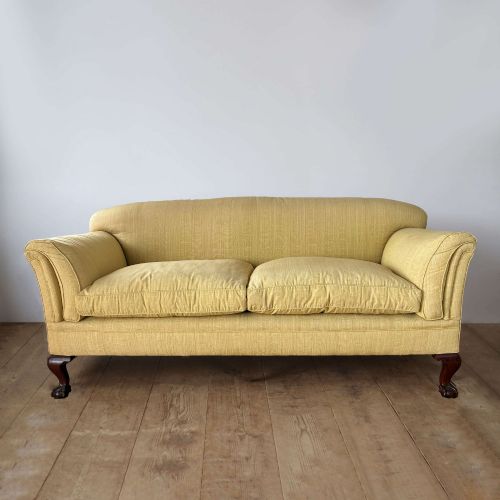
These ball and claw sofa designs combine carved wooden feet with upholstered seating from the nineteenth and twentieth centuries.
What a ball and claw sofa is
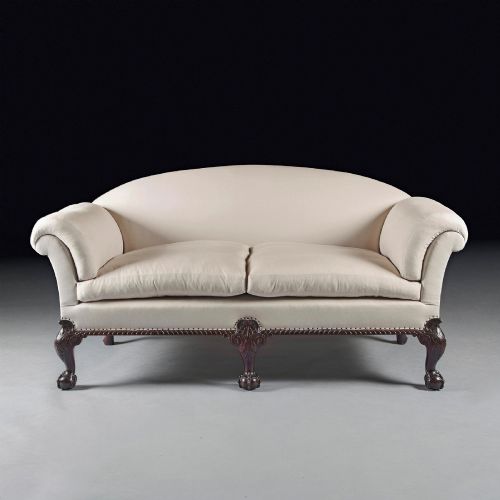
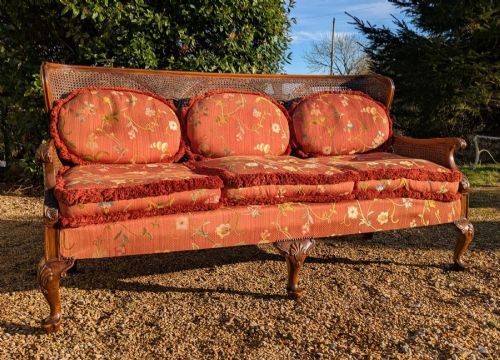
A ball and claw sofa brings together traditional carved supports and upholstered frames spanning the nineteenth century, Edwardian era, nineteen-ten, and nineteen-thirty. These pieces appear in forms such as settees, camel back sofas, campaign pieces, bergere chairs with feather cushions, and complete sets including chairs.
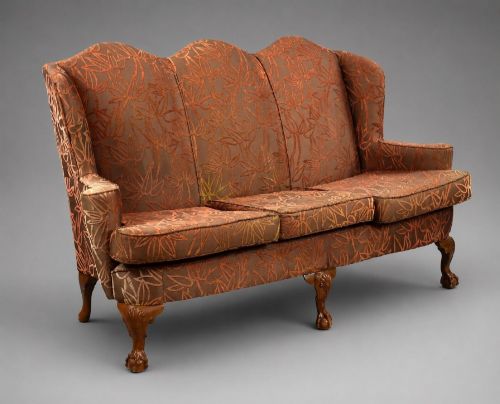
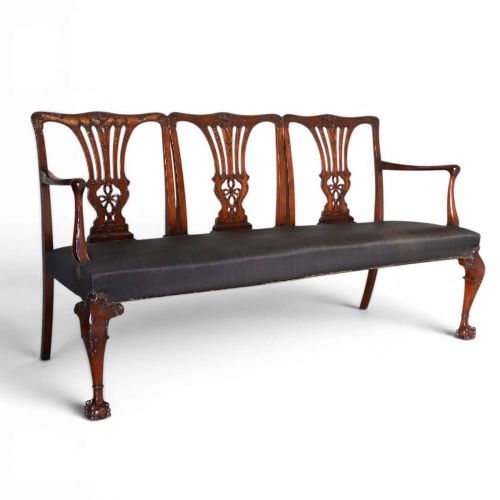
The aesthetic draws heavily on historical revivals, with Chippendale, Queen Anne, and Georgian revival styles dominating the selections. Walnut and mahogany provide the structural timber for the frames, while fabric, velvet, brass, cane, and cotton chintz furnish the seating and decorative details.

How they were made
Cabinetmakers shaped the foundational frames from solid mahogany and walnut, utilising timber strength to support substantial upholstered bodies. Carvers then detailed the characteristic feet directly from the wood, depicting the iconic grasped sphere motif.
Upholstery techniques varied from traditional fabric and velvet coverings to cane panels and feather cushions. Brass components sometimes reinforced structural joints or decorated the heavy wooden framework.
Retail Price Guide 2026
Typical UK retail prices for ball and claw sofa, calculated from the Sellingantiques database of over a million retail prices indexed since 2003. This retail price guide relies exclusively on Sellingantiques data; no external sources or auction records are used, so the figures do not describe the wider market.
Mahogany and walnut are the dominant timbers across all listed periods, frequently paired with velvet, fabric, and cane.
What varies in quality
The precision of the foot carving dictates the upper tier of execution, separating finely articulated talons from simpler rounded forms. Timber selection also defines worth, with rich mahogany and figured walnut sitting above standard secondary woods.
Upholstery finish and the integrity of internal padding reveal the standard of workshop execution. Pieces featuring integrated suites or specialised maker attribution display greater refinement in overall proportion.
Howard and Sons
The Ball and Claw Sofa Glossary
- Ball and claw
- A carved furniture foot depicting a bird's talon clutching a spherical ball. This motif appeared widely during revival periods referencing earlier centuries.
- Camel back
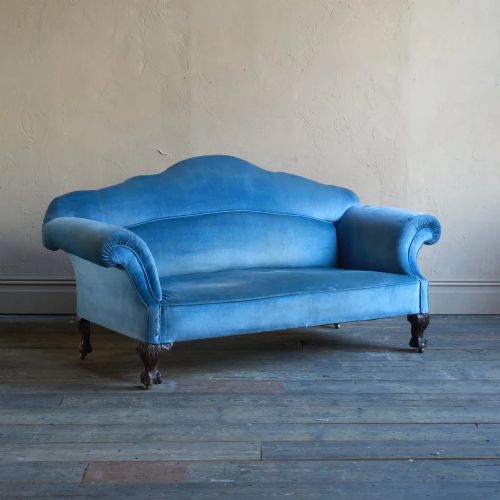
- An upholstered sofa style featuring a graceful, undulating serpentine top rail that rises to a central hump. It forms a classic silhouette seen in eighteenth-century revivals.
- Bergere
- An enclosed upholstered armchair or settee featuring exposed wooden frames and cane sides. These often include loose feather cushions for comfort.
- Campaign sofa
- A portable seating form designed for travel or military use, constructed to dismantle or fold easily. Surviving examples retain robust timber frames.
Frequently Asked Questions
What periods do these sofas date from?
The available selection spans the nineteenth century through to nineteen-thirty, encompassing Edwardian examples, nineteen-ten pieces, and nineteenth-century craftsmanship.
Revival movements heavily influence these dates, as makers in later eras reproduced earlier Chippendale and Queen Anne aesthetic traditions.
What materials are used in construction?
Mahogany and walnut form the primary wooden structures for both the frames and the carved feet. Brass fittings occasionally appear alongside timber elements.
Upholstery materials include traditional fabric, velvet, cane, cotton chintz, and specialised feather cushion fillings.
How do I identify different styles?
Chippendale and Queen Anne revival pieces display distinct carved legs, shaped backs, and formal proportions typical of eighteenth-century English design. Camel back profiles offer a clear serpentine silhouette along the upper rail.
Other variations include bergere frames with cane work and campaign pieces built for portability.
Are complete sets available?
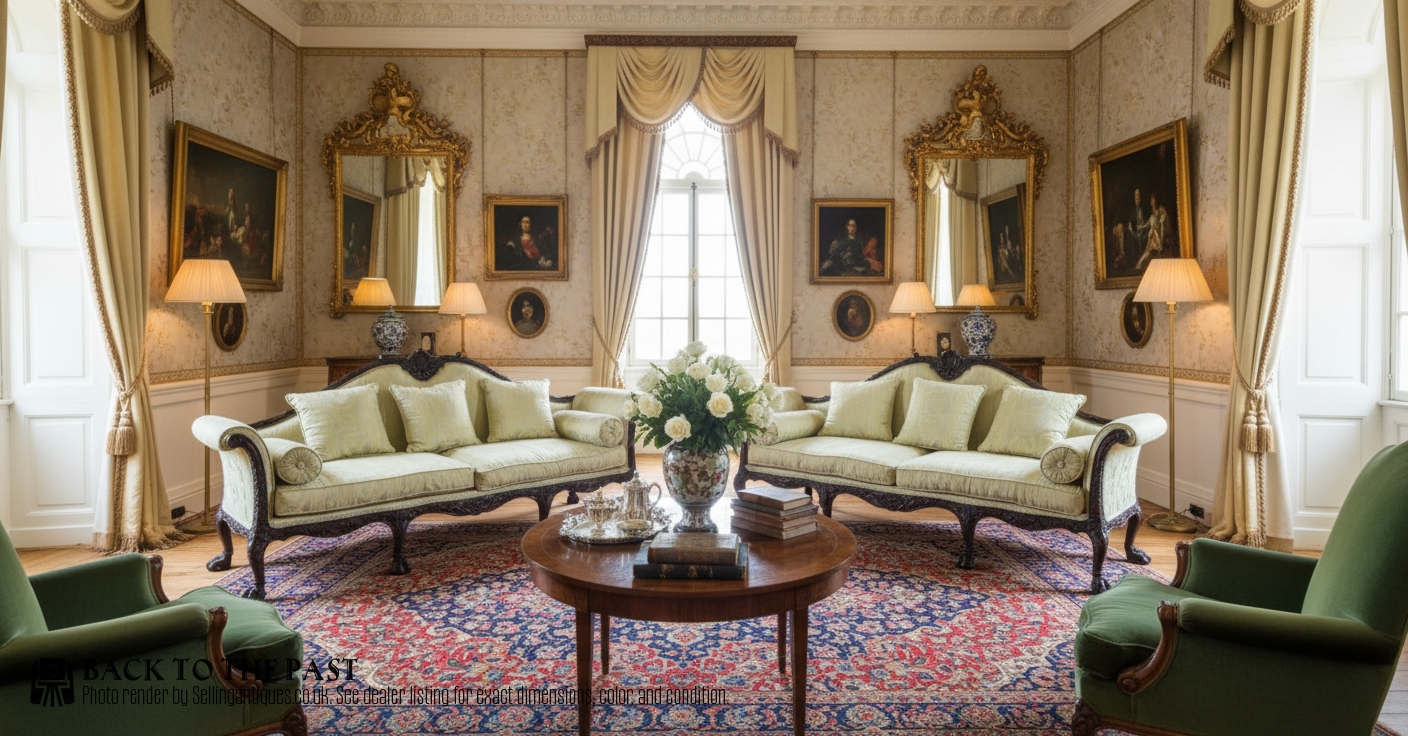
Evidence shows matched groupings such as pairs of settees and comprehensive suites comprising a sofa alongside accompanying armchairs. These configurations often bear Edwardian or revival styling.
Individual three-seat sofas and settee variations also appear independently.