

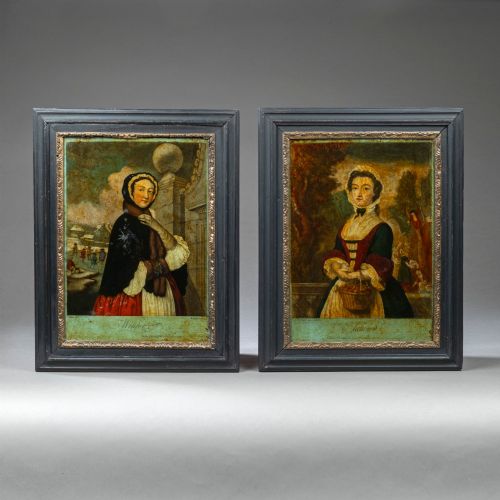
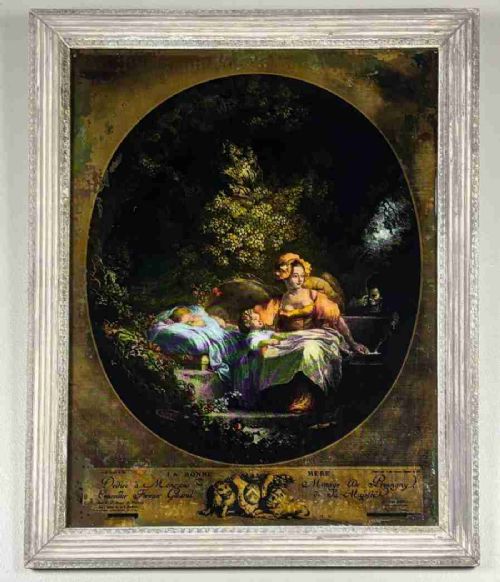
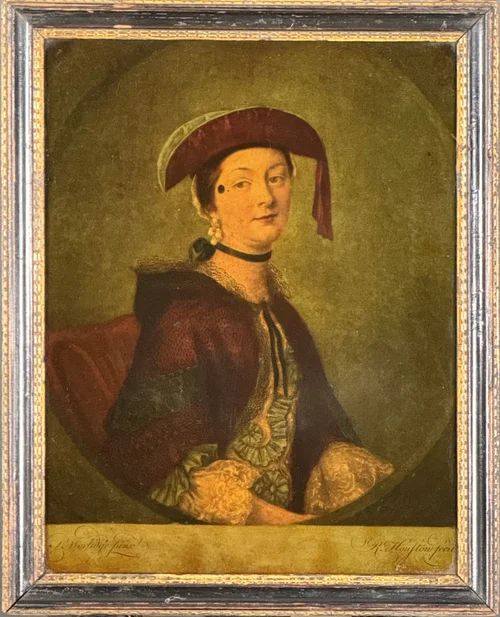
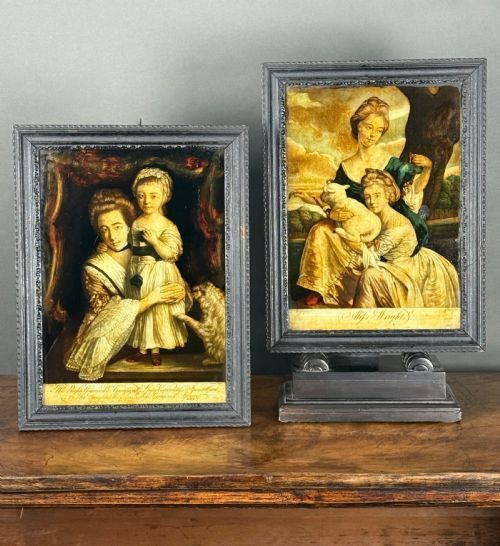

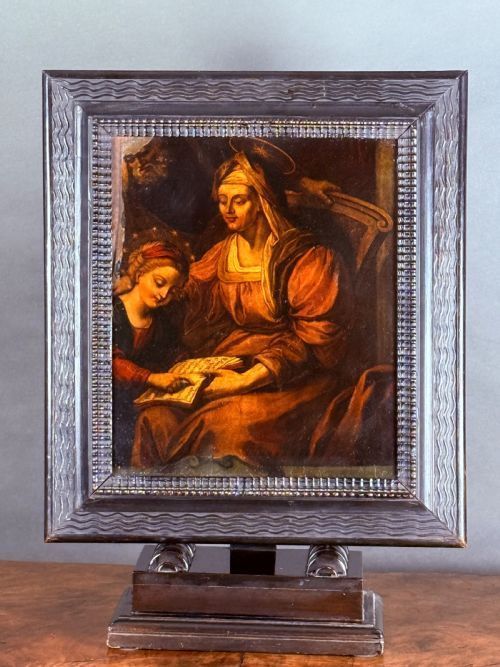

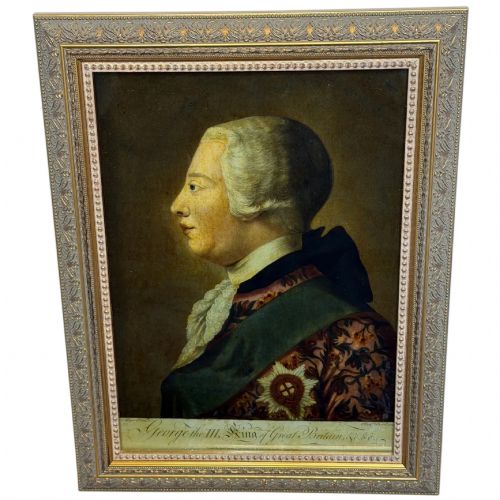


Georgian Reverse Glass Mezzotint
A georgian reverse glass mezzotint is a striking wall art piece that brings depth and historic portraiture straight into your room.
Georgian Reverse Glass Mezzotint
A georgian reverse glass mezzotint is a wall art picture or print where the imagery is applied directly to the back of the glass panel. You will most frequently meet 18th century and Georgian examples depicting royal portraits, allegorical seasons, and domestic scenes on this page.
These works range from individual portraits like Miss Campbell or Mrs Brooks to pairs and sets such as the seasons. They span periods from the 18th century through to the Regency era and 19th century.
The format includes reverse glass paintings and engravings alongside coloured mezzotints. Each piece offers a glossy surface reflection characteristic of historic glass framing.
Materials and Techniques
Makers utilised glass panels as the primary base for painting and printing, applying oil paint, oil pigment, and pigment from behind. This technique required the artist to paint fine details and highlights first before laying down broader background colours.
Paper and ink transfers formed the foundational mezzotint print before hand-colouring. Wood, gold leaf, and gilt finishes were subsequently applied to frame and enhance the visual depth of the completed glass panel.
Georgian Reverse Glass Mezzotint Retail Price Guide 2026
Typical asking prices for georgian reverse glass mezzotint among the pieces listed under this phrase on Sellingantiques today, from the lower quarter to the upper quarter. They describe what is for sale here now, not the wider market.
The listings span the 18th century, Georgian, Regency, and 19th century eras.
Judging Quality
The preservation of the original gilt and wood framing contributes to the integrity of the piece. Intact pigment layers without significant flaking or lifting indicate superior historical survival.
Fletcher·Sebastiaan Vrancx·Charles Spooner·Richard Purcell·W. Bishop·Richard Phillips
The Georgian Reverse Glass Mezzotint Glossary
- Reverse glass mezzotint
- A print technique where a mezzotint engraving is transferred and painted onto the underside of a glass sheet. This process creates a luminous, polished finish when viewed from the front.
- Mezzotint
- A printmaking method of the intaglio family where tones are developed from dark to light using a rocker. It allows for subtle gradations of shade and rich portrait details.
- Gilt
- A thin layer of gold or gold-like material applied to wood frames or the glass edges. It provides a bright metallic border to the artwork.
- Allegorical
- Artworks representing abstract ideas or seasonal themes such as Spring, Summer, Autumn, and Winter through human figures. These sets were popular decorative subjects in the period.
Georgian Reverse Glass Mezzotint: Frequently Asked Questions
How do I hang a reverse glass print safely?
These works require secure wall fixings that support the combined weight of the wood frame, glass panel, and backing materials. Hang them away from direct sunlight to protect the pigments from fading over time.
Ensure the wall brackets are level and firmly anchored. Professional framing support helps distribute the weight evenly across the hanging wire.
What subjects are common in these prints?
Portraits of royalty, nobility, and literary figures dominate the surviving examples from the Georgian period. You will also find allegories of the seasons and domestic narrative scenes.
These subjects reflect the interior decoration tastes of 18th century and Regency homes. They were designed to display sophistication and cultural literacy.
Are these pieces painted or printed?
They combine both techniques through a transfer process where a printed mezzotint is applied face down onto glass. Artists then hand-coloured the reverse side using oil paints and pigments.
This hybrid method gives the finished artwork its distinctive glossy depth and texture. The printed lines provide the structure while the paint adds colour from behind.