


Georgian Period Side Table
A georgian period side table brings dependable utility and refined proportions to a room, offering a surface that works as easily in a hallway as beside a sofa.
Georgian Period Side Table
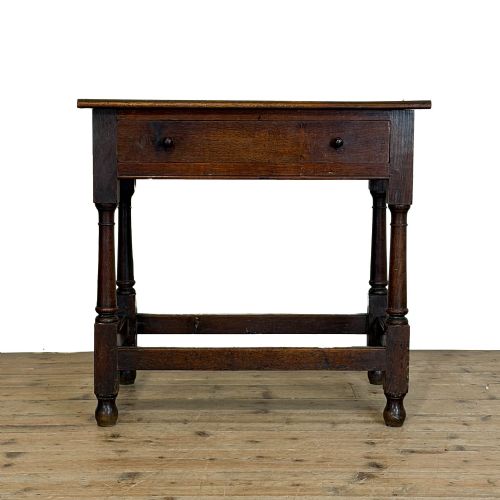
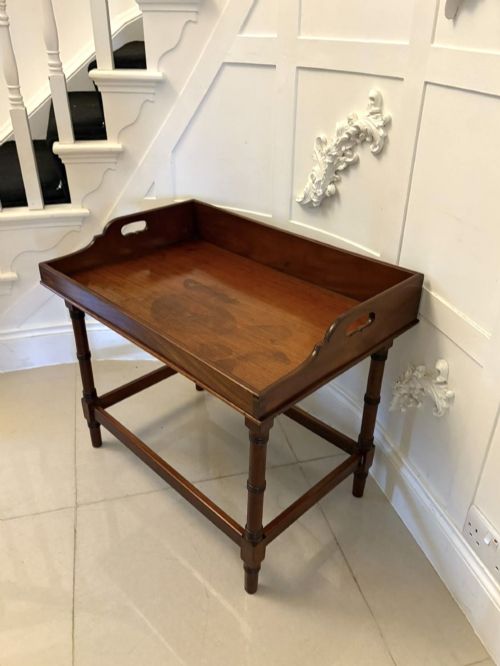
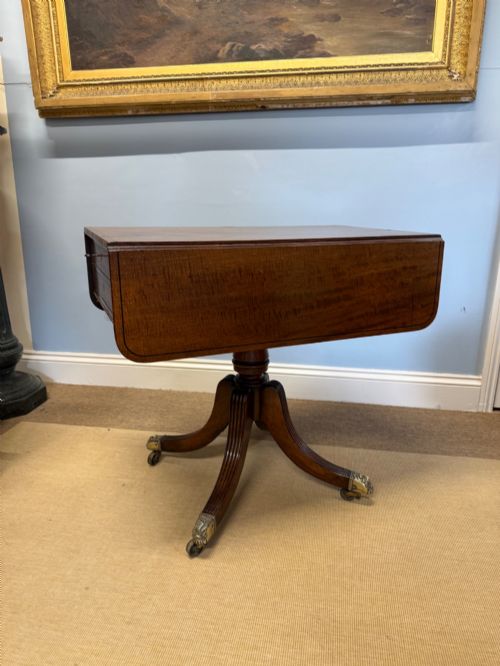
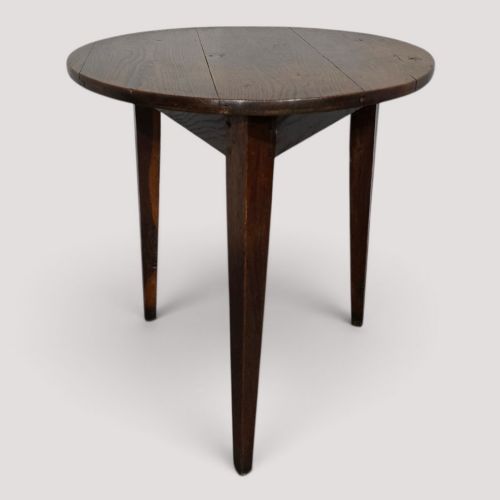
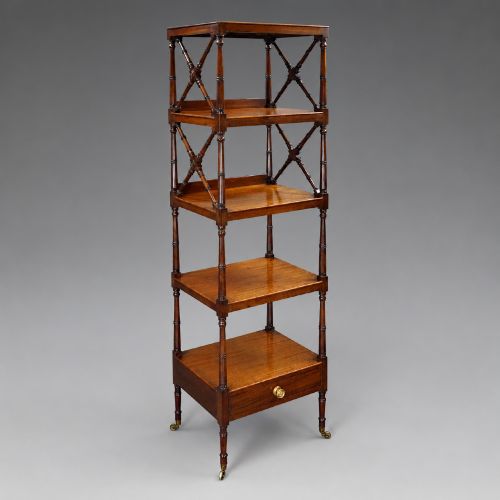
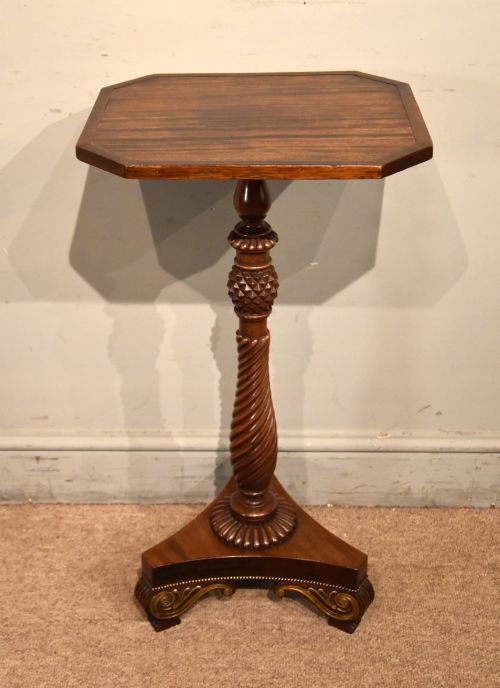
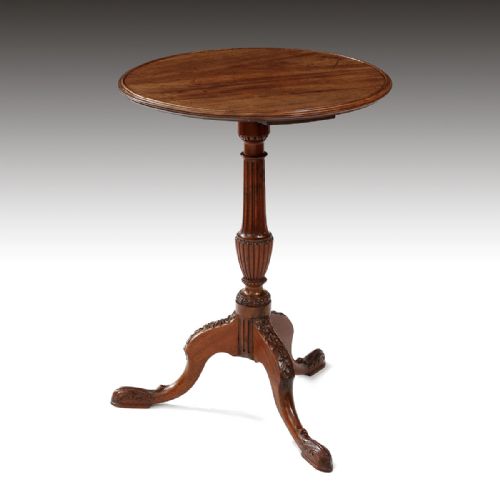
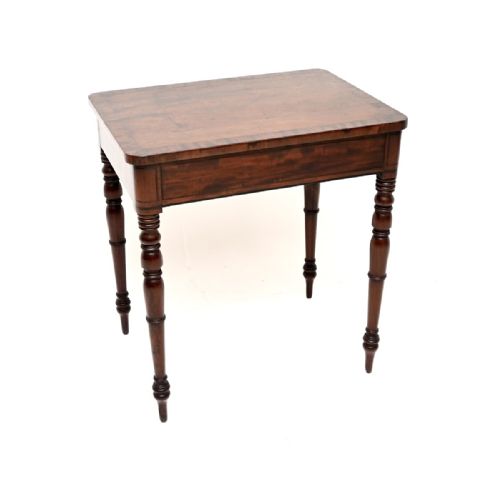
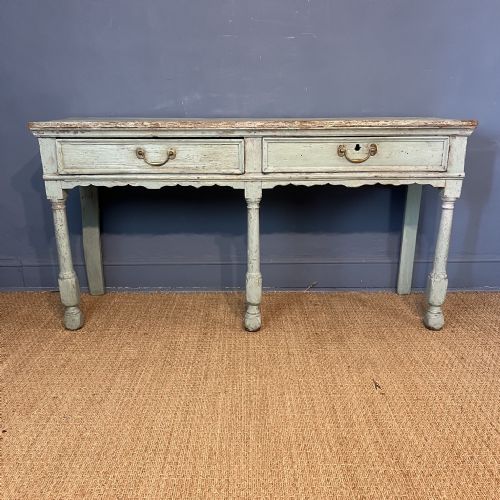
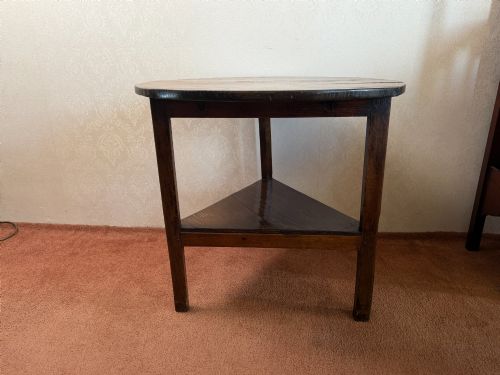
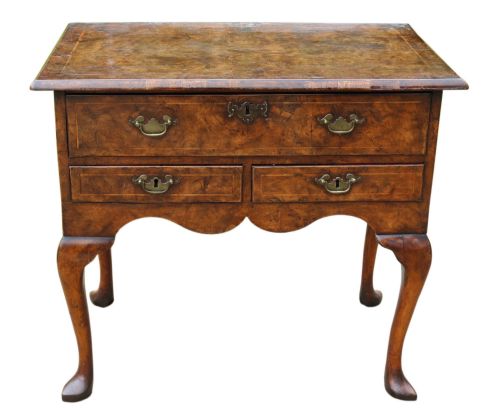
When searching for a georgian period side table, a buyer encounters pieces originating primarily from the eighteenth and early nineteenth centuries, encompassing styles from George II and George III through to the Regency period. These tables serve multiple functions, appearing frequently as lowboys, writing tables, occasional pieces, or console tables designed to stand against a wall.
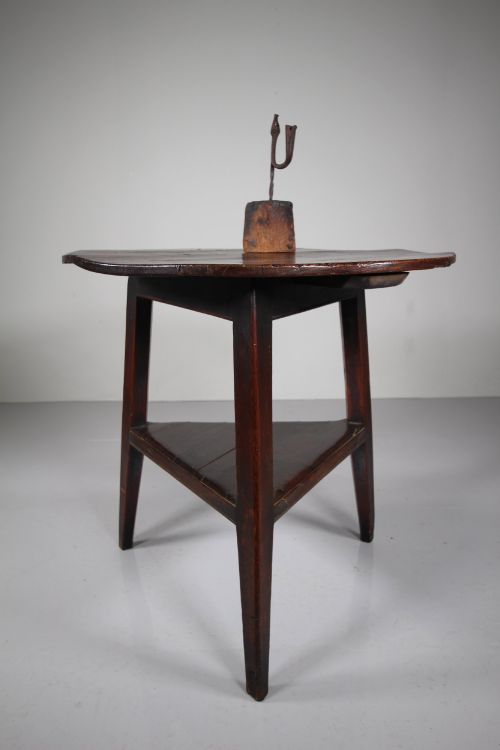
The regional and domestic origins of these items vary from formal London cabinet makers producing polished mahogany and marquetry to provincial joiners working in sturdy local oak or elm. Buyers select them for their adaptable scale and the way their traditional timber patination integrates into contemporary and historic interiors alike.
How they were made
Cabinet makers constructed these tables using dense timbers such as mahogany, oak, walnut, and satinwood, often combining structural carcases of secondary woods with finely figured veneers on the visible surfaces. Joinery relied on traditional methods like dovetailing for drawer construction and mortise and tenon joints for frames.
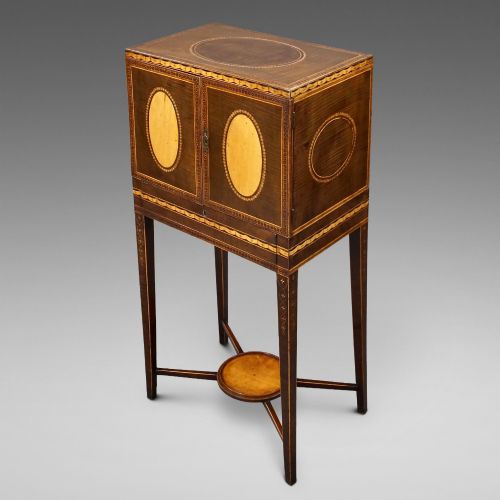
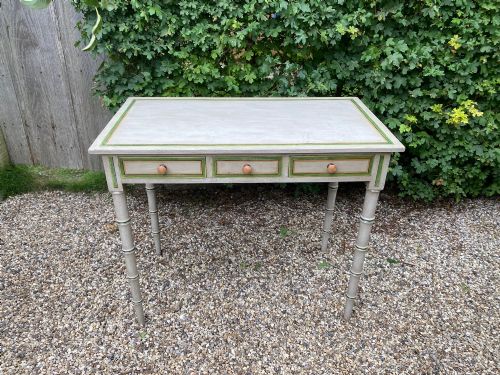
Surface decoration frequently incorporated boxwood stringing, marquetry, or brass hardware including drop handles and escutcheons. Tables finished in the Regency taste occasionally display painted faux bamboo or black lacquer with gilt highlights rather than exposed wood grain.
Georgian Period Side Table Retail Price Guide 2026
Typical asking prices for georgian period side table among the pieces listed under this phrase on Sellingantiques today, from the lower quarter to the upper quarter. They describe what is for sale here now, not the wider market.
Some occasional tables tilt upright so thoroughly they double as unexpected wooden wall art in compact nineteenth-century spaces.
What varies in quality
Quality rests upon the choice of timber and the natural figure of the grain, with burr elm, figured mahogany, and matched walnut marking the upper tier of production. The crispness of carved details, such as fretwork brackets or cabriole legs, distinguishes bespoke workshop pieces from simpler country furniture.
Structural integrity also separates examples, seen in the retention of original brass fittings, the smoothness of drawer movement within dovetailed boxes, and the harmonious proportions of the legs and top.
Gillow
The Georgian Period Side Table Glossary
- Lowboy
- A small table with one or more drawers and cabriole or straight legs, commonly used as a dressing or side table during the eighteenth century.
- Tripod table
- A small round table supported by a central pillar resting on three spreading legs, often featuring a tilt-top mechanism.
- Marquetry
- The art of forming decorative patterns by fitting together thin veneers of different coloured woods.
- Stringing
- A narrow inlaid line of contrasting timber used to outline the edges of table tops and drawer fronts.
- Demi-lune
- Having a half-moon shape, typically describing a console or side table designed to sit flat against a wall.
Georgian Period Side Table: Frequently Asked Questions
What is a lowboy?
A lowboy is a small leg table equipped with drawers, traditionally used for personal grooming or as a compact side surface in bedrooms and parlours.
Over time, these versatile pieces transitioned into general living spaces where their shallow depth allowed them to fit neatly into alcoves and hallways.
Where should I place a side table?
These tables find natural homes alongside seating groups, in narrow hallways, or beneath a wall mirror where they provide a convenient surface for lighting or objects.
Their finished backs and compact footprints allow them to stand freely or hug a wall without dominating the spatial flow of a room.
What is the difference between mahogany and oak?
Mahogany offers a reddish-brown hue and a smooth, fine grain that suited the formal, polished aesthetic of late eighteenth-century urban cabinet making.
Oak presents a heavier, highly figured grain associated with earlier vernacular pieces and country houses where durability mattered more than exotic veneer.