


Georgian Panelled Coffer
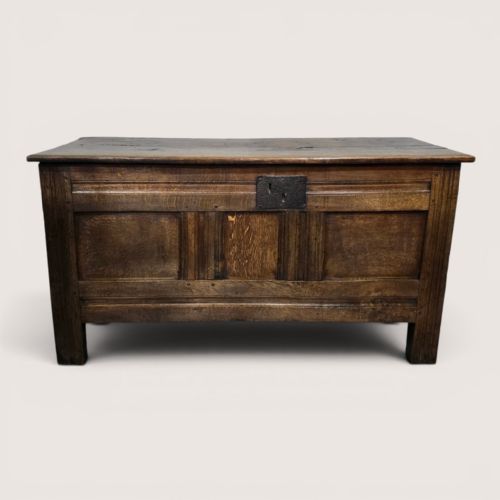
A georgian panelled coffer is a robust timber storage chest that anchors a traditional interior with centuries of practical craftsmanship.
Georgian Panelled Coffer
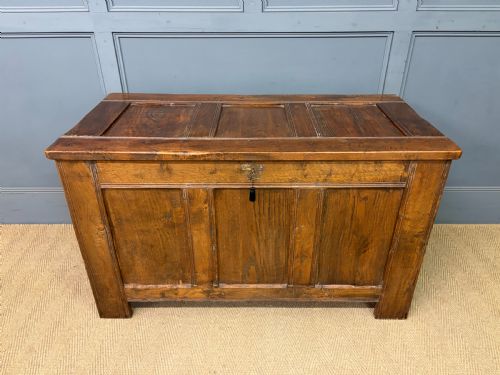
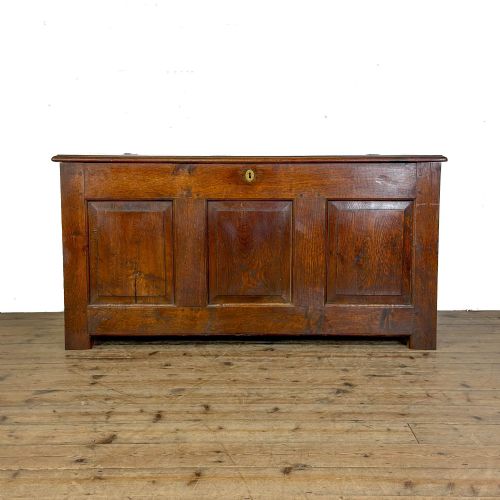
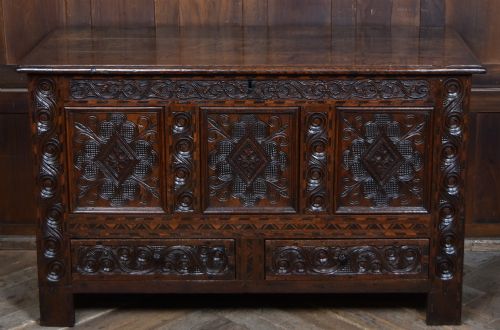
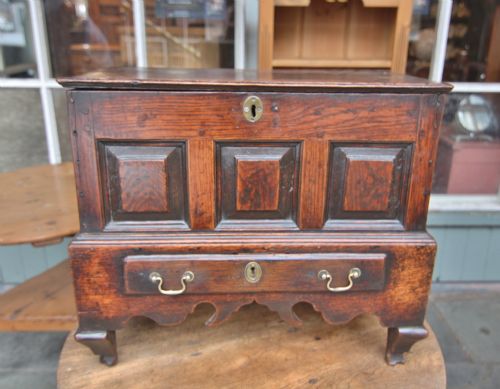
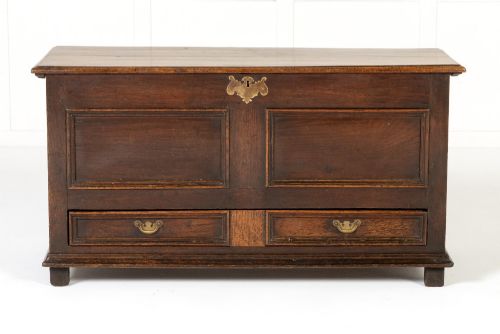
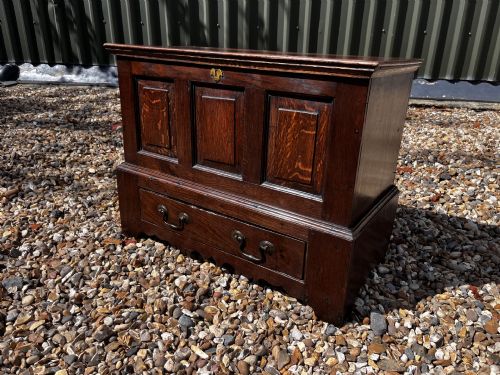
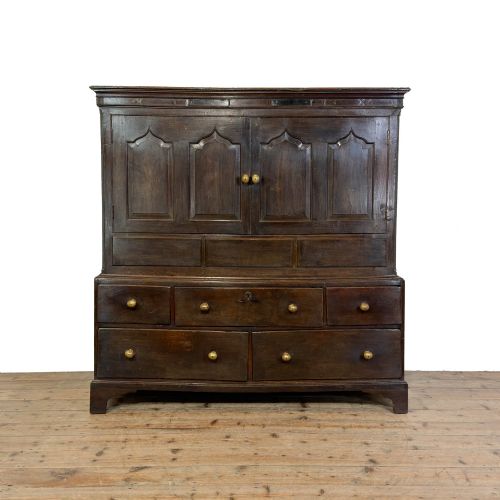
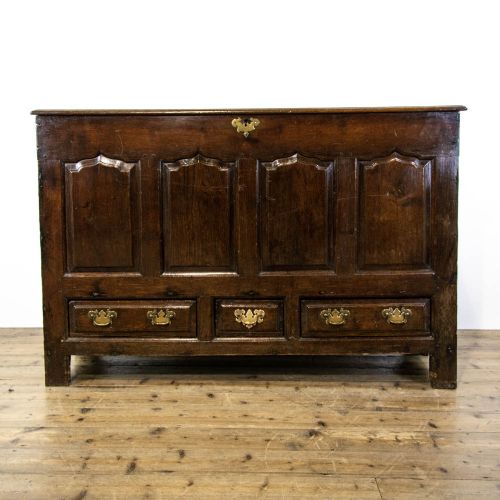
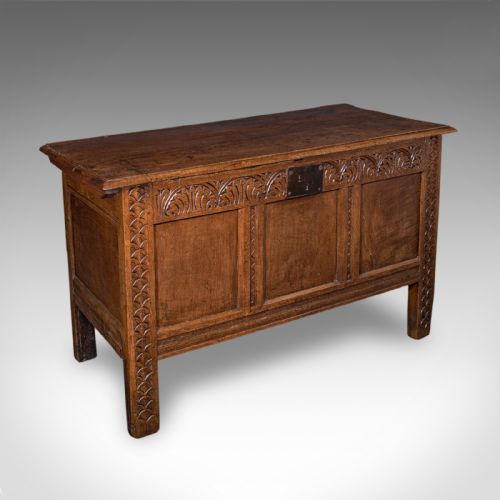
A georgian panelled coffer provides deep interior storage through a hinged lid mounted above framed and panelled timber walls. These pieces range from standard blanket chests to mule chests fitted with lower drawers and smaller coffer bach variants originating from Wales.
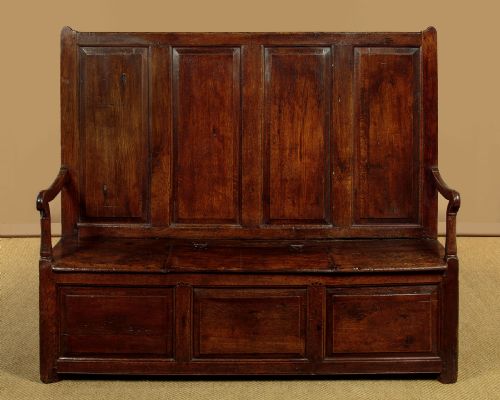
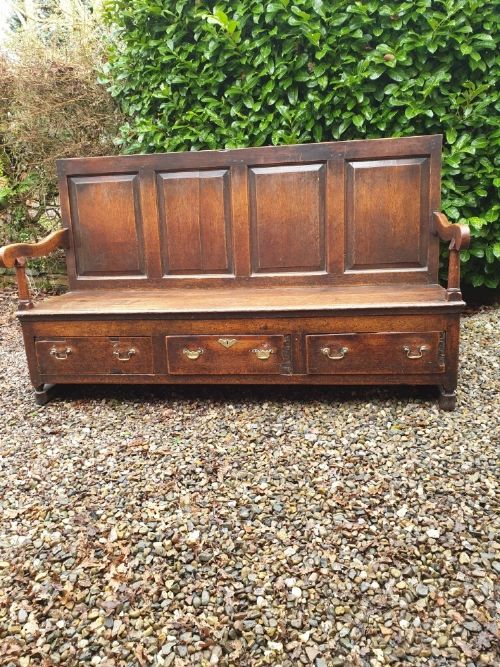
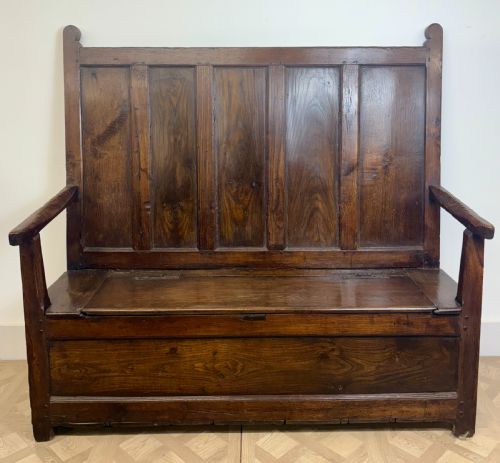
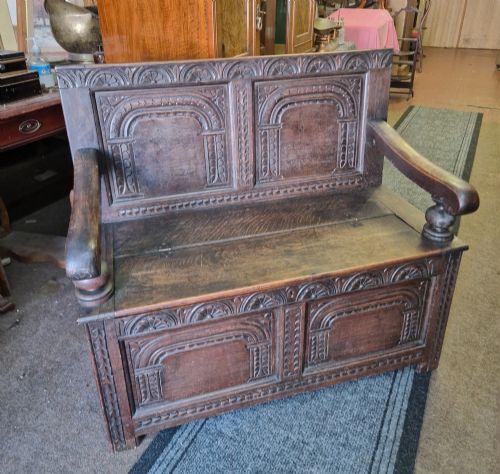
The examples seen here date principally across the eighteenth and nineteenth centuries, spanning regional English workshops and Welsh vernacular traditions. Buyers encounter straightforward rectangular forms alongside box settles that integrate high panelled backs and armrests.
Most pieces rely on sturdy joinery where stiles and rails capture floating panels to accommodate seasonal wood movement. The proportions suit placement at the foot of a bed, beneath a window, or within a hallway as functional seating.
How they were made
Makers constructed these chests primarily using solid oak, supplemented by ash, pine, and occasional burr elm panels for decorative contrast. Timber boards were cleft or sawn and joined using pegged mortise and tenon joints.
Iron and brass hardware such as strap hinges, lock plates, and carrying handles secure the lids and fronts. Wax finishes were applied to nourish the timber and develop a deep lustre over generations of handling.
Many coffers conceal tiny internal candle boxes inside the main chamber, ready for when the tallow ran low.
What varies in quality
The distinction between standard utility pieces and finer examples rests on the crispness of carved detailing, the selection of figured timber, and the integrity of the original joined framing. Pieces featuring secondary drawers, internal candle boxes, or untouched regional surfaces command greater appreciation.
Proportion and structural survival dictate lasting merit, particularly where lids retain their original hinges and base boards remain free from extensive damp decay. The balance between vernacular plainness and deliberate decorative carving defines the character of each individual chest.
The Georgian Panelled Coffer Glossary
- Cofer
- A large timber chest used for storing valuables, linens, and domestic goods. Early versions pre-date specialised wardrobes.
- Mule chest
- A storage chest featuring one or more drawers built beneath the main interior compartment. This form bridges the gap between traditional coffers and modern chests of drawers.
- Coffer bach
- A small Welsh box, translating literally as little coffer, often resting on feet or a small drawer base. These miniature chests served as presentation pieces or valuables boxes.
- Box settle
- A wooden bench incorporating a high panelled back and a hinged seat concealing a storage box beneath. They were placed near hearths to block drafts.
- Stile and rail
- A frame construction method where vertical stiles and horizontal rails hold a central floating panel. This technique allows wood to expand and contract without splitting.
Georgian Panelled Coffer: Frequently Asked Questions
How were coffers used originally?
These chests served primarily for storing household linens, woollens, and valuable documents in domestic chambers before fitted wardrobes became common.
They also functioned as seating benches, tables, or travelling trunks when households moved between properties.
Where should I place a coffer at home?
A coffer fits naturally at the foot of a bed for blanket storage or positioned beneath a window as a deep seat.
They also anchor entrance hallways as practical places to store shoes while providing a firm surface when entering the room.
How do I care for the oak wood?
Maintain the timber by applying a traditional beeswax polish sparingly to nourish the dry grain and protect the surface.
Keep the chest away from direct heat sources and rapid temperature fluctuations to prevent the oak panels from splitting.
What is a mule chest?
A mule chest combines the traditional deep top-opening compartment of a coffer with one or more drawers built into the base.
This hybrid design allowed users to access smaller items stored below without needing to lift heavy items off the top lid.