


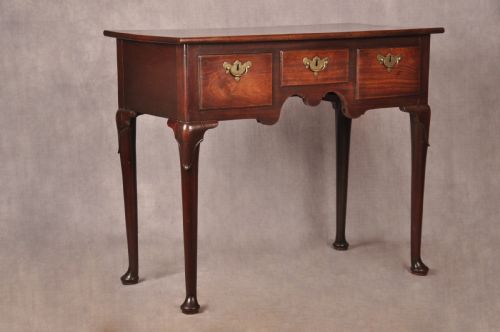


Georgian Pad Foot Lowboy
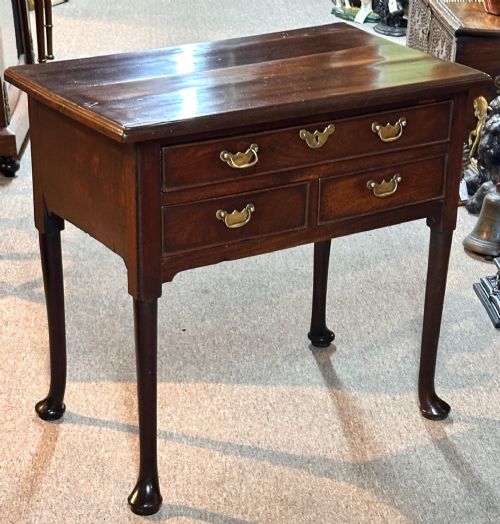
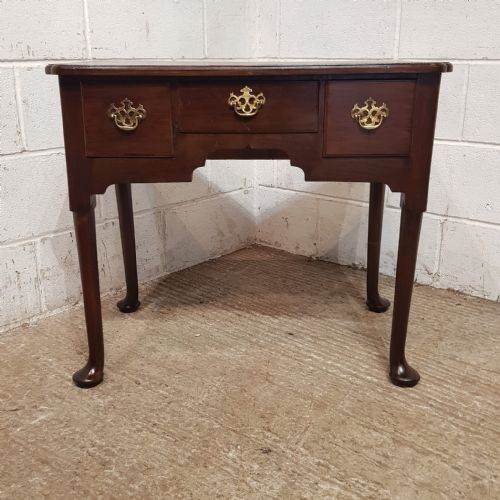
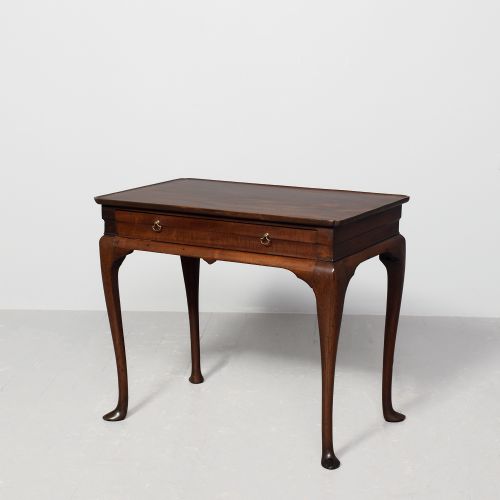
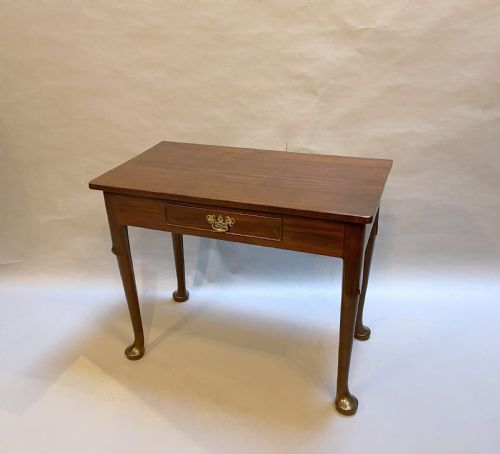
These georgian pad foot lowboy examples are compact dressing and side tables with cabriole legs, offering practical drawer storage and classic eighteenth-century proportions.
Georgian Pad Foot Lowboy
A georgian pad foot lowboy functions primarily as a small side table, dressing table or writing desk equipped with one or more drawers. These pieces sit low to the ground on characteristic cabriole legs terminating in simple pad feet, a design which gained popularity during the early eighteenth century.
The versions most commonly met on this page span the George II and George III periods, though earlier examples surface in regional woods. Buyers encounter forms designated variously as side tables, lowboys or correspondence tables, each sharing a compact footprint suited to hallways and reception rooms.
How they were made
Cabinetmakers constructed these tables using native and imported hardwoods including oak, walnut and mahogany, occasionally selecting burr walnut, cherrywood, yew or dense Cuban mahogany for show surfaces. Timber selection dictates the weight and grain pattern of each frame.
Joinery techniques rely on traditional mortise and tenon construction for the structural frame, while drawer boxes typically feature hand-cut dovetails. The distinctive pad foot is shaped directly at the base of the curving cabriole leg.
Some tables were built narrow enough for a hasty note, proving that eighteenth-century correspondents faced the exact same desk clutter we do today.
What varies in quality
The visual success of a georgian pad foot lowboy depends on the grace of the cabriole leg profile and the harmony between the top and the apron beneath. Finer examples display confident curves and balanced proportions rather than rigid or heavy lines.
Material quality distinguishes standard utilitarian items from higher-status commissions, particularly where figured veneers or premium dense timbers like Cuban mahogany are utilised. The crispness of the drawer dovetails and the retention of original brass hardware also mark the upper tier of quality.
The Georgian Pad Foot Lowboy Glossary
- Pad foot
- A simple, rounded foot resting flat on the floor, frequently found at the base of cabriole legs on early furniture. This foot style provides a subtle anchor to curving supports.
- Cabriole leg
- A furniture leg that curves out in an arc and tapers inward as it descends, mimicking animal limbs. It represents a defining stylistic element of eighteenth-century design.
- Lowboy
- A small kneehole-free table with drawers, used historically for dressing or writing. These compact tables fit easily into smaller domestic spaces.
- Apron
- The decorative wooden member beneath the tabletop connecting the legs. On these tables, the apron is often shaped with simple curves or arches.
Georgian Pad Foot Lowboy: Frequently Asked Questions
Where were lowboys placed?
These tables served multiple functions across the domestic interior, appearing in bedchambers as dressing tables and in reception rooms or hallways for correspondence. Their modest scale allowed them to stand against walls without obstructing pathways.
Today, owners utilise them similarly as hall tables or side pieces in living spaces where surface area and low drawer storage are required.
How do I date a lowboy?
Dating relies on observing wood species, leg profiles and construction methods documented across the eighteenth century. Walnut and oak dominate earlier pieces, while mahogany becomes prevalent towards the middle and later decades.
Cabriole leg shapes also evolve over time, moving from robust early Georgian curves to slightly straighter or more refined George III proportions.
Are all lowboys mahogany?
Cabinetmakers utilised a wide variety of timbers depending on regional availability and the date of manufacture. Oak and walnut appear frequently in earlier pieces, alongside cherrywood, yew and burr walnut.
Imported dense timbers like Cuban mahogany emerge more prominently in pieces dating from the mid-eighteenth century onward.
What is a pad foot?
The pad foot is a rounded, circular foot design that terminates the sweeping line of a cabriole leg. It sits directly on the floor without resting on a separate ball or shoe.
This understated foot style provides a stable base while maintaining the smooth, curving silhouette characteristic of early Georgian furniture.