



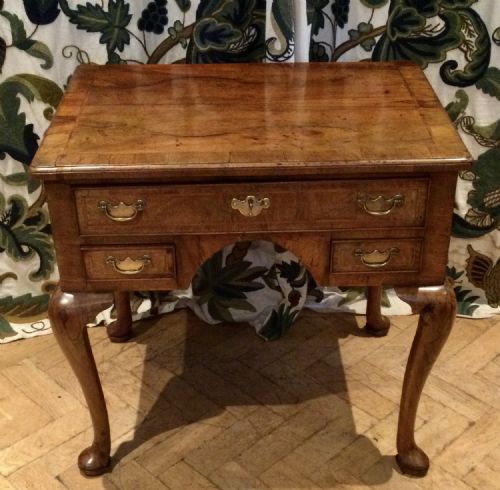


Feather Banded Walnut Table
A feather banded walnut table brings warmth and rich grain to a room, offering practical surface space rooted in eighteenth-century design.
Feather Banded Walnut Table
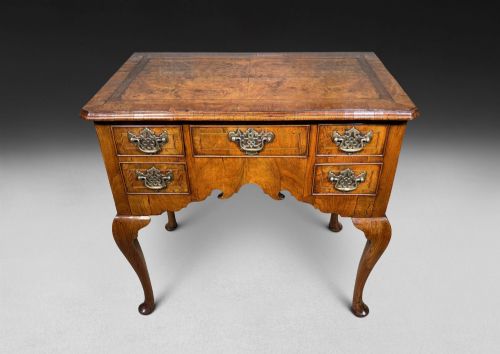
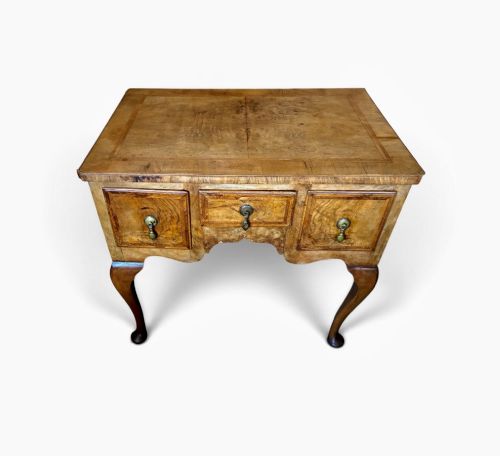
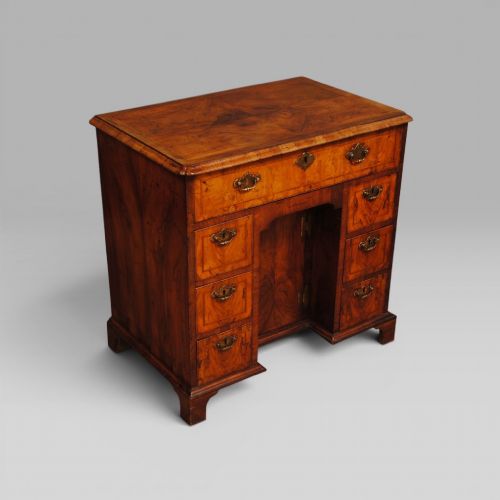
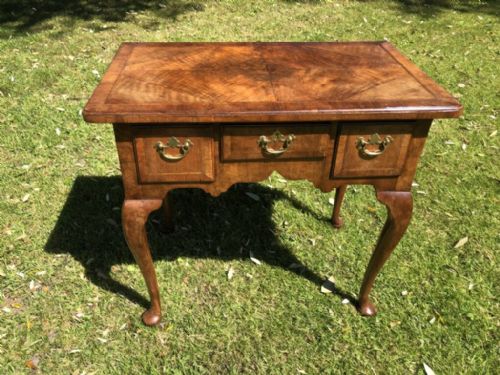
A feather banded walnut table encompasses lowboys, side tables, desks, and card tables originating predominantly from the eighteenth century, including the Georgian and Queen Anne periods. These forms serve as versatile tables and compact desks, reflecting the domestic requirements of their era.
The version a buyer is most likely to encounter here is the walnut lowboy, frequently featuring three drawers and precise banded decoration. Examples range from early eighteenth-century originals to later nineteenth-century interpretations and Edwardian revivals.
Makers and craftsmen of the period constructed these tables using rich timber selections, resulting in forms that function equally well as writing desks or occasional side tables in contemporary interiors.
How they were made
Makers utilised walnut, burr walnut, and burr walnut veneer applied over secondary timbers such as oak, creating striking figurative patterns across the top surfaces. The decorative borders rely on precise inlay work known as feather banding, which frames the primary grain.
Hardware details such as brass handles and drawer pulls complement the timber construction, while joints and internal drawer linings reflect traditional period cabinetmaking techniques.
Early cabinetmakers squeezed burr walnut veneers under heavy handscrews, hoping the unpredictable grain would behave itself long enough to dry flat.
What varies in quality
The standard of a feather banded walnut table rests upon the choice of timber and the dexterity of the veneer work. Figured and burr walnut displays greater natural movement and depth, elevating pieces above plain-grained alternatives.
The precision of the feather banding around the edges and drawers demonstrates the skill of the workshop. Original surface patination and retention of period brass elements further distinguish superior examples from later revivals.
The Feather Banded Walnut Table Glossary
- Feather banding
- A decorative inlay technique where thin strips of veneer are cut and arranged in a V-shape pattern to form a border around table tops or drawer fronts. This framing method is characteristic of fine eighteenth-century cabinetwork.
- Lowboy
- A small side table or dressing table featuring a low set of drawers, typically supported on slender legs. It frequently serves as an occasional table or compact writing desk.
- Burr walnut
- Timber taken from a growth deformity on a walnut tree, yielding complex and swirling grain patterns. It is sliced into veneers to ornament prominent surfaces.
- Kneehole desk
- A writing table featuring a central recess for the sitter's legs, flanked by pedestals of small drawers. This form provides substantial storage within a compact footprint.
- Quarter veneered
- A method of arranging four matching slices of veneer side by side to create a symmetrical pattern. This technique highlights the natural symmetry of the wood grain.
Feather Banded Walnut Table: Frequently Asked Questions
What is a lowboy used for?
A lowboy functions primarily as an occasional side table or a compact dressing table with storage drawers. In modern spaces, it suits placement in hallways or living rooms as a display surface.
Historically, these small tables held grooming items or writing materials, making them adaptable for contemporary use where space is limited.
How do I identify a Georgian walnut table?
Georgian walnut tables often display rich figure walnut timbers combined with traditional joinery methods. Examining the secondary woods, such as oak inside the drawers, helps confirm the period.
Stylistic cues like Queen Anne or George II proportions, along with original brass hardware, further indicate eighteenth-century origin.
What does feather banded mean?
Feather banding refers to decorative borders created by setting small strips of wood into channels around the edge of a table top or drawer front. The pieces are angled to resemble the spine of a feather.
This meticulous inlay work frames the primary grain and serves as a hallmark of quality cabinetmaking.
Can I use an antique table daily?
These tables are robust pieces of furniture built to withstand generations of domestic use. Normal daily placement for lamps or decorative objects causes no harm.
Placing the timber away from direct heat sources and sudden humidity changes helps preserve the walnut veneer and polished surface.