
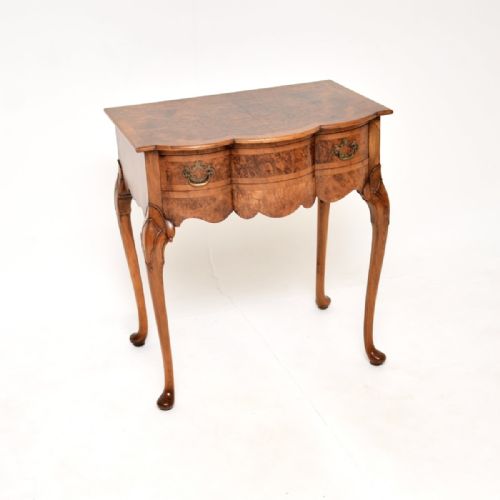


Vintage Burr Walnut Lowboy
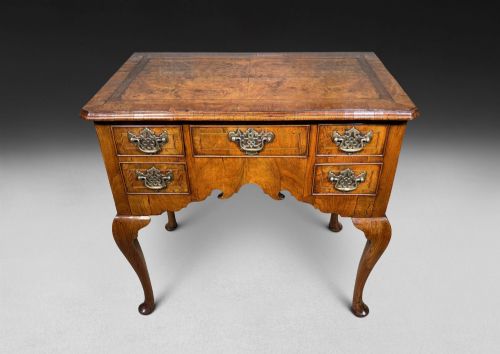
A vintage burr walnut lowboy brings rich, swirling grain and compact proportions to a room, functioning as a side table or dressing piece.
Vintage Burr Walnut Lowboy
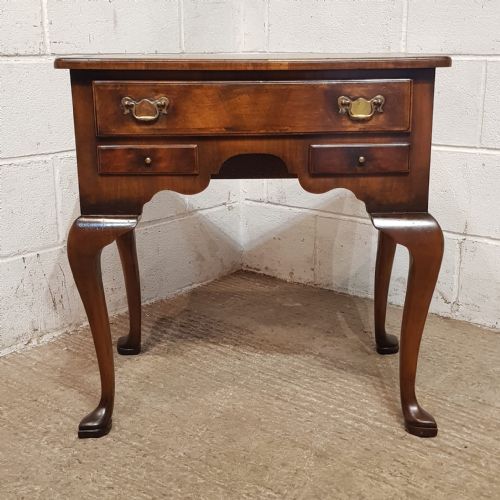
A vintage burr walnut lowboy is a small, waist-high table fitted with drawers, designed primarily for occasional use or as a compact dressing surface. These tables typically sit on slender cabriole legs, often terminating in pad feet, giving them a light footprint despite the rich presence of the timber.
The pieces appearing on this page span several eras, from mid-eighteenth-century examples up to twentieth-century revivals. While original Georgian pieces surface occasionally, buyers are most likely to encounter twentieth-century interpretations, particularly those made during the 1920s and 1930s in the Queen Anne revival style.
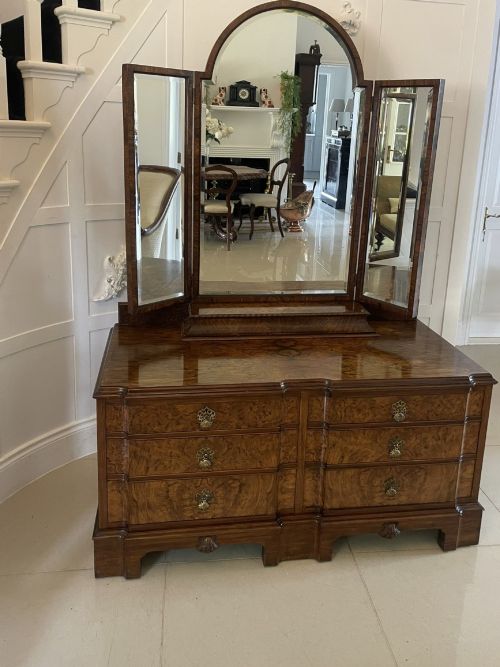
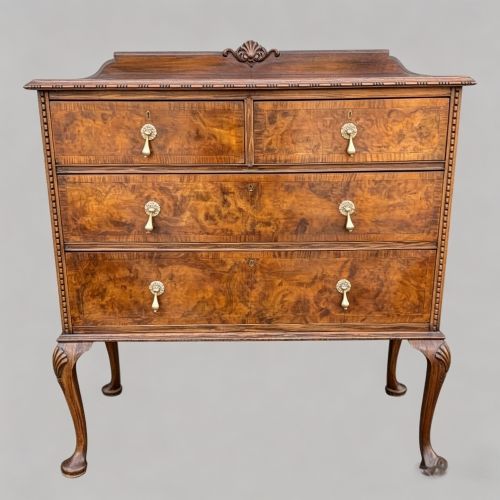
Makers of the revival period adopted traditional forms, combining walnut solids with burr walnut veneers to emulate earlier craftsmanship. Alongside dedicated lowboys, the selection includes related forms such as side tables and dressing tables that share the same characteristic proportions and drawer arrangements.
What varies in quality
The quality of a burr walnut lowboy rests largely on the selection and matching of the veneer. Superior pieces feature harmonious, mirrored grain patterns across the top and drawer fronts, whereas simpler examples rely on more uniform or plain timber.
Construction detail also separates the ordinary from the exceptional. Finer tables exhibit careful joinery in the drawer construction and well-proportioned cabriole legs that flow gracefully into the feet, maintaining visual balance without stiffness.
Forms span traditional lowboys, side tables, console tables, and dressing tables incorporating brass hardware and mirror glass.
Maple and Company
The Vintage Burr Walnut Lowboy Glossary
- Burr walnut
- A thin slice of wood veneer taken from the wart or burl of a walnut tree, prized for its swirling, highly figured patterns. It provides a decorative surface on furniture tops and drawer fronts.
- Lowboy
- A small kneehole dressing table or side table on four legs, usually featuring one or more rows of drawers beneath the work surface. Originating in the late seventeenth century, it remains a staple of traditional interior design.
- Cabriole leg
- A furniture leg that curves out in a convex arc and tapers inward in a concave arc, typically ending in a pad or claw foot. This form became a defining feature of eighteenth-century and revival seating and tables.
- Veneer
- A thin layer of finely figured wood applied to a base timber of a different material to provide a decorative exterior. This technique allows cabinetmakers to display expensive grain patterns economically.
- George II
- The period of British design spanning the mid-eighteenth century, characterised by robust proportions, architectural details and the widespread adoption of walnut before mahogany rose to dominance.
Vintage Burr Walnut Lowboy: Frequently Asked Questions
How do I use a lowboy today?
A lowboy serves well as a compact hallway table, a writing desk in a small study, or a dressing table in a bedroom. Its shallow depth allows it to fit into tight spaces where larger case pieces will not go.
The drawers provide useful storage for small items like keys, stationery, or cosmetics, keeping surfaces clear and orderly.
How do I tell an 18th-century lowboy from a 1920s revival piece?
Examination of the secondary woods, drawer linings, and construction marks reveals the age of the piece. Eighteenth-century tables often show hand-cut dovetails and timber shrinkage consistent with age.
Twentieth-century revival pieces utilise machine-sawn elements and standardised fixings while mimicking the earlier Queen Anne aesthetic closely.
What is burr walnut?
Burr walnut comes from a growth on the walnut tree where the grain has grown in a deformed, swirling manner. When sliced thinly into veneer, it produces complex, eye-catching patterns.
Cabinetmakers apply this veneer to the most prominent surfaces of a lowboy to create visual depth and luxury.
Do lowboys require special care?
Walnut furniture benefits from stable indoor environments away from direct heat sources and strong sunlight, which can dry out the wood and fade the polish. Regular dusting with a soft cloth maintains the finish.
Occasional application of a suitable wax polish nourishes the timber and preserves the lustre of the burr veneer.