
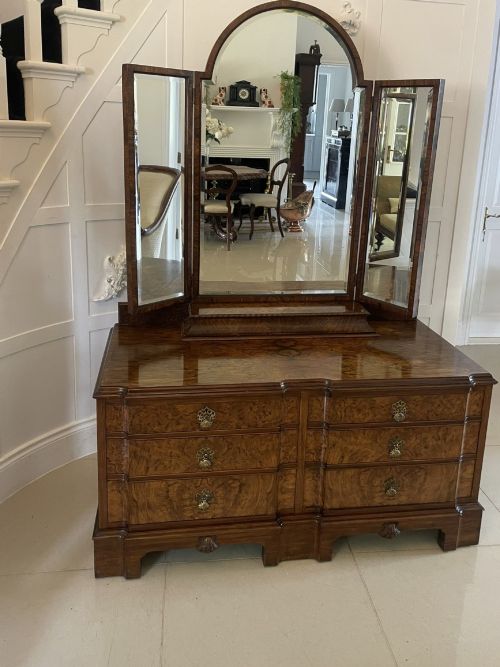


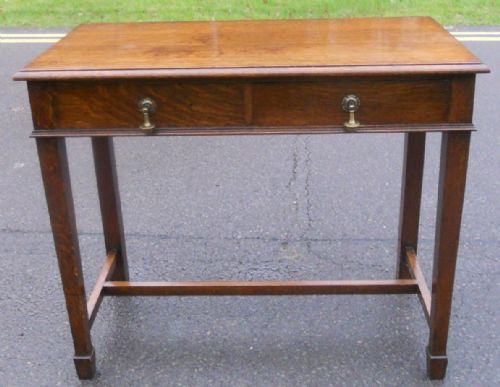

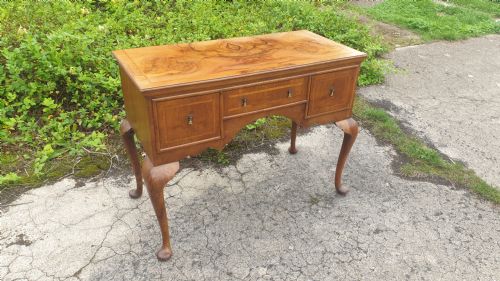

Edwardian Lowboy Desk
These edwardian lowboy desk pieces are compact tables with drawers designed for writing and dressing, offering timeless elegance for modern homes.
Edwardian Lowboy Desk
When you search for an edwardian lowboy desk, you are looking at small functional tables designed with drawers, commonly functioning as dressing tables or writing desks. The pieces listed on this page span several periods, including the Edwardian era, the nineteenth century, and the eighteenth century.
The forms found in these listings include lowboys, side tables, serving tables, and dressing tables. You are most likely to meet Edwardian examples alongside Queen Anne and Georgian style revivals that replicate earlier aesthetic traditions.
Originating from diverse periods, these items range from authentic eighteenth-century lowboys to later revivals from nineteen twenty and nineteenth-century interpretations. Each piece maintains the signature low-slung drawer configuration that defines the form.
Materials and construction
Cabinet makers utilised a variety of timbers including walnut, burr walnut veneer, mahogany, and oak to construct these tables. Secondary elements incorporate boxwood for inlay work and brass for drawer hardware.
Surface treatments and decorative techniques include feather banding, inlay, and mirror glass additions. Burr walnut veneer provides distinctive figuring across drawer fronts and tabletops.
Some Edwardian dressing tables hide secret compartments behind their small drawers for secret correspondence.
Assessing quality and craftsmanship
Superior examples display careful timber selection, particularly in the figuring of burr walnut veneer and the precision of boxwood inlay. The integration of period details such as feather banding elevates the execution of revival pieces.
Construction standards depend upon the joinery of the drawer boxes and the retention of original brass fittings. The harmony of proportions between the low frame and the leg styling separates standard production from finer cabinet work.
Maple's of London
The Edwardian Lowboy Desk Glossary
- Lowboy
- A small table with one or more drawers, standing on relatively tall legs. This form originated in the late seventeenth century and remained popular through the Georgian period.
- Feather banding
- A decorative inlay technique using two strips of veneer laid side by side with the grain meeting at an angle to form a herringbone pattern. It frames drawer fronts and tabletops on finer walnut furniture.
- Burr walnut
- Wood taken from a walnut tree growth featuring swirling, knotted grain patterns. Craftsmen slice this timber into thin veneers to cover larger surfaces with striking visual texture.
- Inlay
- A technique where pieces of contrasting timber, such as boxwood, are inserted into recesses cut into the primary wood surface. This creates geometric or botanical patterns.
- Queen Anne style
- A design movement characterised by curved lines, cabriole legs, and pad feet. This aesthetic experienced revivals during the Edwardian period and the nineteenth century.
Edwardian Lowboy Desk: Frequently Asked Questions
What is an edwardian lowboy desk used for?
These tables function primarily as compact writing desks or dressing tables equipped with convenient drawer storage.
Their modest proportions allow them to fit easily into smaller rooms or hallways as side tables.
How do I identify an Edwardian piece?
Edwardian furniture often draws inspiration from earlier eras like the Queen Anne style while utilising machinery alongside traditional hand woodworking.
Look at the interior drawer construction and timber choices for clues regarding the manufacturing period.
What woods are used for these desks?
Mahogany, walnut, and oak form the primary structural timbers for these tables, supplemented by burr walnut veneer.
Details often include contrasting boxwood inlay and brass drawer pulls.
Where should I place a lowboy in my home?
A lowboy suits a bedroom as a dressing table or a living room as a decorative side table.
Its shallow depth makes it practical for narrow corridors and entryways.