


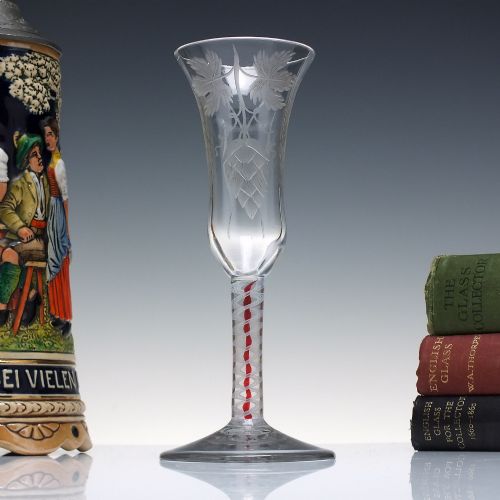
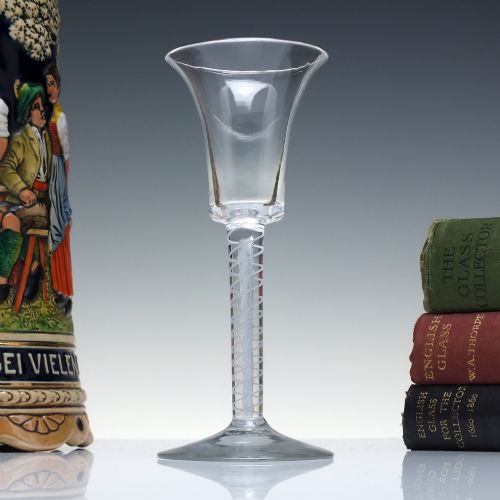
Georgian Opaque Twist Stem
A georgian opaque twist stem brings eighteenth-century drinking vessels to life with intricate white enamel threads trapped inside clear lead glass.

Georgian Opaque Twist Stem
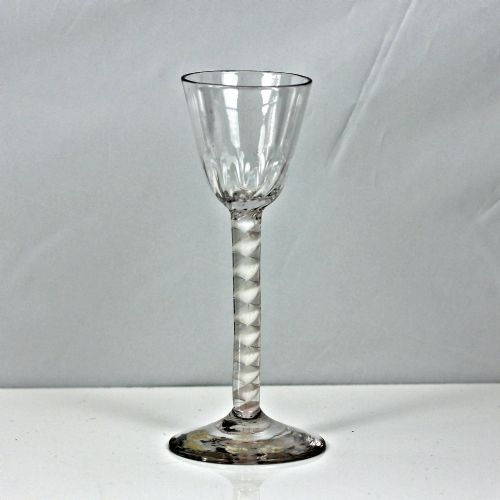
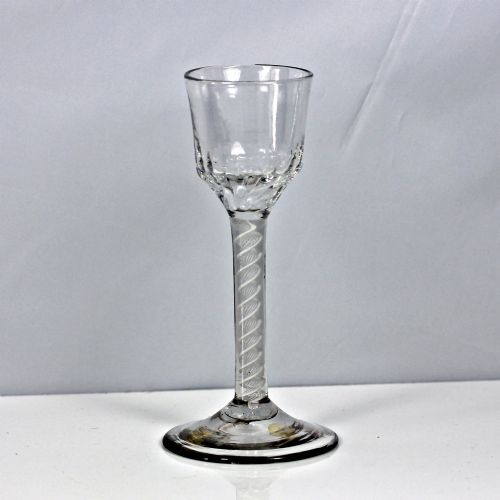
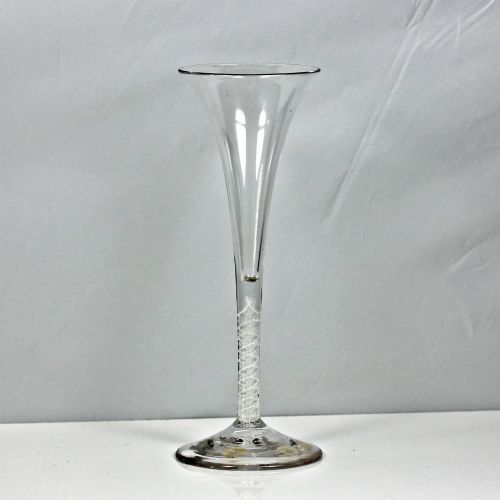
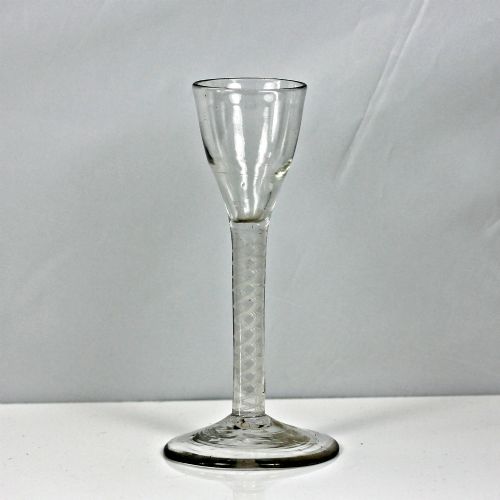
A georgian opaque twist stem forms the defining feature of eighteenth-century drinking vessels designed for wine, ale, champagne, or cordials. These glasses belong firmly to the Georgian era, specifically dating from the mid to late eighteenth century.
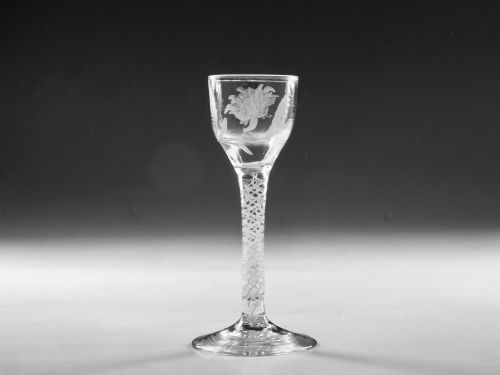
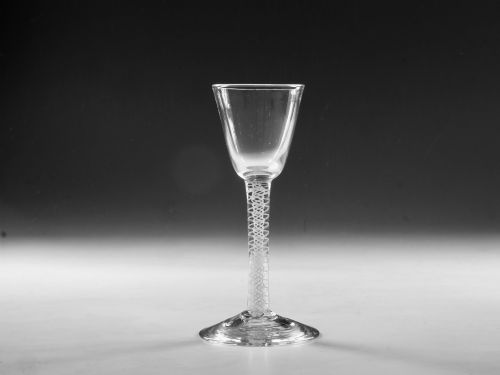
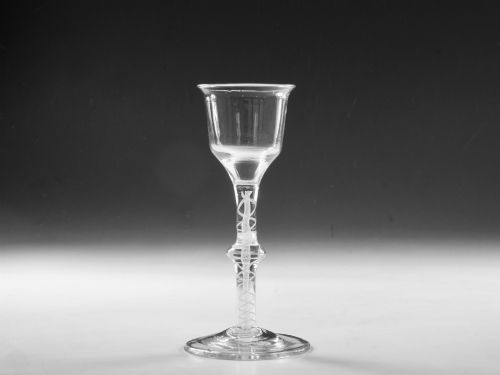
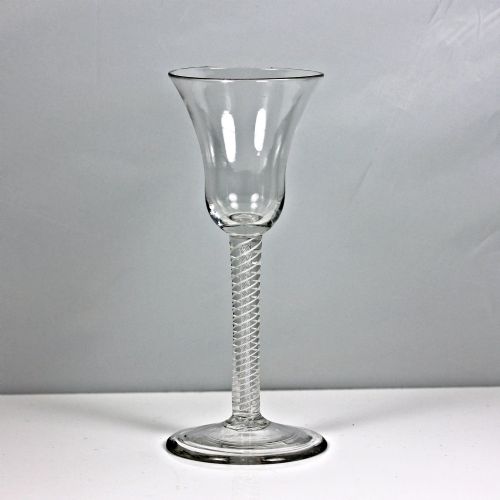
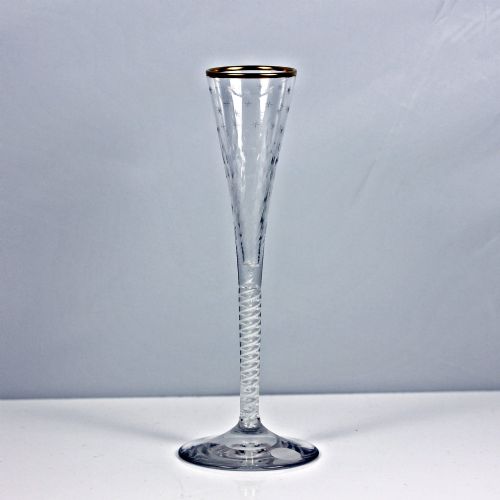
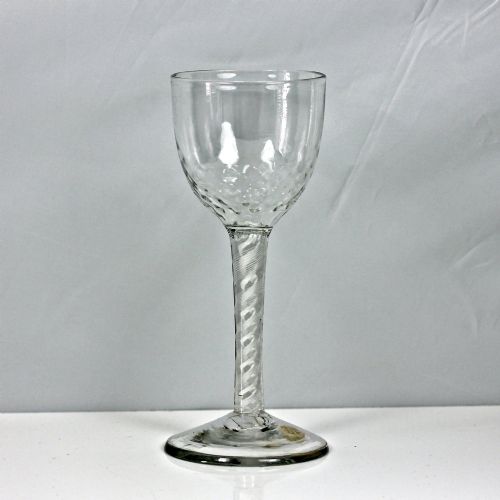
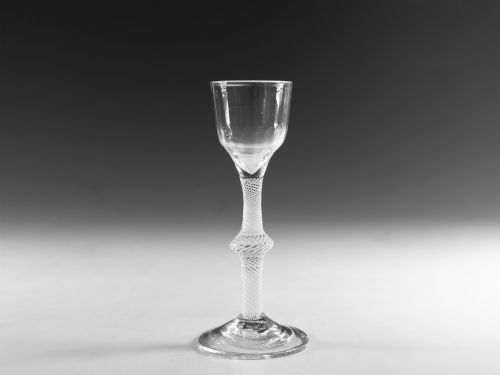
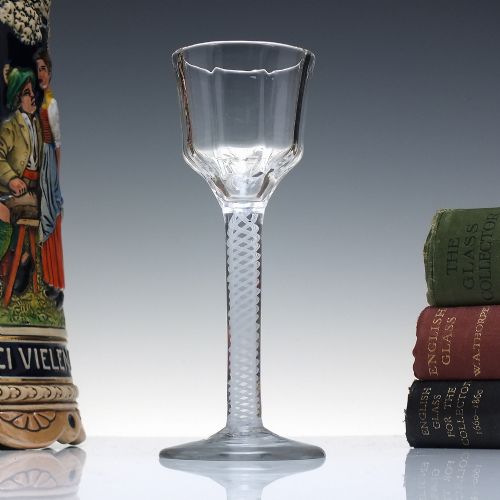
The form typically centres on a wine glass featuring a trumpet, ogee, flared bucket, or flute-moulded bowl atop a slender stem enclosing white enamel canes. Variations include sweetmeat glasses, ale glasses, and cordials fitted with single, double, or multi-spiral twists.
Most examples originate from English glasshouses working in lead glass and flint glass. Collectors encounter straightforward wine glasses most frequently, alongside occasional champagnes and tall goblets.
What varies in quality
The precision and complexity of the enamel twist dictate much of the visual appeal, moving from simple single spirals to dense multi-spiral formations. Master glassmakers achieved remarkable symmetry in the internal threads, whereas lesser examples show uneven spacing or wandering canes.
Proportion and bowl form also influence the standing of a piece, with well-balanced trumpet or ribbed ogee bowls resting harmoniously upon stable conical feet. Added knops, composite stem structures, or fine surface engraving elevate specific vessels above standard tavern ware.
Georgian Opaque Twist Stem Retail Price Guide 2026
Typical asking prices for georgian opaque twist stem among the pieces listed under this phrase on Sellingantiques today, from the lower quarter to the upper quarter. They describe what is for sale here now, not the wider market.
Listings feature eighteenth-century drinking vessels in lead glass and flint glass, showcasing single, double, and multi-spiral opaque white enamel twists.
The Georgian Opaque Twist Stem Glossary
- Opaque twist
- A stem featuring white enamel glass rods drawn into spirals within clear lead glass. This technique gained popularity in mid-eighteenth-century English glass production.
- Double series
- A stem configuration containing two distinct sets of opaque enamel twists, usually an outer cable surrounding an inner core of threads. This method creates a denser optical effect than single strands.
- Ogee bowl
- An S-shaped vessel profile curving outward at the rim and inward toward the base. It appears frequently on eighteenth-century drinking glasses.
- Knop
- A knob or swelling on the stem of a glass. Makers added these decorative elements singly or in multiples to improve balance and appearance.
- Sweetmeat glass
- A wide, shallow vessel intended for serving small confections or preserves. These pieces often share the same stem styles as contemporary wine glasses.
Georgian Opaque Twist Stem: Frequently Asked Questions
What is an opaque twist glass?
An opaque twist glass is an eighteenth-century drinking vessel featuring white enamel threads sealed inside a clear lead glass stem. These threads were manipulated while hot to form delicate spiral patterns.
Such glasses emerged during the Georgian period as a popular alternative to earlier air twist and plain stems. They remain highly sought after by collectors of antique glassware.
Were these glasses used for wine?
These vessels served various dining table functions, primarily holding wine, ale, champagne, or cordials. Their capacities and bowl depths varied according to the specific drink.
Smaller conical bowls suited potent cordials, while trumpet and ogee bowls accommodated wines of the period. Taller flutes were reserved for sparkling beverages.
How should I display antique stemware?
Displaying eighteenth-century stemware requires stable shelving away from direct sunlight and heavy foot traffic vibrations. Proper spacing prevents accidental contact between delicate conical feet and thin bowls.
Enclosed cabinets protect the lead glass surfaces from dust accumulation. Adequate interior lighting highlights the internal white enamel spirals effectively.