


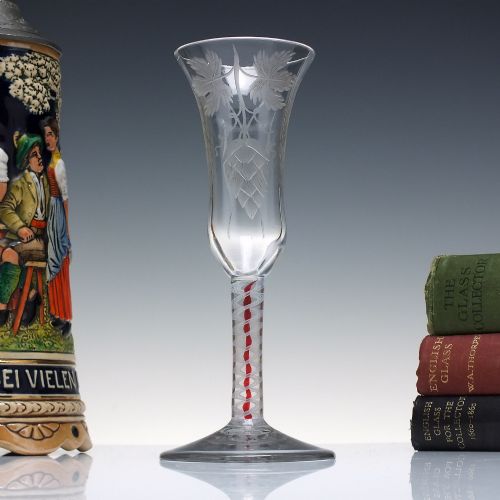
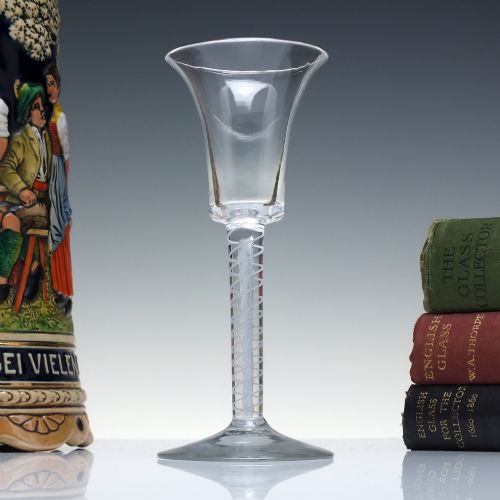
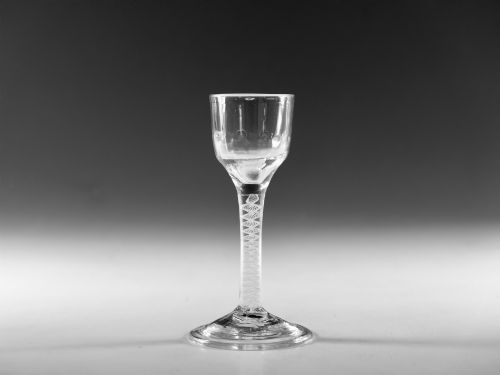
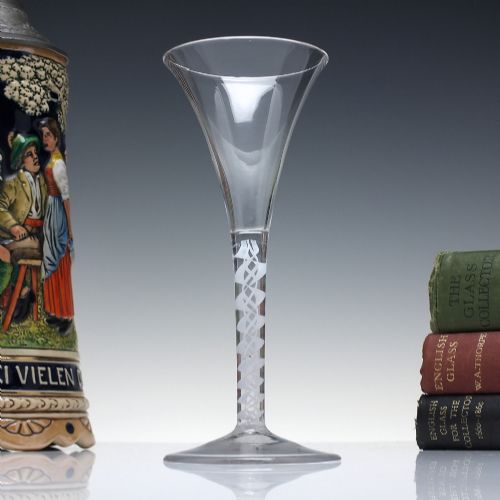


Georgian Opaque Twist Glass
Georgian opaque twist glass drinking vessels bring 18th-century craftsmanship to the table through brilliant white enamel threads sealed inside lead crystal stems.
Georgian Opaque Twist Glass
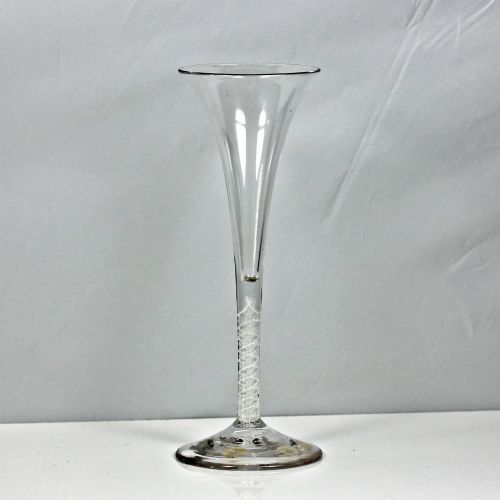
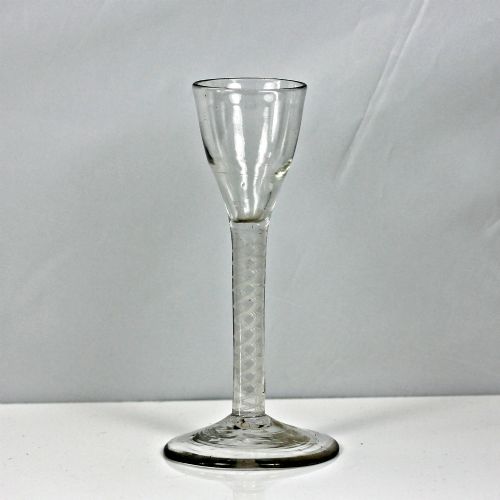
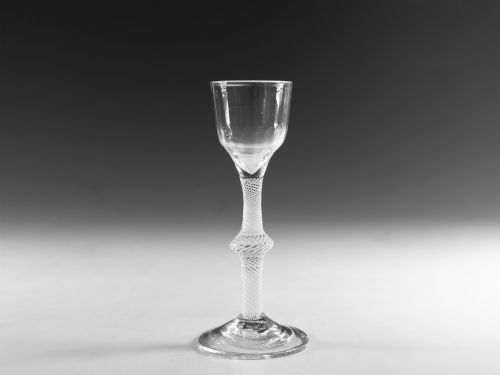
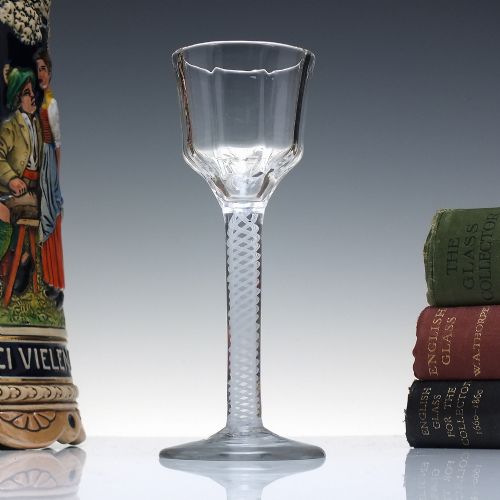
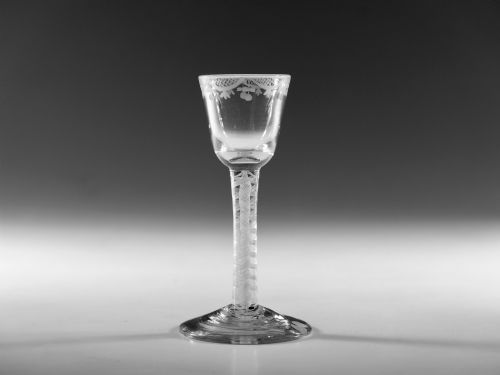
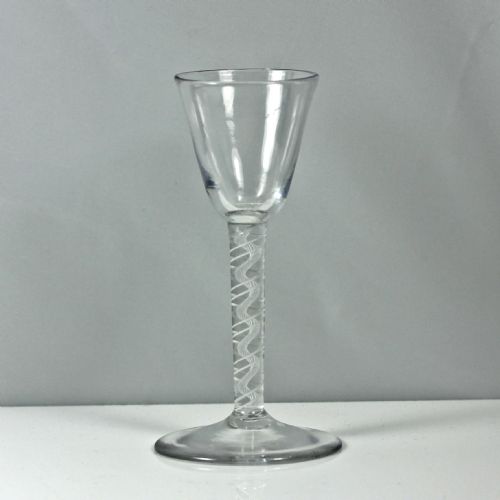
When you search for georgian opaque twist glass, you are looking at drinking vessels produced primarily during the eighteenth century featuring distinctive white or coloured enamel threads enclosed within the glass stem. The pieces listed on this page are predominantly wine glasses, alongside ale glasses, champagnes, cordials, and sweetmeat glasses originating from the Georgian period.
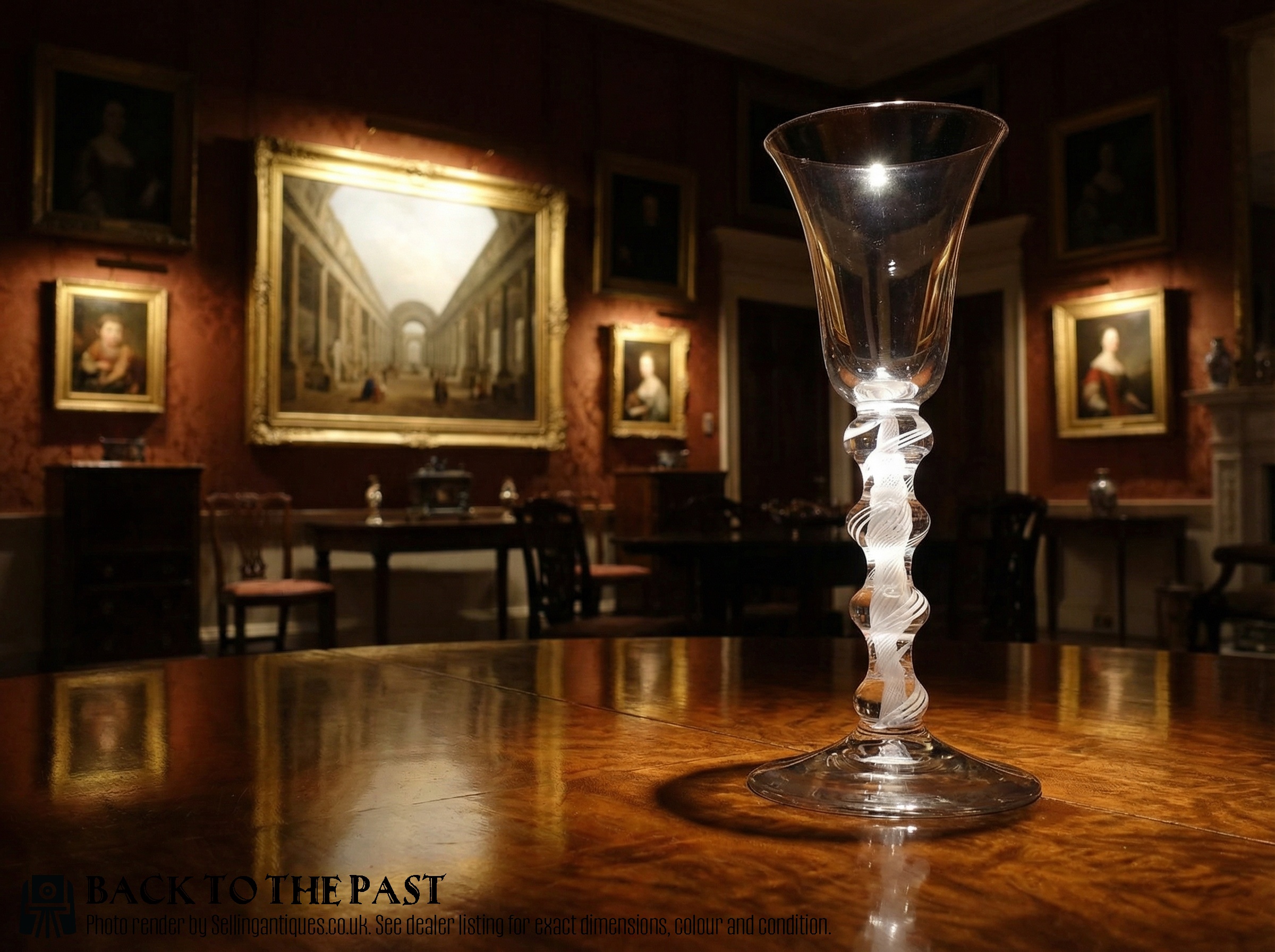
You will most frequently encounter the double series opaque twist, where two distinct sets of enamel threads spiral down the stem, often paired with standard ogee or trumpet bowls. Single series variations, multi-spiral formats, and mixed twists incorporating clear glass threads also appear regularly across the inventory.
While the majority of examples date from the mid-18th century around 1760, occasional Victorian interpretations demonstrate the enduring appeal of these stems. Bowls vary from bell and ovoid to flute-moulded and waisted bucket shapes, sitting upon conical or terraced feet.
How they were made
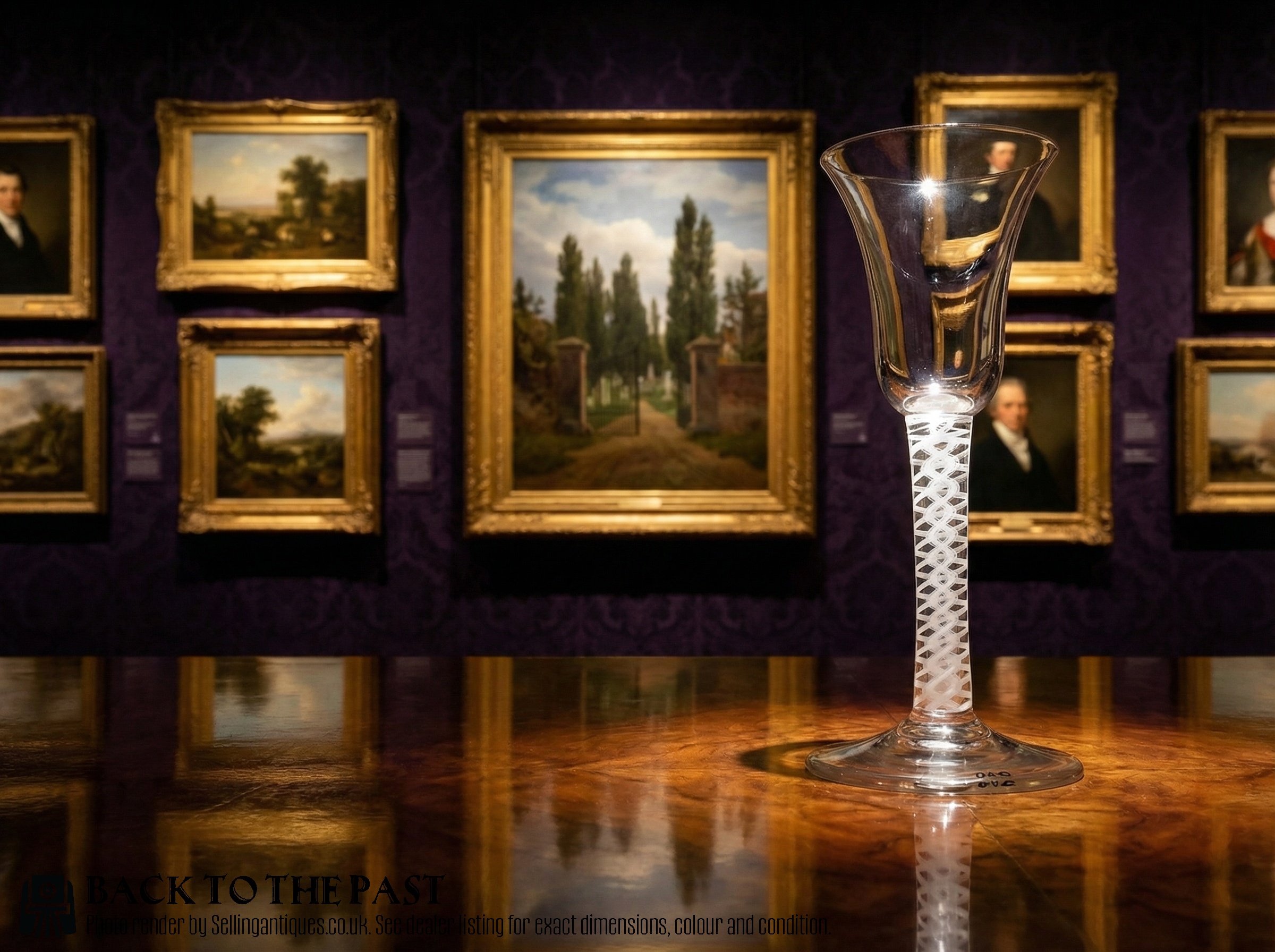
Glassmakers created these stems using lead glass or flint glass, combining clarity with the weight necessary for hand-blown drinking vessels. Enamel or white enamel was drawn into fine threads and arranged inside a cylindrical mould before molten clear glass was gathered over the top.
The combined mass was then reheated and twisted while being drawn out to the required length, sealing the opaque threads permanently within the stem. Artisans subsequently shaped bowls separately and attached them to the twisted stems alongside conical feet.
Georgian Opaque Twist Glass Retail Price Guide 2026
Typical asking prices for georgian opaque twist glass among the pieces listed under this phrase on Sellingantiques today, from the lower quarter to the upper quarter. They describe what is for sale here now, not the wider market.
Some sturdy 18th-century examples were built with heavy feet specifically designed to survive enthusiastic tavern table-thumping during toasts.
What varies in quality
Quality rests in the precision and complexity of the internal twist, distinguishing simple single-series stems from intricate multi-spiral or multi-knop configurations. Regularity in the spiral threads and clarity in the surrounding lead crystal elevate certain pieces above standard production.
The presence of supplementary decorative techniques, such as delicate floral, Jacobite, or vine engraving upon the bowl, alters the character of the vessel. Structural additions like terraced feet, multiple knops, or moulded bowl fluting also indicate higher levels of original craftsmanship.
James Giles
The Georgian Opaque Twist Glass Glossary
- Double series
- A stem configuration featuring two distinct pairs or sets of opaque enamel twists operating simultaneously. One set typically comprises a pair of heavy spirals while the other forms finer inner threads.
- Ogee
- A bell-shaped bowl featuring an 'S' profile that curves outward at the rim. This form was widely utilised for wine and ale glasses during the Georgian era.
- Knop
- A decorative swelling or bulge formed on the stem of a glass. These can be single, double, or multiple, adding tactile weight and visual interest.
- Sweetmeat glass
- A wide, shallow bowl form designed for serving small confectionery or sweet preserves rather than standard beverages. They frequently feature dentated or flanged rims.
- Firing glass
- A heavy-based drinking vessel utilised during fraternal or political toasts. The thick foot produced a loud sound when struck against a table instead of traditional cheering.
Georgian Opaque Twist Glass: Frequently Asked Questions
What is an opaque twist glass?
An opaque twist glass is a drinking vessel featuring white or coloured enamel glass threads sealed inside a transparent lead crystal stem. These pieces date primarily from the mid-18th century.
The technique creates intricate optical patterns that remain permanently protected within the solid glass structure of the stem.
How do I identify a Georgian twist glass?
Georgian examples display characteristic hand-blown traits, such as pontil marks on the underside of the foot and slight variations in the bowl symmetry. The metal itself possesses the heavy feel and deep ring typical of 18th-century lead glass.
Stem structures rely entirely on enclosed enamel threads rather than surface-cut patterns or later pressed glass manufacturing methods.
Were these glasses used for wine?
While many were indeed utilised for wine, the category encompasses several distinct drinking forms including ale glasses, cordials, champagnes, and dram glasses. Each vessel shape suited the specific viscosity and serving volume of the beverage.
Smaller cordial and dram bowls handled potent spirits, while taller flutes and ogee bowls accommodated wines and ales.