



Georgian Oak Tilt Top Table
A georgian oak tilt top table combines practical utility with ingenious folding mechanisms designed to save floor space in period interiors.
Georgian Oak Tilt Top Table
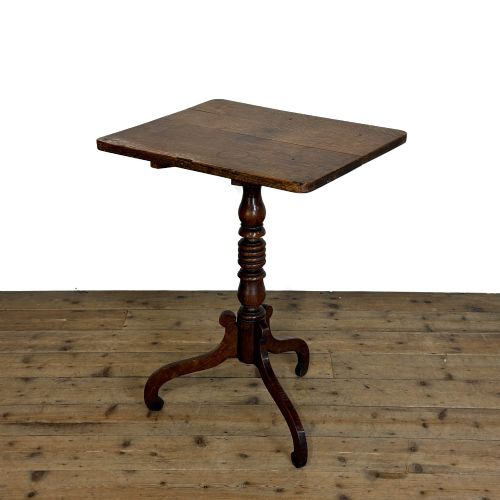
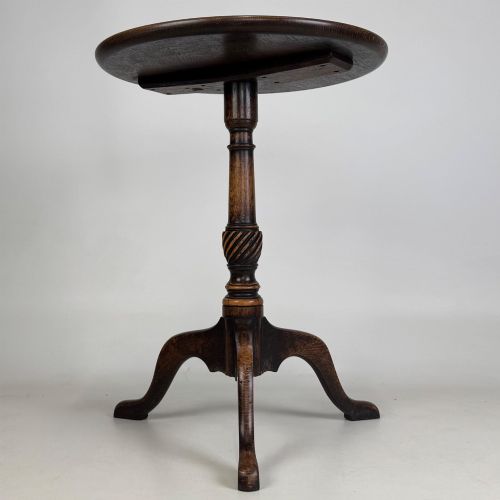
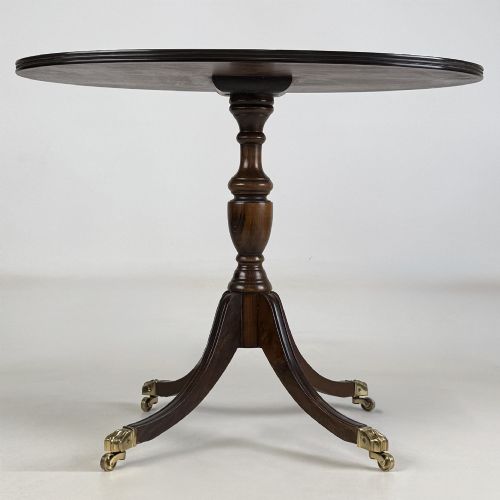
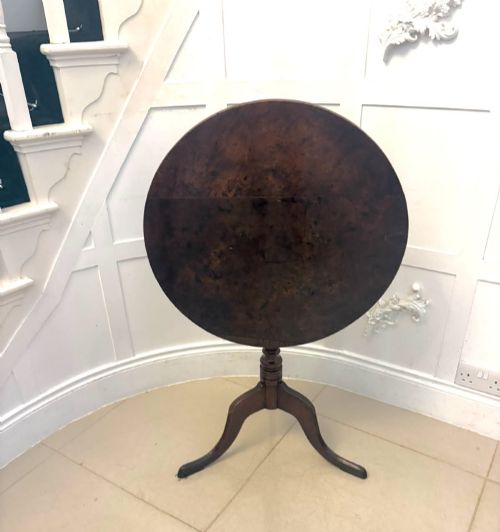
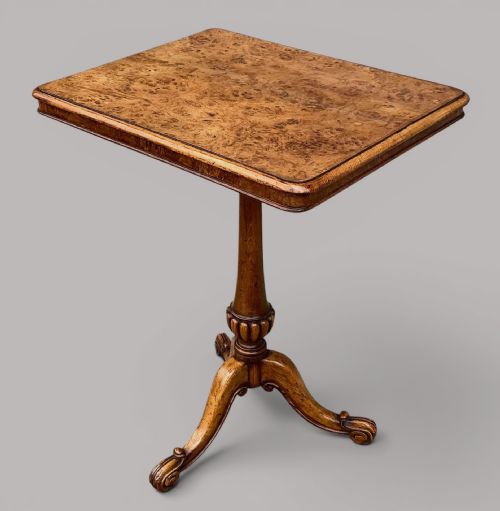
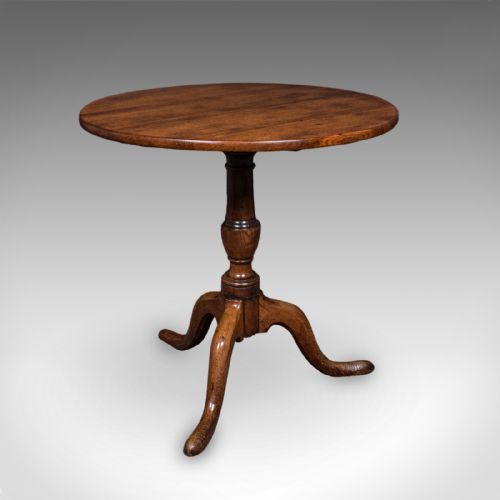
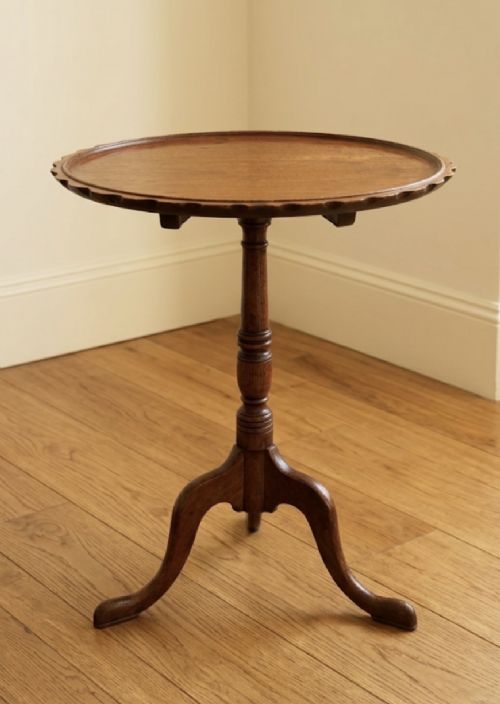
When searching for a georgian oak tilt top table, buyers encounter tripod base supports holding circular or occasional tops. The pieces span the eighteenth century and into the nineteenth century, including vernacular and country forms as well as formal Georgian designs.
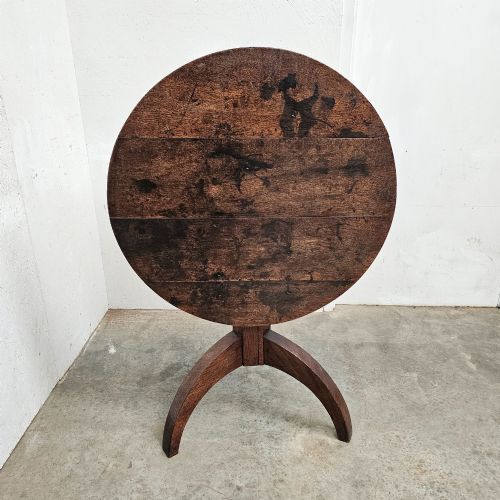
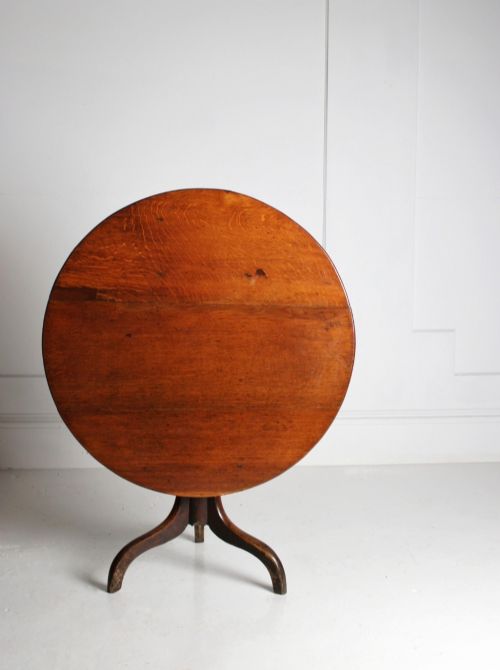
Most examples function as wine tables, lamp tables, or supper tables with clever pivoting mechanisms. The tilt top allows the surface to rest vertically against the pedestal when not in use, fitting neatly into corners.
What Varies in Quality
Quality rests upon the crispness of the timber grain, the proportion of the tripod legs to the top, and the integrity of the pivoting mechanism. Finer pieces display careful selection of burr oak or figured timber alongside slender, well-turned pedestals.
Country pieces show simpler construction with thicker timbers and straightforward peg joints, whilst refined examples achieve greater elegance through balanced proportions and subtle shaping on the legs and edge of the top.
Some nineteenth-century breakfast tables arrived with clever birdcage frames that let guests spin the entire surface mid-conversation.
The Georgian Oak Tilt Top Table Glossary
- Tilt top
- A table mechanism allowing the wooden surface to pivot upright on its pedestal. This enabled the furniture to stand flat against a wall when the room required empty floor space.
- Tripod table
- A small stand supported by three legs radiating from a central pillar. This configuration offered stability on uneven historical floorboards.
- Birdcage
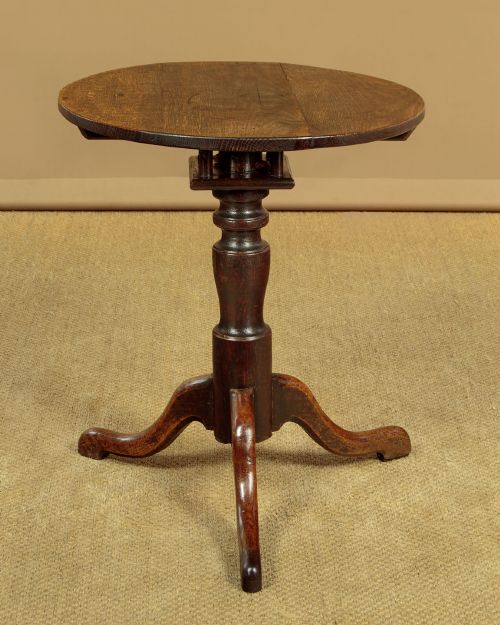
- A timber framework beneath the table top that permits both rotation and tilting actions. It uses parallel discs connected by small spindles.
- Snaptop table
- An alternative period term for a table with a pivoting top secured by a catch. The mechanism snaps into a horizontal position during use.
- Vernacular furniture
- Pieces made by regional craftsmen using local traditions rather than following strict metropolitan pattern books. These objects often display practical construction and straightforward materials.
Georgian Oak Tilt Top Table: Frequently Asked Questions
What is a tilt top table used for?
These tables served multiple functions in domestic interiors, acting as occasional surfaces for drinks, reading, or small meals. Their pivoting mechanism meant servants could easily store them against walls to clear rooms for dancing or other activities.
Over time, owners moved them beside chairs or beds as lamp and side tables. Today, they continue to serve these same practical roles in sitting rooms and studies.
How do you operate the tilt mechanism?
The top pivots on a horizontal axis fixed to the top of the central pillar. A small wooden catch or peg beneath the surface releases the top so it can tilt upward.
When returning the table to a horizontal position, the catch engages automatically to lock the surface in place. Birdcage versions allow the top to rotate as well as tilt.
Are these tables stable on three legs?
Three-legged tripod bases maintain firm contact on uneven floors where four legs might rock. The splayed design distributes weight outward to prevent tipping during normal use.
Care should be taken when placing heavy objects near the very edge of the overhanging top. The balanced weight of the central column keeps the entire structure upright.
How do I date an oak tilt top table?
Dating relies on observing construction marks, timber choice, and leg styling. Eighteenth-century examples often display simpler hand-turned posts and pegged tenons, whilst later nineteenth-century pieces may incorporate veneers or revival details.
Hardware such as brass catches or iron fixings also provides clues to the period of manufacture. Comparing the patination of the wood helps confirm the age of the top relative to the base.