
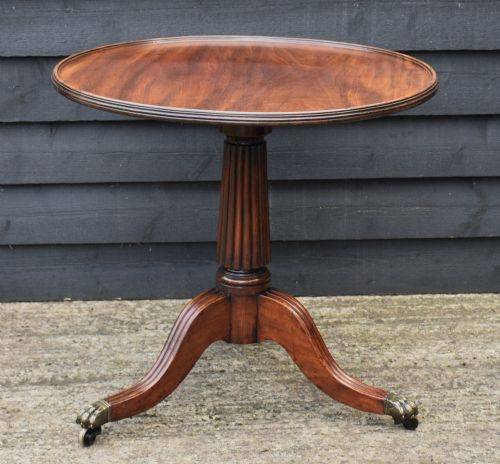
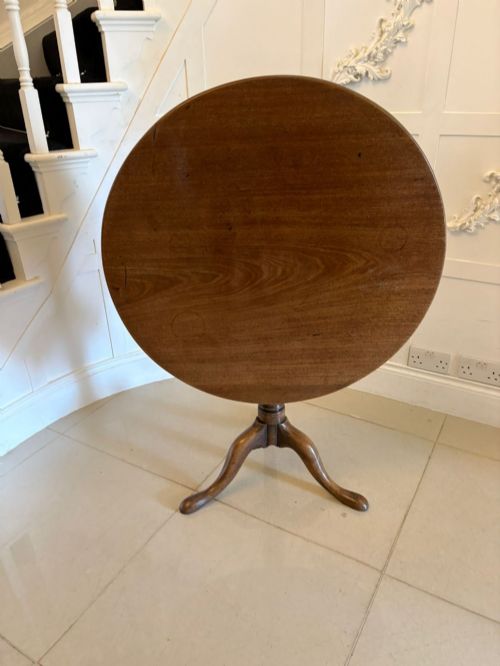
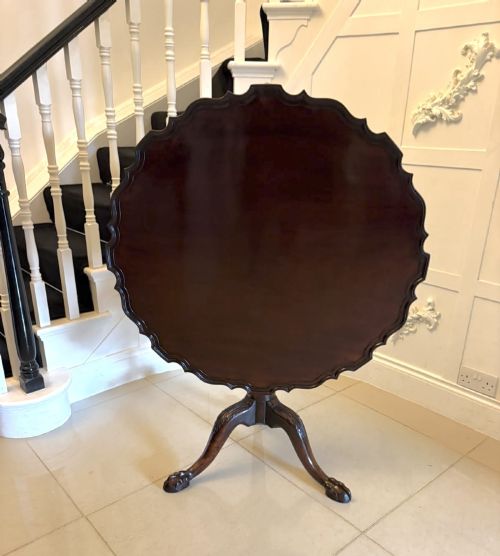
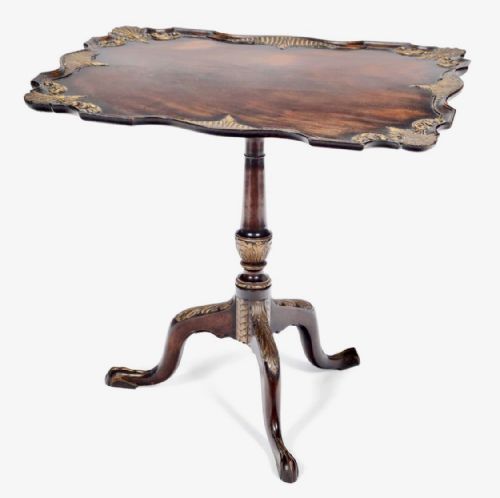
Georgian Tilt Top Tea Table
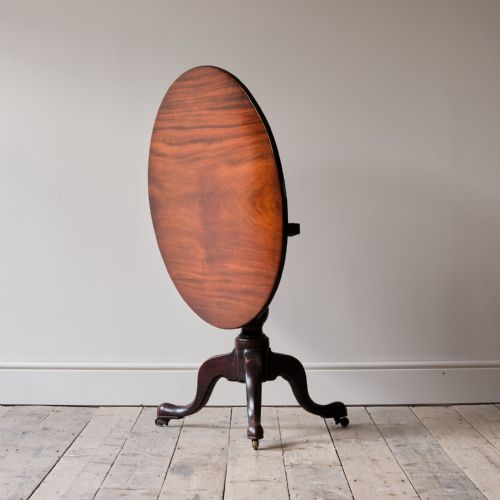
A georgian tilt top tea table combines ingenious pivoting mechanics with rich timber, designed to save space when stowed against a wall.
Georgian Tilt Top Tea Table
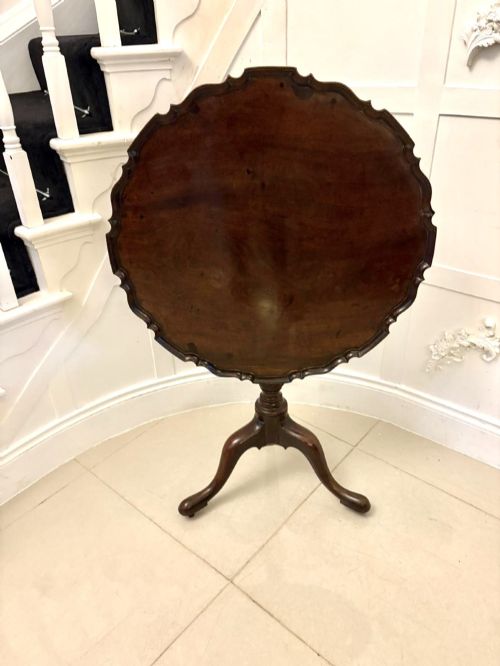
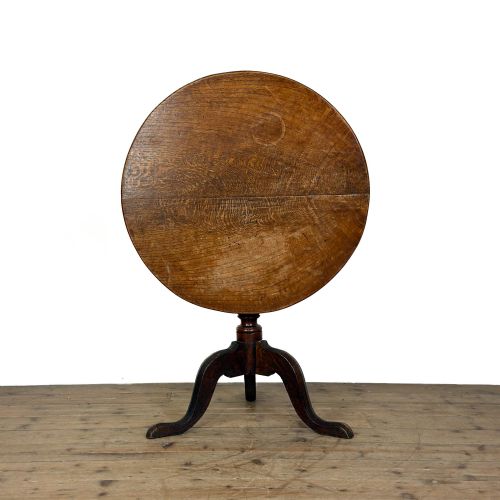
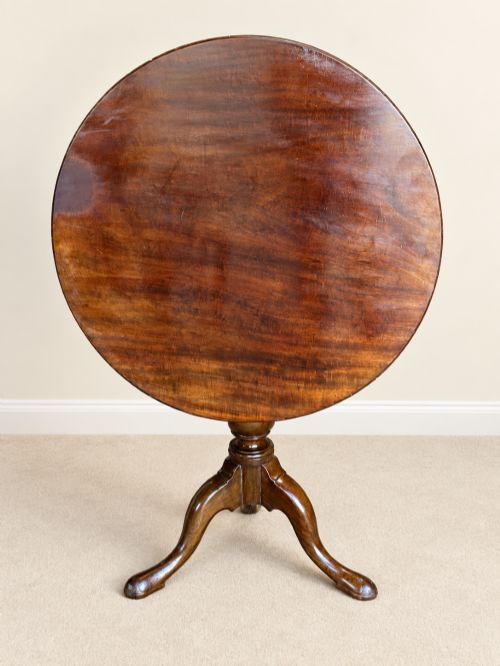
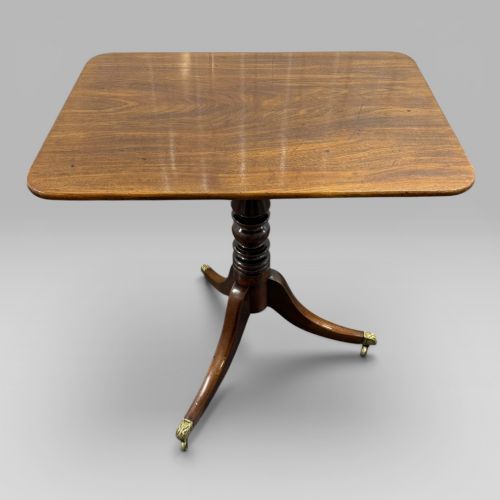
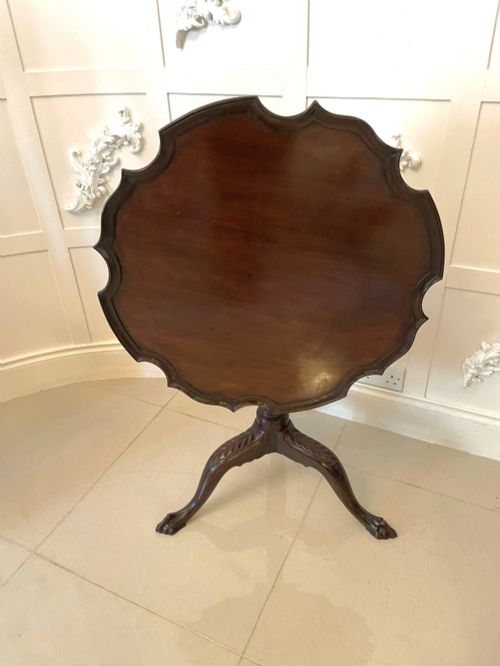
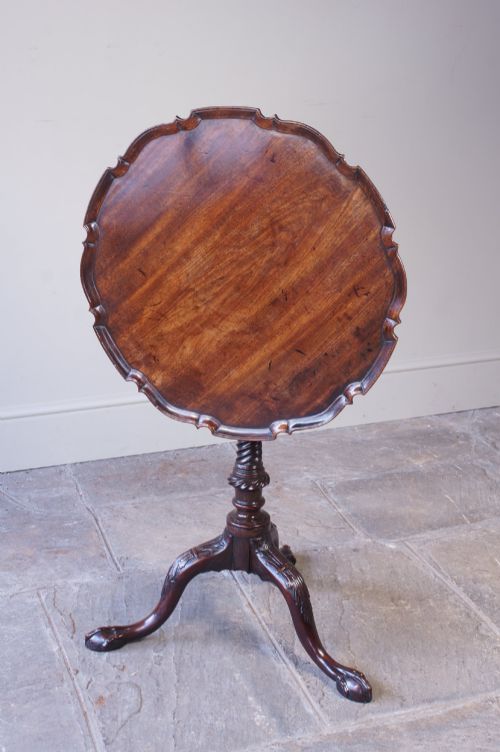
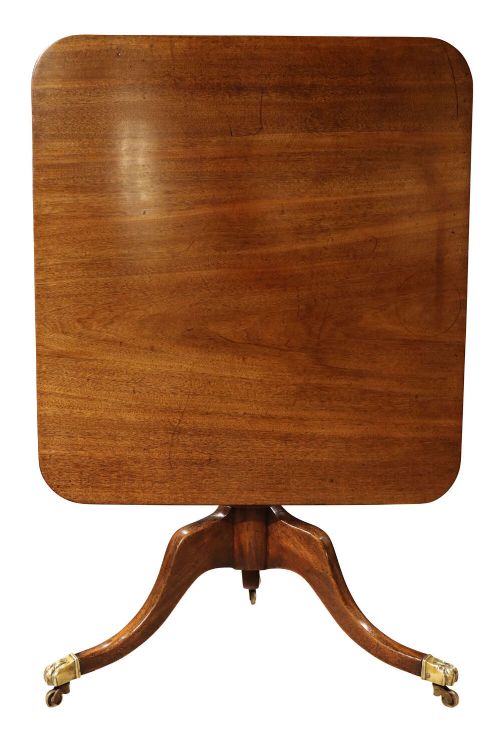
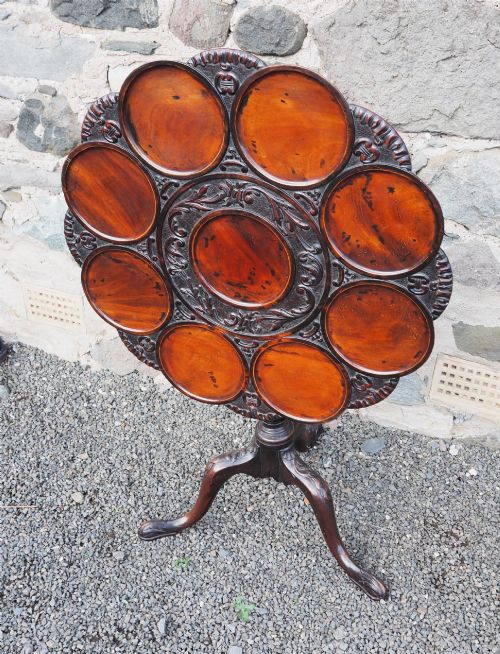
A georgian tilt top tea table is an occasional piece engineered with a hinged mechanism allowing the top to pivot upright when not in use. These circular or serpentine tables served evening gatherings and supper service in domestic interiors.
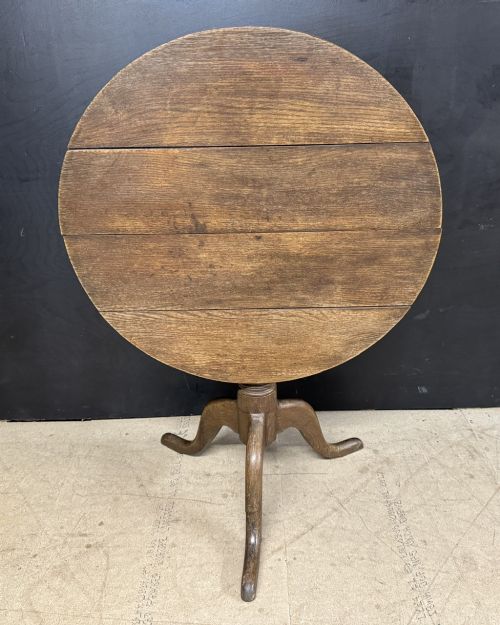
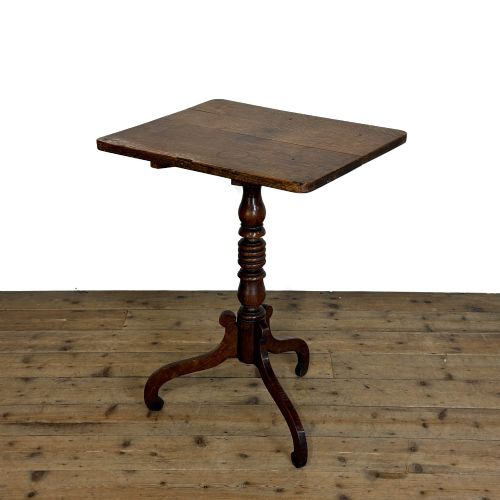
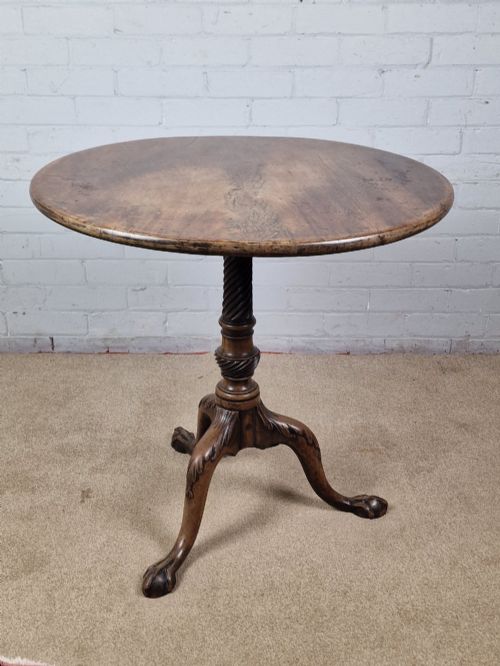
The version most commonly met on this page is the tripod base format, supported by three cabriole or straight legs terminating in pad, claw and ball, or spade feet. Examples range from plain country oak and fruitwood iterations to formal mahogany and red walnut designs.
Materials and Construction
Cabinetmakers utilised dense timbers such as mahogany, oak, walnut and fruitwood, turning central pedestals from solid stock and sawing thick planks for the tops. Grain selection mattered deeply, with burr veneers and Cuban mahogany reserved for high-status commissions.
The pivoting action relied on sophisticated joinery, frequently incorporating a birdcage mechanism - a small rotating box frame atop the pillar that allowed the surface to both tilt and spin.
Materials recorded across the archive include mahogany, burr walnut, oak, fruitwood, and occasional parcel gilt accents.
Assessing Distinction
Quality rests upon the crispness of the carving on the knees and feet, the weight and stability of the tripod stance, and the structural integrity of the tilting mechanism. Finer pieces display moulded or pie crust edges shaped directly from solid timber rather than applied moulding.
The choice of cabinet wood dictates grade, where figured veneers, rich patination and thick single-board table tops elevate an example far above utilitarian counterparts.
The Georgian Tilt Top Tea Table Glossary
- Birdcage
- A revolving wooden framework beneath the table top that enables the surface to tilt and rotate independently. This complicated mechanism adds considerable stability and desirability.
- Pie crust
- A raised, scalloped edge carved directly from the solid timber of the table top. This intricate border mimics pastry crusts popular in formal 18th-century dining.
- Tripod base
- A pedestal support branching into three legs, typical of occasional tables from this era. It provides a stable stance on uneven floorboards.
- Snap top
- An alternative term for a tilt top table utilising a spring catch or brass catch to lock the horizontal surface securely in place.
- Cuban mahogany
- A dense, dark timber imported from the Caribbean, prized by cabinetmakers for its rich grain and capacity to hold sharp carving detail.
Georgian Tilt Top Tea Table: Frequently Asked Questions
How were these tables used originally?
These tables served primarily for serving tea, wine, or light supper in the parlour or drawing room. When the evening meal concluded, the top was tilted vertically and the piece pushed against the perimeter wall to clear the floor for dancing or conversation.
Their dual function as portable serving surfaces and compact wall furniture made them central to Georgian domestic hospitality. Servants could easily relocate them as gatherings shifted rooms.
What is a birdcage mechanism?
A birdcage is an ingenious assembly of small wooden turnings and blocks placed directly beneath the table top. It allows the surface to spin horizontally as well as tip vertically.
This construction prevents warping by letting the timber expand and contract naturally across the grain while offering superior mechanical movement.
How do I live with one today?
A tilt-top table functions brilliantly as an accent piece in a living room, hallway, or study. Leaving the top tilted showcases the joinery and grain when the table rests against a wall.
Keep them away from direct heat sources and strong sunlight to protect the polish and prevent timber shrinkage. Wax polish applied sparingly maintains the historic sheen.
How do I tell periods apart?
Early examples from the George II era often feature heavier proportions, dark red walnut timber, and vigorous cabriole legs with pad feet. Late 18th-century pieces under George III tend towards slender pillars, delicate tripod legs, and occasionally inlaid stringing or chess boards.
Revival pieces from the Edwardian and later periods display mechanical uniformity, cleaner internal glue blocks, and timber finishes lacking deep historic patination.