
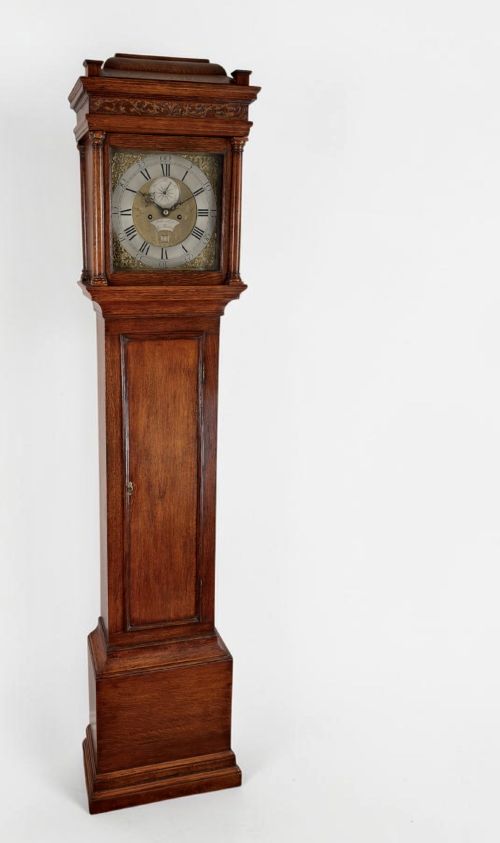
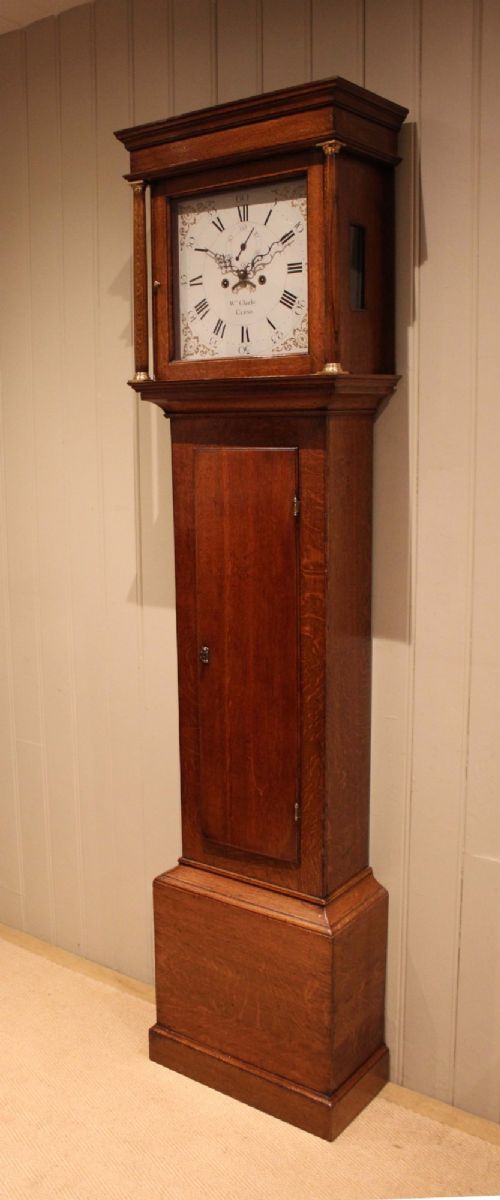
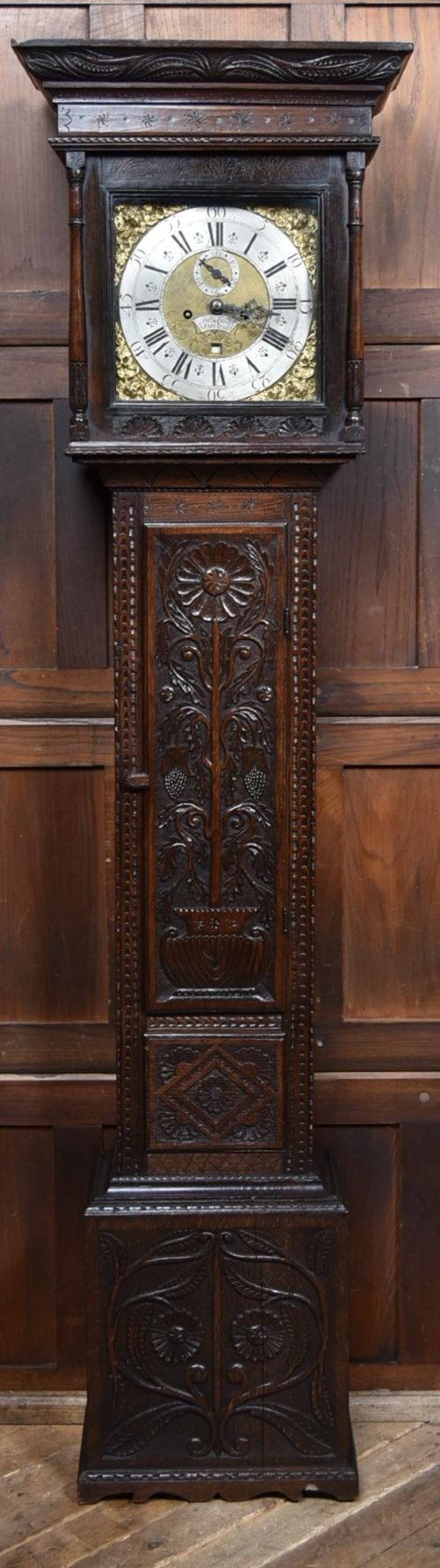
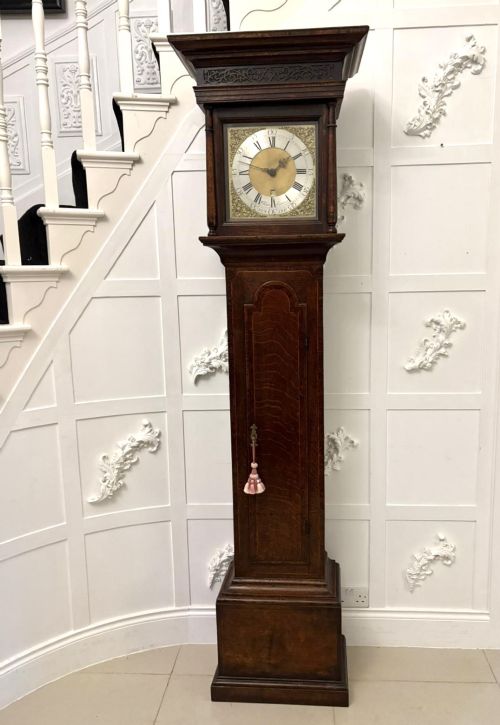
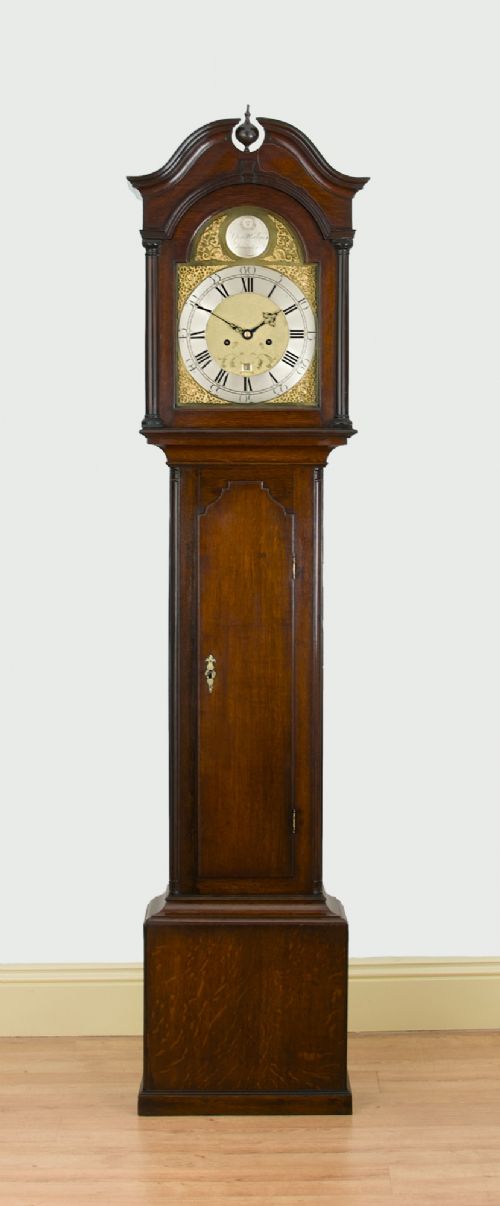


Georgian Oak Tall Clock
A georgian oak tall clock anchors a room with steady mechanical rhythm and the warm grain of 18th century timber.
Georgian Oak Tall Clock
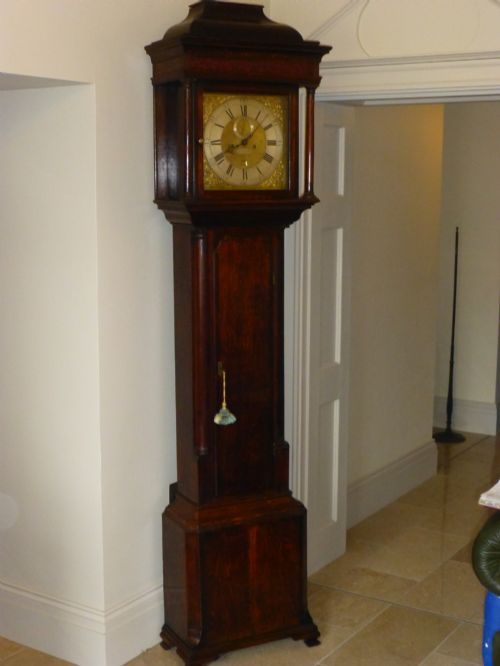
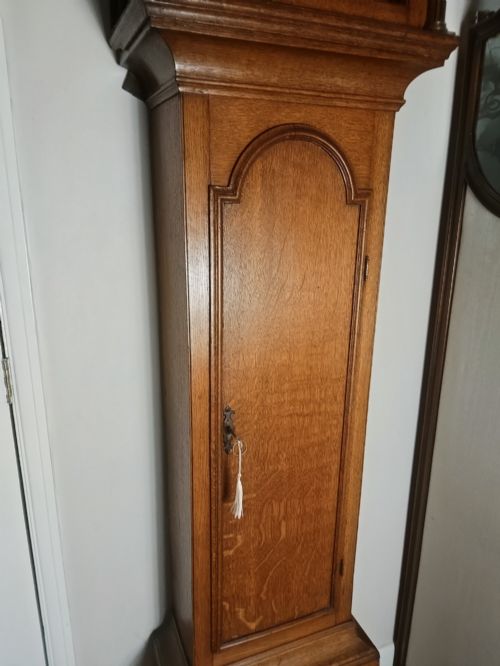
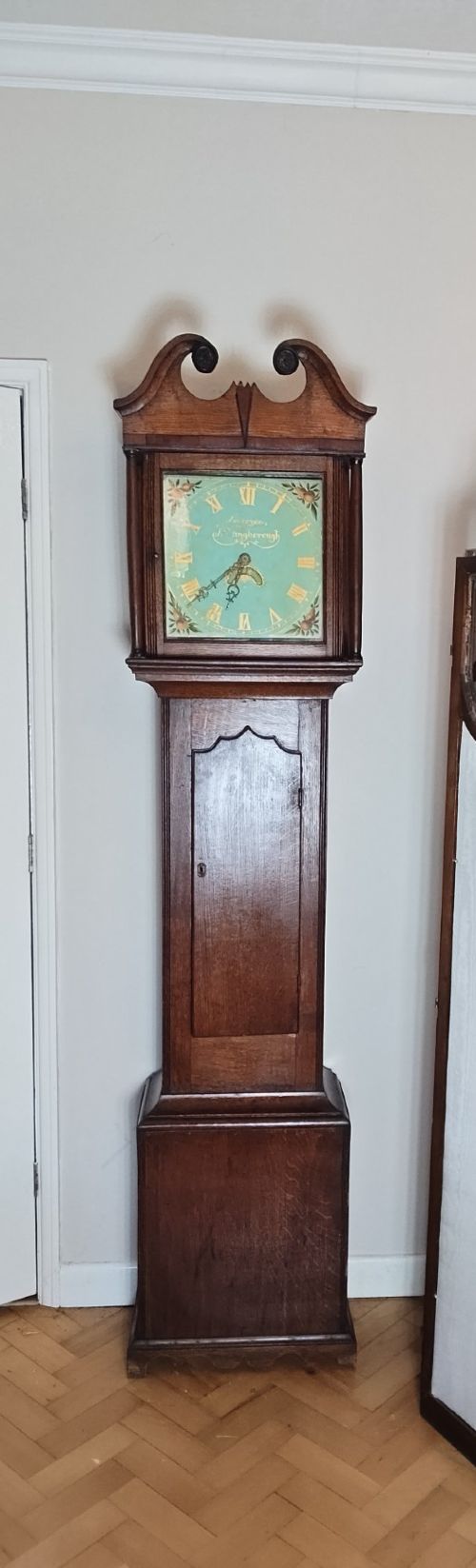
A georgian oak tall clock stands as a floor-standing timepiece housing a weight-driven movement within a tall wooden case. The pieces listed here span the Georgian era, the 18th century, and the early 19th century, frequently described as grandfather clocks or longcase clocks.
Most examples rely primarily on oak, often accented with mahogany, walnut, or burr oak crossbanding. Regional makers from towns such as Chester, Macclesfield, and Nottingham built these clocks to measure hours with steady precision.
Materials and Construction
Dial faces incorporate engraved brass, painted enamel, or glass protection panels to shield the hands and movement. Single-handed and eight-day movements sit within these timber housings, operated by lead or iron weights suspended on lines or chains.
Georgian Oak Tall Clock Retail Price Guide 2026
Typical asking prices for georgian oak tall clock among the pieces listed under this phrase on Sellingantiques today, from the lower quarter to the upper quarter. They describe what is for sale here now, not the wider market.
Listings feature oak, mahogany, walnut, brass, and glass, spanning the Georgian period, 18th century, and Regency eras.
Distinctions in Execution
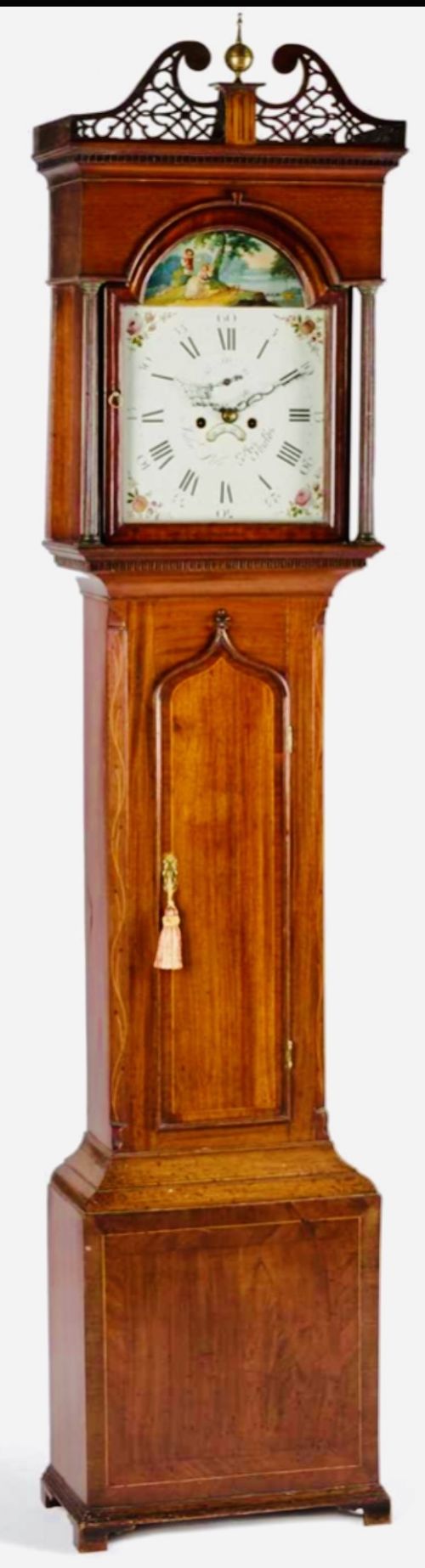
The degree of refinement in the cabinetwork separates standard regional clocks from more ambitious workshop productions. Secondary timbers like mahogany crossbanding or burr oak panels elevate the visual depth of the case.
Dial complexity also marks the hierarchy of these timepieces, moving from simple brass plates signed by provincial makers to arched dials featuring moonphase mechanisms and strike-silent options.
Lee of Great Marlow·Jn° Smith, Macclesfd·Richard Corless of Stockport·George Hallifax Of Doncaster·Thomas Webbe of New Quay·Edward White Birmingham·Thomas May Of Witney·Thomas Utting of Yarmouth·John Wylde, Nottingham
The Georgian Oak Tall Clock Glossary
- Longcase clock
- A tall pendulum clock enclosed in a wooden case designed to stand directly on the floor. This term is historically accurate for grandfather clocks.
- Moonphase
- A dial mechanism tracking the lunar cycle through a rotating disc showing the phases of the moon. It appears on more complex movements.
- Crossbanding
- A decorative border technique where strips of veneer are laid so the grain runs at right angles to the surrounding wood. Mahogany and walnut frequently provide this contrast on oak cases.
- Strike-silent
- A mechanism allowing the striking train of the clock to be disengaged so the clock remains quiet at night. It requires additional levers behind the dial.
Georgian Oak Tall Clock: Frequently Asked Questions
How do I wind an eight-day tall clock?
Winding involves inserting a crank key into the winding holes on the dial face and turning it slowly until the weight rises. Care must be taken not to overwind the mechanism.
Most eight-day movements require this action once a week, keeping the heavy iron or lead weights at the correct height inside the trunk.
What is the difference between single-handed and two-handed clocks?
Single-handed clocks use one pointer to indicate hours, with the dial subdivided to allow the reader to estimate minutes. They are typically found on earlier examples.
Two-handed clocks include separate hands for hours and minutes, offering greater precision in timekeeping as mechanical standards advanced through the Georgian period.
Where should I place a tall clock in my home?
A tall clock requires a stable, dry interior wall away from direct sunlight, central heating vents, and exterior doors. Fluctuations in temperature and humidity affect the wooden case and the expansion of internal metal parts.
Securing the tall case to the wall using a bracket prevents accidental tipping and ensures the pendulum hangs plumb for accurate beating.
How do I date an oak longcase clock?
Dating relies on stylistic clues in the dial design, the shape of the hood, and the construction methods used in the oak case. Brass dial corners, known as spandrels, changed in pattern across different decades.
Maker signatures on the dial or movement backplate often allow reference to historical trade directories, narrowing the production period down to a specific decade.