
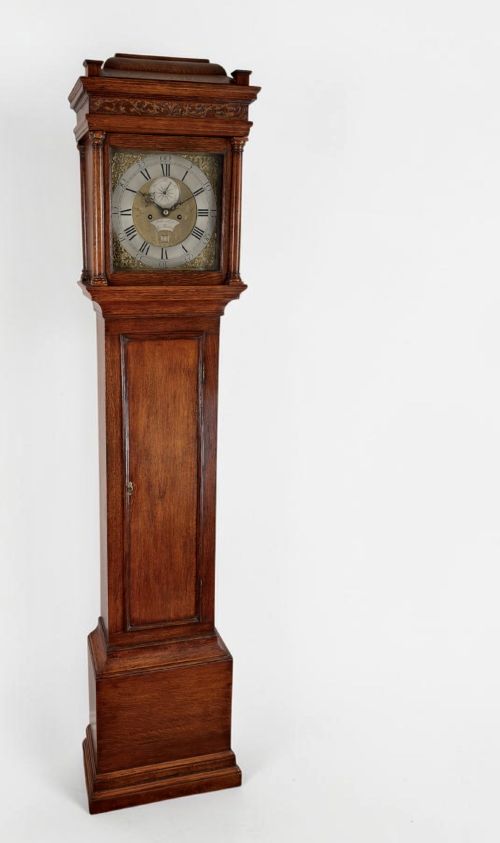
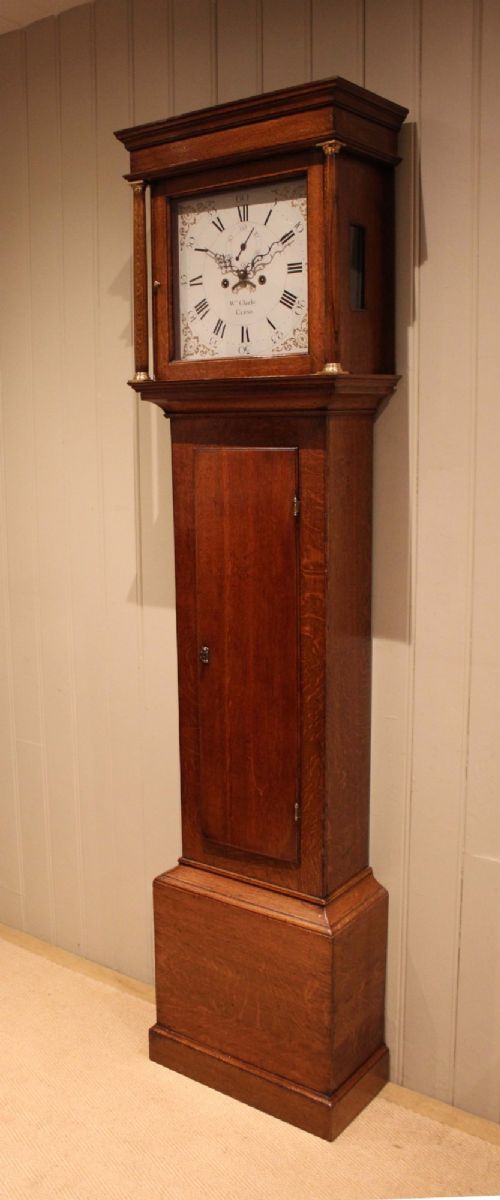
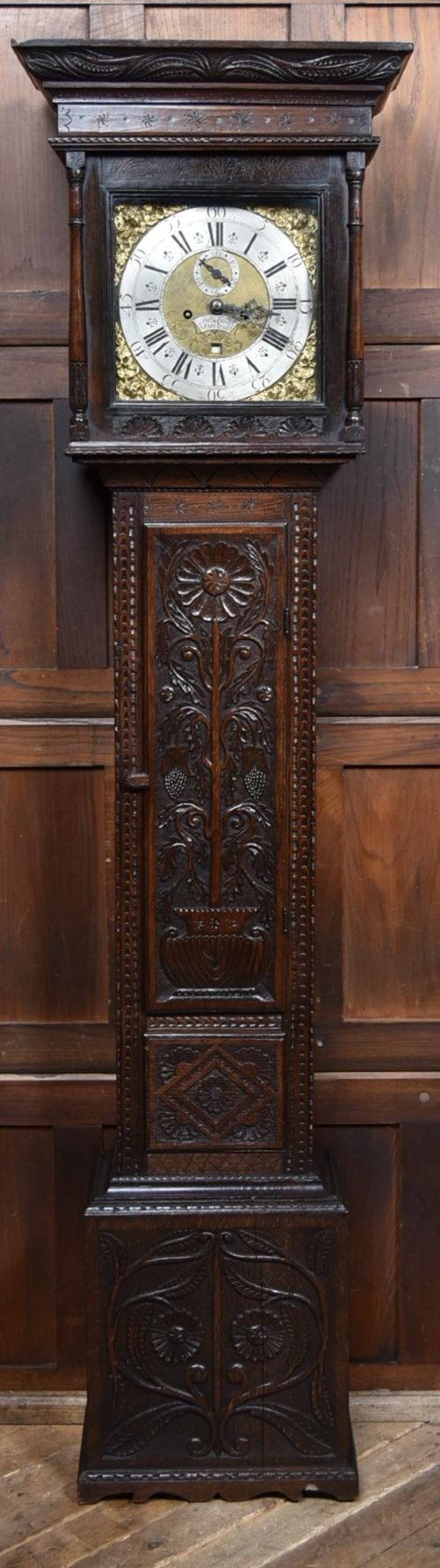
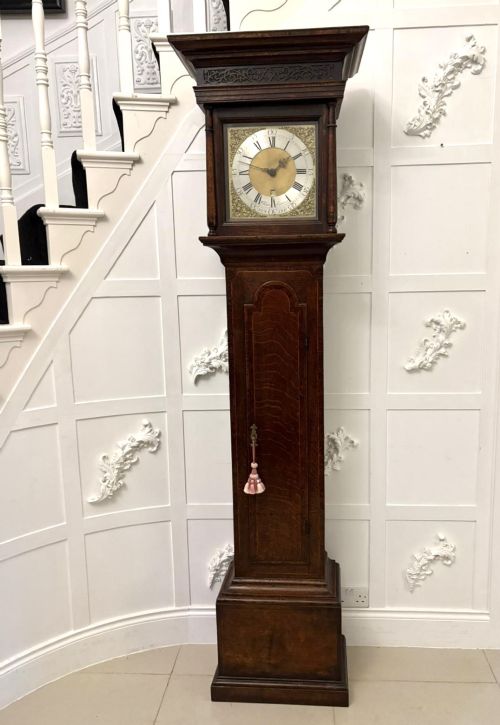
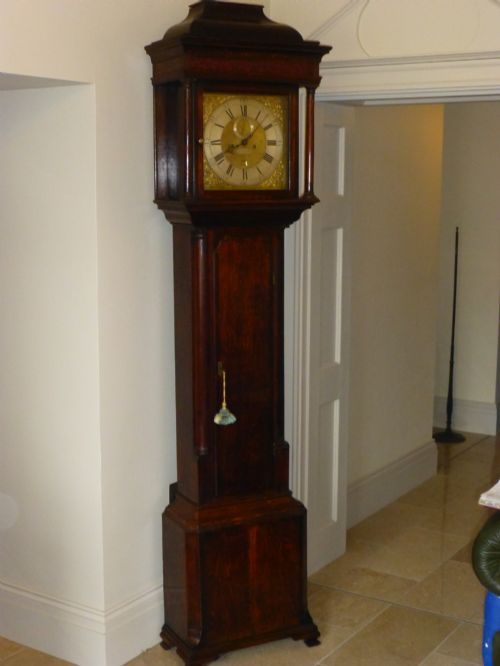
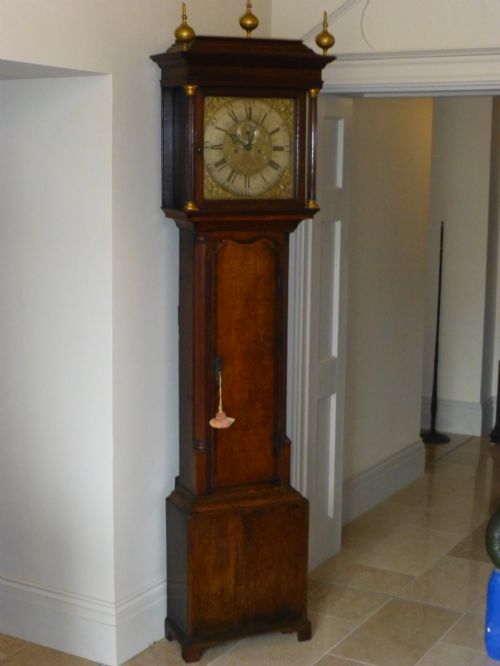
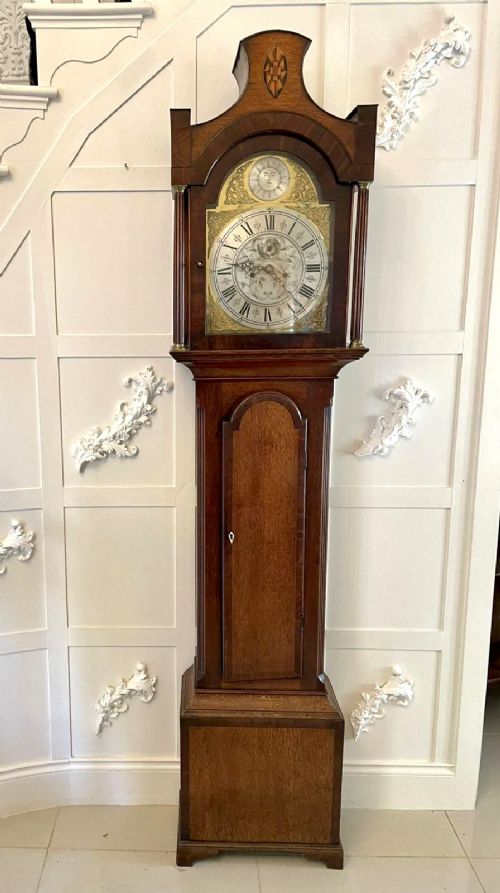
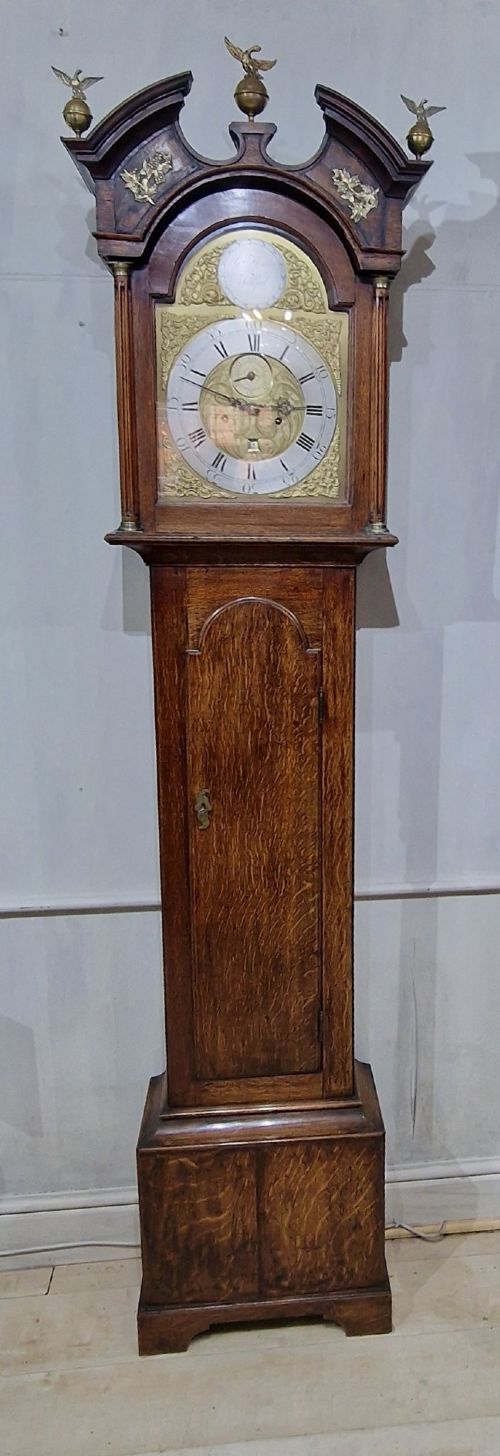
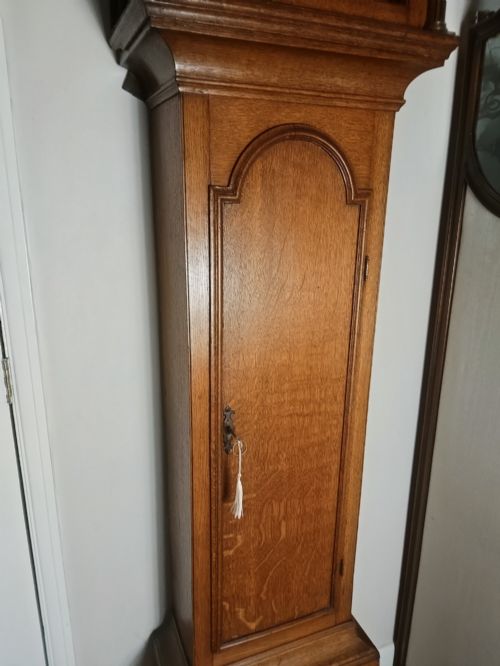
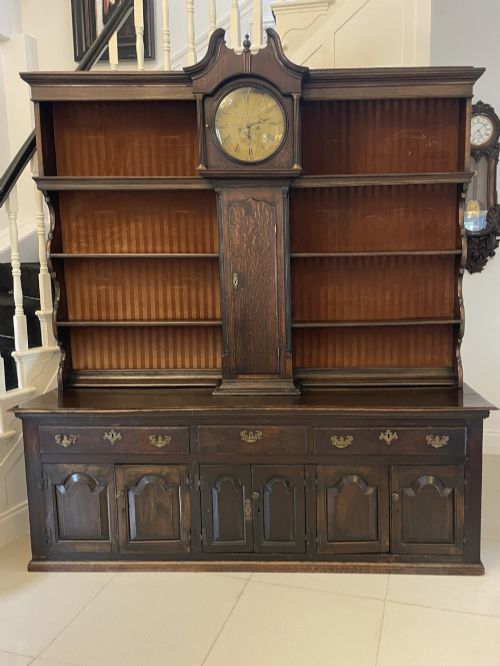
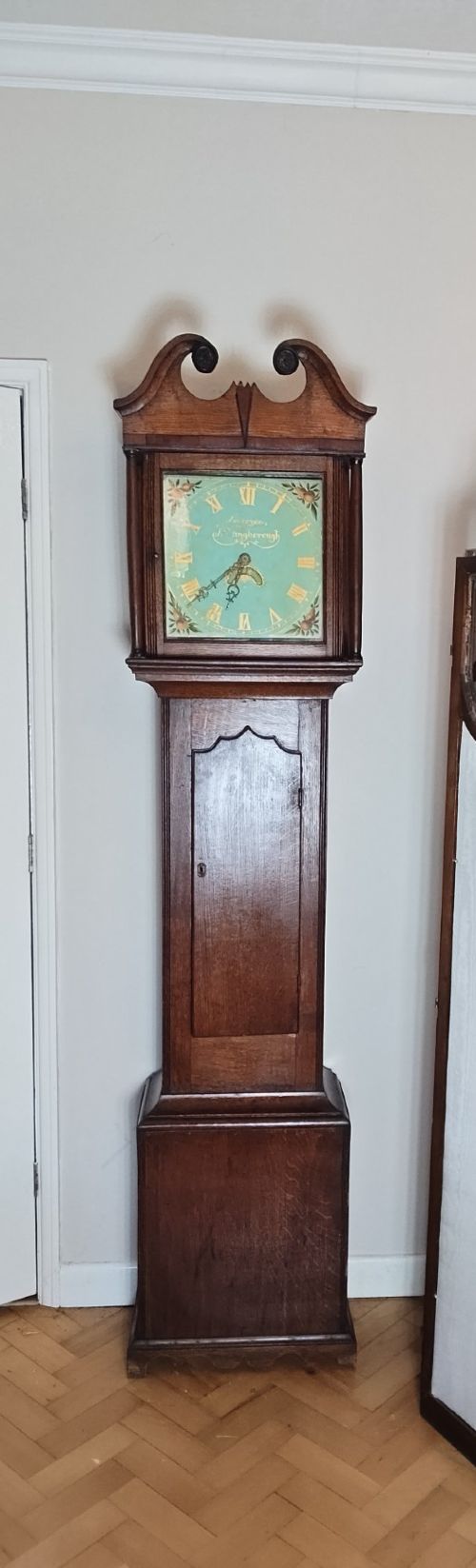
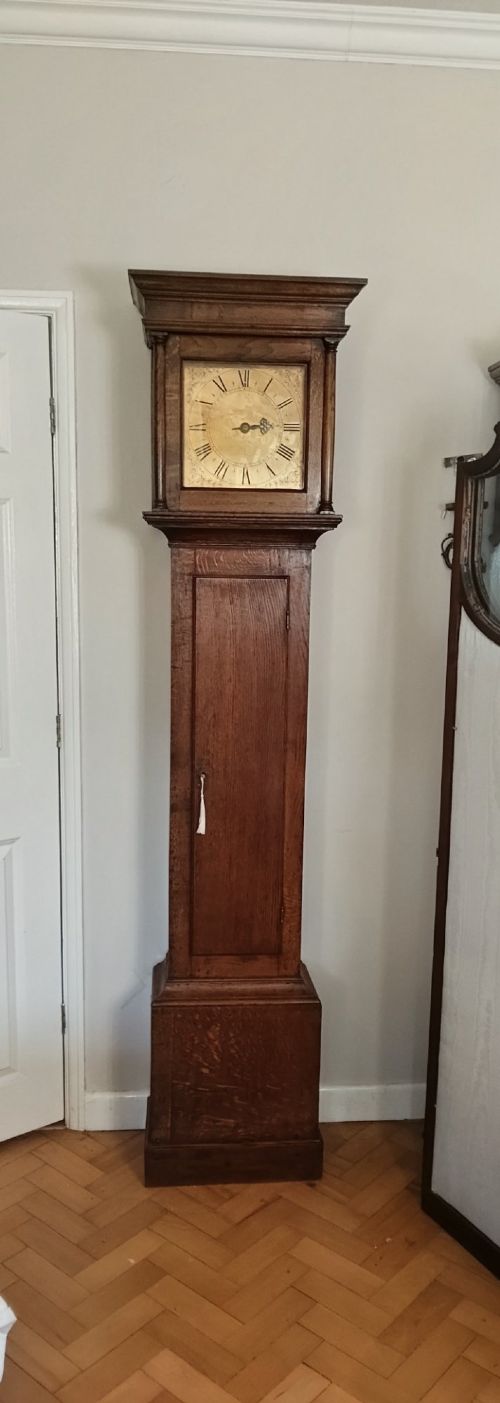
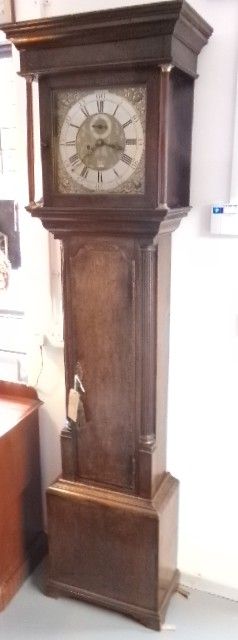
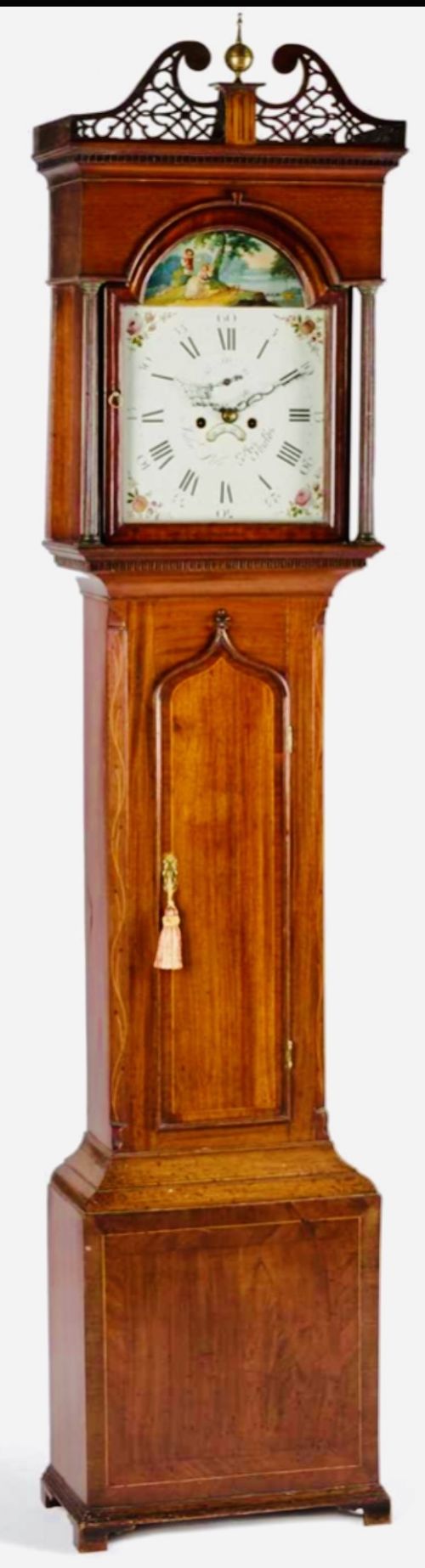
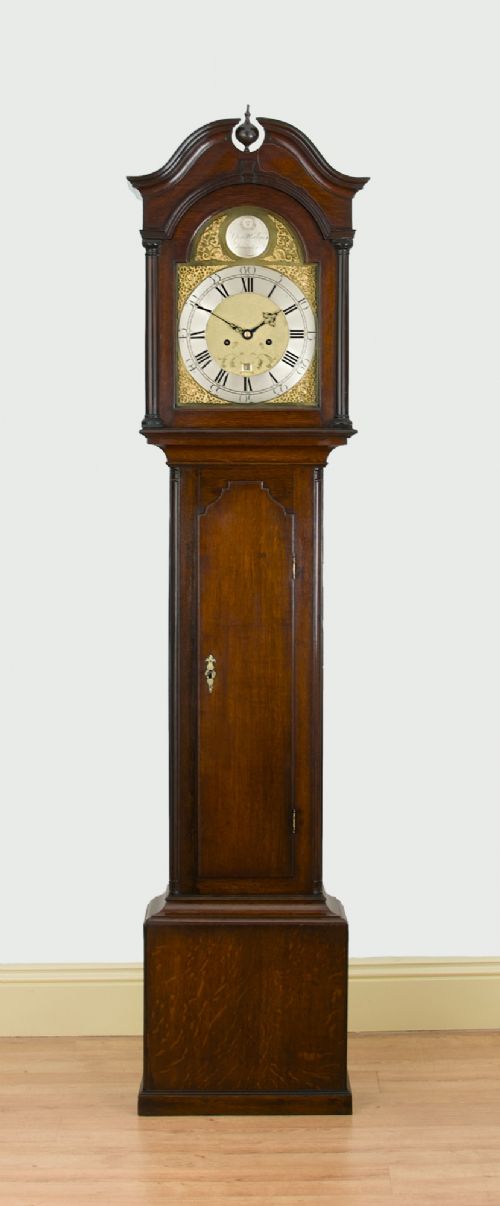

Georgian Oak Grandfather Clock
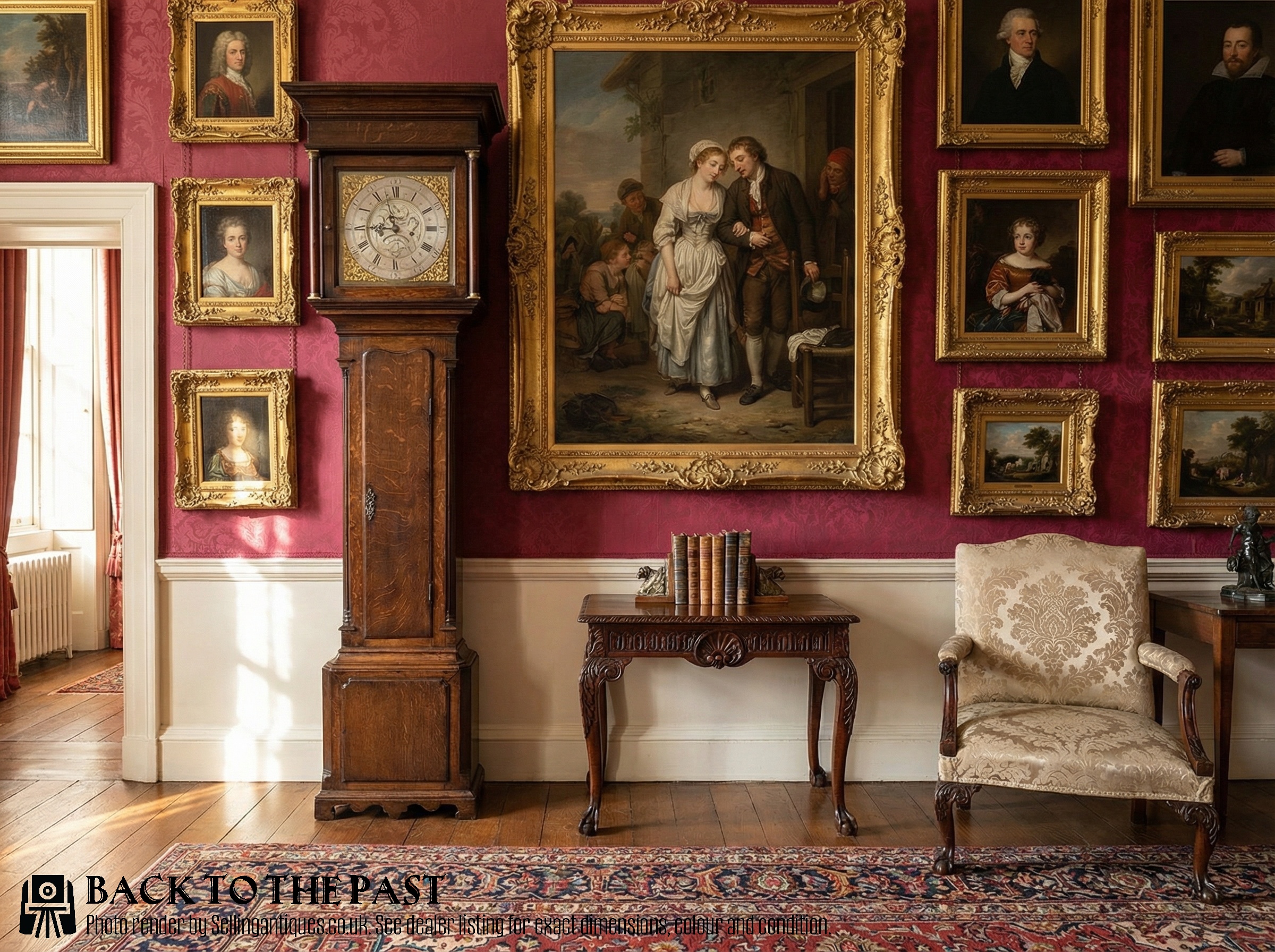
A Georgian oak grandfather clock brings mechanical heritage and regional cabinet-making together into a tall floor-standing timepiece.
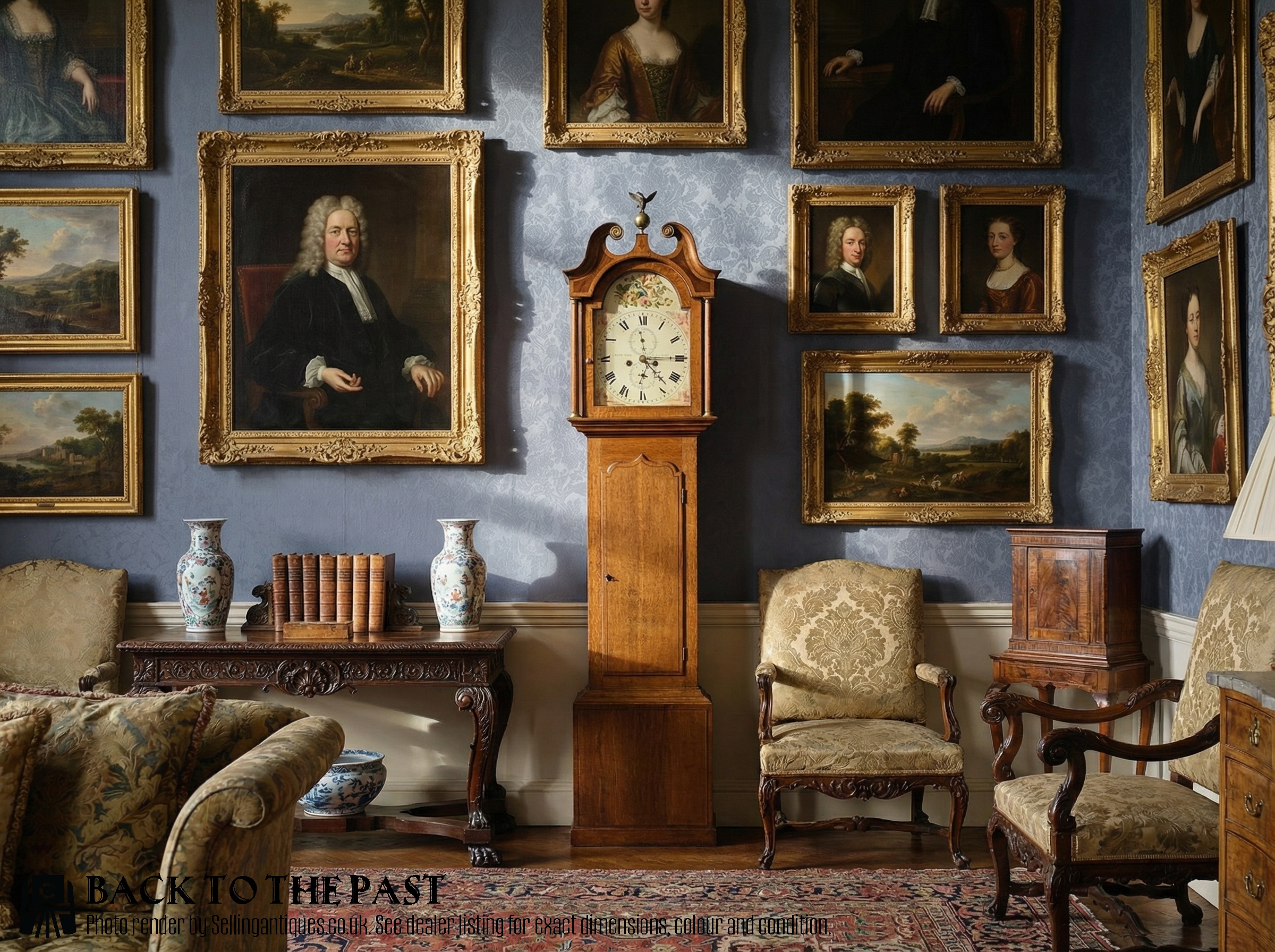
Georgian Oak Grandfather Clock
A georgian oak grandfather clock represents the traditional tallcase timepieces produced during the eighteenth and early nineteenth centuries. These instruments combine a weighted pendulum movement housed in a protective wooden trunk with a visible dial face.
Examples on this page span the early Georgian, George III, and Regency periods, originating from diverse provincial makers across England, Wales, and Scotland. Most specimens utilise standard proportions, though smaller or slimmer formats appear frequently among regional workshops.
Materials and Construction
Makers constructed the tall floor cases primarily from native solid oak, occasionally incorporating secondary timbers such as mahogany, walnut, or burr oak for crossbanding, inlay, and decorative panels. The long grain and growth rings of the timber provided structural stability for the tall trunk and hood.
Internal movements relied on brass, iron, and steel components assembled by hand, while dial faces combined engraved brass, silvered chapter rings, or painted iron.
Georgian Oak Grandfather Clock Retail Price Guide 2026
Typical asking prices for georgian oak grandfather clock among the pieces listed under this phrase on Sellingantiques today, from the lower quarter to the upper quarter. They describe what is for sale here now, not the wider market.
One past piece featured hood columns carved in the unusual style of a narwhal or unicorn tusk.
Variations in Standard
Quality differences stem from the sophistication of the internal movement and the precision of the dial work. Simple thirty-hour single-hand mechanisms contrast with complex eight-day movements featuring moon phases, strike-silent functions, or musical chimes.
Cabinet work also defines distinction, ranging from plain country construction to cases enriched with carved mouldings, dentil cornices, reeded columns, and fine mahogany banding.

Lee of Great Marlow·Jn° Smith·Richard Corless·Smith of Chester·James Hendrie·George Hallifax·Thomas Webbe·Edward White·Richard Houton·William Barnard·Thomas King·John Greenough·Crawshaw of Rotherham·Thomas Dicker·Peter Bower·John Birtles·John Calver·Richard Roe·John Stancliffe·Thomas Hampson·Thomas Moore·George Stubbs
The Georgian Oak Grandfather Clock Glossary
- Longcase
- The formal trade term for a pendulum clock enclosed in a tall wooden case, commonly known as a grandfather clock.
- Chapter ring
- The outer metal circle on the dial face that displays the hours, usually marked with Roman numerals.
- Moonphase
- A specialised mechanical dial display that tracks the lunar cycle over the course of a month.
- Single-handed
- An older movement design utilising only one hand to indicate the time, typical of early eighteenth-century production.
- Hood
- The upper glazed section of the case that lifts or opens to provide access to the dial and internal movement.
Georgian Oak Grandfather Clock: Frequently Asked Questions
How do I wind an eight-day movement?
Eight-day clocks require winding via keys inserted into winding holes on the dial face, which draw up the internal weights suspended on cords or chains.
Care must be taken to support the weight pulley slightly while winding to avoid sudden strain on the gut lines or brass drums.
What is the difference between thirty-hour and eight-day clocks?
Thirty-hour movements require resetting and winding daily or slightly past daily, driven by simpler gear trains often using a single hand for time indication.
Eight-day movements utilise twin weights and more complex gearing to run for over a week between winding intervals and typically feature separate minute and hour hands.
Where were regional clocks made?
Makers operated in towns and cities across the British Isles, signing dials with their name and location such as Chester, Preston, Falkirk, or Newark.
Local cabinet makers built the oak floor cases to house these movements, resulting in distinct regional styles of woodwork and joinery.
How do I keep a longcase clock running accurately?
The case must stand level on a solid floor with the back secured to the wall to prevent vibration from disturbing the pendulum beat.
Adjustment nuts on the pendulum bob allow the rate to be slowed or accelerated depending on whether the clock gains or loses time.