

Georgian Oak Drawer Table
When you search for a georgian oak drawer table, you are looking for a sturdy domestic piece built to hold linen, cutlery or writing materials.
Georgian Oak Drawer Table
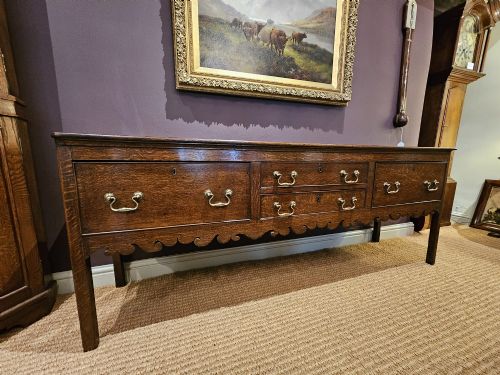
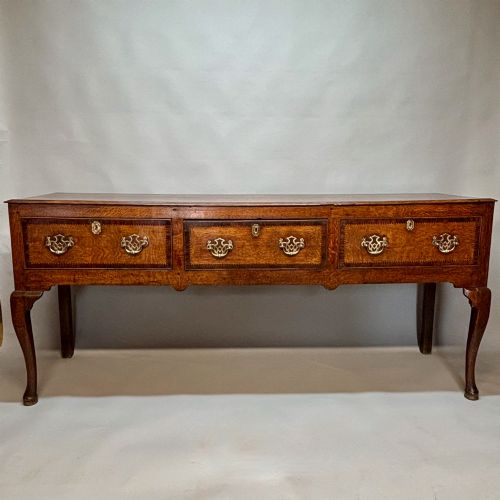
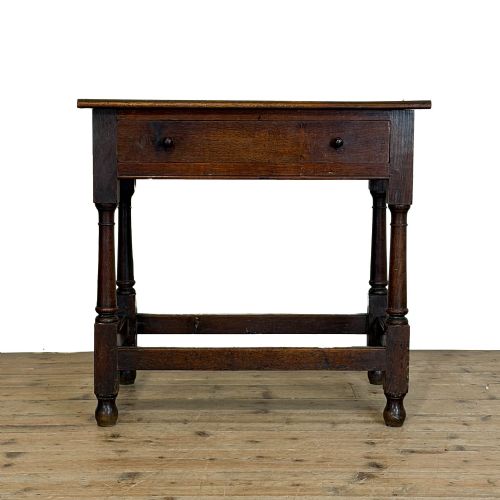
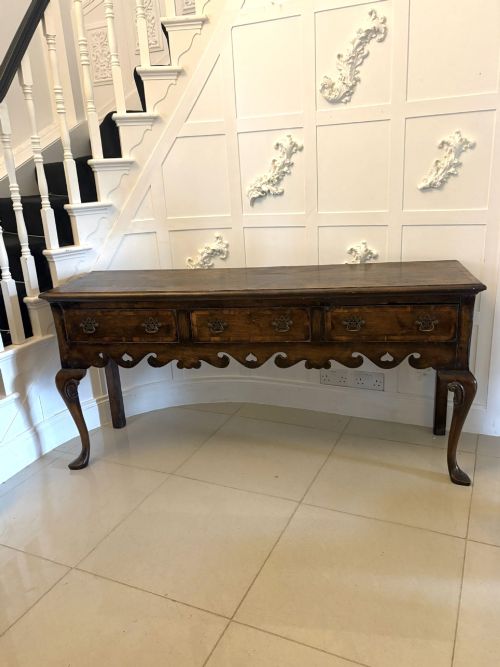
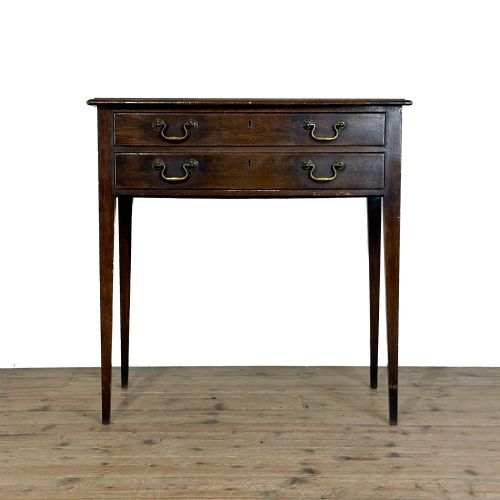
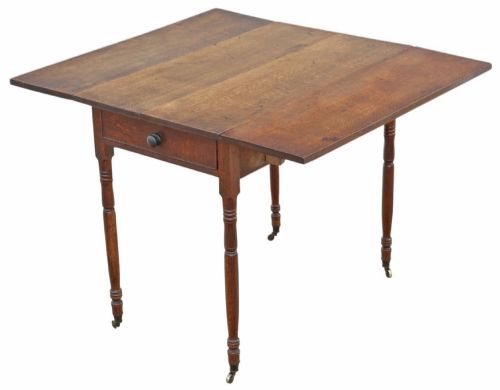
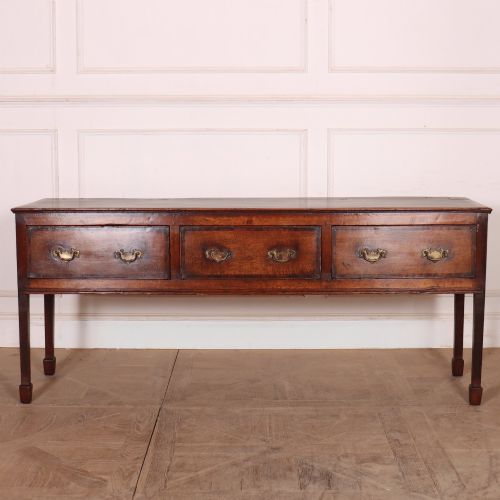
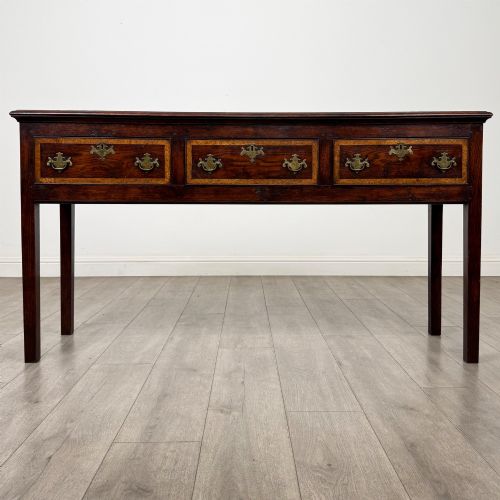
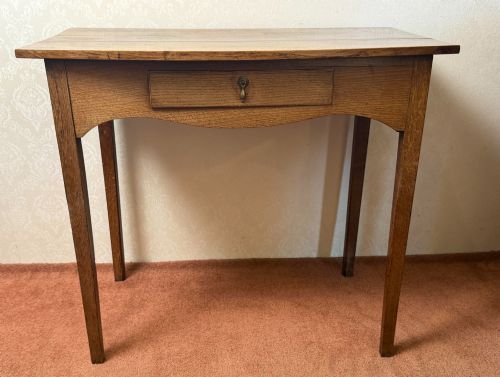
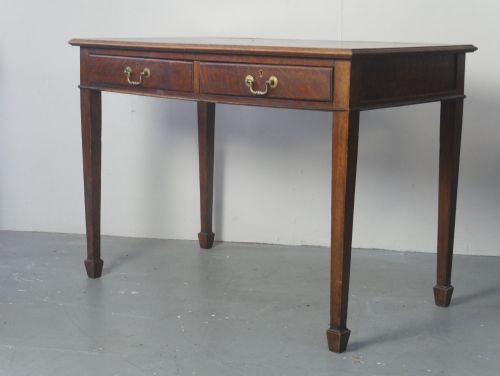
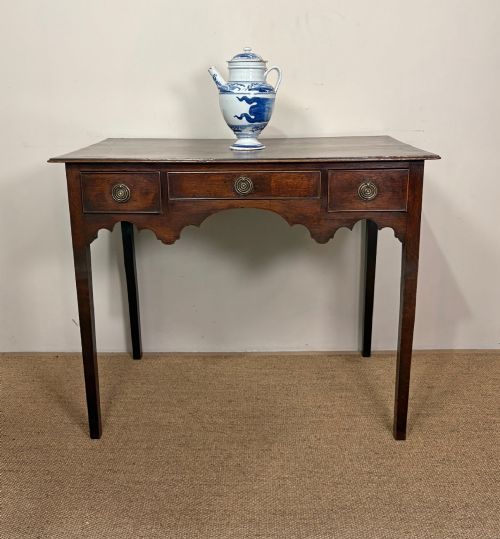
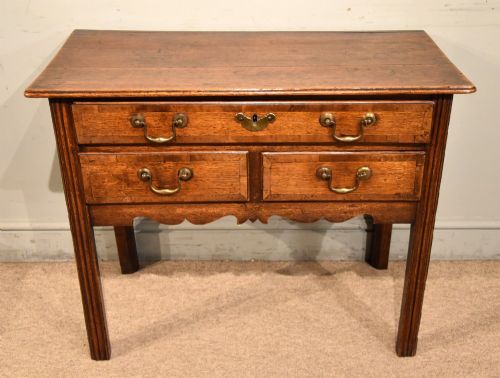
A georgian oak drawer table encompasses functional domestic forms like lowboys, side tables, and dresser bases originating predominantly from the eighteenth century. These pieces were built for everyday service in country houses, provincial homes, and taverns, providing a flat surface and integrated storage.
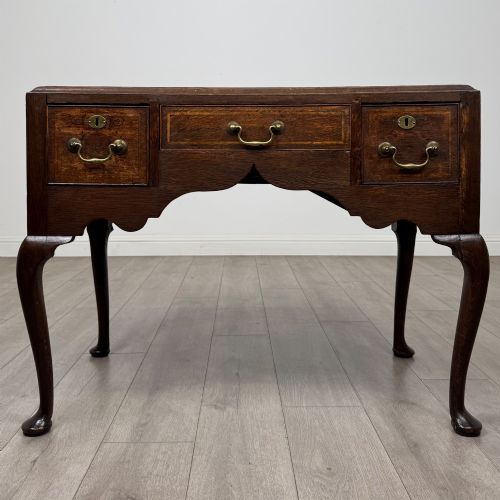
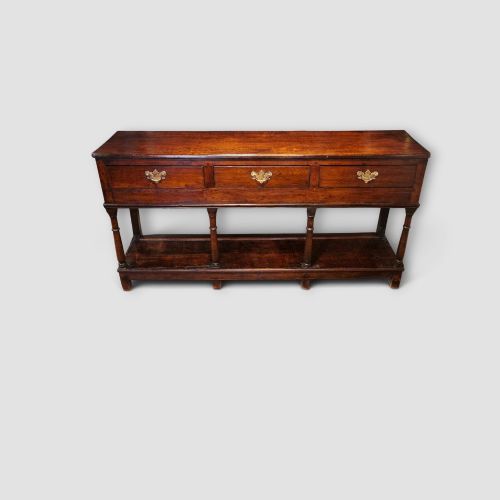
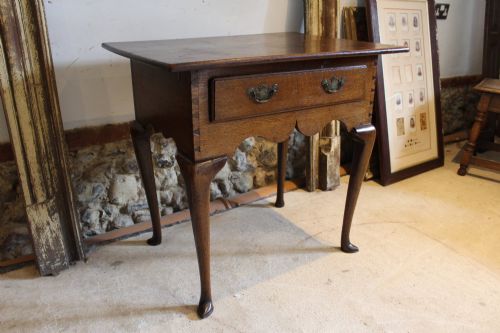
The versions most commonly met on this page range from single-drawer side tables and lowboys with cabriole legs to multi-drawer dresser bases featuring lower potboards. Many exhibit regional vernacular traits, balancing straightforward utility with the refined stylistic shifts of the George I, George II, and George III periods.
How they were made
Construction relies heavily on solid native timber, primarily oak complemented by secondary woods like pine or ash, joined with traditional framing methods. Drawer linings and structural supports often display period-specific hand-tool marks and pegged tenons.
Surface finishes vary from unpainted timber showing natural grain and patination to historical painted treatments in green or muted tones. Hardware typically includes brass drop handles or bail pulls mounted on drawer fronts secured with single or multiple frieze drawers.
The inventory records vernacular country styles alongside formal George II and George III designs, encompassing side tables, lowboys, and dresser bases.
What varies in quality
Quality rests in the integrity of the timber selection, the crispness of any applied mouldings, and the original state of the structural joints. Pieces retaining their early brasses, uncompromised drawer runners, and untouched surface patination stand apart from those with heavy alterations.
Proportion and regional craftsmanship also dictate standing; well-balanced lowboys with elegant cabriole legs or geometric moulded drawer fronts demonstrate superior cabinet-making compared to plain, utilitarian variants.
The Georgian Oak Drawer Table Glossary
- Lowboy
- A small oak table with one to three drawers, originally used as a dressing table or side table in eighteenth-century rooms. These items typically feature slender legs, sometimes terminating in pad feet.
- Dresser base
- A lower sideboard or serving table equipped with drawers and occasionally a potboard shelf underneath. They provided essential storage and display space in country kitchens and dining rooms.
- Frieze drawer
- A drawer built into the upper structural band of a table directly beneath the top board. These drawers slide on wooden runners and often feature hand-cut dovetail joints.
- Potboard
- An open lower shelf fitted between the legs of a dresser base or side table. This platform was historically used to store ceramic pots and heavy kitchen utensils.
- Cabriole leg
- A furniture leg that curves outward in a convex arc and then bends inward in a concave arc, ending in a shaped foot. This design became prominent during the early Georgian period.
Georgian Oak Drawer Table: Frequently Asked Questions
What is a lowboy used for?
A lowboy served multiple domestic roles across the eighteenth century, functioning primarily as a small dressing table, a writing desk, or a hall side table. Its compact dimensions allowed it to fit into bedrooms and smaller chambers where large cabinetry was impractical.
Fitted drawers kept personal items, documents, or accessories close at hand while providing a sturdy top surface for lighting or mirrors. Today, they adapt easily to modern hallways and living spaces as compact accent tables.
How do I identify a Georgian period piece?
Identifying a Georgian piece involves examining the construction methods, timber patination, and stylistic proportions typical of the eighteenth century. Look for hand-cut dovetails on drawer boxes, pegged tenon joints, and the characteristic warmth of aged oak.
Stylistic cues such as geometric mouldings, brass drop handles, and cabriole legs help anchor a piece within the reigns of the Georges or regional English country traditions.
Where should I place a dresser base?
A dresser base fits naturally into dining rooms, kitchens, or wide hallways where its surface and deep drawers provide practical utility. Placing it against a main wall allows the proportions and wood grain to serve as a focal point.
The lower drawers accommodate tableware or linens, while the top surface supports lamps, books, or decorative objects without cluttering the room.
Are these tables suitable for daily use?
These tables were originally engineered for rigorous daily service in domestic households, making them durable additions to contemporary homes. Solid oak construction and pegged framing provide remarkable stability across centuries of handling.
Routine care involves placing them away from direct heat sources and treating the aged wood surfaces with mild, appropriate waxes to maintain the finish.