
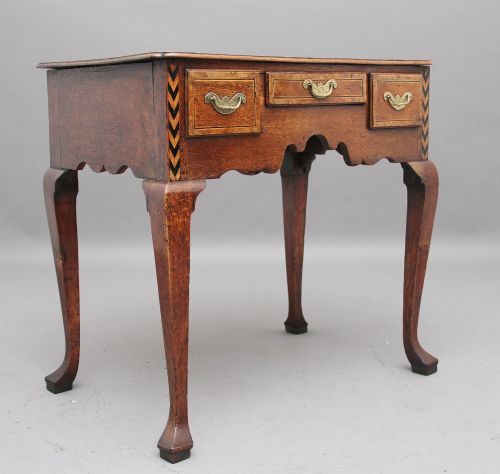
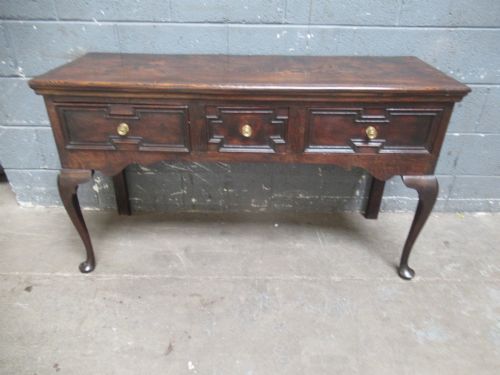


Queen Anne Oak Table
A queen anne oak table brings domestic warmth to a room through honest timber and restraint.
Forms and periods of the queen anne oak table
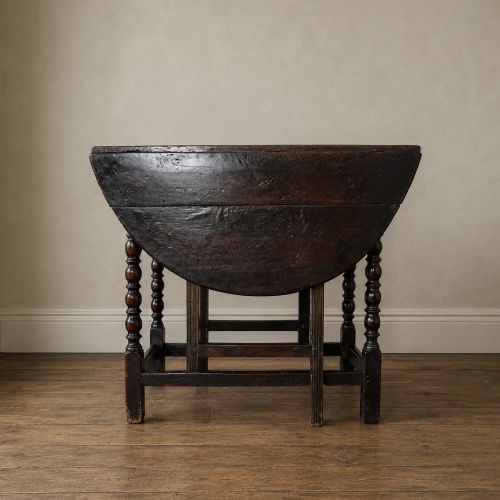
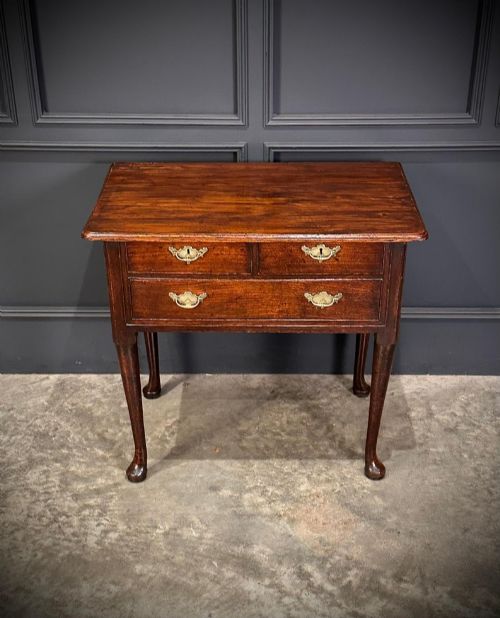
Drop leaf gateleg tables and compact side tables dominate the selection, offering versatile surfaces suited for daily use in smaller rooms or grander halls. The proportion generally remains understated, relying on clean timber expanses rather than heavy carving.
Makers of this era employed native hardwoods to build sturdy furniture designed to withstand generations of household service. Surviving examples demonstrate how domestic furniture adapted to changing dining and writing habits across provincial and metropolitan England.
Materials and construction methods
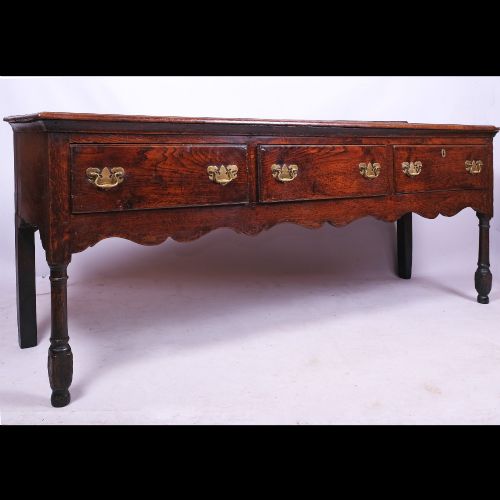
Carpenters relied principally on solid oak, occasionally supplemented with secondary timbers such as beechwood or walnut for specific structural components. Brass handles and iron hinges appear as functional hardware on drawer variations.
Construction techniques involve pegged mortise and tenon joints, hand-planed tabletops, and turned legs often terminating in pad or spade feet. Gateleg actions utilise pivoting wooden gates to support folding leaves with reliable mechanics.
Retail Price Guide 2026
Typical UK retail prices for queen anne oak table, calculated from the Sellingantiques database of over a million retail prices indexed since 2003. This retail price guide relies exclusively on Sellingantiques data; no external sources or auction records are used, so the figures do not describe the wider market.
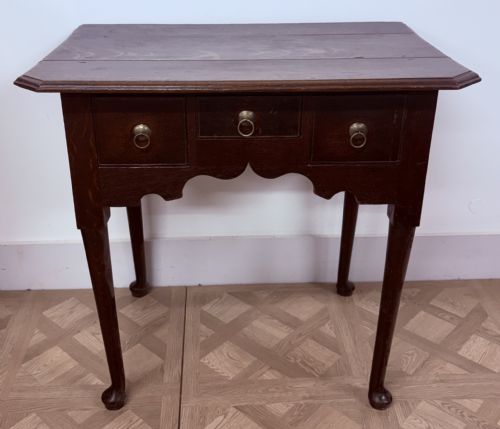
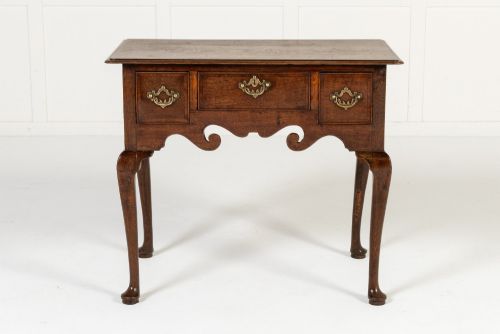
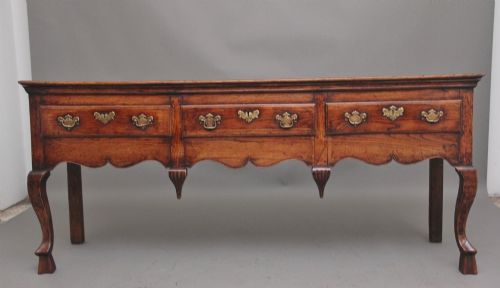
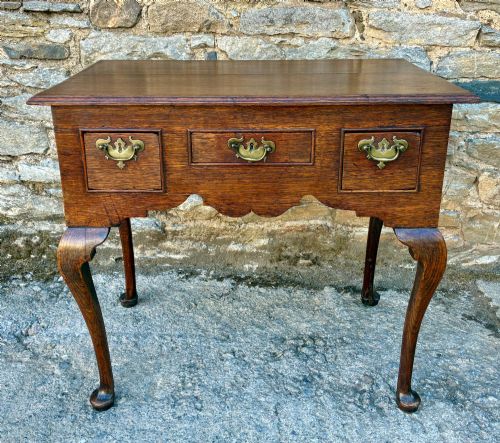
Listings feature oak alongside occasional brass and iron elements, spanning side tables, gateleg dining tables, lowboys, and writing desks.
Distinctions in craftsmanship and survival
Quality rests in the integrity of the timber selection, the crispness of the turning on legs and stretchers, and the survival of original surface finishes. Tables retaining their early patination and untouched structural timber command deeper interest than heavily restored counterparts.
Proportion and subtlety of form separate standard utility pieces from finer examples designed for polite rooms. The balance of the overhang on drop leaves and the precise taper of a pad foot reveal the hand of a more accomplished carpenter.
The Queen Anne Oak Table Glossary
- Gateleg table
- A drop leaf table featuring swinging legs that pivot outward to support the extended leaves. This design allows the surface area to expand significantly for dining while folding flat for storage against a wall.
- Lowboy
- A small side table equipped with one or more drawers, commonly used as a dressing table or side hall console. The low stature distinguishes it from taller writing desks.
- Pad foot
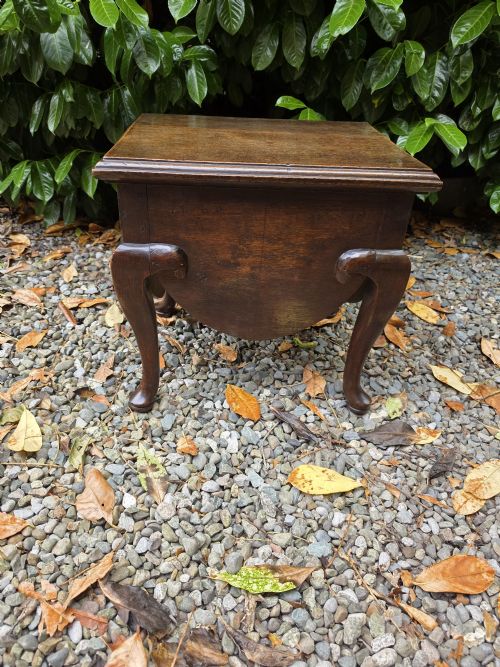
- A simple, rounded foot terminating the bottom of a cabriole or turned leg. It rests flat on the floor without additional scrolling or carving.
- X stretcher
- Intersecting wooden braces connecting the legs of a table near the base for added rigidity. This frame detail provides both structural stability and visual balance.
- Refectory table
- A long dining table traditionally built for communal dining halls. Early examples feature sturdy plank tops resting on trestle or four-leg frames.
Frequently Asked Questions
How do I date a queen anne oak table?
Dating relies upon examining construction marks, joint types, timber shrinkage, and hardware configurations visible across the frame. Hand-cut peg placement and board thickness offer reliable indicators of early eighteenth-century manufacture.
Later nineteenth-century revivals often display machine precision and cleaner timber surfaces that lack the varied patination accumulated over centuries of domestic use.
Were these tables used for dining?
Larger gateleg and refectory versions served primarily for communal meals in country houses and farmhouses. Their folding leaves allowed households to clear floor space between sittings.
Smaller variants functioned as side tables, supper tables, or writing desks in private chambers rather than central dining spaces.
How should I care for an antique oak surface?
Maintain the timber by applying traditional beeswax sparingly and buffing with a soft cloth to preserve the natural lustre. Avoid synthetic polishes and keep the piece away from direct heat sources and strong sunlight.
Stable room humidity prevents the old oak planks from splitting or warping over seasonal shifts.
What defines the style of this period?
The aesthetic shifts away from heavy seventeenth-century rectilinearity toward softer curves, cabriole supports, and pad feet. Simplicity of form takes precedence over elaborate carving.
Proportions become lighter and domestic comfort begins to influence furniture design across both town and country workshops.