
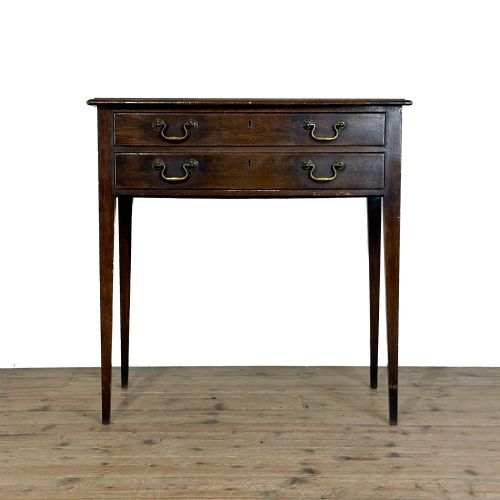
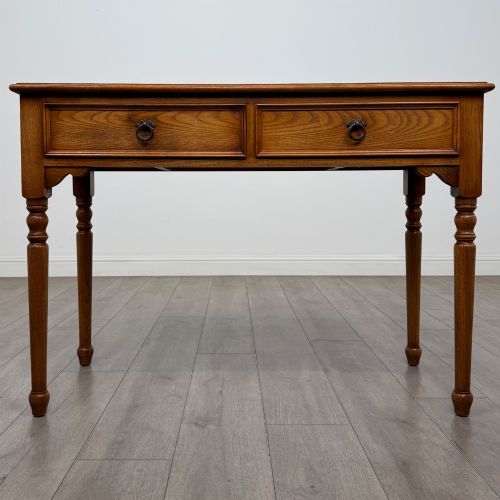
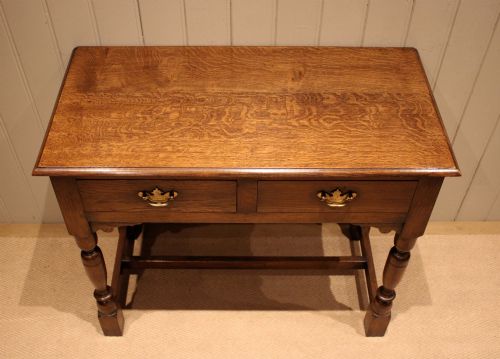

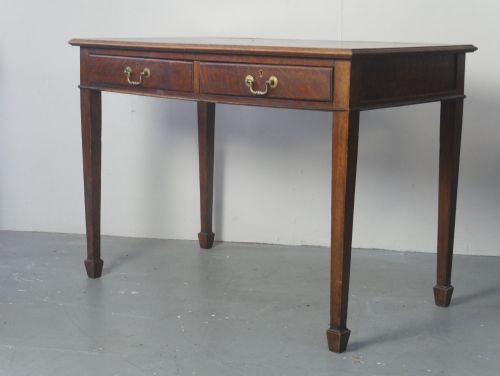
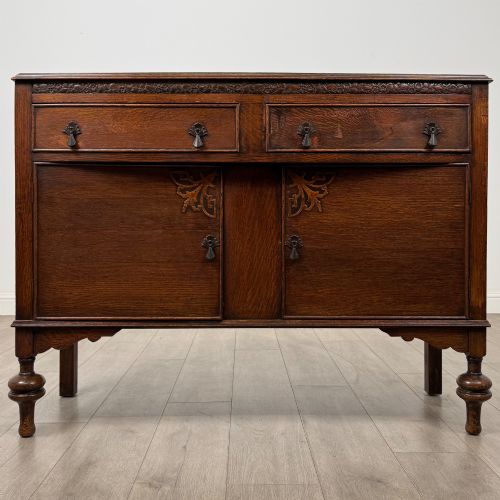
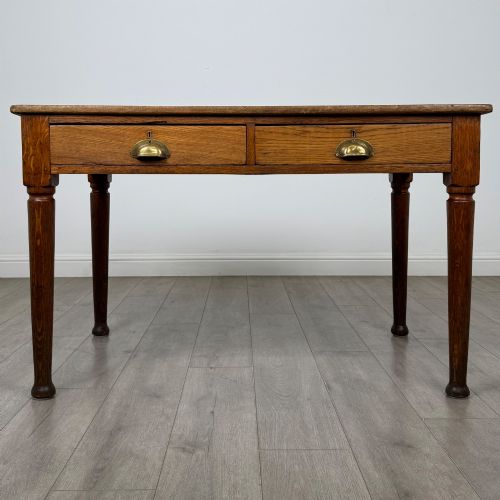
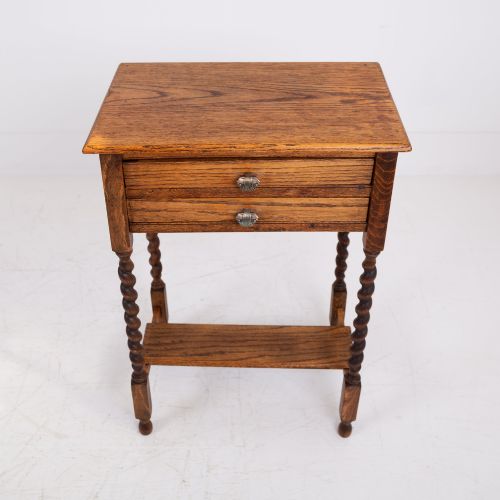
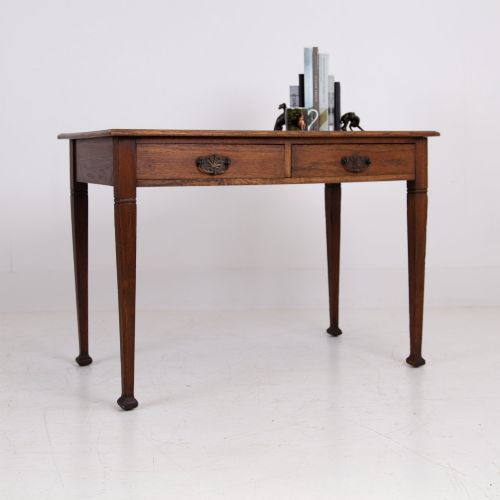
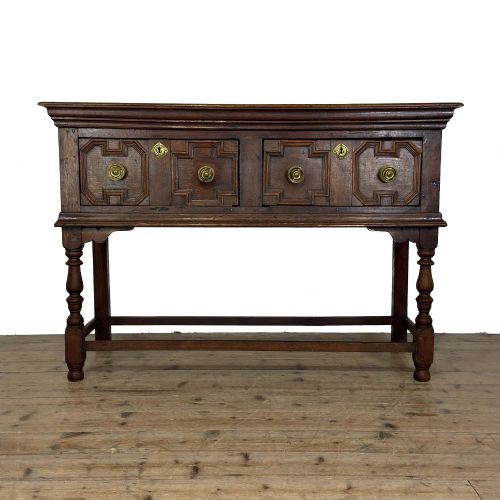
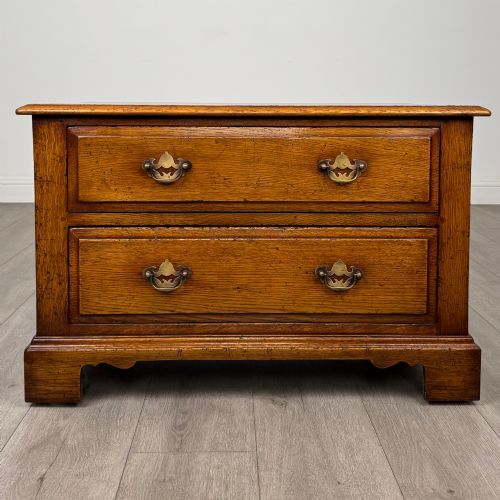
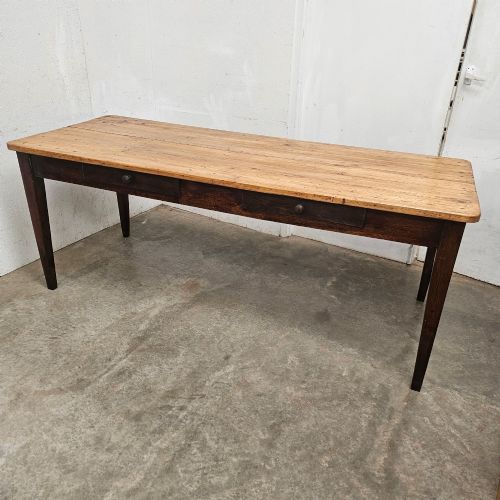
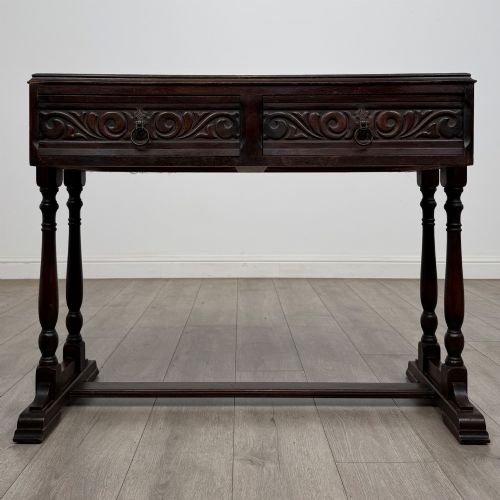
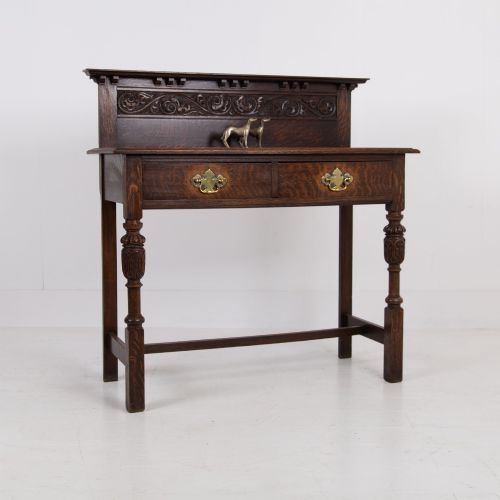

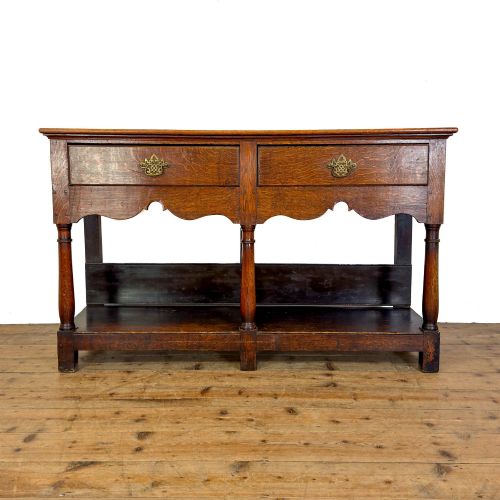
Oak Two Drawer Table
An oak two drawer table brings domestic utility and sturdy timber grain into any room.
What They Are
An oak two drawer table serves as a functional surface for writing, serving or occasional placement, appearing in forms from side tables to writing desks and lowboys. These pieces span the seventeenth, eighteenth, and nineteenth centuries, alongside Edwardian and 1920s examples.
The domestic role of an oak two drawer table shifts across periods, taking shape as provincial hall furniture, farmhouse tables, or library desks. Buyers encounter vernacular Welsh country pieces as well as formal Georgian and Gothic revival designs.
What Varies in Quality
Quality in an oak two drawer table rests upon the crispness of structural joinery and the selection of timber figure, distinguishing vernacular workshop output from formal cabinetwork. The integrity of the drawer construction and timber thickness dictate the physical stability of the piece.
Decorative elements determine the tier of a piece, separating plain utilitarian side tables from examples featuring elaborate carved detail, inlay, or attribution to notable workshops.
Retail Price Guide 2026
Typical UK retail prices for oak two drawer table, calculated from the Sellingantiques database of over a million retail prices indexed since 2003. This retail price guide relies exclusively on Sellingantiques data; no external sources or auction records are used, so the figures do not describe the wider market.
Listings for this phrase include examples in seventeenth-century, eighteenth-century, Victorian, Edwardian, and 1920s periods.
Gillows·Edwards and Roberts
The Oak Two Drawer Table Glossary
- Lowboy
- A small side table or dressing table fitted with drawers, typically standing on relatively tall legs. This form gained popularity during the seventeenth and eighteenth centuries.
- Writing Table
- A freestanding table designed for correspondence, usually equipped with one or more apron drawers to house writing implements. These pieces often feature leather inserts on the upper surface.
- Jacobean Revival
- A nineteenth-century style imitating the heavy, rectilinear furniture of the early seventeenth century. Pieces in this style frequently display dark finishes and deep geometric carving.
- Barley Twist
- A turned furniture leg or support resembling a spiralling rope. This decorative turning method appears frequently on seventeenth-century and revival pieces.
- Inlay
- The technique of inserting contrasting strips of wood or other materials into recessed portions of the oak base. This ornament enhances surface pattern.
Frequently Asked Questions
Where were these tables used?
An oak two drawer table functioned primarily in domestic interiors as a hall surface, serving piece, or writing desk. Provincial examples found placement in farmhouse kitchens and country estates alike.
More formal library and writing variants occupied studies and withdrawing rooms for administrative tasks.
How do I date an oak table?
Dating relies on construction methods, timber characteristics, and style markers present in the frame and drawers. Seventeenth-century pieces reveal hand-riven timber and pegged joinery, while later pieces show machine-sawn components.
Stylistic details like Gothic revival carving or Art Nouveau lines anchor pieces within Victorian and Edwardian periods.
Are these tables solid oak?
Most examples utilise solid oak for primary surfaces, framing, and drawer construction. Regional and provincial pieces frequently employ local hardwood throughout the entire carcass.
Some later or more decorative versions incorporate secondary woods for internal drawer linings and structural framing.
What is a lowboy?
A lowboy is a compact side table equipped with drawers beneath the work surface. These pieces originated as dressing or serving tables before finding broader domestic application.
Their proportions make them suited for smaller spaces requiring surface area and concealed storage.