


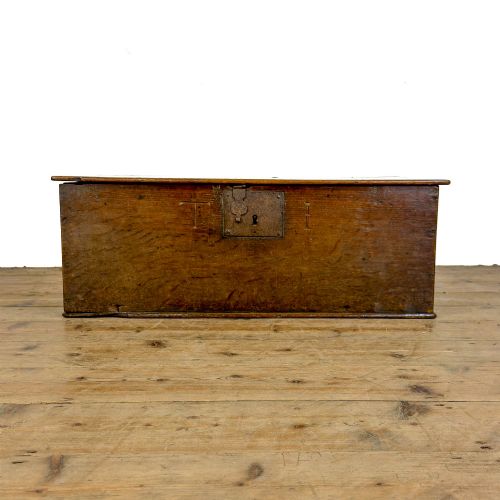
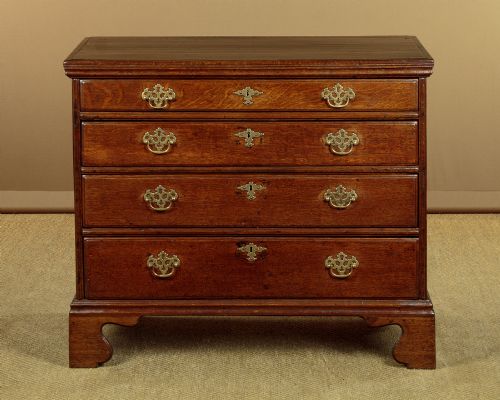
Georgian Oak Coffer Chest
A georgian oak coffer chest offers solid utilitarian storage built to last centuries in regional country houses.
Georgian Oak Coffer Chest
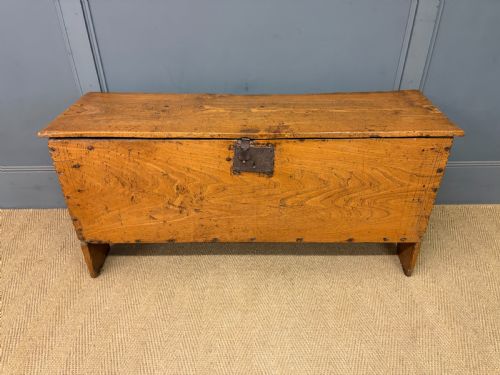
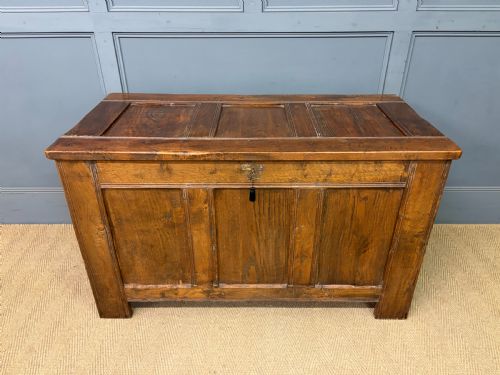
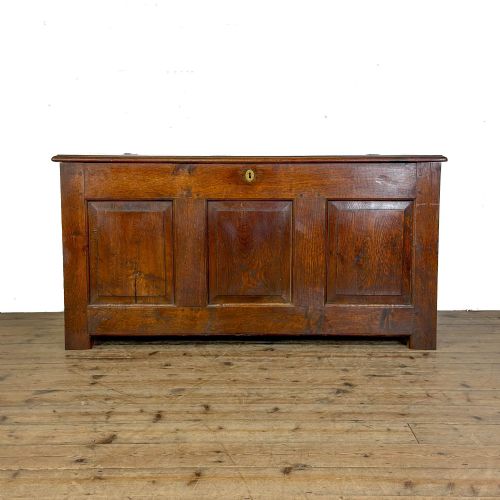
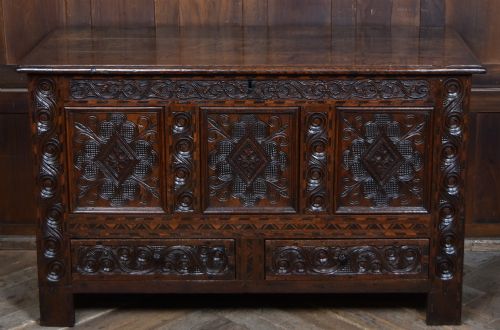
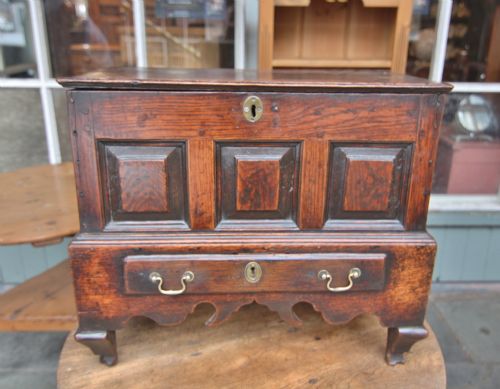
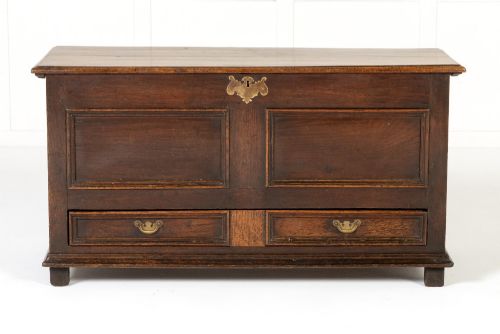
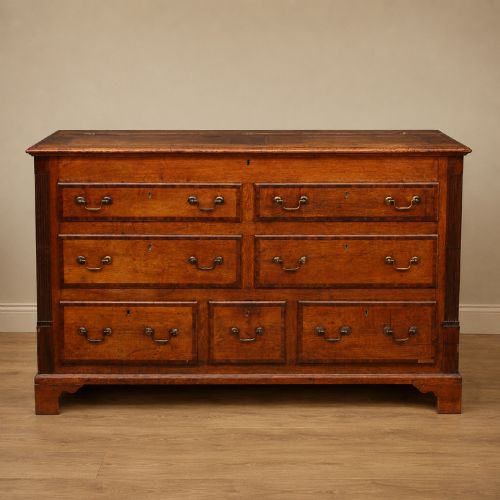
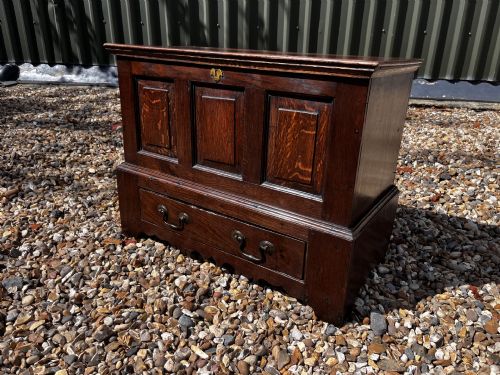
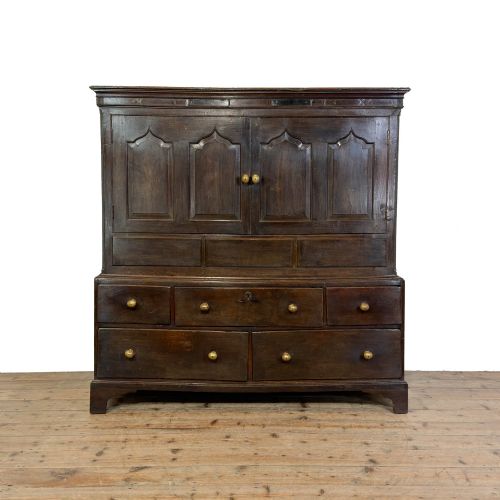
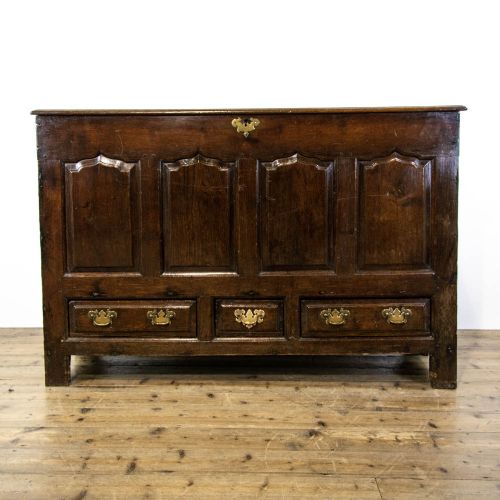
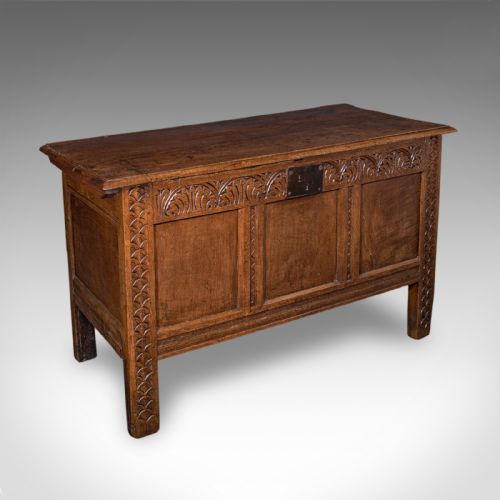
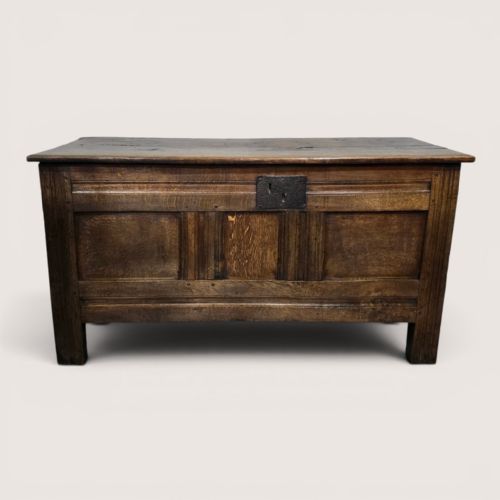
A georgian oak coffer chest serves as a robust domestic storage vessel, frequently encountered as plain boarded boxes, joined multi-panel trunks, or sophisticated mule chests fitted with lower drawers.
Makers across English counties and Welsh regional workshops produced these pieces using local timber, resulting in distinct regional vernacular characteristics.
Surviving examples span simple eighteenth-century blanket boxes to larger storage chests intended for domestic linen and textiles.

Materials and Construction
Joiners relied primarily on native oak, complemented occasionally by secondary timbers like elm, walnut, and mahogany for contrasting crossbanding or panels.
Frame-and-panel construction accommodated the natural seasonal movement of solid timber, utilising pegged mortise and tenon joints to maintain structural integrity.
Iron hinges, brass escutcheons, and visible dovetailing on internal drawers provide evidence of traditional hand-tool joinery.
Some chests retain faint candlewax drips inside the till compartment from centuries of nocturnal rummaging.
Assessing Craftsmanship
Superior examples display crisp carving, balanced proportions, and careful timber selection, such as figured burr elm panels or rich grain matching.
The refinement of the internal construction, including hand-dovetailed drawer boxes and well-fitted till compartments, separates standard utilitarian trunks from finer regional pieces.
The Georgian Oak Coffer Chest Glossary
- Coffer bach
- A small Welsh coffer traditionally used as a miniature storage chest or presentation piece. These compact boxes often sit on small bracket feet.
- Mule chest
- A storage chest featuring one or more drawers built into the base beneath the main compartment. This hybrid form bridges the traditional coffer and the chest of drawers.
- Crossbanding
- A decorative border technique where thin strips of veneer, frequently mahogany or walnut, are laid with grain running perpendicular to the surrounding timber. This frames panels and drawer fronts.
- Till
- A small internal compartment built into the upper corner of a chest for storing valuables or documents. It usually includes a small lid.
- Joined chest
- A piece constructed using a rigid frame of stiles and rails fitted with grooved panels rather than simple boards. This method provides greater dimensional stability.
Georgian Oak Coffer Chest: Frequently Asked Questions
What is a coffer bach?
A coffer bach is a miniature Welsh chest typically constructed in oak during the eighteenth century. These small boxes often featured drawers beneath the main lidded compartment and served domestic storage or presentation purposes.
Collectors prize them for their diminutive scale and regional vernacular details, which mirror the construction methods of full-sized furniture.
How do I identify a mule chest?
A mule chest combines a traditional lidded storage box at the top with one or more functional drawers arranged in the base. This form emerged when makers realised adding drawers improved access to stored items without requiring users to lift contents out from the top.
Most surviving examples date from the eighteenth and early nineteenth centuries, constructed in solid oak with occasional mahogany or walnut crossbanding.
Were these chests used as window seats?
The flat top and sturdy proportions of many low chests made them practical for dual use as window seats or benches in country houses. Their solid construction easily supported daily seating.
Over centuries of domestic use, many retained this functional role in hallways and parlours alongside their primary storage purpose.
How do I care for antique oak furniture?
Maintain antique oak by placing pieces away from direct heat sources and sudden humidity changes, which cause timber to split. Apply a microcrystalline wax polish occasionally to nourish the surface.
Avoid modern liquid cleaners that strip the historic patina developed through centuries of handling and polishing.