


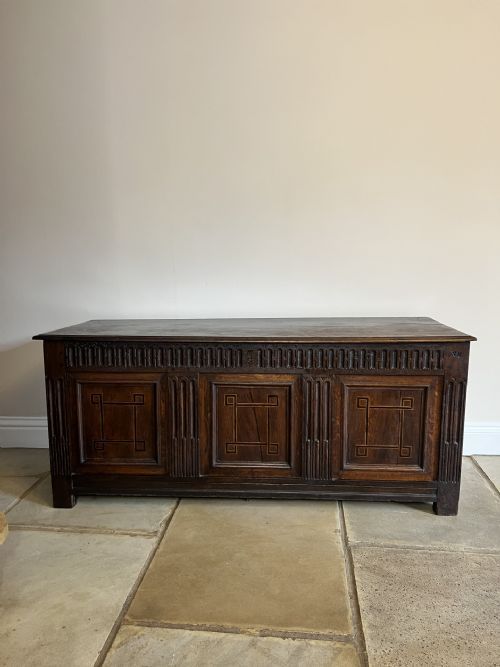

Georgian Oak Coffer Trunk
When you search for a georgian oak coffer trunk, you enter a world of sturdy domestic storage built to last centuries.
Georgian Oak Coffer Trunk
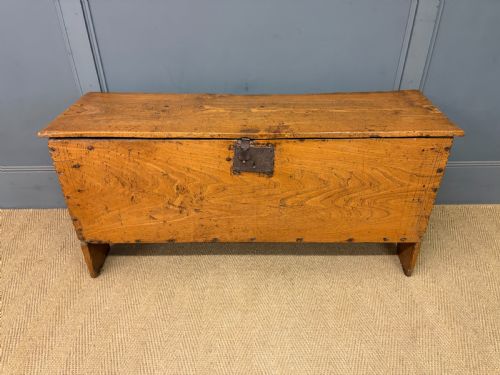
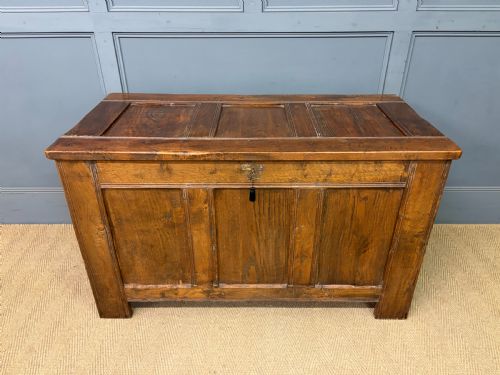
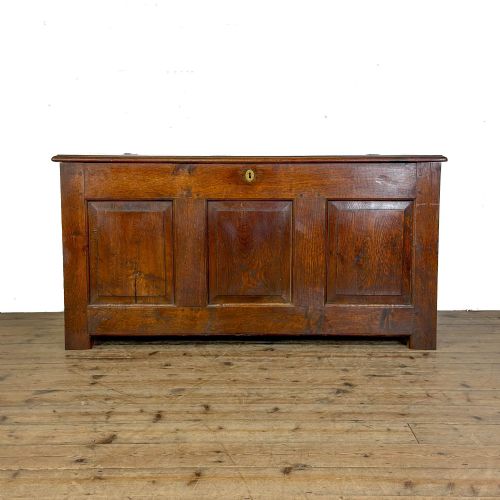
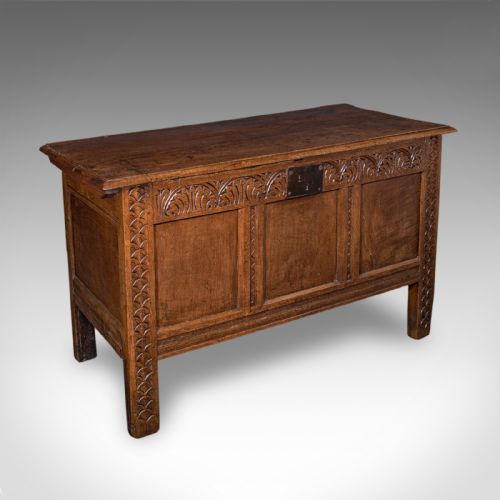
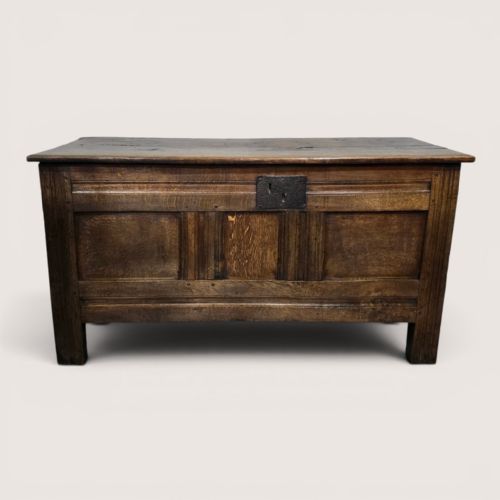
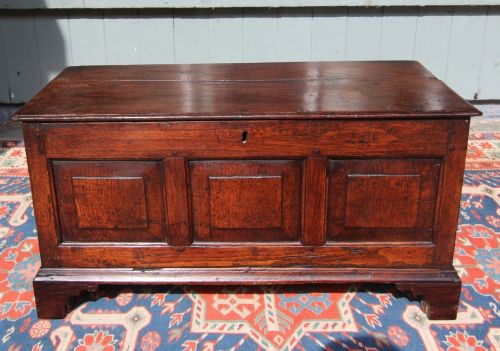
A georgian oak coffer trunk functions as a robust storage chest for household textiles, blankets and valuables. These pieces span the seventeenth, eighteenth and nineteenth centuries, reflecting domestic life through changing decades of English and Welsh craftsmanship.
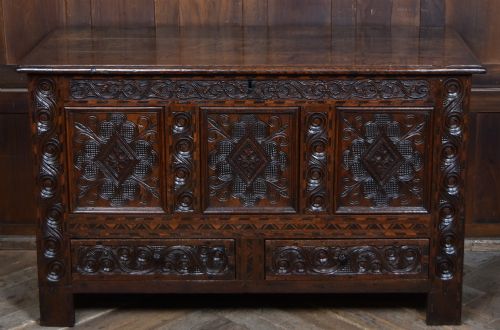
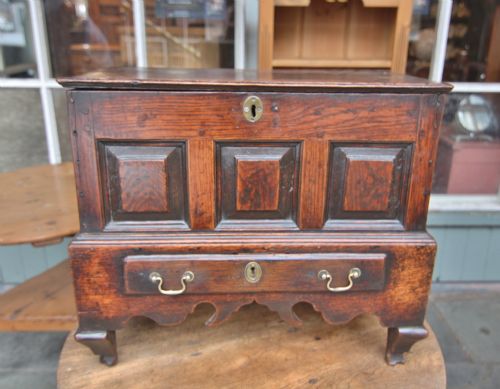
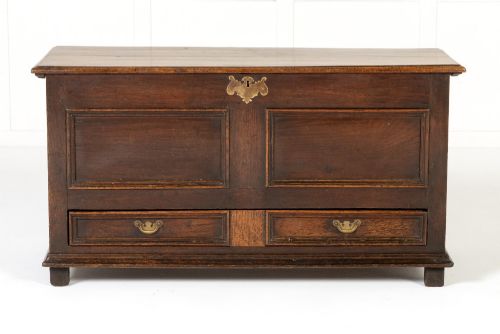
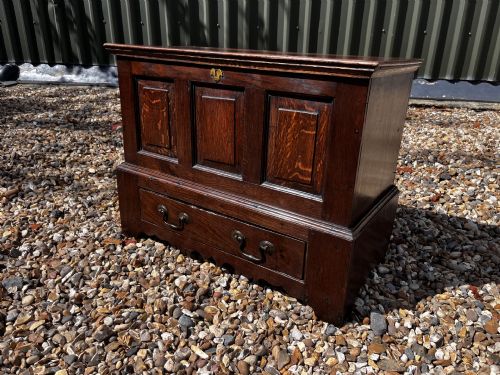
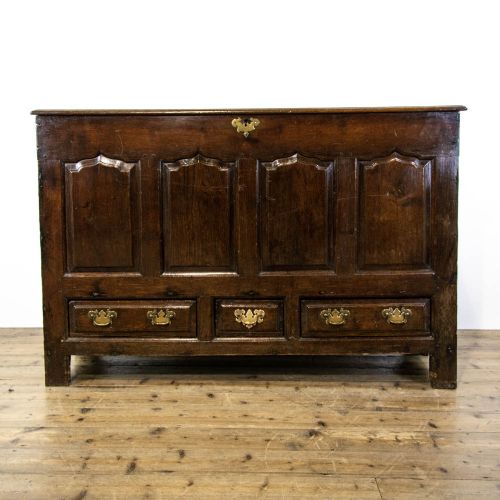
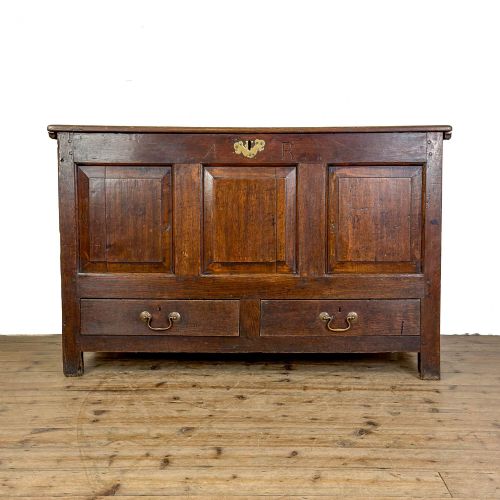
The selections here range from standard boarded and panelled storage chests to specialised forms like mule chests featuring lower drawers, compact coffer bach chests, and sword chests. The most frequent discoveries combine traditional regional oak construction with simple panel layouts.
How they were made
Makers built these pieces primarily from solid English oak, frequently supported by secondary timbers such as elm, burr elm, and iron or brass hardware. Joinery relied on joined and panelled frameworks designed to accommodate the natural movement of timber over time.
Surface treatments varied from plain waxed timber and carved detailing to painted finishes, incorporating wood inlay and specialised internal fittings like candle boxes.
Some chests retain internal candle boxes, tiny compartments once used to keep tallow candles safe from hungry mice.
What varies in quality
Quality depends upon the selection of timber and the complexity of the original joinery, such as carved panels or integrated drawer arrangements. Pieces retaining their original hardware, uncompromised internal candle boxes, and stable boarded bases command greater attention from collectors.
Proportion and regional vernacular style also dictate distinction, with smaller formats and welsh coffer bach examples showing particular refinement in domestic scale.
The Georgian Oak Coffer Trunk Glossary
- Coffer
- A heavy wooden chest traditionally used for storing valuables, linens, and documents. Many examples feature hinged lids and boarded or panelled construction.
- Mule chest
- A storage chest featuring one or more drawers built into the base beneath the main compartment. This form bridges the traditional coffer and the chest of drawers.
- Coffer bach
- A small Welsh tabletop or miniature coffer, translated literally as little coffer. These diminutive chests often served specific domestic or presentation purposes.
- Joined and panelled
- A method of construction where frame stiles and rails enclose a floating panel. This technique allows timber to expand and contract safely with humidity changes.
- Sword chest
- A specialised narrow chest designed to store swords or polearms. These elongated forms are considerably scarcer than standard blanket chests.
Georgian Oak Coffer Trunk: Frequently Asked Questions
What is a mule chest?
A mule chest combines a traditional lift-lid coffer compartment with one or more functional drawers built into the lower base. This design evolution provided easier access to frequently used items without disturbing the contents piled on top.
Craftsmen produced these pieces extensively through the eighteenth and nineteenth centuries in English and Welsh workshops. They served as primary bedroom and landing furniture for storing household linens and garments.
How were these chests used?
These pieces served primarily as secure domestic storage for valuable textiles, blankets, clothing, and legal documents before fitted wardrobes became common. Their heavy timber construction and iron locks protected contents from dampness, pests, and theft.
Many examples also functioned as impromptu seating benches or window seats within historic homes. The flat lids provided a sturdy surface when the chests rested at the foot of a bed or along hallway walls.
What is a coffer bach?
A coffer bach is a miniature Welsh chest, typically standing on bracket feet or a small stand. Despite their small scale, cabinetmakers constructed them with the same joinery techniques used for full-sized furniture.
These diminutive pieces often functioned as presentation items, dowry gifts, or specialised storage for precious documents and small valuables. Surviving examples remain sought after for their compact proportions and regional character.
How do you date an oak coffer?
Dating relies on observing construction methods, hinge types, nail marks, and stylistic clues within the carved panels or framing. Early pieces often display pegged mortise and tenon joints with hand-split panels, while nineteenth-century versions incorporate machine-sawn timber and different fastening techniques.
Secondary woods like elm and specific regional carving patterns also help historians narrow down the era and geographic origin. Comparing the layout against dated archival examples confirms the likely period of manufacture.