




Vintage Oak Dower Chest
A vintage oak dower chest is a substantial timber piece built for linen and blankets, offering rustic storage with centuries of practical domestic history.
Vintage Oak Dower Chest
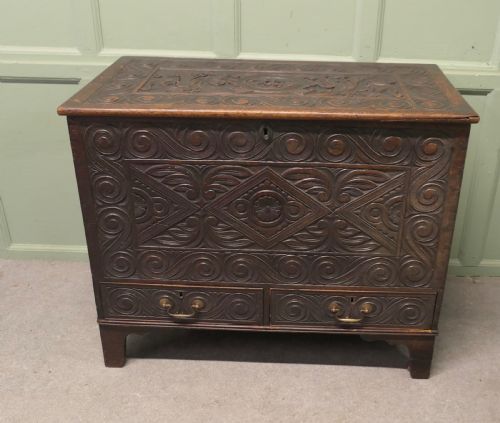
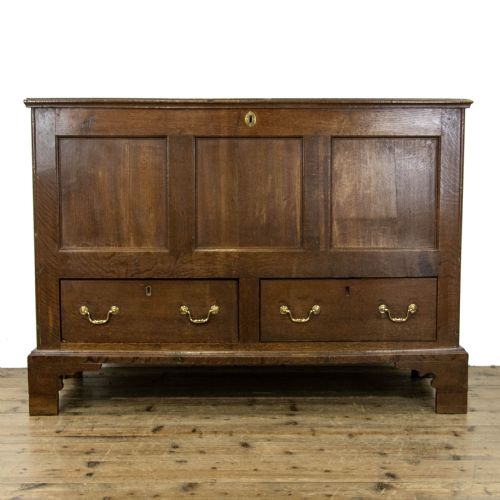
A vintage oak dower chest provides deep interior storage, often configured as a coffer or a mule chest with added drawers below the main compartment. These items function as enduring furniture centerpieces in hallways, bedrooms and living spaces.
The versions most commonly met on this page date from the sixteenth, eighteenth and nineteenth centuries, with Georgian and Jacobean styles appearing frequently alongside cottage-size examples.
Makers constructed these sturdy items from solid oak, sometimes embellishing the panels with carved motifs or incorporating wrought iron hinges and brass fittings for structural reinforcement.
How they were made
Carpenters built these chests primarily from solid oak, utilising heavy timber boards joined to withstand generations of daily domestic use. The natural grain of the wood provides the primary visual texture across the panels and lids.
Metalwork played a crucial structural role, with wrought iron bindings and brass elements securing the corners and lids on early examples. Carved details, such as the green man motif, appear on specific panels to ornament the otherwise utilitarian timber surfaces.
Some chests wear the carved face of the green man amidst their foliage, watching over your spare duvet covers with leafy ancient vigilance.
What varies in quality
The refinement of the surface carving and the integrity of the solid oak construction dictate the standing of an individual piece. Early sixteenth-century iron-bound examples demonstrate heavier utilitarian forging compared to later Georgian iterations.
Proportion and scale also influence character, ranging from compact cottage-size chests to broader mule chests featuring integrated drawer storage beneath the main compartment.
The Vintage Oak Dower Chest Glossary
- Coffer
- A heavy wooden chest traditionally used for storing valuables, linens or documents. These form the foundational ancestor of the later dower chest.
- Mule chest
- A storage chest featuring one or more drawers built into the base beneath the main compartment. This form bridges the traditional coffer and the modern chest of drawers.
- Green man
- A sculptural architectural motif depicting a face carved from leaves and foliage. It symbolises rebirth and appears on specific carved oak furniture.
- Georgian
- A style period spanning the eighteenth century, characterised by balanced proportions and classical influence. Pieces from this era often display refined joinery.
- Jacobean
- A seventeenth-century aesthetic marked by dark oak, geometric mouldings and robust proportions. Revivals of this style recur in later furniture production.
Vintage Oak Dower Chest: Frequently Asked Questions
What is a dower chest?
A dower chest is a large wooden trunk historically used by a bride to store household linen, clothing and personal property for her marriage.
Over time, these pieces transitioned into general domestic furniture utilised for blankets and bulky items in the home.
How do I date an oak chest?
Dating relies on examining the construction methods, tool marks, timber selection and stylistic motifs visible across the piece. Sixteenth-century examples often feature heavy iron bindings, whereas eighteenth-century Georgian items frequently incorporate lower drawers.
Changes in hardware, such as brass versus wrought iron, also provide chronological markers for the period of manufacture.
Where should I place a chest?
These substantial oak pieces sit well at the foot of a bed, along a wide hallway or as a focal point in a living room. Their flat lids allow them to function as surface display areas.
Ensure the placement avoids direct heat sources to protect the solid oak timber from drying out.
What is a mule chest?
A mule chest is a variation of the standard storage chest that includes one or more functional drawers fitted beneath the main lidded compartment. This hybrid design emerged to provide easier access to smaller garments without opening the top lid.
They appear frequently in eighteenth-century British cabinetmaking.