


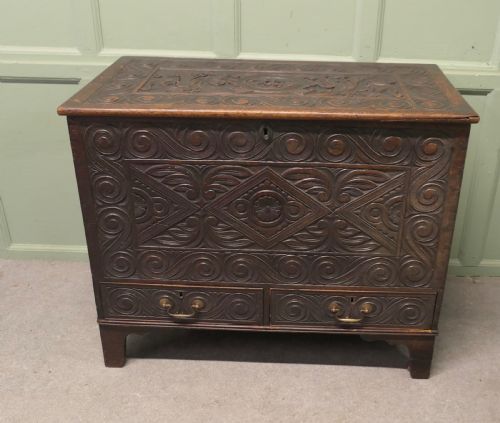


Oak Trunk with Drawers
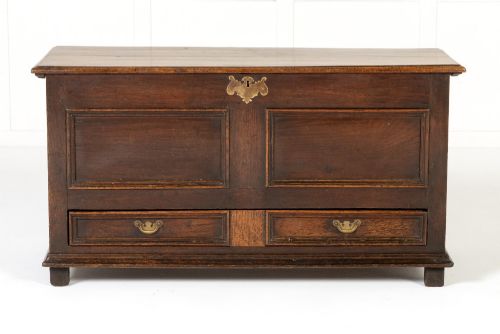
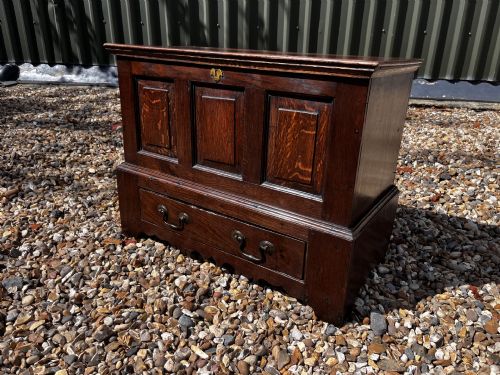
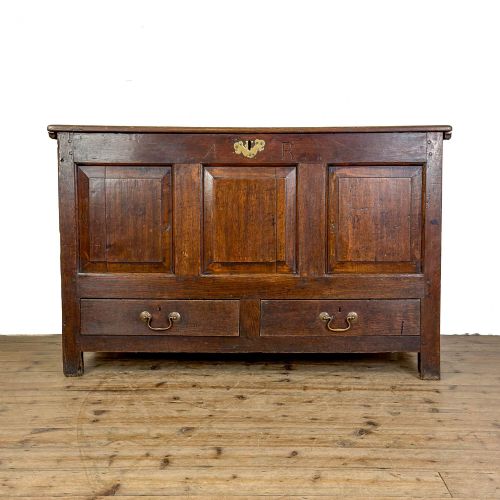
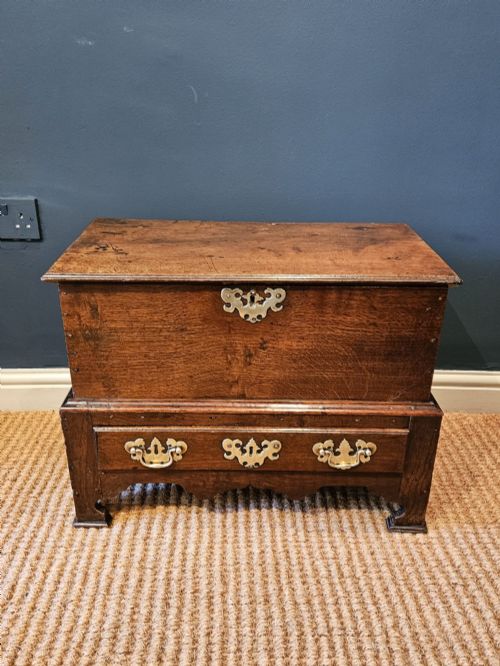
An oak trunk with drawers combines the lift-top storage of a traditional coffer with the accessible lower drawers of a chest.
Oak Trunk with Drawers
An oak trunk with drawers represents a practical evolution in domestic storage, merging a hinged upper compartment for linens or blankets with one or more lower drawers for smaller items. These pieces frequently appear as mule chests, coffer bachs, and regional blanket boxes originating from English and Welsh workshops.
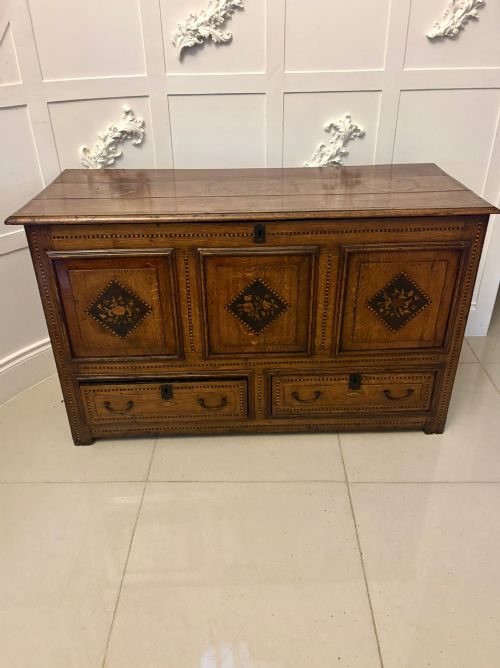
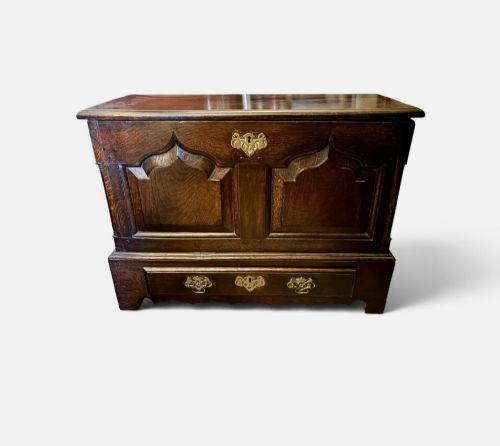
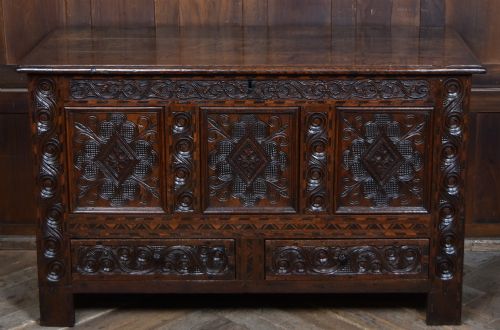
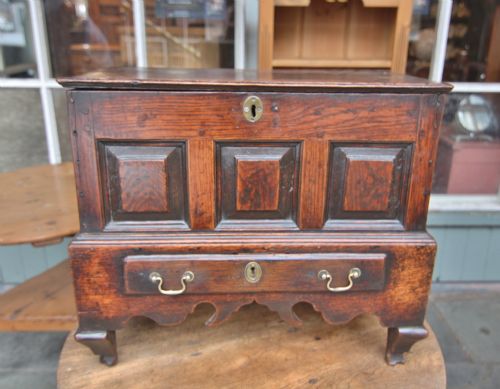
The specimens seen here span from the seventeenth century through the nineteenth century, encompassing vernacular pieces and formal Georgian designs. Buyers encounter robust three-panel and four-panel configurations alongside smaller tabletop or stand-mounted coffer bachs.
Regional styles dominate this category, showing distinct characteristics from Welsh country makers and English provincial cabinetmakers. The integration of drawers beneath the main storage well defines the form, separating it from a simple enclosed coffer.
Materials and construction methods
Solid oak serves as the primary structural timber, often complemented by secondary woods and decorative accents like burr elm panels, mahogany, and walnut. Iron hinges and brasses secure the lids and drawer pulls, while marquetry inlay adds surface pattern on finer examples.
Joinery relies on traditional frame-and-panel construction to accommodate the natural seasonal movement of timber without splitting. Drawers are built with hand-cut joints, fitted beneath the main chest compartment where the weight rests upon heavy internal framing.
Materials paired with oak in these storage pieces include brass, iron, mahogany, marquetry inlay, burr elm, and walnut.
Distinctions in quality
The sophistication of the surface enrichment dictates much of the distinction between vernacular utility pieces and ambitious cabinet work. Crisp carving, such as green man motifs or geometric panels, alongside intricate marquetry inlay, separates standard country workshop output from exceptional examples.
Proportion and structural integrity define the upper tier of these pieces, particularly the balanced arrangement of the drawers beneath the coffer box. Original hardware, untouched timber patination, and undisturbed panel construction elevate the standing of a piece.
The Oak Trunk with Drawers Glossary
- Mule chest
- A storage chest featuring one or more drawers fitted beneath the main lift-top compartment. This form bridged the gap between the simple blanket chest and the tall chest of drawers.
- Coffer bach
- A small Welsh box or chest, often mounted on a stand or fitted with drawers, traditionally made as a love token or dowry chest. The Welsh term translates literally as little chest.
- Vernacular
- Objects built by local country craftsmen following regional traditions rather than metropolitan academic designs. These pieces utilise locally sourced timber and practical construction methods.
- Marquetry inlay
- The art of applying thin slices of contrasting wood veneers onto a structural surface to create pictorial or geometric patterns. It appears on select high-status eighteenth-century panels.
- Frame-and-panel
- A method of wooden construction where a central floating panel sits within a grooved outer frame. This technique allows the wood to expand and contract safely with humidity changes.
Oak Trunk with Drawers: Frequently Asked Questions
What is a mule chest?
A mule chest is a hybrid storage form that places one or more drawers beneath a traditional hinged coffer box. This design allowed users to access smaller garments without disturbing the items stored in the main upper compartment.
The form gained popularity during the seventeenth and eighteenth centuries in English and Welsh households. It serves today as a versatile linen chest or coffee table alternative in period and modern interiors.
How old is an oak trunk with drawers?
These pieces date primarily from the late seventeenth century through the nineteenth century, with strong representation from the Georgian period. Construction details and stylistic motifs help narrow down the decade of manufacture.
Early examples feature heavy framing and pegged joints, while later nineteenth-century versions often show softer mouldings and machine-sawn components. Examining the drawer linings and panel construction reveals the true age.
Where should I place an oak trunk with drawers?
These trunks function well at the foot of a bed for storing extra blankets or in a hallway as a striking focal point. Their flat wooden lids also offer a convenient surface for displaying decorative objects.
Keep solid oak furniture away from direct heat sources and intense sunlight to prevent the timber from drying out or splitting. Maintaining stable room humidity preserves the original polish and wood movement.