



Georgian Mahogany Knife Boxes
Georgian mahogany knife boxes are elegant dining room receptacles designed to house flatware, combining practical storage with sculptural presence.
Georgian Mahogany Knife Boxes
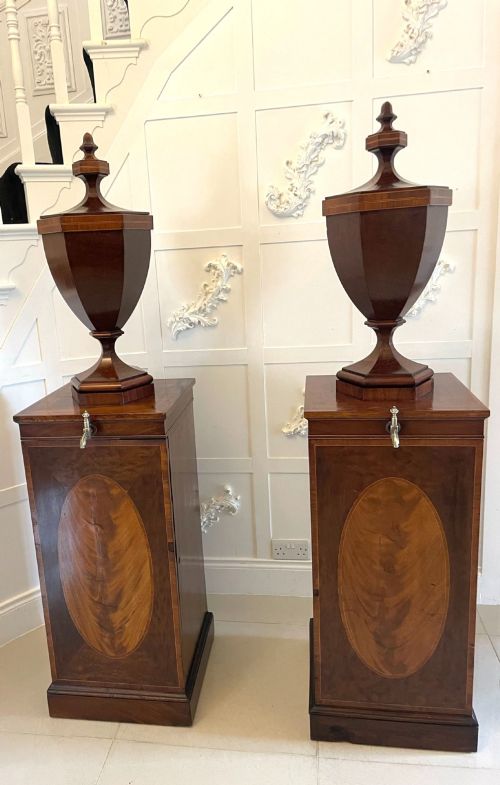
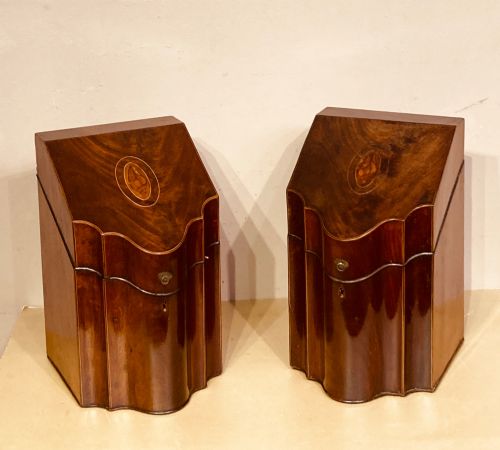
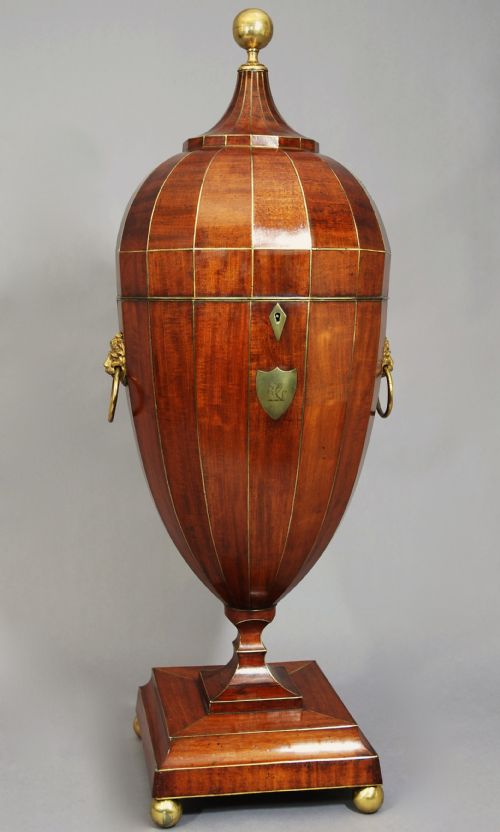
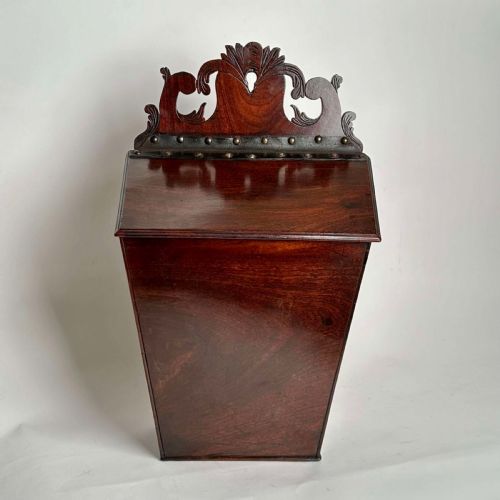
When searching for georgian mahogany knife boxes, collectors encounter sophisticated dining room storage solutions dating primarily from the eighteenth century and the George III period. These pieces frequently take the form of sloping lidded boxes or soaring urns designed to sit on sideboards.
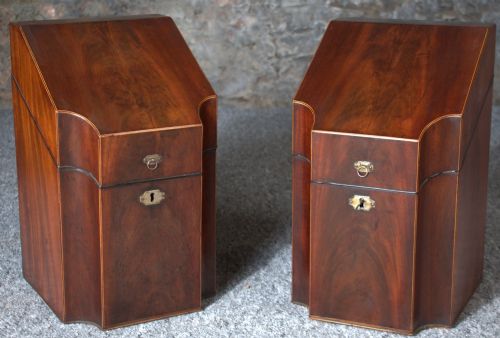
Most items reflect the classic domestic requirements of affluent Georgian households where cutlery was stored securely between meals. Buyers will readily find both straight-fronted variants and shaped profiles finished with patinated mahogany timbers.
How they were made
Cabinet makers utilised dense mahogany timbers, often selected for figured grain, as the primary structural material for these boxes and urns. Surfaces were frequently embellished with contrasting boxwood and wood inlay to create geometric and fan motifs.
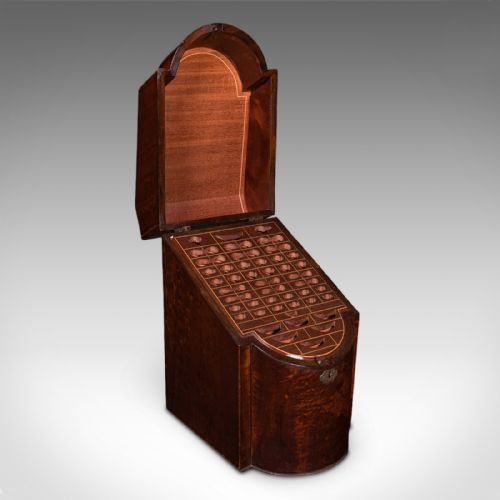
Functional hardware such as brass handles, escutcheons, and locking mechanisms were integrated to secure the contents and facilitate handling. Solid silver mounts occasionally appeared on higher status pieces alongside internal fitted partitions designed to separate individual cutlery items.
Some knife boxes feature internal velvet-lined tiers that whisper softly when the lid opens.
What varies in quality
The distinction between ordinary and exceptional georgian mahogany knife boxes lies primarily in the selection of the timber and the crispness of the serpentine or bow front shaping. Superior examples display rich, deep patination and highly figured wood grain that catches the light.
Craftsmanship is further demonstrated in the precision of the boxwood inlay and the integration of original brass fittings rather than later replacements. The architectural proportions, especially in urn forms and paired sets, dictate the visual harmony and overall desirability of the piece.
The Georgian Mahogany Knife Boxes Glossary
- Serpentine front
- A furniture front characterised by a wavy outline with a convex centre flanked by concave curves. This contour requires advanced woodworking skill and indicates a higher status piece.
- Bow front
- A convex curved front that projects outward in a smooth arc. It softens the strict geometric lines typical of earlier storage boxes.
- Boxwood inlay
- Contrasting light-coloured wood inserted into recesses within the darker mahogany surface. It creates decorative borders and ornamental centrepieces.
- Cutlery urn
- A tall, vase-shaped vessel used on dining room sideboards to store table silver during the Georgian period. They often match a pair of knife boxes and stand on pedestal cupboards.
Georgian Mahogany Knife Boxes: Frequently Asked Questions
What were georgian mahogany knife boxes used for?
These boxes were kept on sideboards in the dining room to store flatware and knives safely when the dining table was cleared between meals.
Servants would retrieve the cutlery as needed, keeping the dining surfaces orderly and protecting delicate steel blades from moisture.
How do I tell a george iii box from a later copy?
Examine the interior construction, the timber density, and the patination of the mahogany surfaces over centuries of handling.
Original hardware, hand-cut dovetail joints, and authentic secondary woods inside the box provide reliable indicators of period manufacture.
Can I use an antique knife box for modern cutlery?
Many surviving boxes feature fitted interiors that accommodate various items, though modern stainless steel flatware handles may differ in thickness from Georgian knives.
Items without rigid internal partitions function well for storing letters, stationery, or contemporary accessories.
Why are pairs of knife boxes difficult to find?
Sideboard layouts in Georgian dining rooms symmetrically flanked the main serving table with matching containers, leading to natural attrition over centuries as pairs were separated.
Matching pairs that survive intact together remain particularly sought after by collectors aiming to recreate period interiors.