



Antique Sideboard Cutlery Box
These antique sideboard cutlery boxes are stately dining room containers that hold flatware with elegance.
Antique Sideboard Cutlery Box
When you search for antique sideboard cutlery box, you encounter formal dining accessories designed to sit upon furniture and store knives and forks.
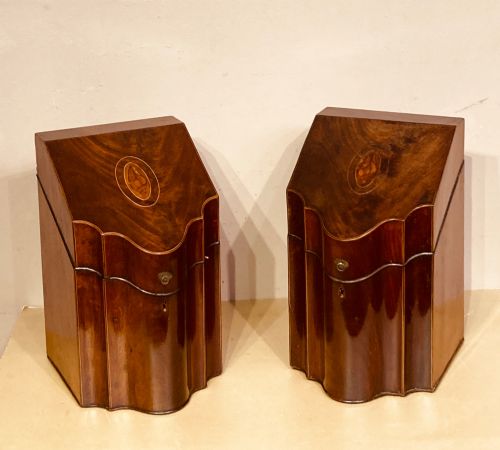
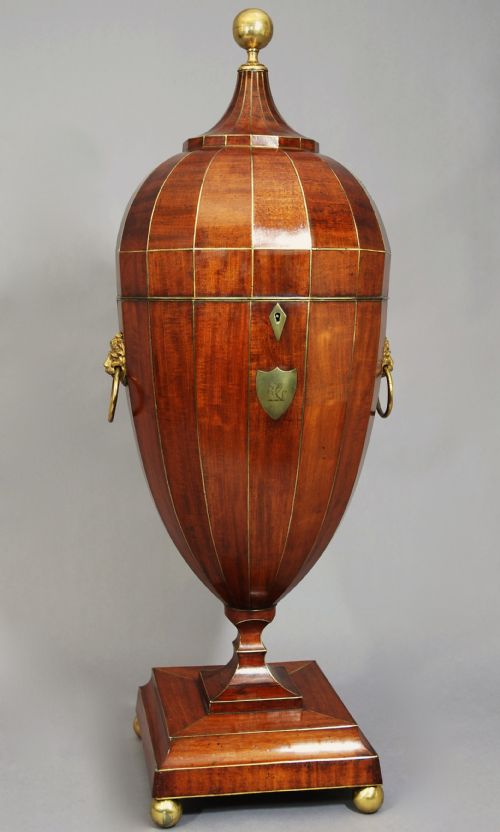
The pieces on this page appear primarily as pairs of knife boxes or lidded cutlery urns from the Georgian and Victorian periods.
Makers shaped these containers in serpentine fronts, bow fronts, and urn profiles to serve elite households.
How they were made
Craftsmen built these containers using timber carcasses of mahogany and walnut, frequently enhancing the surfaces with satinwood and boxwood inlay.
Makers fitted these wooden structures with metal handles, locks, and solid silver mounts to secure the contents and punctuate the dark grain.
Inside, artisans lined the compartments in wood or velvet to organise individual pieces of cutlery.
Antique Sideboard Cutlery Box Retail Price Guide 2026
Typical asking prices for sideboard cutlery box among the pieces listed under this phrase on Sellingantiques today, from the lower quarter to the upper quarter. They describe what is for sale here now, not the wider market.
Some boxes hide secret compartments behind their fitted interiors for stray silver sixpences.
What varies in quality
The distinction between standard examples and superior pieces rests on the complexity of the timber figure and the precision of the wood inlay.
Proportions dictate value, where narrow proportions and matched pairs command greater attention from discerning collectors.
Original hardware, including solid silver mounts and brass fittings, elevates the integrity of the piece.
The Antique Sideboard Cutlery Box Glossary
- Serpentine front
- A curved furniture front with a convex centre flanked by concave sides. This shape demands high carpentry skill.
- Bow front
- A convex curved front that swells outward. It creates a refined profile on eighteenth-century dining furniture.
- Cutlery urn
- A vase-shaped vessel designed to hold flatware on a sideboard. These tall pieces often stand as matching pairs.
- Wood inlay
- Pieces of contrasting timber fitted into a recess to form decorative patterns. Boxwood and satinwood provide sharp visual contrast against dark mahogany.
Antique Sideboard Cutlery Box: Frequently Asked Questions
What is an antique sideboard cutlery box used for?
These containers served elite dining rooms as secure storage for flatware and serving knives.
Servants placed them upon sideboards to keep cutlery organised and accessible during formal meals.
How do I date a Georgian cutlery box?
Examine the timber species, carcass construction, and decorative motifs such as stringing or wood inlay.
Eighteenth-century examples often utilise solid mahogany with distinct serpentine or bow fronts.
Are these boxes found as pairs?
Many surviving examples appear as matched or identical pairs to balance the symmetry of a dining room.
Pairs often feature mirrored wood grain or matching brass and silver mounts.
What is the difference between a knife box and a cutlery urn?
Knife boxes present a sloping lidded profile with a vertical back, designed to stand flat upon furniture.
Cutlery urns take a classical vase shape with a removable top section to access the interior.