


Sloped Mahogany Cutlery Box
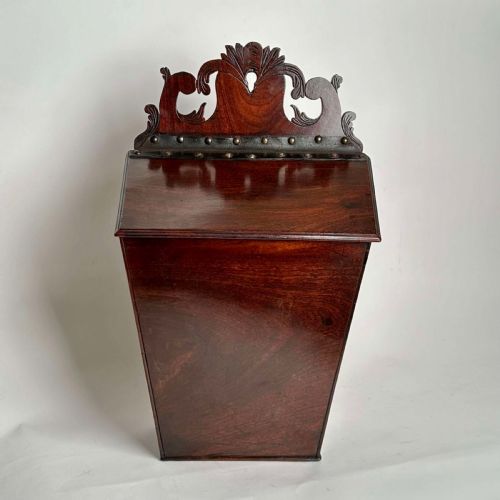
These sloped mahogany cutlery box pieces are refined containers shaped for the dining table, offering traditional storage for cutlery and stationery.
Sloped Mahogany Cutlery Box
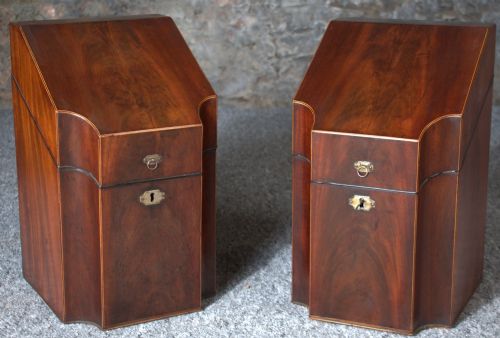
Most examples found here date from the eighteenth century and the year 1800, built in rectangular or serpentine fronted profiles. Makers adapted these versatile storage pieces for both knife storage and letter holding, combining domestic utility with disciplined cabinetmaking.
Buyers encounter single pieces and matched pairs, often enhanced with contrasting stringing or brass furniture. These items reflect the formal dining rituals of their era while serving as practical storage in modern interiors.
How they were made
Cabinetmakers constructed these pieces primarily from solid and figured mahogany timber, frequently selecting cuts with strong grain patterns for the main exterior surfaces. This dense wood provided stability and a rich dark ground for decorative work.
Decoration often relied on precision woodworking techniques such as boxwood and satinwood inlay, creating delicate border lines and geometric motifs. Artisans fitted brass handles, escutcheons and hinges to secure the lids and facilitate handling.
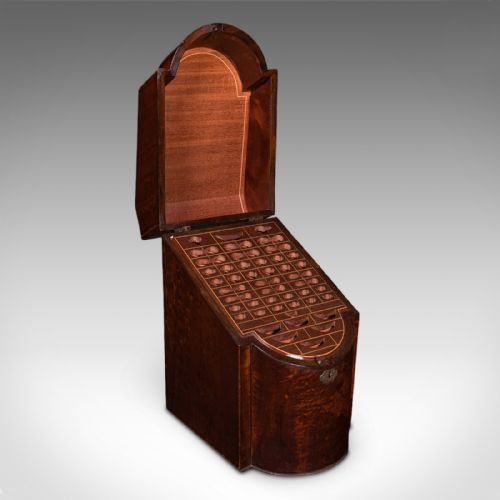
Internal compartments were meticulously arranged to hold upright cutlery blades or stationery documents safely. Every joint and surface received careful attention to ensure structural integrity across decades of daily use.
Surviving nineteenth-century letters tucked inside hidden compartments occasionally reveal forgotten family gossip from the dining room.
What varies in quality
The choice of timber underpins the distinction between standard and superior examples, with highly figured mahogany and intricate wood inlay marking out the better workshop productions. Subtle variations in timber selection determine the visual depth of the polished surface.
Cabinetwork precision reveals itself in the alignment of the sloped lid, the crispness of the serpentine front, and the integration of internal fittings. Superior examples maintain tight joints and balanced proportions without relying on heavy restoration.
Original brass fittings and uncompromised internal dividers contribute significantly to the standing of a piece. The survival of crisp boxwood stringing and unaltered hardware distinguishes the finest specimens from simpler utilitarian boxes.
The Sloped Mahogany Cutlery Box Glossary
- Serpentine front
- A curved furniture front featuring a convex centre flanked by concave wings. This graceful contour appears on finer George III knife boxes.
- Stringing
- A narrow inlay of contrasting wood, such as boxwood or satinwood, set flush into the mahogany surface. It provides delicate framing lines around the lid and front panels.
- Escutcheon
- A protective plate surrounding a keyhole, usually cast in brass on these boxes. It prevents the wood from splitting around the lock.
- Georgian
- The period spanning the reigns of the first four British monarchs named George, lasting from 1714 to 1830. Pieces from this era display classical proportions and refined craftsmanship.
- Knife box
- A specialised container designed in the eighteenth century to hold standing cutlery upright. Many later double as stationery holders or letter racks.
Sloped Mahogany Cutlery Box: Frequently Asked Questions
How were these boxes used originally?
In eighteenth century dining rooms, these containers sat upon sideboards to keep silver-handled knives organised and protected between meals. Servants would open the slanted lids to access the cutlery before laying the table.
Over time, many owners repurposed them as elegant stationery holders or letter boxes. Their fitted interiors made them adaptable for storing household documents.
How can I date a Georgian cutlery box?
Dating relies on examining the timber, construction methods, and decorative styles typical of the eighteenth century. George III examples often incorporate serpentine fronts and fine boxwood stringing.
Earlier seventeenth and eighteenth-century pieces display simpler rectangular proportions and robust joinery. The style of the brass hinges and locks also offers clues to the manufacturing period.
Are these boxes suitable for modern interiors?
These boxes integrate easily into contemporary rooms as sculptural tabletop storage. Their warm mahogany tones and compact footprints suit living rooms, halls, and studies.
Owners often utilise them to store letters, modern desk accessories, or small collections. Their classic architectural lines complement both traditional and modern decorating schemes.