

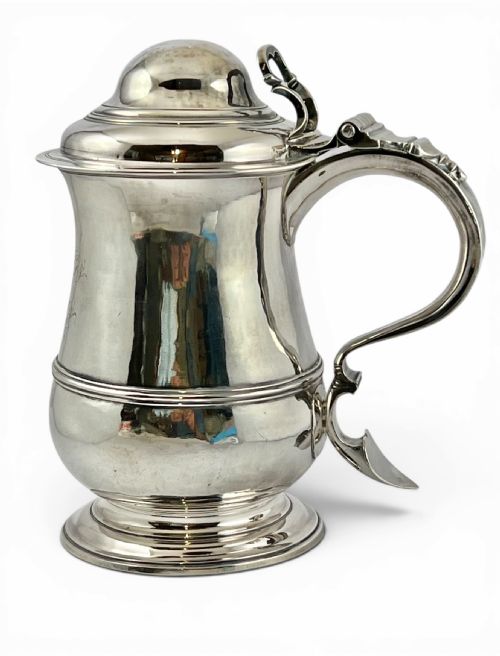


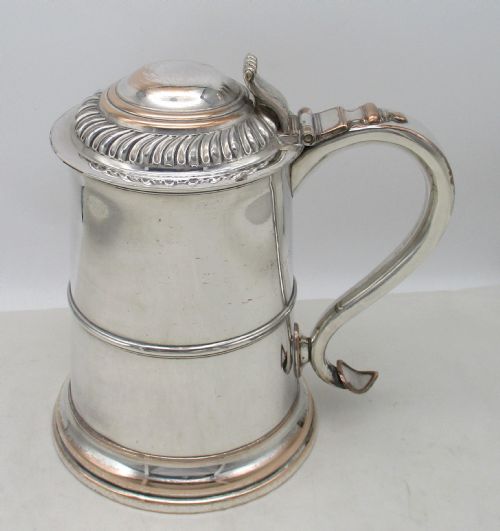


Georgian Lidded Mug
A georgian lidded mug is a sturdy drinking vessel built for heavy use, combining solid metalwork with practical domestic design.
Georgian Lidded Mug
A georgian lidded mug generally takes the form of a substantial tankard, designed to hold generous portions of ale or other beverages during the eighteenth century. These pieces appear most frequently in sterling silver, old Sheffield plate, and pewter, reflecting the standard materials of the period.
Makers fashioned these vessels in distinct regional styles, with examples originating from London and Newcastle alongside continental pieces like German salt-glazed stoneware. The forms range from pint and quart capacities up to larger presentation pieces featuring hinged lids.
How they were made
Silversmiths hammered sterling silver and pewter into thick walls capable of withstanding daily tavern or household service. They soldered sturdy handles securely to the bodies and attached hinged thumbpiece lids with precise pins.
Makers of old Sheffield plate fused a thin layer of silver onto a copper core, rolling the metals together before shaping the sheet into cylindrical tankards. Craftsmen then concealed the exposed copper edges with silver wire solder to ensure durability.
Potters shaped salt-glazed stoneware on the wheel, applying mineral salt to the kiln fire to produce the characteristic pebbled texture on continental vessels. These ceramic bodies offered a cheaper, robust alternative to metal drinkware.
Listings feature items spanning the eighteenth century, including specific periods under George II and George III alongside later nineteenth-century styles.
What varies in quality
The weight of the metal dictates the substantial feel of the vessel, with heavier gauge silver and thick pewter representing superior craftsmanship. Thinner walls on plated or silvered items reveal less material investment by the original maker.
The crispness of maker marks and hallmarking stamped into the base or handle indicates the standing of the workshop. Clear punches from silversmiths provide assurance of origin and metal standard, whereas worn or absent marks obscure provenance.
John Payne·Burgum And Catcott
The Georgian Lidded Mug Glossary
- Tankard
- A tall, cylindrical drinking vessel featuring a single handle and a hinged lid. These pieces formed the primary drinking vessels for ale before the widespread use of ceramic mugs.
- Old Sheffield Plate
- An early form of plated metal created by fusing a thin sheet of silver to a thick copper ingot. This technique produced durable tableware that predates modern electroplating.
- Sterling Silver
- An alloy consisting of pure silver and other metals, typically copper, standardised for strength and purity. English pieces bear hallmarks indicating the assay office and maker.
- Salt-Glazed Stoneware
- A dense ceramic fired at high temperatures with common salt thrown into the kiln to create a glassy, pitted finish. This finish rendered the porous clay completely waterproof.
- Pewter
- A malleable metal alloy composed chiefly of tin alloyed with copper and lead. Pewter vessels provided an affordable domestic alternative to silver tankards.
Georgian Lidded Mug: Frequently Asked Questions
How were these tankards used?
These vessels were built for serving and drinking ale, beer, or cider during meals and social gatherings. The attached lid helped keep dust and insects out of the drink in busy eighteenth-century environments.
Because of their solid construction in metal and stoneware, they handled daily washing and heavy table use without sustaining damage.
How do I identify a Georgian piece?
Look for hallmarks stamped into the metal, which often reveal the city of assay, the date letter, and the maker's mark. Styles from this era also tend to follow specific reigns like George II or George III.
Form and construction methods, such as the way the handle joins the body or the shape of the thumbpiece, also help date the vessel.
Can I use old Sheffield plate daily?
Old Sheffield plate can withstand careful handling, but the thin layer of silver over copper requires gentle washing to prevent wear. Many collectors prefer to display these items rather than use them for regular dining.
Harsh abrasives will expose the underlying copper core, permanently altering the appearance of the plated surface.