



Silver Plate Mug
These silver plate mug examples range from sturdy Georgian drinking vessels to ornate Victorian christening pieces, offering substance and historical charm.
Silver Plate Mug
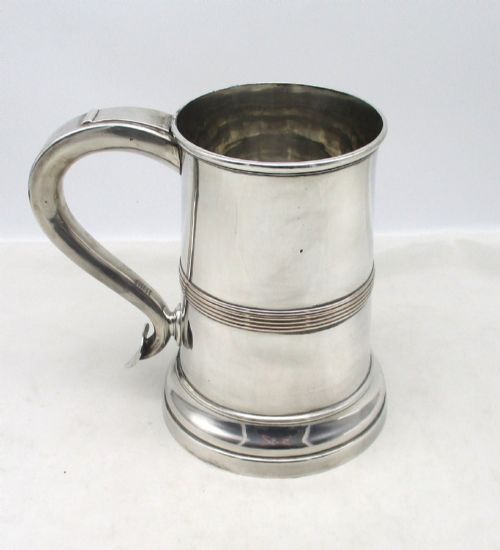
Buyers seeking a silver plate mug encounter a diverse selection of drinking vessels spanning the eighteenth, nineteenth, and early twentieth centuries. These encompass heavy tavern tankards, loving cups, and intimate christening or shaving mugs designed for daily use or presentation.
The objects frequently appear in Georgian and Victorian styles, including Queen Anne revivals and rustic oak-mounted forms. Smaller child variants and collapsible stirrup cups also feature among the heavier quart and pint tankards.
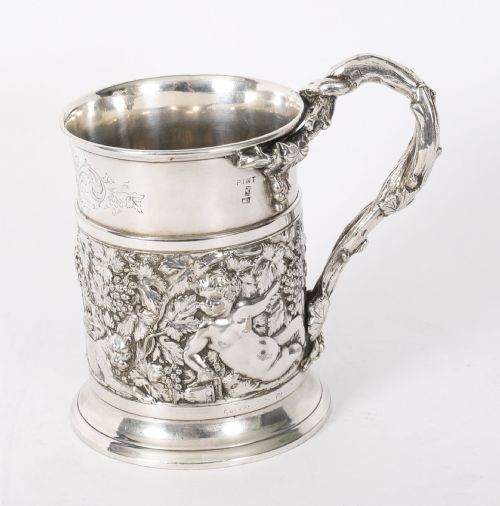
Origins trace primarily to English workshops utilising traditional techniques of the period. Forms range from plain cylindrical bodies to heavily embossed and engraved surfaces depicting floral scenes or children playing.
Materials and construction
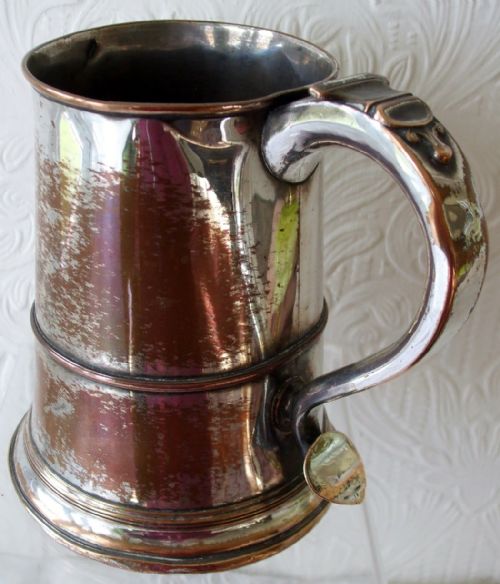
Early pieces rely heavily on Old Sheffield Plate, fusing a thin layer of silver to a thicker copper base. Later Victorian items typically employ electroplated nickel silver as a substrate for the silver coating.
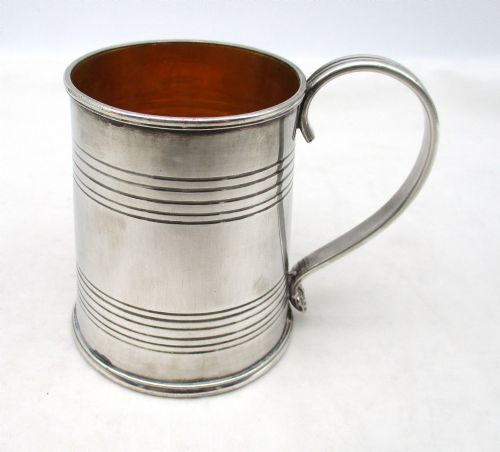
Combinations of materials surface regularly, pairing the metal with clear glass bodies, oak staves, or gold gilt interiors. Handles are frequently cast separately in scroll, leaf, or figural designs such as owls or boar tusks before being attached to the body.
Pin-up girl motifs and boar's tooth handles occasionally appear on nineteenth-century drinking vessels, adding unexpected personality to formal barware.
Evaluating craftsmanship and distinction
Differentiation lies in the crispness of the chasing, the depth of the repoussé work, and the integrity of the original fusion in Old Sheffield pieces. Superior examples display sharp engraving and balanced proportions rather than worn or smoothed surface detail.
The weight of the metal and the complexity of cast handles, such as scrollwork or figural elements, elevate certain tankards. Secondary materials like clear glass inserts and well-fitted lidded mechanisms further distinguish finer items from standard tavern ware.
G R Collis·Richard Morton·Thomas Bradbury·Walker and Hall
The Silver Plate Mug Glossary
- Old Sheffield Plate
- An early fusing technique where a sheet of silver is melted onto a copper ingot before being rolled into plates. This method leaves characteristic copper edges visible upon close inspection.
- Electroplated Nickel Silver
- A mid-nineteenth-century process where an electrical current bonds silver onto a nickel brass alloy base. It largely superseded older plating methods due to its efficiency.
- Loving Cup
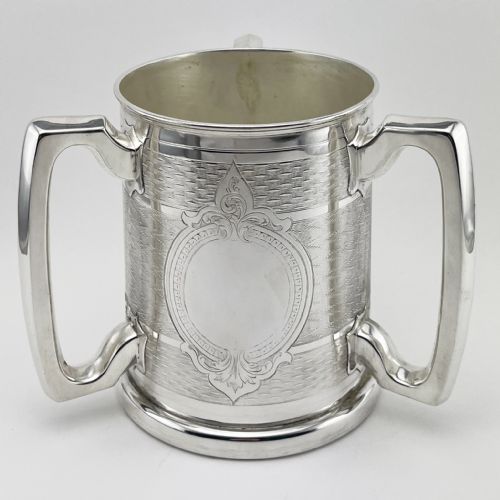
- A large drinking vessel with multiple handles designed to be passed around a group. These often appear in substantial sizes for communal toasts.
- Stirrup Cup
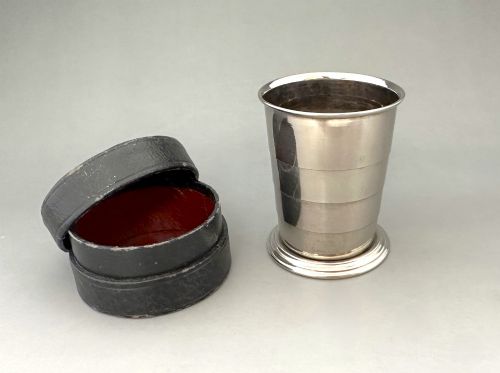
- A small drinking vessel given to riders before a hunt, traditionally shaped without a flat base so it could not be set down until emptied. Some Victorian versions feature collapsible mechanisms for portability.
- Cartouche
- An ornamental frame or panel, often engraved on mugs and tankards to receive initials or family crests. Many surviving examples remain blank.
Silver Plate Mug: Frequently Asked Questions
How do I clean a silver plate mug?
Wash the vessel gently in warm water using a mild washing-up liquid and a soft cloth. Avoid abrasive pastes or harsh scrubbing that might wear through the thin silver layer to the underlying copper or nickel.
Dry the item thoroughly with a soft lint-free towel to prevent water spots. Store the piece in a dry environment away from direct sunlight to maintain the finish.
Are these tankards safe for drinking?
Many historical drinking vessels remain structurally sound for holding cold beverages. However, older items featuring exposed copper edges or degraded interior plating require careful consideration before practical use.
Examine the interior condition closely to ensure the metal surface remains intact. Buyers intending regular use often choose pieces with gold gilt interiors designed to protect beverages from direct metal contact.
How do I tell Old Sheffield Plate from later electroplate?
Examine the rims and edges for a thin reddish line where the underlying copper core shows through the silver layer. This characteristic telegraphs the earlier fusion method used before electrical plating became standard.
Later electroplated pieces display an even silver layer across all surfaces without exposed base metals at the cut seams. Maker marks and manufacturing technology stamps also help date the transition between techniques.
What were christening mugs used for?
Christening mugs functioned as traditional gifts presented to infants to mark a baptism or birth. Families kept these small vessels as commemorative keepsakes rather than utilitarian tableware.
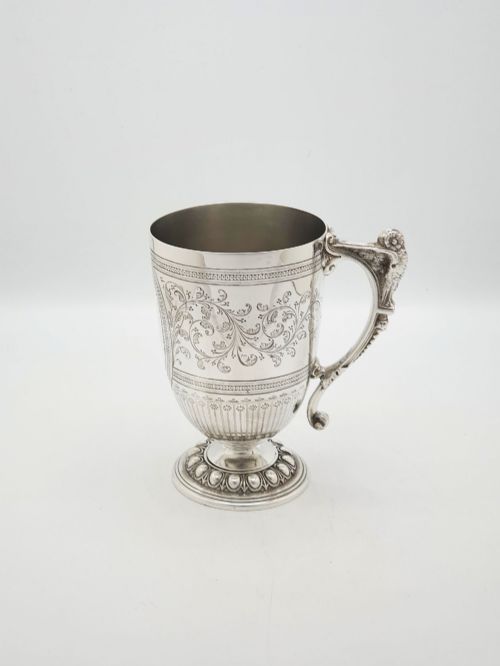
They frequently feature blank engraved cartouches intended for the child's initials or birth date. Common decorative motifs include floral scenes, scrolling foliage, and depictions of children playing.