
Georgian Flame Mahogany
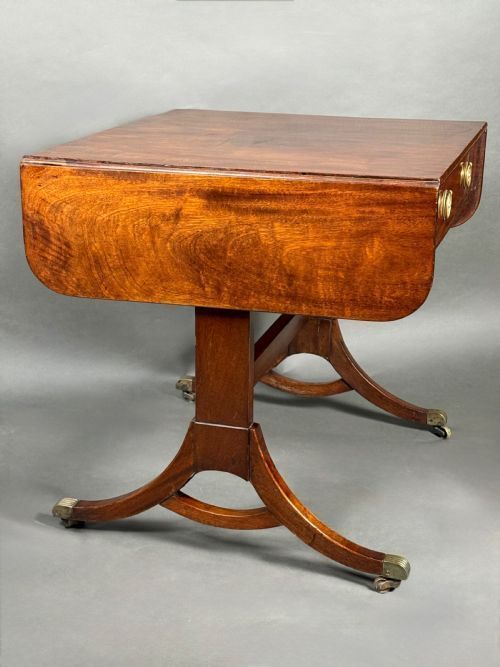
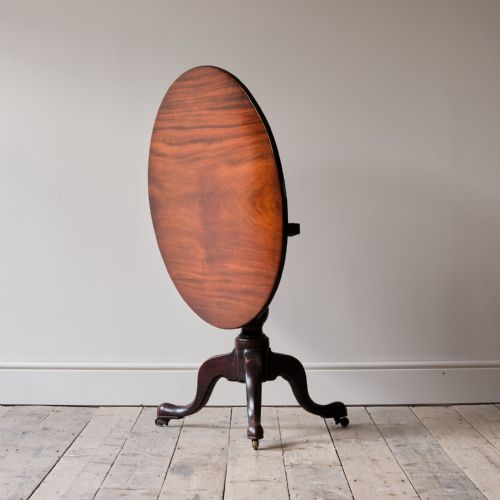
Georgian flame mahogany brings together rich timber surfaces and classic cabinet forms from the eighteenth and nineteenth centuries.
Georgian Flame Mahogany
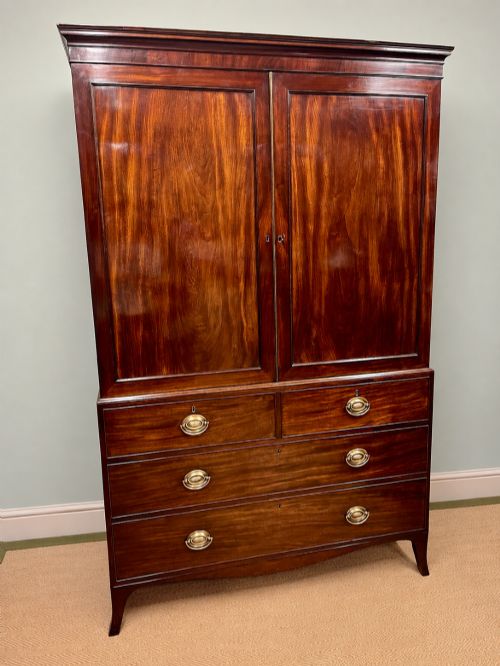
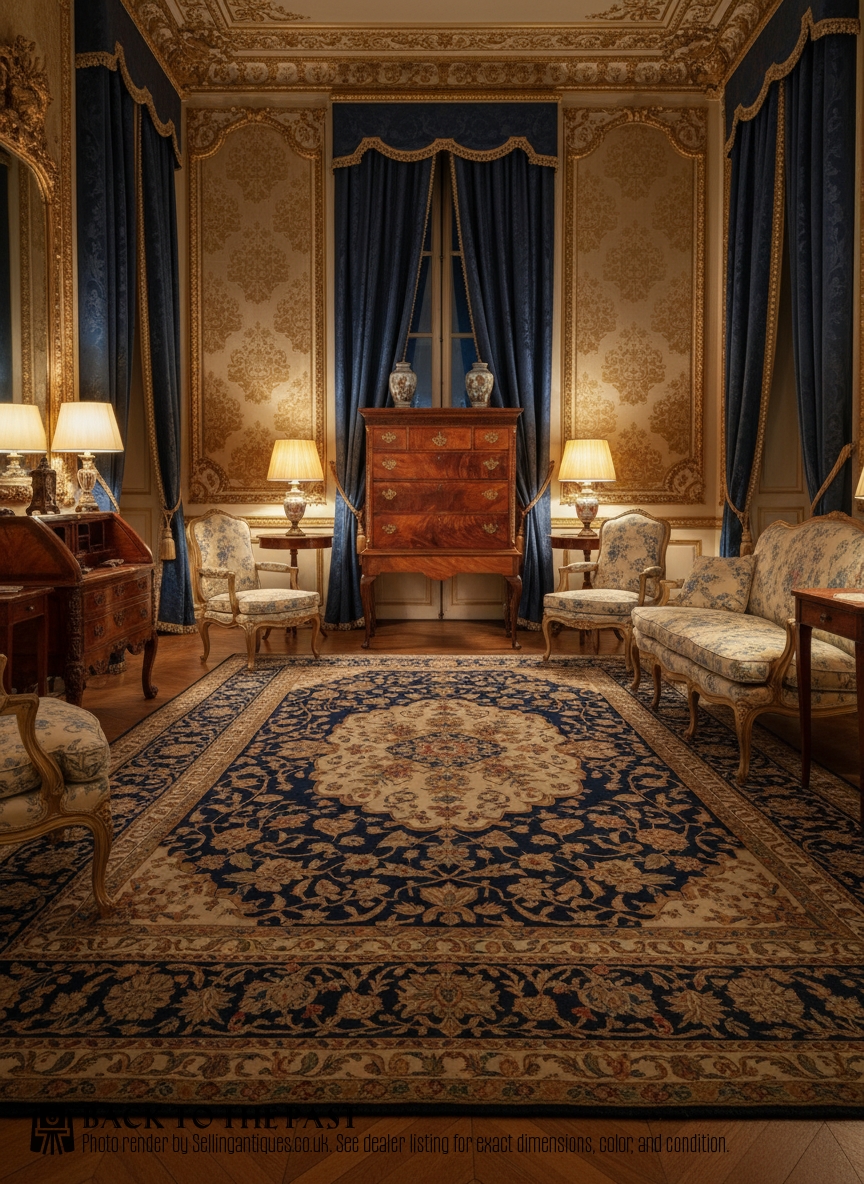
Georgian flame mahogany centres on grand case furniture, including chests of drawers, linen presses, and secretaire bookcases designed for domestic utility and display. The search phrase covers dining and writing furniture alongside tall storage, spanning the eighteenth and nineteenth centuries.
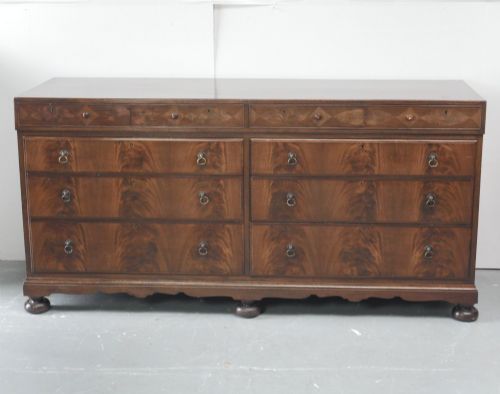
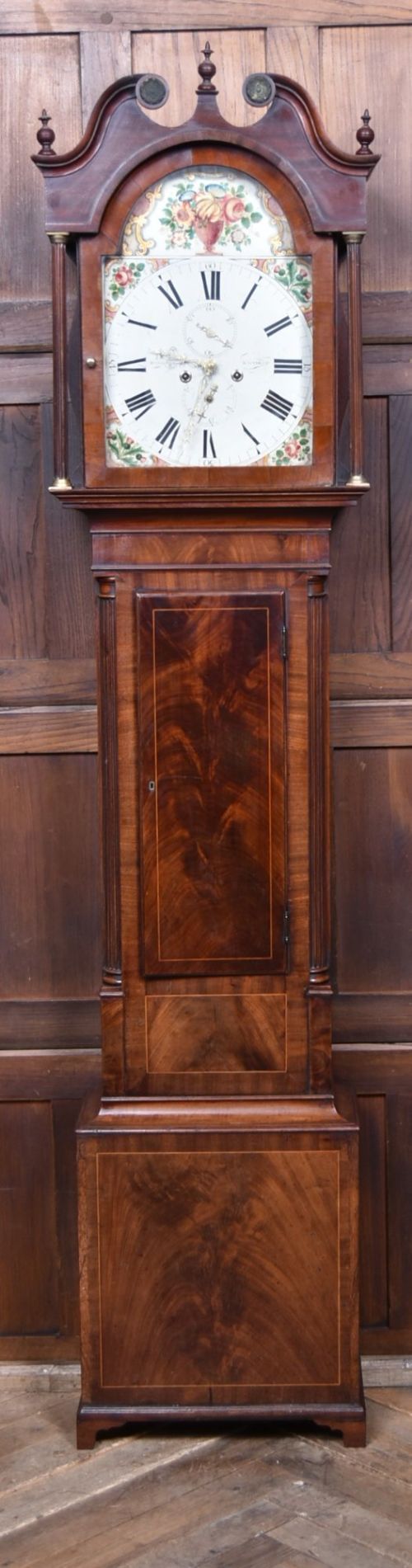
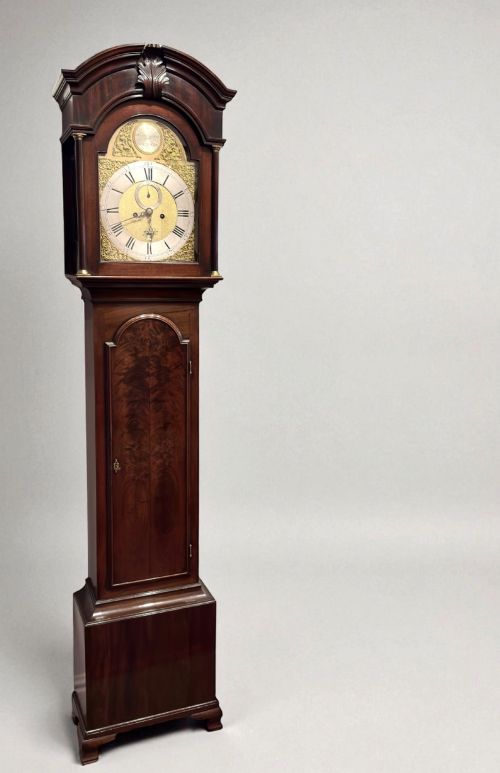
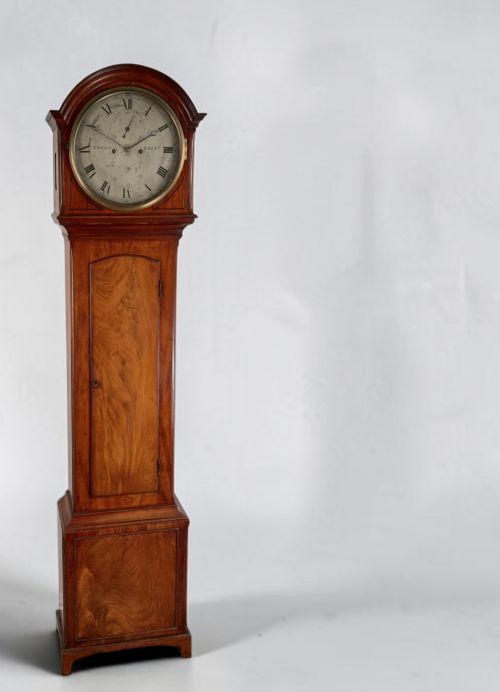
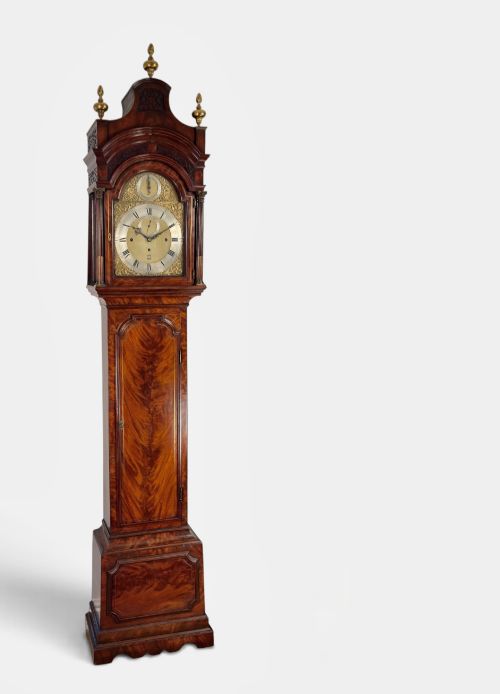
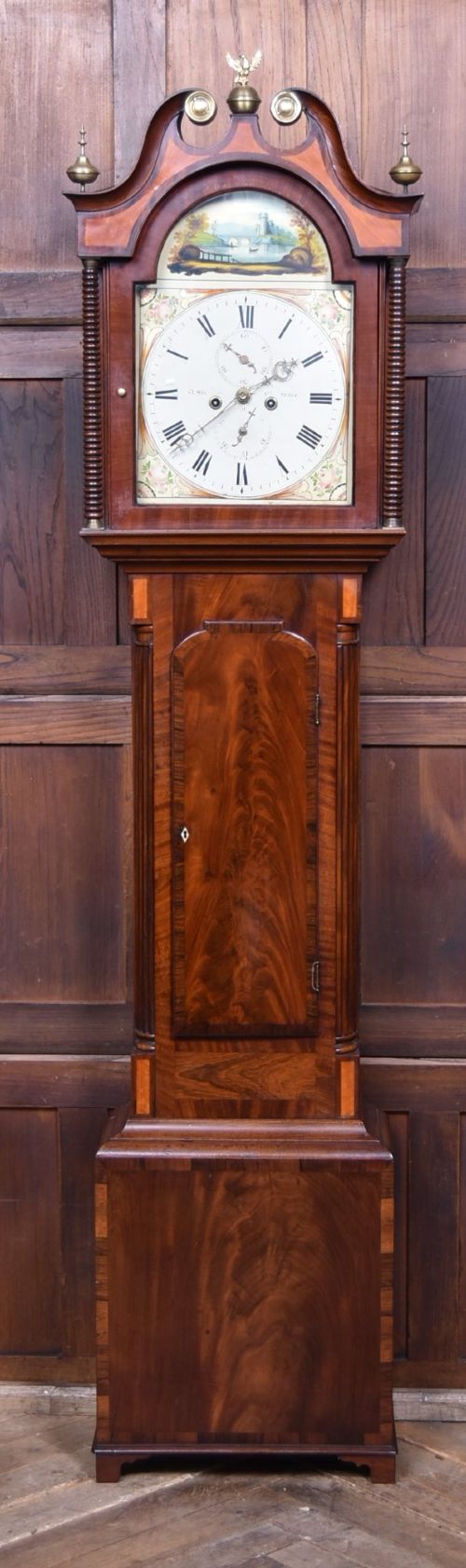
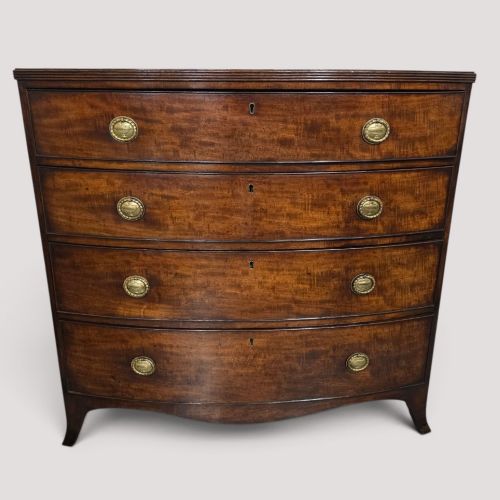
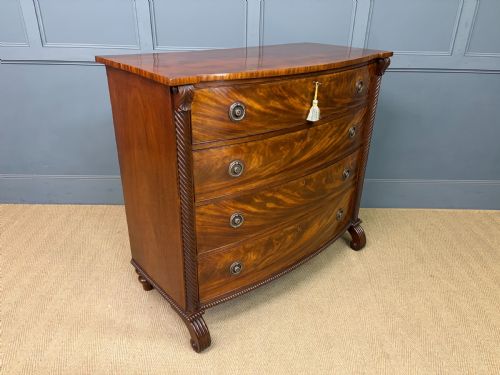
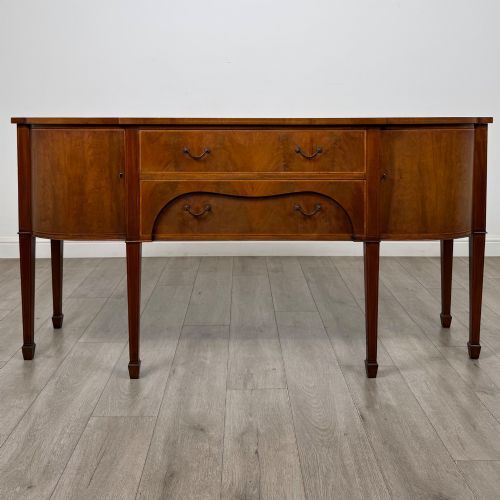
Chest of drawers variants dominate the selection, appearing in bow front, serpentine, and straight front proportions. Alongside these, sideboards, wardrobes, and longcase clocks represent the core forms recorded in the evidence.
Pieces range from the Georgian and Regency periods through to later revival interpretations, utilising the dramatic figuring of the wood across substantial surfaces.
Materials and Construction Techniques
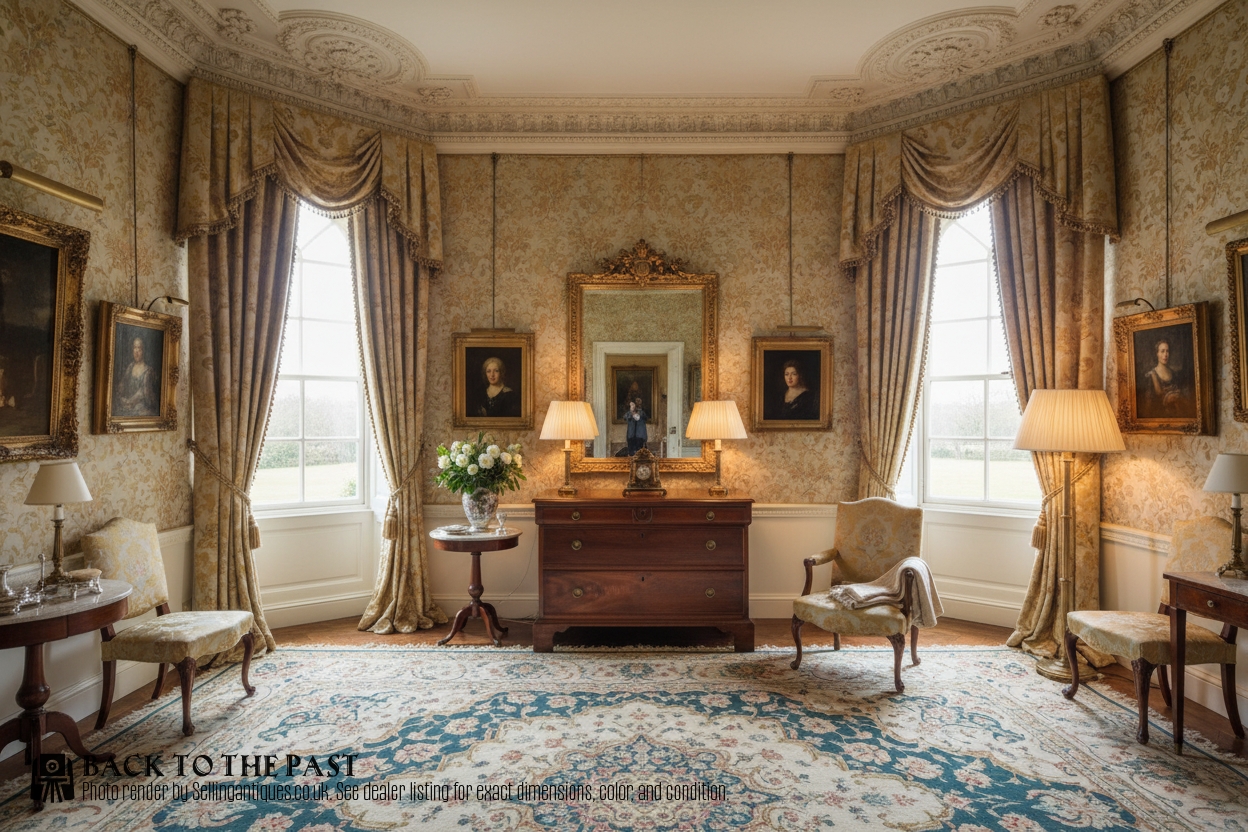
Cabinet makers applied carefully selected veneers of flame mahogany over secondary timbers such as oak, creating striking patterns derived from the branching of the tree. Solid mahogany formed structural elements and mouldings, while brass hardware provided functional and decorative accents.
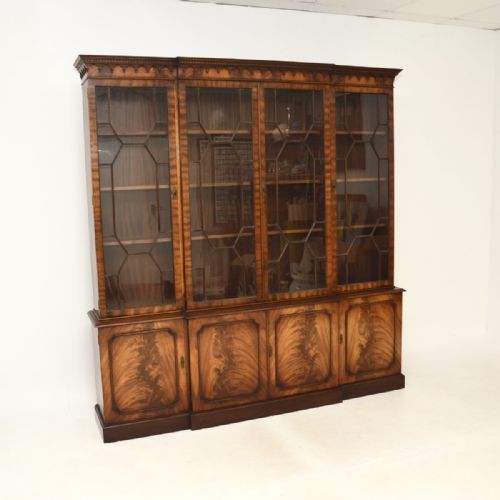
Construction relied on precise dovetail joints for drawer construction and sturdy framing for large case pieces like linen presses and breakfront bookcases. Inlays of satinwood and ebony occasionally outlined drawer fronts and panels, adding linear contrast to the figured grain.
Georgian Flame Mahogany Retail Price Guide 2026
Typical asking prices for georgian flame mahogany among the pieces listed under this phrase on Sellingantiques today, from the lower quarter to the upper quarter. They describe what is for sale here now, not the wider market.
Listings feature extensive case furniture, including bow front chests, linen presses, and breakfront bookcases spanning the eighteenth to early twentieth centuries.
Factors That Separate Good Pieces from Ordinary Ones
Quality rests on the symmetry and placement of the veneer figures across prominent surfaces, where skilled matching creates balanced patterns. Lesser examples show mismatched grain direction or disrupted flow between adjacent drawers and doors.
Proportion and architectural integrity dictate standard, with superior items maintaining refined proportions, original brass fittings, and clean lines on bow front and serpentine bodies. Secondary woods and internal drawer construction also reflect the original workshop standards.
Whytock & Reid·Hendrie Ogg·Gordon of Aberdeen·Green of Edinburgh·John Ellicott·D. Straiton
The Georgian Flame Mahogany Glossary
- Flame Mahogany
- A wood veneer cut from the fork of the mahogany tree, producing a distinctive flame-like pattern. It was widely used on high-grade cabinet doors and drawer fronts during the Georgian era.
- Bow Front
- A convex, curved front elevation popular on chests of drawers and sideboards. This shape softens the angular appearance of large case furniture.
- Serpentine
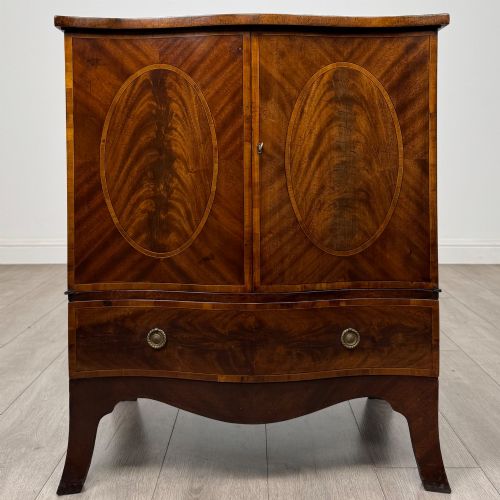
- A front contour characterised by a convex centre flanked by concave curves. It requires advanced woodworking skill to veneer and fit accurately.
- Linen Press
- A tall piece of cabinetry featuring upper doors enclosing sliding trays for textiles, placed above a base of lower drawers. These items served major storage functions in period households.
- Secretaire Bookcase
- A tall combination cabinet featuring a fitted writing drawer with a drop-front desk surface beneath upper shelving. It combined library storage with private correspondence functions.
- Chiffonier
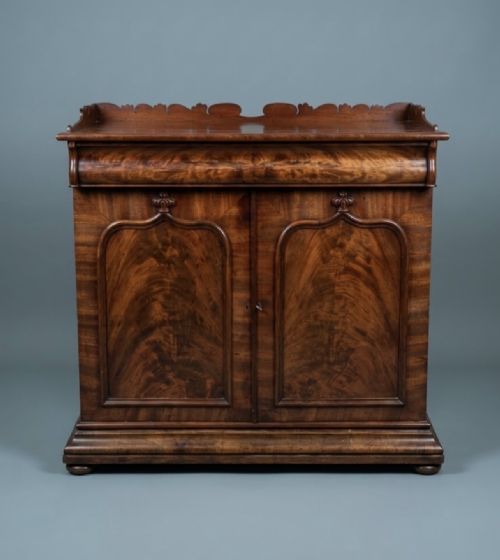
- A compact sideboard cabinet equipped with lower cupboards and often a raised shelf or gallery back. These developed during the Regency period for dining room storage.
Georgian Flame Mahogany: Frequently Asked Questions
What is flame mahogany?
Flame mahogany is a highly figured wood veneer harvested from the junction where branches meet the main trunk of the tree. This figure creates distinctive, fiery ripples across the polished surface.
Cabinet makers reserved these choice veneers for the most prominent display areas of chests, sideboards, and wardrobes.
How do I date a Georgian chest of drawers?
Dating relies on observing construction methods, timber choices, handle styles, and overall proportions. Georgian pieces often feature hand-cut dovetails and oak drawer linings.
Changes in foot styles, such as bracket feet transitioning to turned or french feet, also help narrow down the period of manufacture.
Where were these pieces used originally?
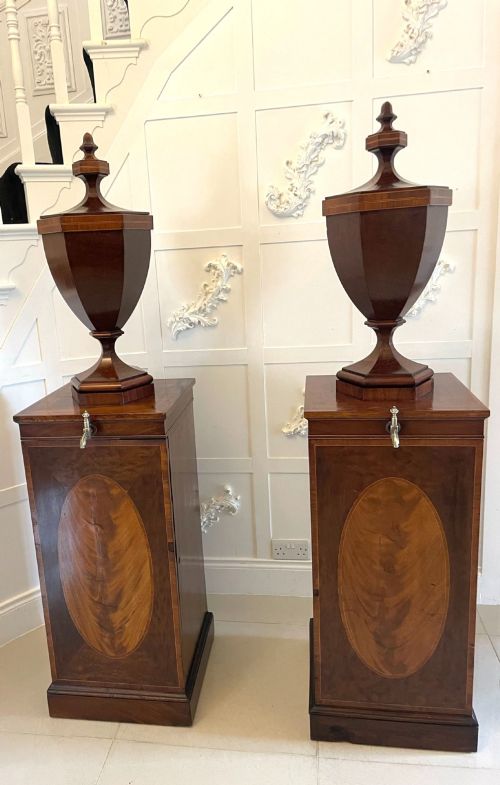
These items populated the principal rooms of country houses, town residences, and formal chambers. Linen presses and wardrobes served bedrooms, while sideboards and wine coolers occupied dining rooms.
Desks and bookcases functioned in libraries and private studies for correspondence and administration.
How should I care for flame mahogany furniture?
Keep wooden pieces away from direct sunlight and steady heat sources to prevent the veneers from drying and lifting. Regular dusting with a soft, dry cloth preserves the polished wax finish.
Avoid commercial silicone sprays and maintain consistent indoor humidity levels to protect the antique timber.