






George III Night Table
A george iii night table is a sturdy Georgian piece designed for the bedroom, offering compact storage and a useful surface beside the bed.
George III Night Table
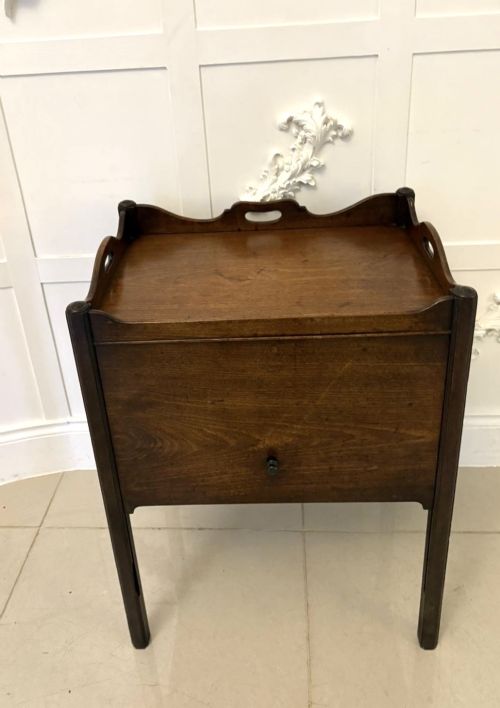
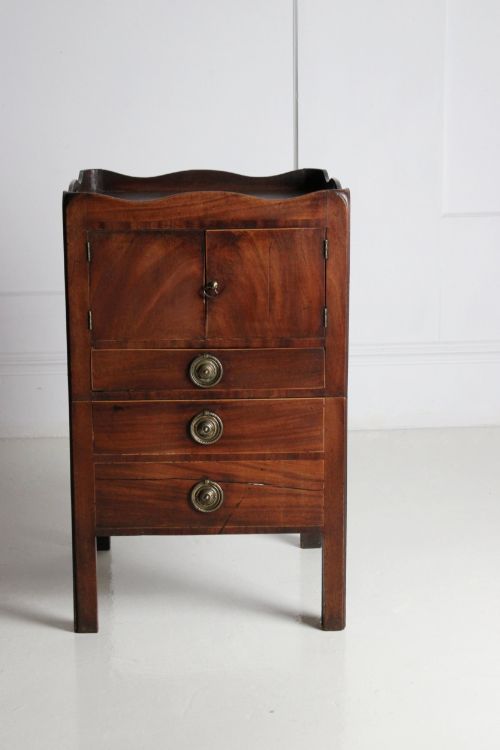
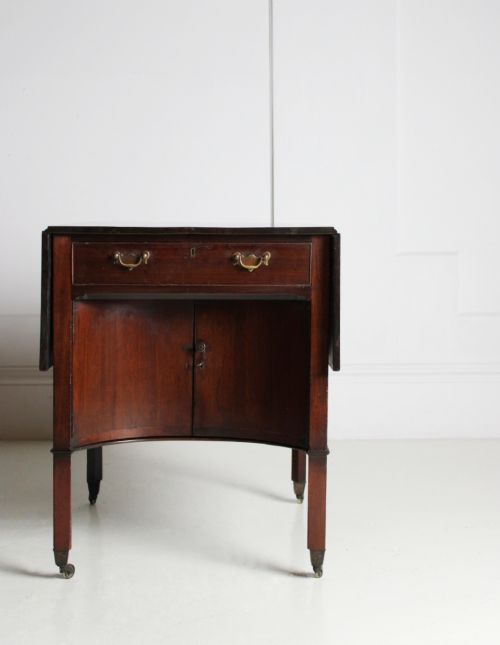
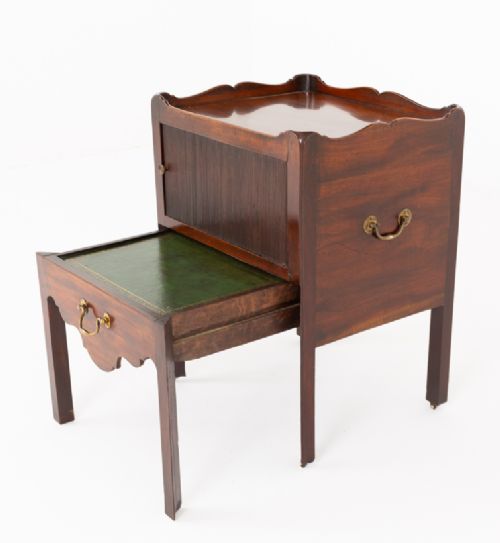
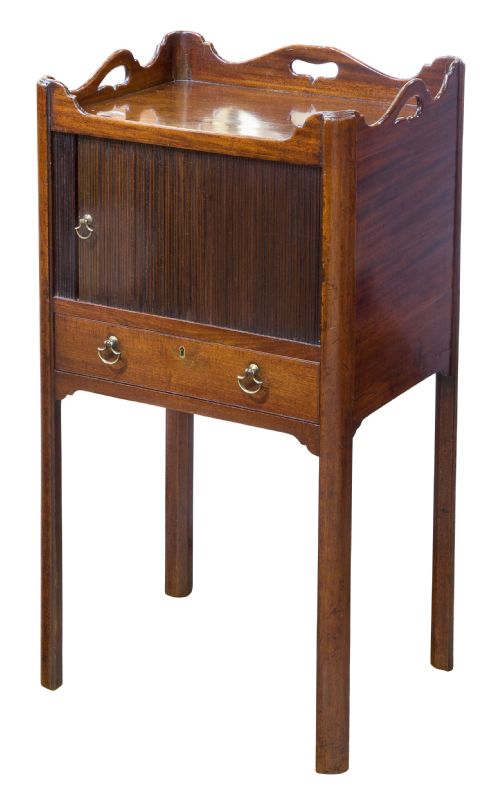
A george iii night table is a functional wooden item from the Georgian period, often configured as a bedside cabinet, commode, or pot cupboard. These forms were designed to hold chamber pots or personal items out of sight whilst remaining compact enough for domestic chambers.
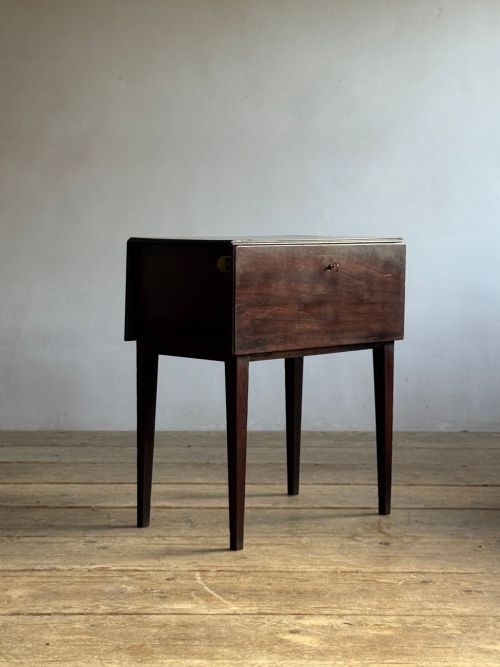
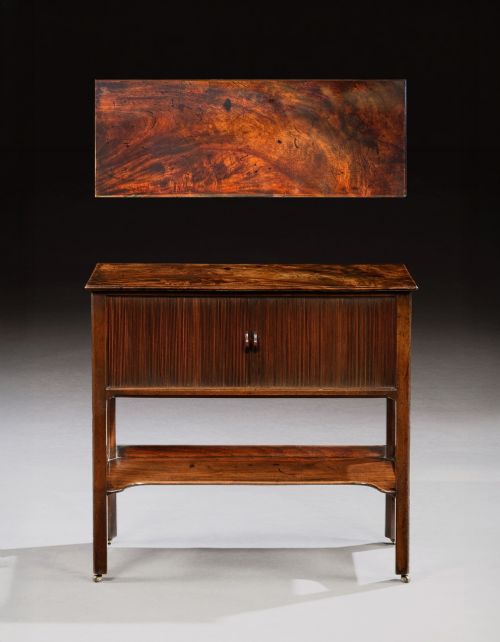
The versions most commonly met on this page are mahogany bedside cabinets and tray-top commodes from the late eighteenth century. Alongside these, buyers encounter serpentine-fronted examples, tambour-fronted stands, and occasional side tables sharing the same period aesthetic.
Makers of the period applied clever engineering to small footprints, producing folding trays, enclosed cupboards, and pull-out sections. Such versatility explains why these pieces remain practical for modern living spaces as lamp tables or small storage units.
How they were made
Cabinet makers of the period relied heavily on solid mahogany and flame mahogany veneer to construct the carcase, often selecting timber with rich natural grain patterns. Secondary woods provided structural support inside cupboards and drawers, whilst brass handles and hinges added functional contrast.
Surface decoration frequently incorporated contrasting timbers such as satinwood and boxwood, sometimes arranged as intricate boxwood inlay. These decorative techniques highlighted the geometric lines of bow-fronted and serpentine commodes without cluttering the compact form.
George III Night Table Retail Price Guide 2026
Typical asking prices for george iii night table among the pieces listed under this phrase on Sellingantiques today, from the lower quarter to the upper quarter. They describe what is for sale here now, not the wider market.
Object forms span bedside cabinets, tray-top commodes, tambour night stands, and occasional side tables originating from the Georgian era.
What varies in quality
The distinction between ordinary utility pieces and the top of the range rests on timber selection and cabinet-making ambition. Finer examples utilise figured flame mahogany veneers, precise boxwood stringing, and well-executed serpentine fronts that demand advanced joinery skills.
Proportion and hardware also separate standard items from superior ones. Pieces with original brass furniture, elegant tray tops, and crisp tambour slides demonstrate the higher standard of workshop production expected by wealthier patrons.
The George III Night Table Glossary
- Commode
- A low cabinet or chest of drawers designed for the bedroom, often fitted to enclose a chamber pot. In this period, the term frequently describes bedside tables with enclosed lower sections.
- Tambour
- A flexible sliding shutter formed from narrow vertical strips of wood glued to canvas backing. This mechanism allowed smooth closure of curved cabinet fronts without projecting doors.
- Serpentine front
- A furniture front characterised by a central convex curve flanked by two concave curves. It requires exceptional woodworking skill to construct accurately from solid timber or veneer.
- Tray top
- A raised rim surrounding the upper surface of a small table or commode. This design prevented items like candlesticks or water pitchers from sliding off the edge.
George III Night Table: Frequently Asked Questions
What was a george iii night table used for?
These pieces served as private bedside storage units in Georgian bedrooms, frequently concealing a chamber pot behind closed cabinet doors or lower drawers. Their upper surfaces provided a stable space for a candle, a pocket watch, or a glass of water during the night.
Over time, many of these cabinets lost their original sanitary function as domestic plumbing evolved. Today, buyers utilise them simply as bedside tables or occasional lamp stands in sitting rooms and hallways.
How do I spot a genuine period piece?
Examination of the timber, construction methods, and secondary woods helps determine age and authenticity. Genuine pieces from the late eighteenth century display appropriate tool marks, period hardware fixings, and stable timber movement consistent with age.
Differences between original Georgian pieces and later copies or revivals often appear in the sharpness of the mouldings and the uniformity of the interior linings. Consulting the listed materials, such as solid mahogany and boxwood inlay, provides further guidance.
Where should I place a night table today?
The compact proportions of these tables make them ideal companions beside low modern beds or as freestanding lamp stands in narrower spaces. Their enclosed cupboards also offer discreet storage for small personal items in a hallway or study.
Because the surfaces often feature delicate mahogany veneers or tray tops, placing them away from direct heat sources and strong sunlight protects the polish. Using coasters prevents moisture rings from cups or glasses.
What is the difference between a commode and a night stand?
In eighteenth-century terminology, a commode usually referred to a low piece of furniture with doors or drawers, whereas a night stand often described an open or enclosed table specifically kept beside a bed. In practice, makers used both terms interchangeably for pieces sharing similar dimensions.
Many listings combine these labels because a single design could function as a pot cupboard, a bedside table, or a small commode. The presence of a door, a tray top, or a tambour front matters more to collectors than the historical label.