

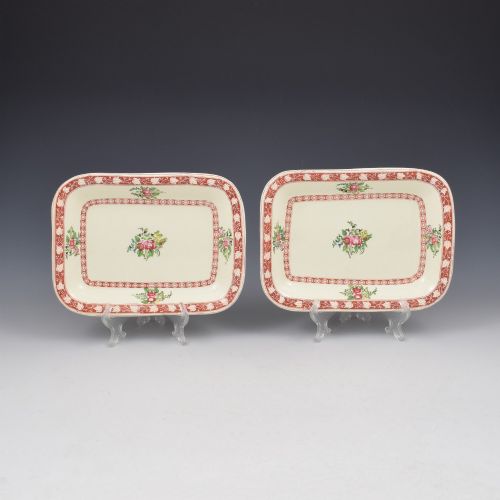



Georgian Earthenware Serving Platter
A georgian earthenware serving platter brings robust pottery and transfer-printed scenes to the table, offering a durable centrepiece for historic dining.
Georgian Earthenware Serving Platter
A georgian earthenware serving platter comprises large ceramic meat dishes, chargers, and platters produced across the eighteenth and nineteenth centuries. These pieces present generous surfaces designed for presenting joints of meat and substantial courses at the table.
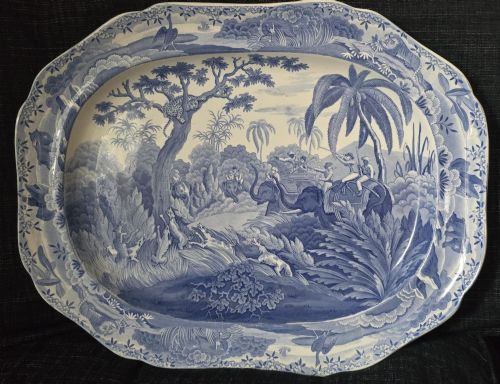
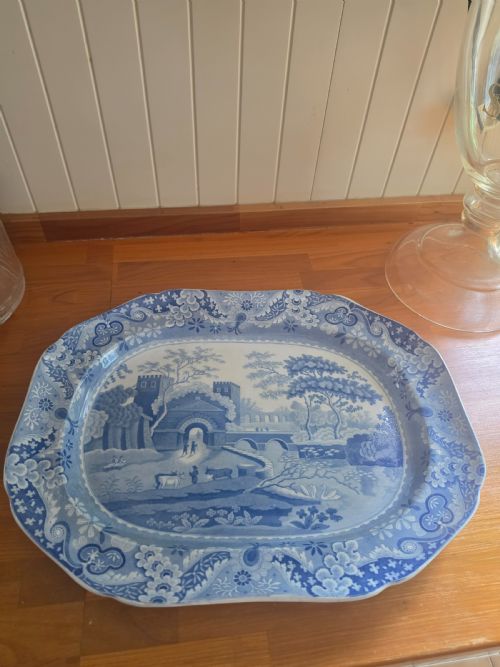
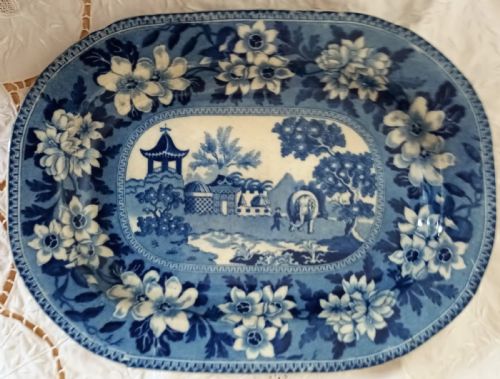
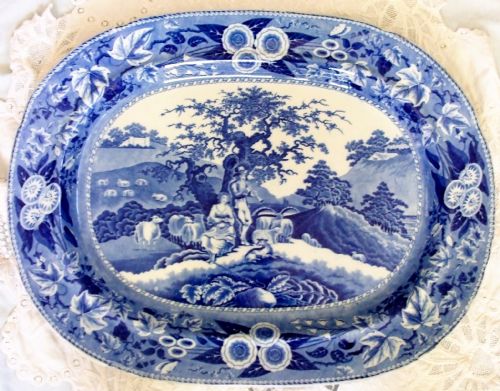
The versions most commonly met on this page feature blue and white transfer-printed designs, reflecting the widespread production of English earthenware during the Georgian and Regency periods. Makers utilised pictorial patterns ranging from classical ruins to animal subjects across expansive serving surfaces.
How They Were Made
Potters formed these serving dishes from earthenware bodies, applying white glazes and lead glazes to seal the porous clay. Cobalt pigment provided the deep blue colour for the transfer-printed patterns that define many examples.
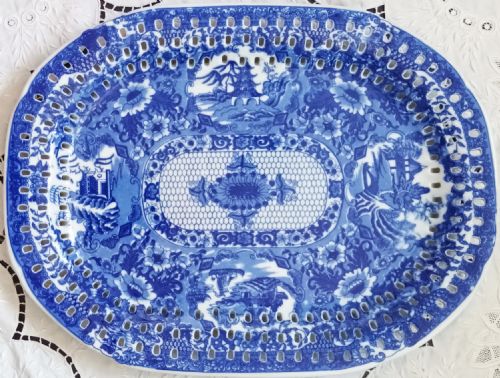
Transfer printing allowed workshops to apply intricate pictorial scenes onto the damp or biscuit-fired ceramic surface before glazing and firing in a kiln. Pierced borders and shaped rims were often moulded or cut by hand prior to firing.
Georgian Earthenware Serving Platter Retail Price Guide 2026
Typical asking prices for georgian earthenware serving platter among the pieces listed under this phrase on Sellingantiques today, from the lower quarter to the upper quarter. They describe what is for sale here now, not the wider market.
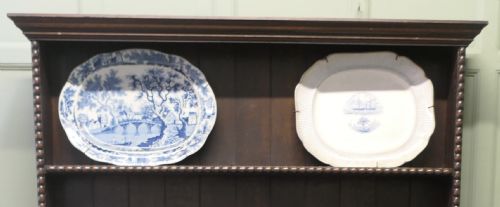
Pattern names recorded on these platters include an elephant, a piping shepherd, and a day sea battle.
What Varies in Quality
The clarity and registration of the cobalt transfer print dictate the visual success of the pattern across the platter. Crisp lines and deep, even blue tones separate skilled printing from blurred or smudged applications.
The weight and balance of the earthenware body, alongside the crispness of moulded edges and pierced drainers, indicate the care taken by the pottery. Formats featuring integrated gravy wells or accompanying drainer inserts demonstrate higher ambition in design.
Spode·Davenport·John Rogers and Son·Thomas Lakin·Don Pottery·Mason·J and R Clews·Elkin Knight and Bridgwood·Minton·Wedgwood
The Georgian Earthenware Serving Platter Glossary
- Creamware
- A fine earthenware developed in the eighteenth century with a pale yellowish cream glaze.
- Pearlware
- An improved earthenware body featuring a bluish-tinted glaze designed to imitate the whiteness of Chinese porcelain.
- Transfer print
- A decorative technique where an engraved copper plate transfers a design onto paper and thence onto the ceramic body.
- Charger
- A large decorative plate or platter typically utilised for ceremonial serving or display rather than individual dining.
- Drainer
- A perforated ceramic insert placed inside a meat dish to allow juices to collect in the well below.
Georgian Earthenware Serving Platter: Frequently Asked Questions
How do I use a serving platter today?
These large ceramic dishes serve well for presenting joints of meat, roasted vegetables, or seasonal fruit spreads at a dining table. Their generous proportions also make them suitable for wall display or sideboard decoration.
Care should be taken with historical earthenware, washing them gently by hand rather than placing them in modern dishwashers to protect the lead glaze and ceramic body.
What is a gravy well?
A gravy well is a depressed channel or recessed corner built into the surface of a meat dish to collect juices during carving. This feature kept roasting juices pooled away from the main joint.
Platters with this addition often included a matching pierced drainer insert to keep the meat elevated above the collected liquid.
How do I date a blue and white platter?
Dating relies on identifying the pottery mark stamped on the reverse, the style of the transfer-printed pattern, and the type of ceramic body used. Creamware bodies typically point towards the late eighteenth century, whilst pearlware and refined earthenware often align with the Regency period.
Specific pattern names and registered trade marks recorded in the ceramic body further narrow the production window down to exact decades.
Why are some platters pierced?
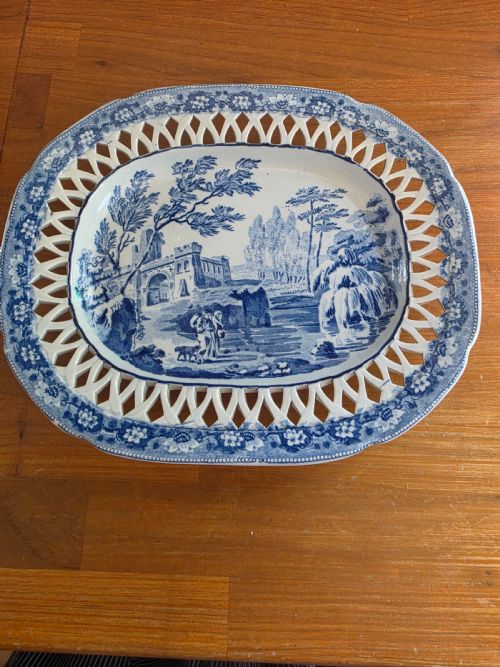
Pierced borders and fretwork patterns allowed decorative chargers and serving dishes to function both as visual display pieces and functional tableware. The pierced rims often featured intricate geometric or net designs cut into the damp clay before firing.
Such decorative elements mark out finer production standards among Staffordshire and northern potteries.