


Oval Transferware Serving Platter
An oval transferware serving platter brings nineteenth-century dining tables to life with rich blue and white patterns.
Oval Transferware Serving Platter
When you search for an oval transferware serving platter, you are looking at large ceramic dishes designed to hold meat and other substantial dishes for the dining table. These pieces date across the nineteenth century, including Georgian and Victorian eras, shaped to fit large family gatherings and formal meals.
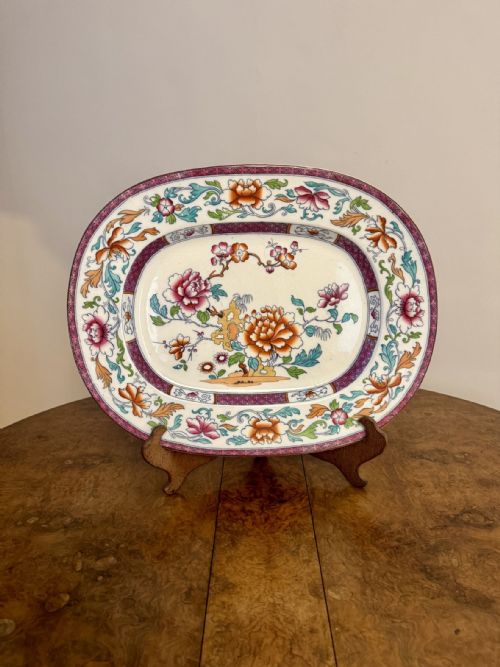
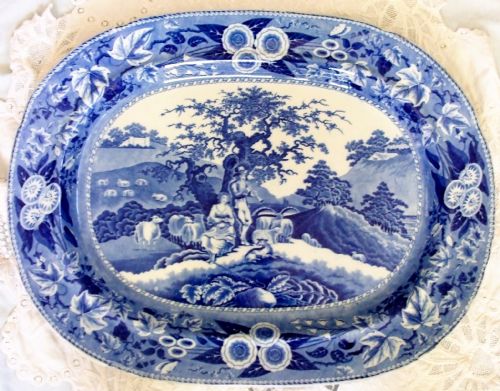
You are most likely to meet earthenware meat platters decorated with blue and white transfer prints, ranging from landscape scenes to Chinese Garden designs and animal motifs like the zebra pattern or piping shepherd. They measure up as heavy, durable serving dishes intended for practical use as much as display.
The assortment on this page spans from early nineteenth-century Staffordshire productions to late Victorian examples. Their origins sit firmly in English ceramic traditions, utilising hand-applied transfer printing to achieve intricate pictorial details across a generous white surface.
How they were made
Potters formed these serving vessels from earthenware, shaping the heavy clay bodies into large oval platters capable of supporting heavy joints of meat. Artisans then applied a smooth glaze to seal the porous ceramic base.
The decoration relied on copper plate transfer printing, pressing a cobalt pigment design onto the unfired ceramic body. Enamel touches occasionally added highlights to the deep blue and white prints before final kiln firing.
A shepherd pipes contentedly across one platter while a Victorian family prepares their Sunday joint on another.
What varies in quality
The clarity of the transfer print defines the visual success of the piece, separating crisp, detailed landscapes from blurred or smudged impressions. A strong, deep cobalt pigment gives the pattern striking definition against the white ground.
The weight and thickness of the earthenware body speak to the sturdiness of the vessel. Superior platters retain a clean, bright glaze with minimal firing blemishes, preserving the pictorial narrative across the entire surface.
The Oval Transferware Serving Platter Glossary
- Transferware
- Ceramic pieces decorated by applying a printed design from an engraved copper plate onto the pottery via tissue paper. This technique allowed intricate pictorial patterns to be replicated consistently.
- Earthenware
- A porous type of pottery fired at lower temperatures, commonly used for nineteenth-century domestic tablewares before being glazed for a waterproof finish.
- Cobalt pigment
- A metallic oxide used to achieve the deep blue colour characteristic of traditional transfer-printed ceramics. It withstands high kiln temperatures without losing its intense hue.
- Lead glaze
- A glossy coating containing lead applied to pottery before firing to create a smooth, impermeable surface. It protects the porous earthenware body beneath.
Oval Transferware Serving Platter: Frequently Asked Questions
How were oval transferware serving platters used?
These large platters served as the centrepiece for presenting roasted meats, poultry, and large portions of food at the nineteenth-century dining table. Their generous oval shape accommodated substantial joints before the carving knife.
Beyond formal dining, they functioned as heavy-duty serving dishes for everyday household meals. Their durable earthenware construction meant they could handle the daily demands of a busy Victorian or Georgian kitchen.
How can I date my transferware platter?
Dating relies heavily on stylistic clues, ceramic bodies, and specific pattern names recorded in nineteenth-century production. Georgian examples often feature darker blues and distinct pastoral motifs, while Victorian pieces show wider stylistic variations including Chinoiserie.
Looking at the back of the platter can sometimes reveal maker marks or registry diamonds that narrow down the decade of manufacture. Comparing the depth of the cobalt pigment and the clarity of the transfer print also helps place the piece within the 1800s.
Can I still use these platters for food?
Many collectors choose to use these robust earthenware platters for serving dry foods during special dinners. Their sturdy build has survived generations of domestic use.
Care must be taken with antique glazes, and hand washing is essential to preserve the nineteenth-century surface. Avoiding dishwashers and harsh detergents protects both the ceramic body and the blue transfer print.
How do I display a large serving platter?
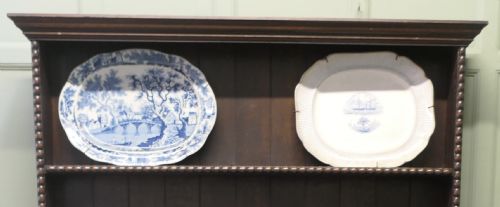
Large platters look striking mounted securely on walls using appropriate plate hangers that distribute the heavy weight evenly. This highlights the pictorial transfer prints as if they were framed artworks.
Alternatively, standing them upright on deep dressers or sideboards allows the curved rims and intricate borders to catch the light. Their size makes them natural anchors for kitchen or dining room displays.