
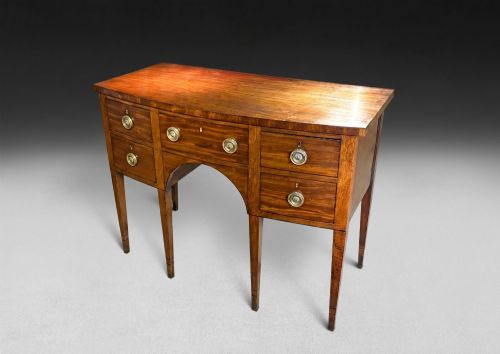
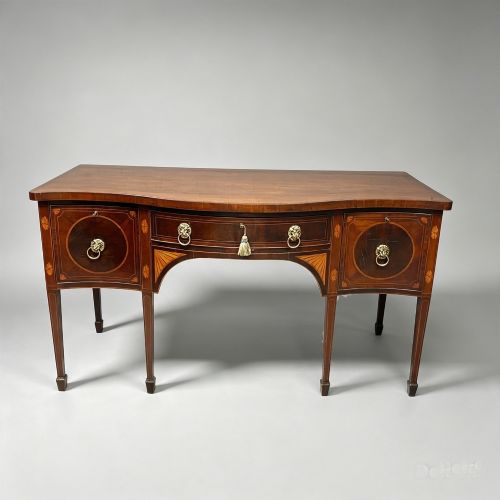
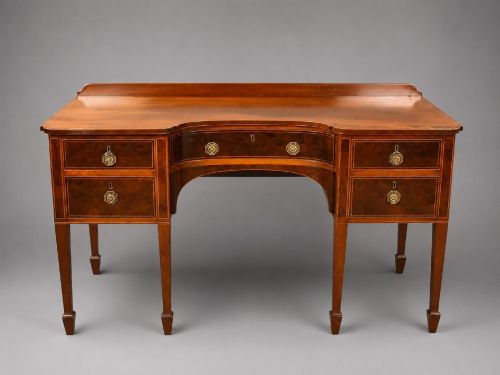
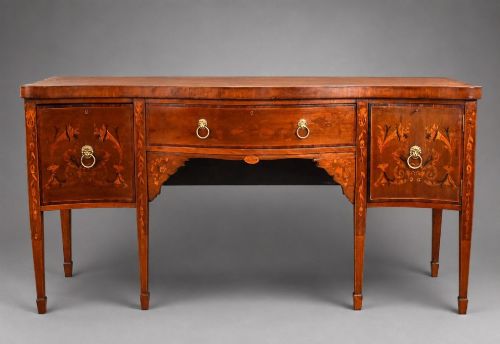
Georgian Dining Server
A georgian dining server provides grand scale and polished timber for the dining room, combining deep storage with a disciplined silhouette.
Georgian Dining Server
When you search for a georgian dining server, you enter a field dominated by substantial dining room furniture built to assist with hospitality and food service. The pieces on this page span sideboards, serving tables, and pedestals designed to hold plates, cutlery, and dishes during large meals.
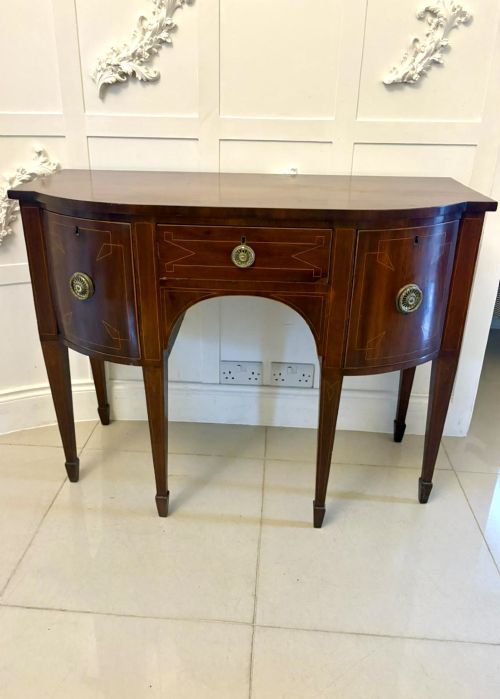
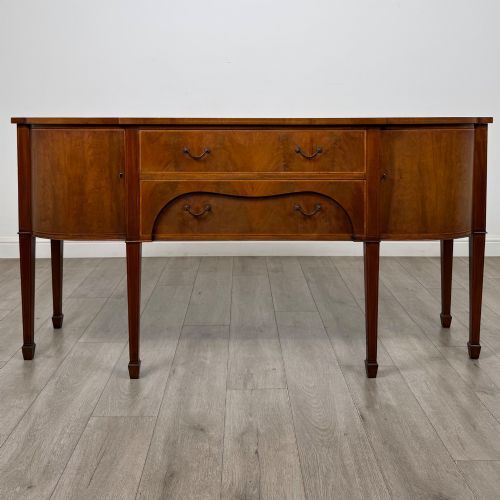
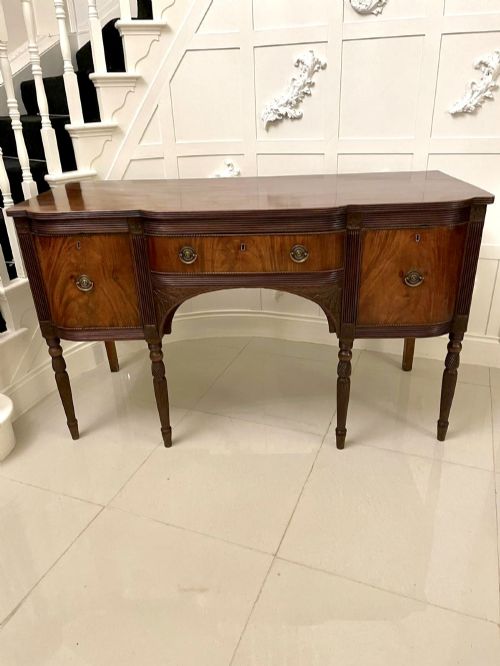
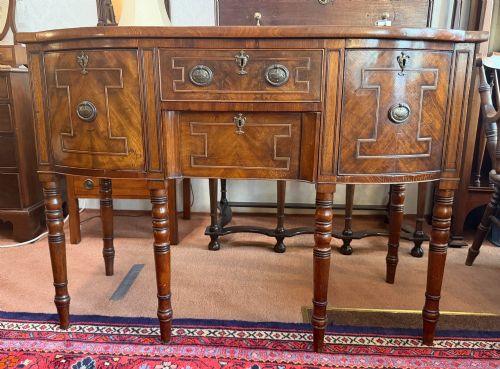
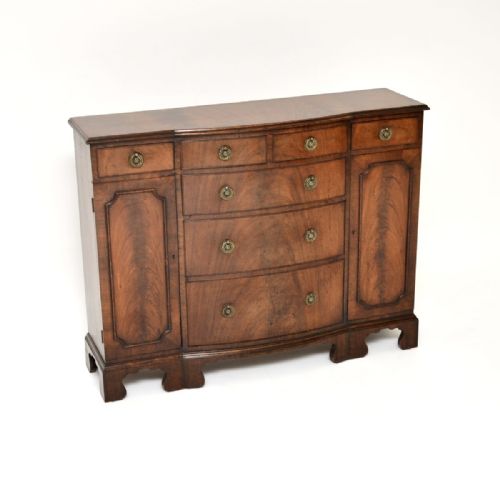
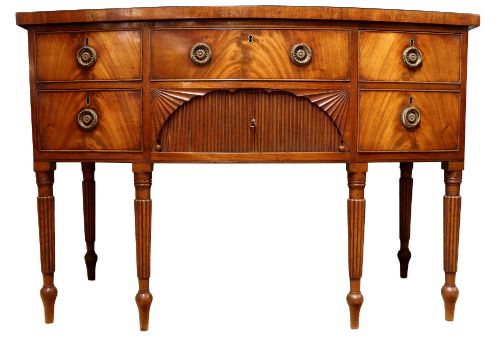
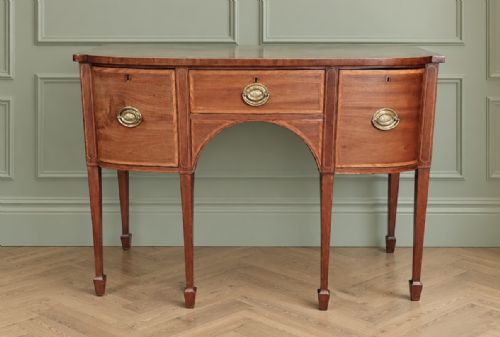
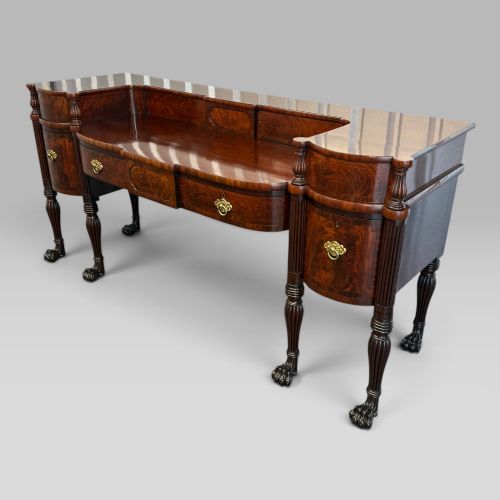
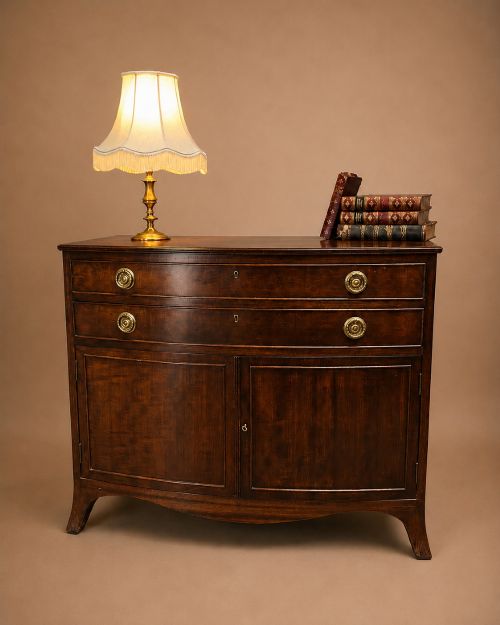
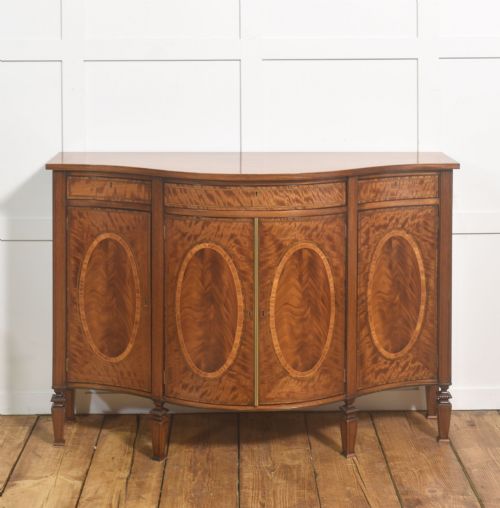
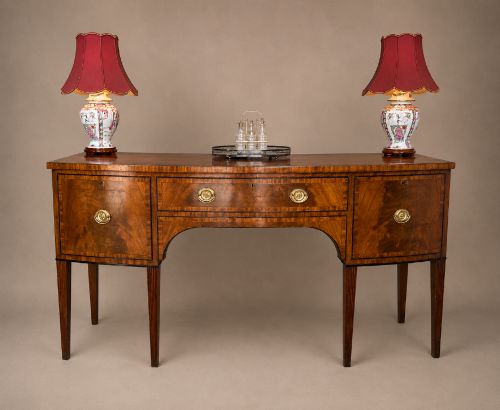
The most common form you will meet is the mahogany sideboard, appearing with straight, bow-front, or serpentine outlines. These varieties emerge primarily from the Georgian, George III, and Regency periods, alongside later revivals from the Edwardian era.
Makers shaped these servers to stand against dining room walls, often incorporating deep cellaret drawers and cupboards. They served a practical function in large households, evolving through the eighteenth and nineteenth centuries into elegant display surfaces.
How they were made
Cabinetmakers built these pieces using solid mahogany and frame constructions lined with secondary woods like oak, applying figured mahogany veneer or flame mahogany to exterior surfaces. Artisans incorporated boxwood and satinwood inlay to create delicate contrasting borders along drawer fronts and tabletops.
Metal elements such as brass handles and lion paw feet added structural weight and decorative contrast to the timber. Construction techniques relied on precise joinery, dovetailed drawer boxes, and hand-turned supports that allowed large sideboards to bear heavy loads of plate.
Georgian Dining Server Retail Price Guide 2026
Typical asking prices for georgian dining server among the pieces listed under this phrase on Sellingantiques today, from the lower quarter to the upper quarter. They describe what is for sale here now, not the wider market.
Form variations include standard sideboards, breakfront designs, stage-back servers, and serving tables.
What varies in quality
Quality rests upon the selection of timber, particularly the grain figuration seen in flame mahogany and the crispness of inlaid satinwood stringing. Superior examples display thoughtful book-matching across drawer fronts and harmonious proportions that govern the entire facade.
The refinement of carved details, such as bracket feet, reeded legs, or cast brass hardware, separates standard utility pieces from masterwork servers. Better construction involves tight joints, original backs, and smooth drawer operation without excessive timber shrinkage.
Roberts Cadman·M D Miller and Sons
The Georgian Dining Server Glossary
- Serpentine
- A front profile curved outward in the centre and inward at the ends. This sweeping contour demands exceptional skill from the cabinetmaker.
- Bow-front
- A convex curved front projecting outward in an arc. It softens the linear severity of a traditional dining room wall.
- Inlay
- Contrasting woods such as boxwood or satinwood set into recesses within the primary timber. This technique creates geometric borders and decorative panels.
- Pedestal sideboard
- A server featuring two distinct pedestal cupboards flanking a central section. These configurations often date to the Regency period.
- Breakfront
- A piece of furniture whose central section projects forward from the flanking wings. It creates depth and visual rhythm across the facade.
Georgian Dining Server: Frequently Asked Questions
What is a georgian dining server?
A georgian dining server is a large wooden cabinet or table utilised in the dining room for storing and serving food. These pieces include sideboards, serving tables, and pedestals designed during the eighteenth and nineteenth centuries.
They provided essential storage for heavy ceramics, silver, and linen while offering a wide surface for staging formal meals. Their design reflected the architectural elegance of the period.
How do I identify a period piece?
Identifying an authentic period piece involves examining timber patination, construction methods, and hardware placement. Eighteenth and nineteenth-century items exhibit hand-cut dovetails and secondary woods consistent with their era.
Style markers like Sheraton inlay, serpentine fronts, and flame mahogany grain also point toward specific decades of manufacture. Later revivals often display standardised machine-cut elements and different interior linings.
Where were these servers placed?
These items stood against the main dining room walls, positioned conveniently near the dining table for efficient service. Their substantial length allowed servants to place heavy platters and meat domes upon them.
In larger houses, matched pairs of pedestals and serving tables flanked the room, creating a balanced architectural arrangement. Their placement governed the flow of hospitality during large gatherings.
How do I care for mahogany surfaces?
Maintaining mahogany requires consistent polishing with traditional beeswax to nourish the timber and preserve its deep colour. Avoid placing these pieces in direct sunlight or near heat sources that cause wood to dry and crack.
Gentle dusting with a soft cloth prevents surface scratching. Regular care enhances the natural figuration built into flame veneers over centuries.