


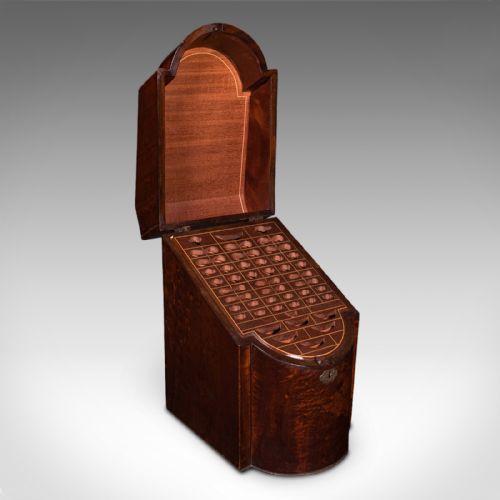


Georgian Cutlery Urn
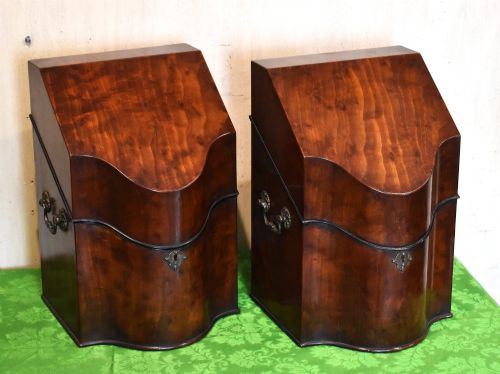
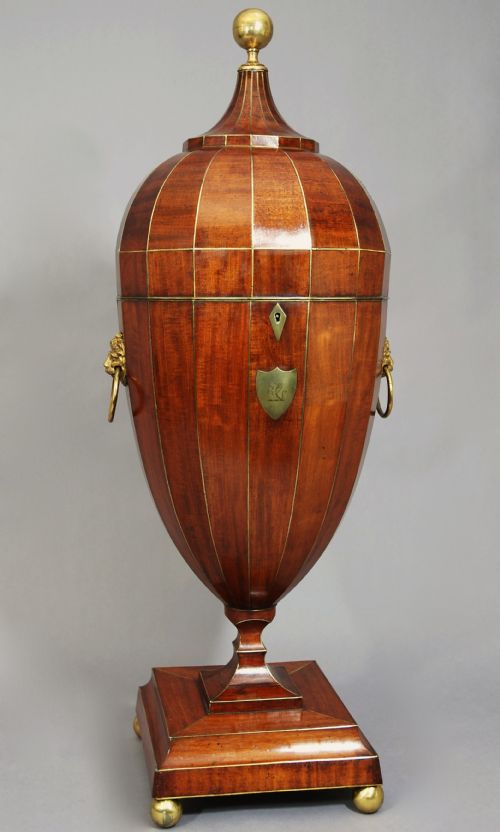
These georgian cutlery urn pieces are sophisticated dining table accessories built to store flatware with architectural grace.
Georgian Cutlery Urn
When you search for georgian cutlery urn, you encounter formal dining accessories designed to house knives, forks, and spoons during the eighteenth and nineteenth centuries. These vessels stand as sculptural ornaments that graced sideboards in wealthy British dining rooms, combining practical storage with neoclassical design.
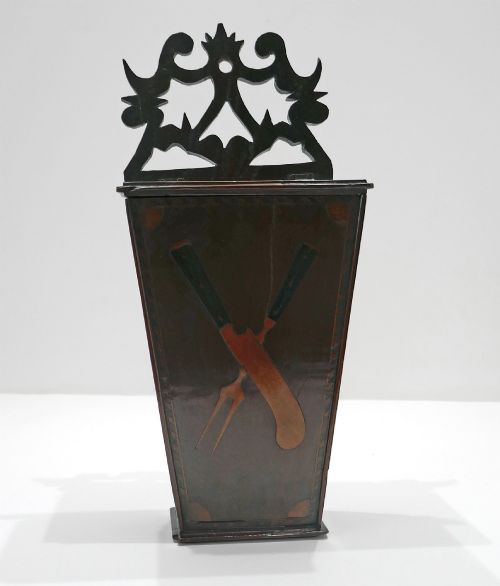
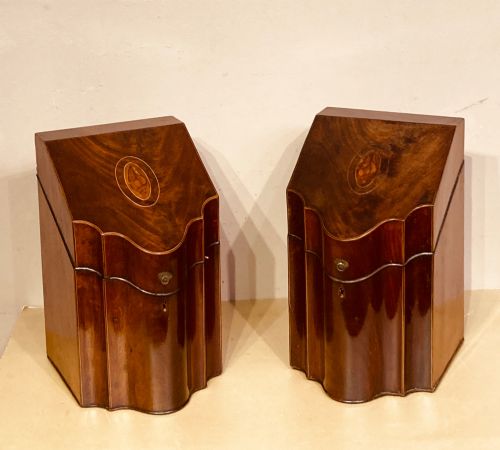
The pieces you meet on this page include classical urn forms alongside related knife boxes and stationery storage. Mahogany predominates among the surviving examples, often enriched with satinwood and boxwood details that reflect the prevailing taste of the period.
Makers shaped these objects during the Georgian and Victorian eras, producing serpentine fronts, bow fronts, and towering urn profiles. While pairs of knife boxes form the majority of the current selection, standalone cutlery urns represent the grandest scale of this domestic tradition.
Distinctions in quality
The finest georgian cutlery urn examples derive their distinction from the precision of their timber selection and the fluidity of their serpentine or bow fronts. Master cabinet makers achieved harmonious proportions where the grain of the mahogany follows the complex curves without interruption.
Attention to decorative detail separates superior pieces from standard workshop output. Finely executed wood inlay, crisp brass or silver mounts, and untouched patination indicate higher status and superior craftsmanship from the eighteenth century.
Georgian Cutlery Urn Retail Price Guide 2026
Typical asking prices for georgian cutlery urn among the pieces listed under this phrase on Sellingantiques today, from the lower quarter to the upper quarter. They describe what is for sale here now, not the wider market.
At least one meticulous owner decided their dining room needed a stationery upgrade, converting a satinwood box for paper storage.
The Georgian Cutlery Urn Glossary
- Cutlery Urn
- A vase-shaped wooden vessel designed to hold dining knives and forks on a sideboard. These tall pieces often feature a tiered lid raised on a central brass column.
- Knife Box
- A sloping wooden container with a slanted lid built specifically to store flatware upright in interior slots. They frequently appear in matched pairs to balance the arrangement of a formal dining room.
- Serpentine Front
- A furniture facade shaped with a central convex curve flanked by two concave sweeps. This flowing contour requires advanced woodworking skill to execute cleanly in solid mahogany.
- Wood Inlay
- The technique of embedding contrasting strips of timber into recesses within the primary wood surface. Cabinet makers used boxwood and satinwood to create decorative borders and classical motifs.
Georgian Cutlery Urn: Frequently Asked Questions
What were georgian cutlery urns used for?
These vessels served to store and present dining knives, forks, and spoons before they were brought to the dinner table. Servants kept them on sideboards until the meal commenced.
They also functioned as decorative centrepieces that displayed the wealth and refinement of the household through polished mahogany and precious metal mounts.
How do I date a knife box?
Dating relies upon examining the timber species, construction methods, and prevailing style characteristics recorded across the Georgian and Victorian periods. Serpentine shapes and delicate inlay typically point toward the late eighteenth century.
Later Victorian interpretations often display heavier proportions and different interior configurations while imitating earlier George III aesthetics.
Can I store modern cutlery inside them?
Many surviving boxes retain their original internal wooden partitions pierced for knife blades and handles. Modern flatware dimensions often differ significantly from eighteenth-century cutlery sizes.
Buyers frequently adapt these historical pieces to hold stationery, letters, or modern serving implements while preserving the exterior structure intact.
Why do knife boxes often come in pairs?
Dining room symmetry dictated that large sideboards display matching accessories balanced on either end of the surface. Pairs of knife boxes or cutlery urns created a formal visual harmony during grand meals.
Surviving matched pairs command particular attention from collectors who seek complete original dining room ensembles.