
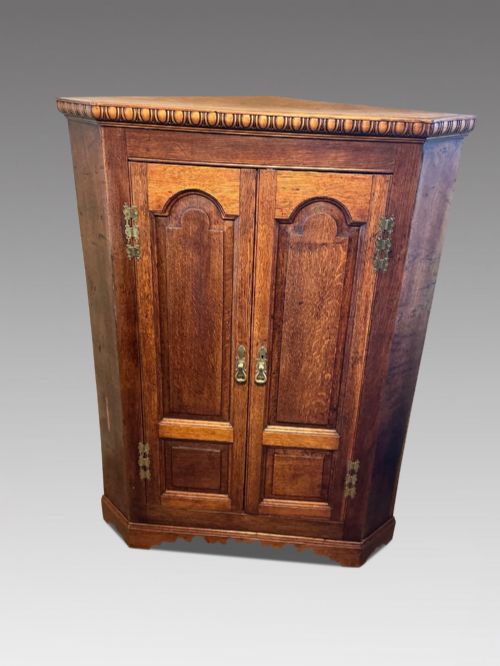
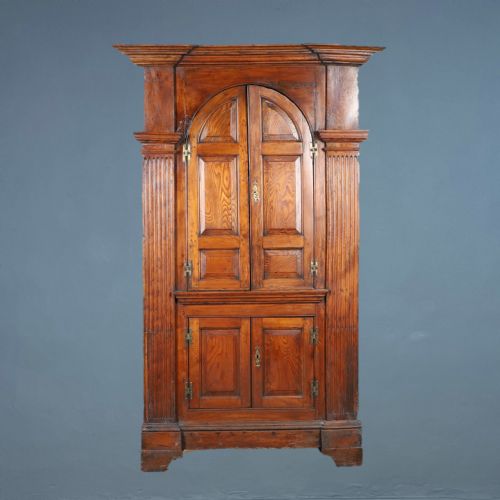
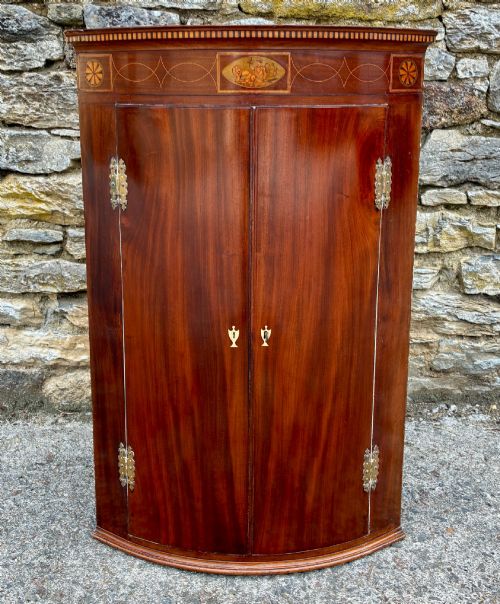
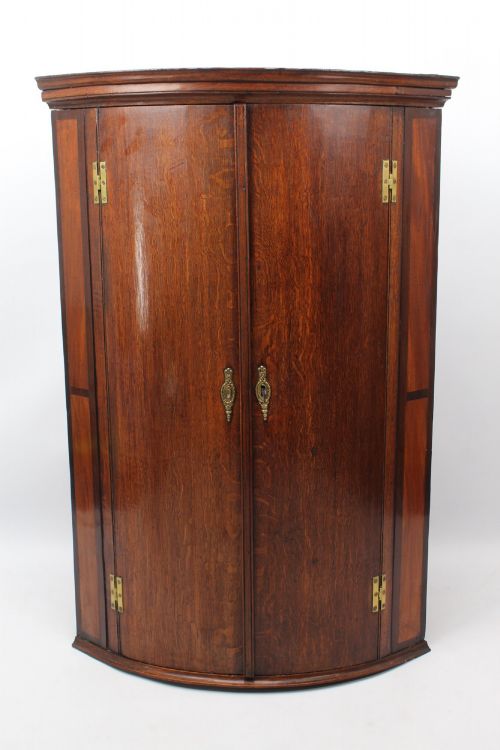
Georgian Corner Display Cabinet
A georgian corner display cabinet turns wasted room angles into a focal point for precious ceramics and glassware.
Georgian Corner Display Cabinet
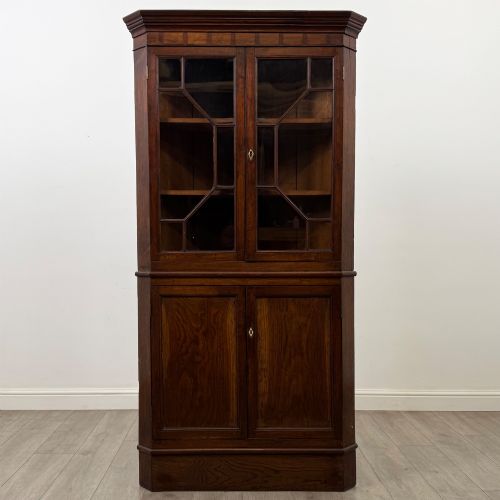
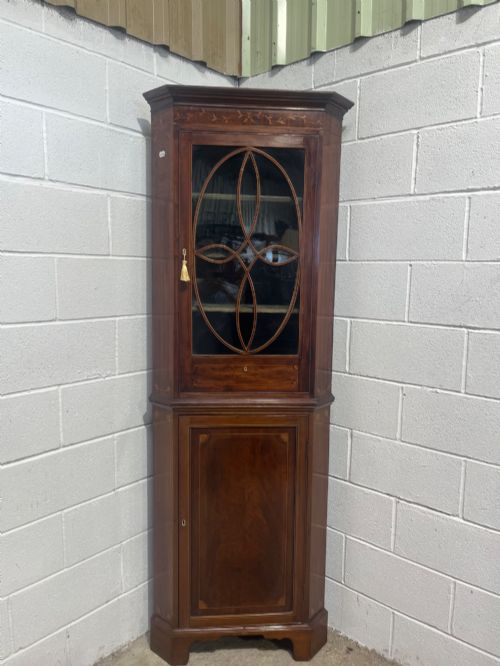
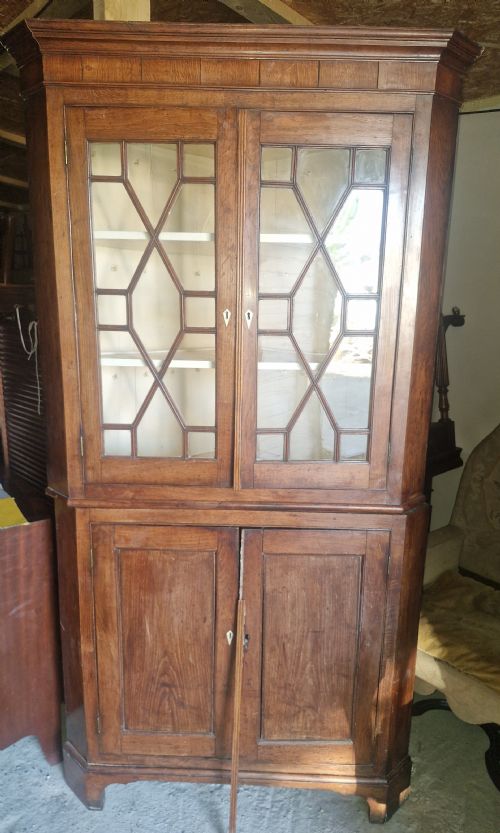
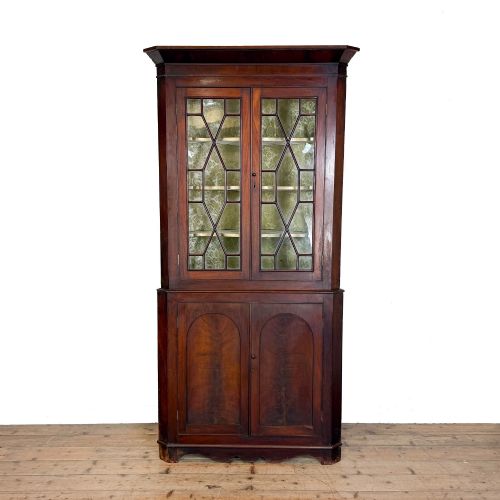
A georgian corner display cabinet serves to utilise awkward room angles by fitting flush into a junction of walls while exhibiting prized objects behind glass doors. Buyers searching this phrase meet architectural wall-hanging units and substantial floor-standing pieces built in two parts.
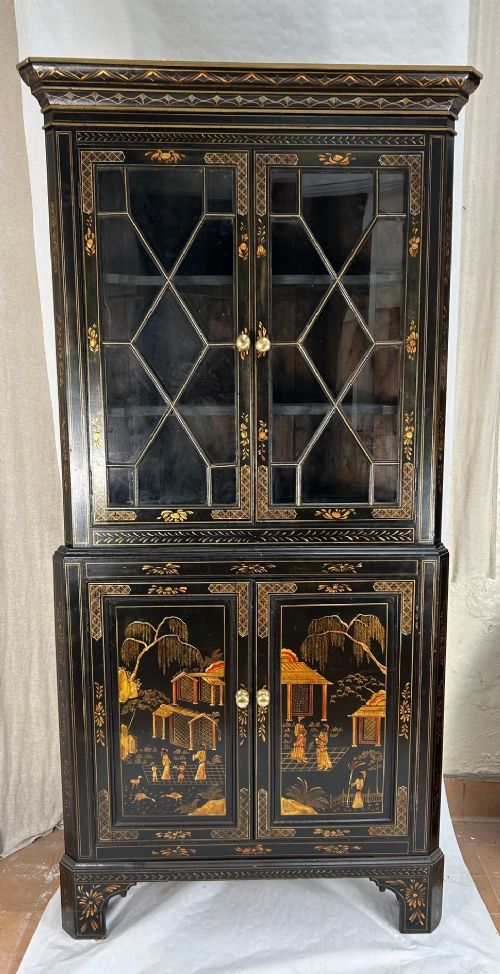
The materials and styles span centuries, featuring authentic 18th-century pieces alongside Edwardian revivals and later interpretations. Oak and mahogany dominate the record, accompanied by walnut, pine, and occasional lacquer work.
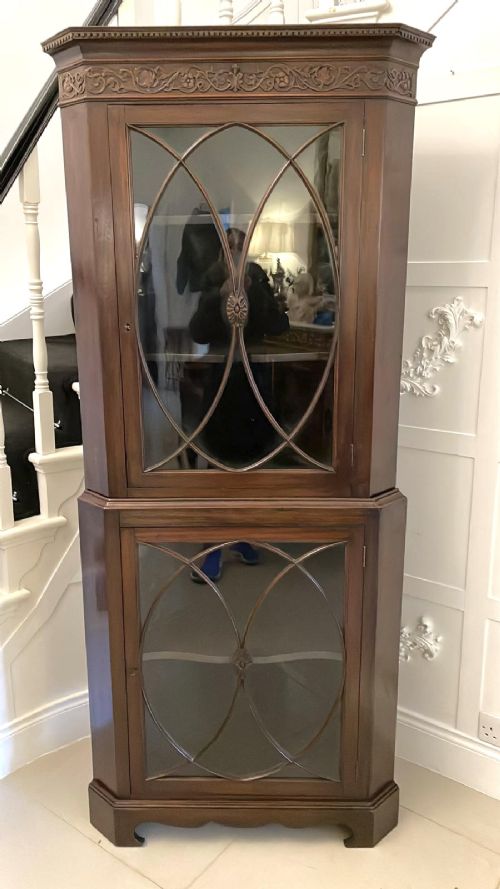
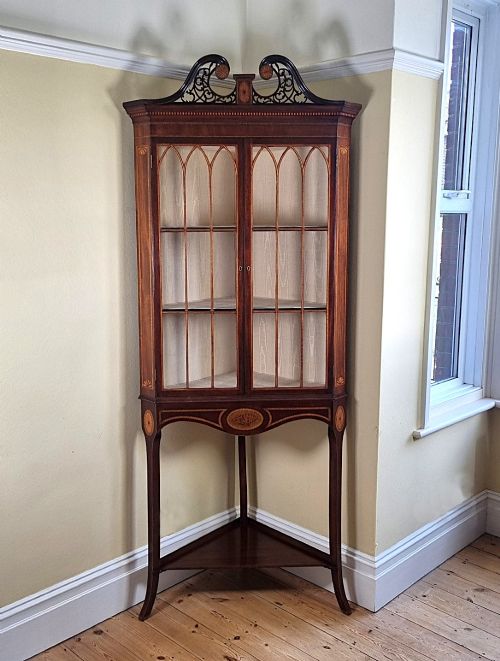
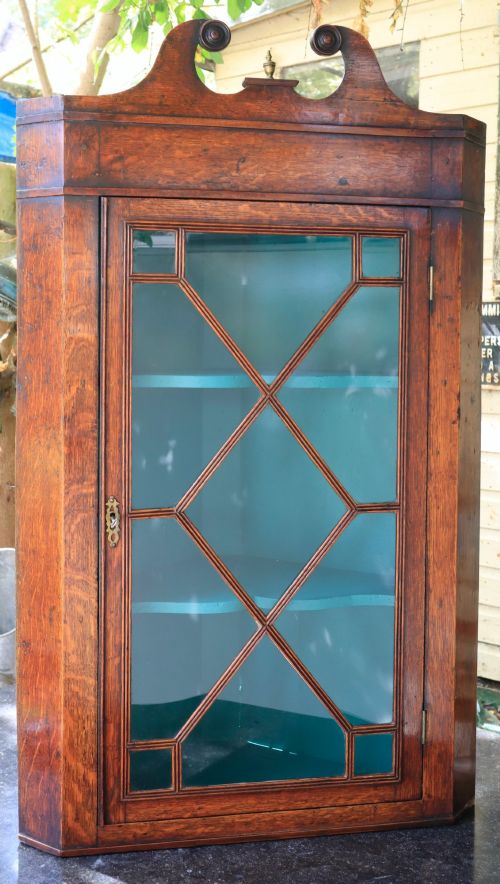
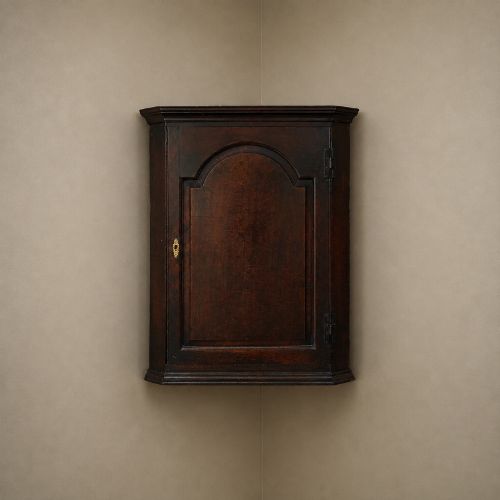
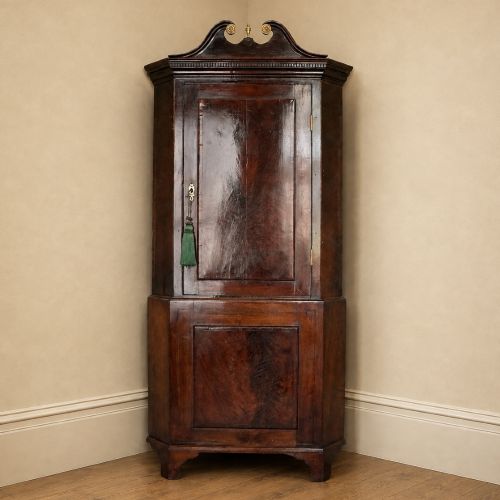
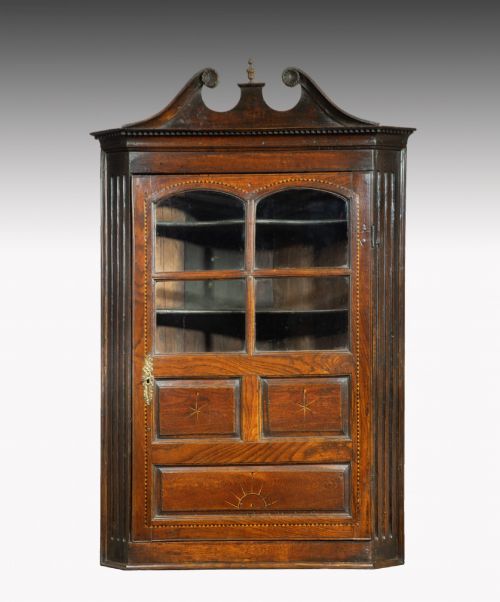
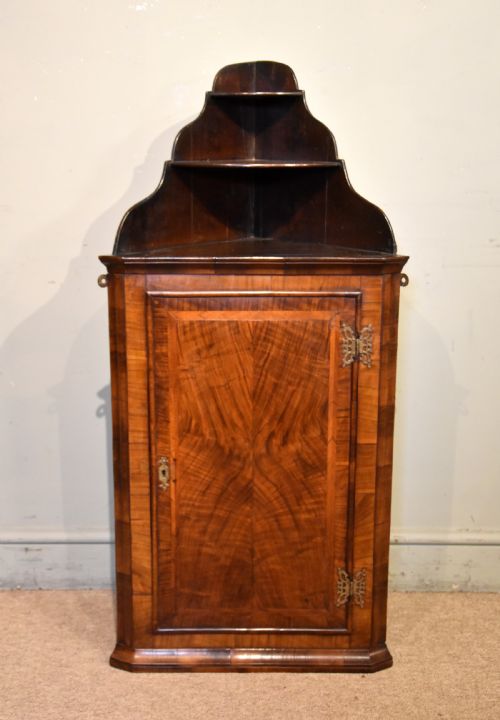
Most examples present glazed upper sections with wooden glazing bars, whilst others rely on solid panelled doors or open shelves. Surviving formats range from compact single-door wall cupboards to tall standing cabinets with broken arch pediments.
Materials and Construction
Cabinet makers utilised dense hardwoods like mahogany and oak, often enhancing surfaces with crossbanding, satinwood inlay, or marquetry. Pine frequently served for secondary interior framing and structural backing.
Glass panels were secured with fine astragal bars, dividing the aperture into geometric panes to support the structure. Brass hardware, including butterfly hinges and key escutcheons, completed the joinery.
Several pine cabinets preserve wonderfully cheerful painted interiors, offering a hidden burst of colour behind sober exterior woods.
Standards of Craftsmanship
The refinement of the timber selection and the precision of the joinery dictate the standing of a piece within the range. Superior examples exhibit tightly fitted mitres, well-figured wood grains, and delicate proportions in the architectural cornices.
Interior detailing also separates basic storage from finer items, seen in shaped wooden shelving, painted backplates, and original brass fittings. The integration of structural elements like broken arch pediments indicates higher ambition from the workshop.
The Georgian Corner Display Cabinet Glossary
- Astragal glazed
- A glass door divided into smaller panes by thin wooden mouldings called glazing bars. This technique was standard for displaying contents securely.
- Crossbanding
- A strip of veneer applied perpendicularly to the grain of the main surface around the border. It provides a neat decorative frame on cabinet doors.
- Broken arch pediment
- A triangular gable cornice left open at the apex, often centred with a carved finial or urn. It appears on taller, more formal architectural cabinets.
- Bow front
- A convex, curved front profile that softens the rigid right angles of the corner fitting. This shape is frequently found on mahogany examples.
- Two-part cabinet
- A tall piece constructed as separate upper and lower sections stacked together. This facilitated transport and placement in domestic rooms.
Georgian Corner Display Cabinet: Frequently Asked Questions
How do I hang a wall cabinet?
Wall-hanging corner cupboards require secure fixing to solid masonry or internal wall studs using heavy-duty brackets suited to the weight of the timber and glass.
Because these pieces project outward from the corner, ensuring the structural integrity of the backboards and hanging loops is essential before loading the interior shelves.
Where should I place a corner cabinet?
These cabinets fit neatly into any unused 90-degree room junction, making them ideal for dining rooms, hallways, or drawing rooms where floor space is limited.
Tall floor-standing versions anchor an empty corner, while wall-hanging models free up floor area beneath for other furniture.
Are these cabinets difficult to clean?
Dusting the small individual glass panes formed by astragal glazing requires a soft cloth and careful attention to the intersecting wooden bars.
Maintaining the exterior timber involves applying appropriate wax polish periodically to nourish the mahogany or oak grain without building up residue.
What is the difference between wall and standing versions?
Wall-hanging cupboards secure directly to the wall at eye level and often feature a flat or moulded top cornice designed to be viewed from below.
Standing variants rest on the floor as single-height units or grand two-part structures, sometimes incorporating lower cupboards beneath the main display area.